Results by title
195 books match the query 'Homes and haunts' and 6 start with m
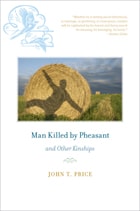
Man Killed by Pheasant and Other Kinships
John T. Price
University of Iowa Press, 2012
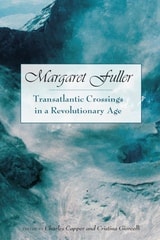
Margaret Fuller
Transatlantic Crossings in a Revolutionary AgeEdited by Charles Capper and Cristina Giorcelli
University of Wisconsin Press, 2007
This volume is a collaboration of international scholars who, from varied fields and approaches, assess Fuller’s genius and character. Treating the last several years of Margaret Fuller’s short life, these essays offer a truly international discussion of Fuller’s unique cultural, political, and personal achievements. From the origins and articulations of Fuller’s cosmopolitanism to her examination of “the woman question,” and from her fascination with the European “other” to her candid perception of imperial America from abroad, they ponder what such an extraordinary woman meant to America, and also to Italy and Europe, during her lifetime and continuing to the present.
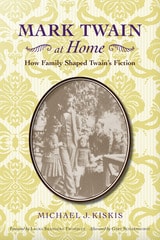
Mark Twain at Home
How Family Shaped Twain’s FictionMichael J. Kiskis, Foreword by Laura Skandera Trombley, Afterword by Gary Scharnhorst
University of Alabama Press, 2016
Mark Twain was the child of a loveless marriage and a homelife over which hovered the constant specter of violence. Informed by his difficult childhood, orthodox readings of The Adventures of Tom Sawyer and Adventures of Huckleberry Finn frame these canonical literary figures as nostalgic—autobiographical fables of heroic individualists slipping the bonds of domestic life.
Kiskis, however, presents a wealth of biographical details about Samuel Clemens and his family that reinterpret Twain’s work as a robust affirmation of domestic spheres of life. Among Kiskis’s themes are that, as the nineteenth century witnessed high rates of orphanhood and childhood mortality, Clemens’s work often depicted unmoored children seeking not escape from home but rather seeking the redemption and safety available only in familial structures. Similarly, Mark Twain at Home demonstrates that, following the birth of his first daughter, Twain began to exhibit in his writing an anxiety with social ills, notably those that affected children.
In vigorous and accessible descriptions of Twain’s life as it became reflected in his prose, Kiskis offers a compelling and fresh understanding of this work of this iconic American author.
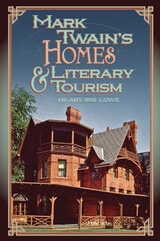
Mark Twain's Homes and Literary Tourism
Hilary Iris Lowe
University of Missouri Press, 2025
A century after Samuel Clemens’s death, Mark Twain thrives. One way fans still celebrate the first true American writer and his work is by visiting any number of Mark Twain destinations. They believe they can learn something unique by visiting the places where he lived. Mark Twain’s Homes and Literary Tourism untangles the complicated ways that Clemens’s houses, now museums, have come to tell the stories that they do about Twain and, in the process, reminds us that the sites themselves are the products of multiple agendas and, in some cases, unpleasant histories.
Hilary Iris Lowe leads us through four Twain homes, beginning at the beginning—Florida, Missouri, where Clemens was born. Today the site is simply a concrete pedestal missing its bust, a plaque, and an otherwise-empty field. Though the original cabin where he was born likely no longer exists, Lowe treats us to an overview of the history of the area and the state park challenged with somehow marking this site. Next, we travel with Lowe to Hannibal, Missouri, Clemens’s childhood home, which he saw become a tourist destination in his own lifetime. Today mannequins remind visitors of the man that the boy who lived there became and the literature that grew out of his experiences in the house and little town on the Mississippi.
Literary historic sites pin their authority on the promise of exclusive insight into authors and texts through firsthand experience. As tempting as it is to accept the authenticity of Clemens’s homes, Mark Twain’s Homes and Literary Tourism argues that house museums are not reliable critical texts but are instead carefully constructed spaces designed to satisfy visitors. This volume shows us how these houses’ portrayals of Clemens change frequently to accommodate and shape our own expectations of the author and his work.
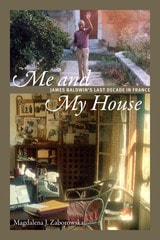
Me and My House
James Baldwin's Last Decade in FranceMagdalena J. Zaborowska
Duke University Press, 2018
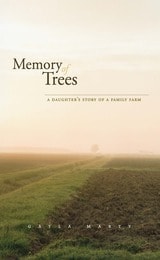
Memory of Trees
A Daughter’s Story of a Family FarmGayla Marty
University of Minnesota Press, 2013
Memory of Trees is a multigenerational story of Gayla Marty’s family farm near Rush City, Minnesota. Cleared from woodlands by her great-grandfather Jacob in the 1880s, the farm passed to her father, Gordon, and his brother, Gaylon. Hewing to a conservative Swedish Baptist faith, the two brothers worked the farm, raising their families in side-by-side houses.
As the years go by, the families grow—and slowly grow apart. Uncle Gaylon, more doctrinaire in his faith, rails against the permissiveness of Gayla’s parents. Financial tensions arise as well when the farm economy weakens and none of the children is willing or able to take over. Gayla is encouraged to leave for college, international travel, and city life, but the farm remains essential to her sense of self, even after the family decides to sell the land.
When Gaylon has an accident on a tractor, Gayla becomes driven to reconnect with him and to find out why she and her uncle—once so close but now estranged—were the only two members of the family who had resisted selling the land. Guided by vivid images of the farm’s many beautiful trees, she pores over sacred and classical works as well as layers of her own memory to understand the forces that have transformed the American landscape and culture in the last half of the twentieth century. Beneath the belief in land as a giver of life and blessing, she discovers a powerful anxiety born of human uprootedness and loss. Movingly written, Memory of Trees will resonate for many with attachments to small towns or farms, whether they continue to work the land or, like so many, have left for a different life.