Results by title
395 books match the query 'How' and 11 start with m
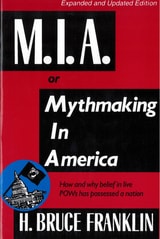
M.I.A. or Mythmaking in America
How and why belief in live POWs has possessed a nationFranklin, H. Bruce
Rutgers University Press, 1992
This paperback edition of M.I.A. or Mythmaking in America adds major new material about Ross Perot's role, the 1991-1992 Senate investigation, and illegal operations authorized by Ronald Reagan.
Make Your Job a Calling
How the Psychology of Vocation Can Change Your Life at WorkBryan J. Dik
Templeton Press, 2013
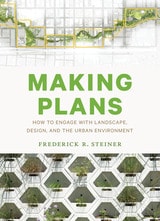
Making Plans
How to Engage with Landscape, Design, and the Urban EnvironmentBy Frederick R. Steiner
University of Texas Press, 2018
“Community and regional planning involve thinking ahead and formally envisioning the future for ourselves and others,” according to Frederick R. Steiner. “Improved plans can lead to healthier, safer, and more beautiful places to live for us and other species. We can also plan for places that are more just and more profitable. Plans can help us not only to sustain what we value but also to transcend sustainability by creating truly regenerative communities, that is, places with the capacity to restore, renew, and revitalize their own sources of energy and materials.”
In Making Plans, Steiner offers a primer on the planning process through a lively, firsthand account of developing plans for the city of Austin and the University of Texas campus. As dean of the UT School of Architecture, Steiner served on planning committees that addressed the future growth of the city and the university, growth that inevitably overlapped because of UT’s central location in Austin. As he walks readers through the planning processes, Steiner illustrates how large-scale planning requires setting goals and objectives, reading landscapes, determining best uses, designing options, selecting courses for moving forward, taking actions, and adjusting to changes. He also demonstrates that planning is an inherently political, sometimes messy, act, requiring the intelligence and ownership of the affected communities. Both wise and frank, Making Plans is an important philosophical and practical statement on planning by a leader in the field.
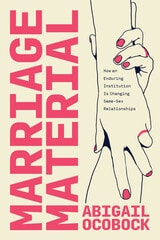
Marriage Material
How an Enduring Institution Is Changing Same-Sex RelationshipsAbigail Ocobock
University of Chicago Press, 2024
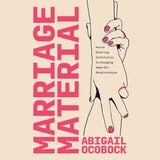
It is no secret that marriage rates in the United States are at an all-time low. Despite this significant decline, the institution of marriage endures in our society amid historic changes to its meaning and practice. How does the continuing strength of marriage impact the relationships of same-sex couples after the legalization of same-sex marriage?
Drawing on over one hundred interviews with LGBTQ+ people, Marriage Material reveals the transformative impact marriage equality has had on same-sex relationships. Sociologist Abigail Ocobock looks to same-sex couples across a wide age range to illuminate the complex ways institutional mechanisms work in tandem to govern the choices and behaviors of individuals with different marriage experiences. Ocobock examines both the influence of marriage on the dynamics of same-sex relationships and how LGBTQ+ people challenge heteronormative assumptions about marriage, highlighting the complex interplay between institutional constraint and individual agency.
Marriage Material presents a bold challenge to dominant scholarly and popular ideas about the decline of marriage, making clear that gaining access to legal marriage has transformed same-sex relationships, both for better and for worse.
Marriage Material
How an Enduring Institution Is Changing Same-Sex RelationshipsAbigail Ocobock
University of Chicago Press, 2024
A cutting-edge study of marriage’s transformative effects on same-sex relationships.
It is no secret that marriage rates in the United States are at an all-time low. Despite this significant decline, the institution of marriage endures in our society amid historic changes to its meaning and practice. How does the continuing strength of marriage impact the relationships of same-sex couples after the legalization of same-sex marriage?
Drawing on over one hundred interviews with LGBTQ+ people, Marriage Material reveals the transformative impact marriage equality has had on same-sex relationships. Sociologist Abigail Ocobock looks to same-sex couples across a wide age range to illuminate the complex ways institutional mechanisms work in tandem to govern the choices and behaviors of individuals with different marriage experiences. Ocobock examines both the influence of marriage on the dynamics of same-sex relationships and how LGBTQ+ people challenge heteronormative assumptions about marriage, highlighting the complex interplay between institutional constraint and individual agency.
Marriage Material presents a bold challenge to dominant scholarly and popular ideas about the decline of marriage, making clear that gaining access to legal marriage has transformed same-sex relationships, both for better and for worse.
Medal Winners
How the Vietnam War Launched Nobel CareersBy Raymond S. Greenberg
University of Texas Press, 2020
As the ground war in Vietnam escalated in the late 1960s, the US government leveraged the so-called doctor draft to secure adequate numbers of medical personnel in the armed forces. Among newly minted physicians’ few alternatives to military service was the Clinical Associate Training Program at the National Institutes of Health. Though only a small percentage of applicants were accepted, the elite program launched an unprecedented number of remarkable scientific careers that would revolutionize medicine at the end of the twentieth century.
Medal Winners recounts this overlooked chapter and unforeseen byproduct of the Vietnam War through the lives of four former NIH clinical associates who would go on to become Nobel laureates. Raymond S. Greenberg traces their stories from their pre-NIH years and apprenticeships through their subsequent Nobel Prize–winning work, which transformed treatment of heart disease, cancer, and other diseases. Greenberg shows how the Vietnam draft unintentionally ushered in a golden era of research by bringing talented young physicians under the tutelage of leading scientists and offers a lesson in what it may take to replicate such a towering center of scientific innovation as the NIH in the 1960s and 1970s.
Migrants for Export
How the Philippine State Brokers Labor to the WorldRobyn Magalit Rodriguez
University of Minnesota Press, 2010
Millennial Momentum
How a New Generation Is Remaking AmericaWinograd, Morley
Rutgers University Press, 2011
About every eight decades, coincident with the most stressful and perilous events in U.S. history—the Revolutionary and Civil Wars and the Great Depression and World War II—a new, positive, accomplished, and group-oriented “civic generation” emerges to change the course of history and remake America. The Millennial Generation (born 1982–2003) is America’s newest civic generation.
In their 2008 book, Millennial Makeover, Morley Winograd and Michael D. Hais made a prescient argument that the Millennial Generation would change American politics for good. Later that year, a huge surge of participation from young voters helped to launch Barack Obama into the White House.
Now, in Millennial Momentum, Winograd and Hais investigate how the beliefs and practices of the Millennials are transforming other areas of American culture, from education to entertainment, from the workplace to the home, and from business to politics and government. The Millennials’ cooperative ethic and can-do spirit have only just begun to make their mark, and are likely to continue to reshape American values for decades to come.
Drawing from an impressive array of demographic data, popular texts, and personal interviews, the authors show how the ethnically diverse, socially tolerant, and technologically fluent Millennials can help guide the United States to retain its leadership of the world community and the global marketplace. They also illustrate why this generation’s unique blend of civic idealism and savvy pragmatism will enable us to overcome the internal culture wars and institutional malaise currently plaguing the country. Millennial Momentum offers a message of hope for a deeply divided nation.
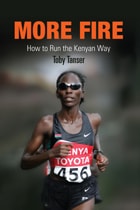
More Fire
How to Run the Kenyan WayToby Tanser
Westholme Publishing, 2008
An Essential Book for Runners of All Abilities
All of the Author’s Proceeds Go to Shoes4Africa to Support the Construction of Children’s Hospitals in Kenya
Kenya has produced the greatest concentration of world-class runners, and fellow athletes have long been intrigued by their remarkable success. Toby Tanser has devoted much of his professional career living and training among Kenyan runners in order to better understand the unique status of East African athletes. In More Fire: How to Run the Kenyan Way, the author builds upon the success of his acclaimed Train Hard, Win Easy, the first book to provide insights into the Kenyan "magic" that so many runners and coaches had sought. Instead of special foods or secret techniques, Tanser found that Kenyan runners simply trained incredibly hard, much harder than anyone had realized. By adapting their training regime—which includes three workouts a day—and following their example, runners, whether novices or champions, are able to improve both their performance and enjoyment in running. For those training for a marathon or any other distance race, this book is both practical and inspirational.
Divided into four parts, the book begins with a description of running in Kenya, the landscape, the physical conditions, and the people; the second part concentrates on details of Kenyan training camps, training methods, and their typical training diet; the third profiles individual runners and coaches from the past and present, with each explaining their approach to running so that readers can gain further insight into their methods. The book ends with a discussion on how the reader can adapt Kenyan training practices for their own running requirements. More Fire: How to Run the Kenyan Way is essential reading for runners of all levels and experience.
More Than Pretty Boxes
How the Rise of Professional Organizing Shows Us the Way We Work Isn’t WorkingCarrie M. Lane
University of Chicago Press, 2024
For a widely dreaded, often mundane task, organizing one’s possessions has taken a surprising hold on our cultural imagination. Today, those with the means can hire professionals to help sort and declutter their homes. In More Than Pretty Boxes, Carrie M. Lane introduces us to this world of professional organizers and offers new insight into the domains of work and home, which are forever entangled—especially for women.
The female-dominated organizing profession didn’t have a name until the 1980s, but it is now the subject of countless reality shows, podcasts, and magazines. Lane draws on interviews with organizers, including many of the field’s founders, to trace the profession’s history and uncover its enduring appeal to those seeking meaningful, flexible, self-directed work. Taking readers behind the scenes of real-life organizing sessions, More Than Pretty Boxes details the strategies organizers use to help people part with their belongings, and it also explores the intimate, empathetic relationships that can form between clients and organizers.
But perhaps most importantly, More Than Pretty Boxes helps us think through an interconnected set of questions around neoliberal work arrangements, overconsumption, emotional connection, and the deeply gendered nature of paid and unpaid work. Ultimately, Lane situates organizing at the center of contemporary conversations around how work isn’t working anymore and makes a case for organizing’s radical potential to push back against the overwhelming demands of work and the home, too often placed on women’s shoulders. Organizers aren’t the sole answer to this crisis, but their work can help us better understand both the nature of the problem and the sorts of solace, support, and solutions that might help ease it.
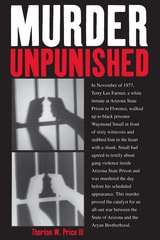
Murder Unpunished
How the Aryan Brotherhood Murdered Waymond Small and Got Away with ItThornton W. Price
University of Arizona Press, 2005
Thornton Price, one of the defense attorneys, now tells how Farmer and Small became cannon fodder in this war to reclaim Arizona’s prisons from rival gangs. These gangs—the Aryan Brotherhood, the Mau Maus, and the Mexican Mafia—were suspected of committing more than a dozen murders over the previous two years, motivating politicians to crack down after the violence could no longer be ignored or contained. To reconstruct the case, Price reviewed 16,000 pages of court records and conducted interviews with key participants to piece together an insider’s account of the crime and the politics behind its investigation. Prison murders should be easy to solve, but investigators quickly learned that the convicts’ code of silence makes these cases often impossible to win in court.
Price focuses on the special problems posed by prison crime by getting inside the skins of men like murderer Terry "Crazy" Farmer and William "Red Dog" Howard, one of the Florence Eleven and a founder of the Aryan Brotherhood. He also presents the perspectives of state investigators and reveals how they calculated to pit black witnesses against white killers until one black would break the code of silence and provoke feuding within the Brotherhood.
Murder Unpunished tells how society’s most outrageous criminals ran the prison through gang violence as outside the walls Arizona struggled to outgrow its Wild West past. Like few other books, it reveals how prisons incubate predatory criminals and gangs, and it exposes the unique difficulties of prosecuting prison crimes. It is a gripping account that cuts to the heart of our penal system and a cautionary tale for citizens who prefer to keep prisons out of sight, out of mind.