Results by title
102 books match the query 'Human body' and 12 start with m
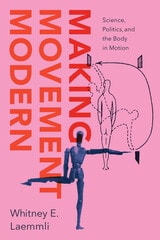
Making Movement Modern
Science, Politics, and the Body in MotionWhitney E. Laemmli
University of Chicago Press, 2026
In the early twentieth century, human bodily movement garnered interest among researchers who were convinced that understanding and controlling it could help govern an increasingly frazzled, fragmented world. Making Movement Modern traces one movement visualization technique, Labanotation, from its origins in expressionist dance, Austro-Hungarian military discipline, and contemporary physiology to its employment in factories and offices a half-century later. Frustrated by societies that seemed plagued by regimentation and alienation, the users of Laban-inspired systems—from artists and scientists to factory owners, politicians, lawyers, anthropologists, psychiatrists, and computer scientists—hoped to provide opportunities for individual expression while simultaneously harnessing movement to serve the needs of larger communities, businesses, and states.
Making Movement Modern reveals how Labanotation’s creator, choreographer Rudolf Laban, and his acolytes offered this system to a surprising variety of individuals and groups. It was a technique that promised liberation through expressive movement; it was also a means of organizing fascist displays of pure “Aryan” culture. The book explores these political ambiguities as Laban-based systems entered postwar society in the United States and the United Kingdom, where they were used to document disappearing folk cultures, treat Holocaust survivors, and make even the dullest, most repetitive work feel spiritually meaningful. Central to these efforts were vast programs to collect and store new kinds of personal movement data, and this history also has much to tell us about mass data collection today. This is a book for anyone interested in the relationship between art, science, data, and the human body across the tumultuous twentieth century.

Many Mirrors
Body Image and Social RelationsEdited by Nicole Sault
Rutgers University Press, 1994
“We've needed a book like Many Mirrors for a long time. In the veritable explosion of new scholarship on the human body, this book stands out in its focus on empirical research. Many Mirrors will move . . . the Anthropology of the Body a giant step forward.”--C. H. Browner, University of California at Los Angeles
In every society, people define and change their physical appearance in response to their relationships to others: we add clothes and masks, remove them, build up our muscles, perforate our flesh, cut parts away, comb our hair, and modify our diets. In rural Jamaica, fat women are considered desirable; in American suburbia, teenage girls are obsessed with thinness. Bedouin women use tattoos to express their secret longings; Asian American women undergo cosmetic surgery to conform to internalized western standards of beauty. Even with mirrors to see ourselves, we rely on the reactions of others to learn how we look and who we are.
Where contemporary Western culture sees the body as a concrete thing with an objective, observable reality, separate from the self, many other societies regard the person as an integrated whole that includes the mind, the body, and the spirit. Through the contributors' studies of individual cultures and through the editor’s unifying “body image system”, this volume gives us a new conceptual framework for understanding how women and men in any society perceive, describe, and alter their bodies.

Marks of Distinctions
Christian Perceptions of Jews in the High Middle AgesIrven M. Resnick
Catholic University of America Press, 2012

Matters of Gravity
Special Effects and Supermen in the 20th CenturyScott Bukatman
Duke University Press, 2003
Considering theme parks, cyberspace, cinematic special effects, superhero comics, and musical films, Matters of Gravity highlights phenomena that make technology spectacular, permit unfettered flights of fantasy, and free us momentarily from the weight of gravity and history, of past and present. Bukatman delves into the dynamic ways pop culture imagines that apotheosis of modernity: the urban metropolis. He points to two genres, musical films and superhero comics, that turn the city into a unique site of transformative power. Leaping in single bounds from lively descriptions to sharp theoretical insights, Matters of Gravity is a deft, exhilarating celebration of the liberatory effects of popular culture.
Medicalized Masculinities
edited by Dana Rosenfeld and Christopher A. Faircloth
Temple University Press, 2006
Medicalized Masculinities considers how these threads in scholarship failed to consider the male body adequately and presents cutting-edge research into the definition and regulation of masculinity by medicine. Renowned health and gender studies experts examine medicalized conditions such as balding, aging, and other dimensions of the life cycle in the tradition of the sociology of health and gender.

Medieval Identity Machines
Jeffrey J. Cohen
University of Minnesota Press, 2003
A provocative new approach to medieval culture
In Medieval Identity Machines, Jeffrey J. Cohen examines the messiness, permeability, and perversity of medieval bodies, arguing that human identity always exceeds the limits of the flesh. Combining critical theory with a rigorous reading of medieval texts, Cohen asks if the category “human” isn’t too small to contain the multiplicity of identities. As such, this book is the first to argue for a “posthuman” Middle Ages and to make extensive use of the philosophical writings of Gilles Deleuze to rethink the medieval.
Among the topics that Cohen covers are the passionate bond between men and horses in chivalric training; the interrelation of demons, celibacy, and colonialism in an Anglo-Saxon saint’s life; Lancelot’s masochism as envisioned by Chrétien de Troyes; the voice of thunder echoing from Margery Kempe; and the fantasies that sustained some dominant conceptions of race. This tour of identity—in all its fragility and diffusion—illustrates the centrality of the Middle Ages to theory as it enhances our understanding of self, embodiment, and temporality in the medieval world.
Metamorphoses Of The Body
Jose Gil
University of Minnesota Press, 1998
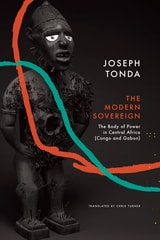
Modern Sovereign
The Body of Power in Central Africa (Congo and Gabon)Joseph Tonda
Seagull Books, 2020
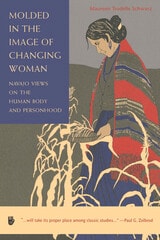
Molded in the Image of Changing Woman
Navajo Views on the Human Body and PersonhoodMaureen Trudelle Schwarz
University of Arizona Press, 1997
This book focuses on the complex interweaving of the cosmological, social, and bodily realms that Navajo people navigate in an effort alternately to control, contain, or harness the power manifested in various effects. Following the Navajo life-course from conception to puberty, Maureen Trudelle Schwarz explores the complex rules defining who or what can affect what or whom in specific circumstances as a means of determining what these effects tell us about the cultural construction of the human body and personhood for the Navajo.
Schwarz shows how oral history informs Navajo conceptions of the body and personhood, showing how these conceptions are central to an ongoing Navajo identity. She treats the vivid narratives of emergence life-origins as compressed metaphorical accounts, rather than as myth, and is thus able to derive from what individual Navajos say about the past their understandings of personhood in a worldview that is actually a viable philosophical system. Working with Navajo religious practitioners, elders, and professional scholars. Schwarz has gained from her informants an unusually firm grasp of the Navajo highlighted by the foregrounding of Navajo voices through excerpts of interviews. These passages enliven the book and present Schwarz and her Navajo consultants as real, multifaceted human beings within the ethnographic context.
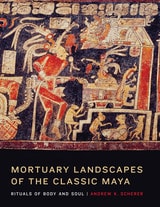
Mortuary Landscapes of the Classic Maya
Rituals of Body and SoulBy Andrew K. Scherer
University of Texas Press, 2015
From the tombs of the elite to the graves of commoners, mortuary remains offer rich insights into Classic Maya society. In Mortuary Landscapes of the Classic Maya: Rituals of Body and Soul, the anthropological archaeologist and bioarchaeologist Andrew K. Scherer explores the broad range of burial practices among the Maya of the Classic period (AD 250–900), integrating information gleaned from his own fieldwork with insights from the fields of iconography, epigraphy, and ethnography to illuminate this society’s rich funerary traditions.
Scherer’s study of burials along the Usumacinta River at the Mexican-Guatemalan border and in the Central Petén region of Guatemala—areas that include Piedras Negras, El Kinel, Tecolote, El Zotz, and Yaxha—reveals commonalities and differences among royal, elite, and commoner mortuary practices. By analyzing skeletons containing dental and cranial modifications, as well as the adornments of interred bodies, Scherer probes Classic Maya conceptions of body, wellness, and the afterlife.
Scherer also moves beyond the body to look at the spatial orientation of the burials and their integration into the architecture of Maya communities. Taking a unique interdisciplinary approach, the author examines how Classic Maya deathways can expand our understanding of this society’s beliefs and traditions, making Mortuary Landscapes of the Classic Maya an important step forward in Mesoamerican archeology.
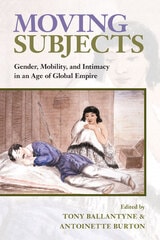
Moving Subjects
Gender, Mobility, and Intimacy in an Age of Global EmpireEdited by Tony Ballantyne and Antoinette Burton
University of Illinois Press, 2008
Moving Subjects is the first of its kind to make a case not simply for the necessity of a spatial analysis of imperial formations, but for the indispensability of an investigative approach that links space and movement with the domain of the intimate. Through careful archival research and a commitment to excavating the variety of "mobile intimacies" at the heart of imperial power, its agents, and its interlocutors, contributors offer new evidence and approaches for scholars engaged in capturing the historical nuances of imperial domination.
Contributors are Tony Ballantyne, Antoinette Burton, Adrian Carton, David Haines, Katherine Ellinghaus, Charlotte Macdonald, Michael A. McDonnell, Kirsten McKenzie, Michelle Moran, Fiona Paisley, Adele Perry, Dana Rabin, Christine M. Skwiot, Rachel Standfield, Frances Steel, Elizabeth Vibert, and Kerry Wynn.
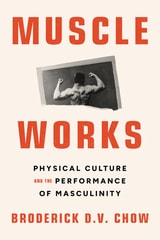
Muscle Works
Physical Culture and the Performance of MasculinityBroderick D. V. Chow
Northwestern University Press, 2024
This book recounts the story of fitness culture from its beginnings as spectacles of strongmen, weightlifters, acrobats, and wrestlers to its legitimization in the twentieth-century in the form of competitive sports and health and wellness practices. Broderick D. V. Chow shows how these modes of display contribute to the construction and deconstruction of definitions of masculinity.
Attending to its theatrical origins, Chow argues for a more nuanced understanding of fitness culture, one informed by the legacies of self-described Strongest Man in the World Eugen Sandow and the history of fakery in strongman performance; the philosophy of weightlifter George Hackenschmidt and the performances of martial artist Bruce Lee; and the intersections of fatigue, resistance training, and whiteness. Muscle Works: Physical Culture and the Performance of Masculinity moves beyond the gym and across the archive, working out techniques, poses, and performances to consider how, as gendered subjects, we inhabit and make worlds through our bodies.