Results by title
425 books match the query 'Human rights' and 11 start with m
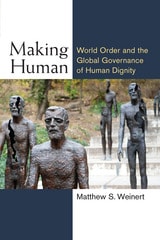
Making Human
World Order and the Global Governance of Human DignityMatthew S. Weinert
University of Michigan Press, 2015
Man and the State
Jacques Maritain
Catholic University of America Press, 1998
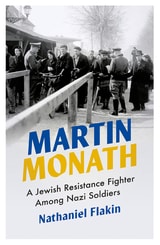
Martin Monath
A Jewish Resistance Fighter Amongst Nazi SoldiersNathaniel Flakin
Pluto Press, 2019
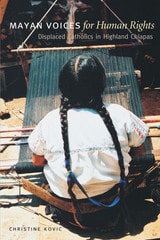
Mayan Voices for Human Rights
Displaced Catholics in Highland ChiapasBy Christine Kovic
University of Texas Press, 2005
In the last decades of the twentieth century, thousands of Mayas were expelled, often violently, from their homes in San Juan Chamula and other highland communities in Chiapas, Mexico, by fellow Mayas allied with the ruling Institutional Revolutionary Party (PRI). State and federal authorities generally turned a blind eye to these human rights abuses, downplaying them as local conflicts over religious conversion and defense of cultural traditions. The expelled have organized themselves to fight not only for religious rights, but also for political and economic justice based on a broad understanding of human rights.
This pioneering ethnography tells the intertwined stories of the new communities formed by the Mayan exiles and their ongoing efforts to define and defend their human rights. Focusing on a community of Mayan Catholics, the book describes the process by which the progressive Diocese of San Cristóbal and Bishop Samuel Ruiz García became powerful allies for indigenous people in the promotion and defense of human rights. Drawing on the words and insights of displaced Mayas she interviewed throughout the 1990s, Christine Kovic reveals how the exiles have created new communities and lifeways based on a shared sense of faith (even between Catholics and Protestants) and their own concept of human rights and dignity. She also uncovers the underlying political and economic factors that drove the expulsions and shows how the Mayas who were expelled for not being "traditional" enough are in fact basing their new communities on traditional values of duty and reciprocity.
Memorializing Violence
Transnational Feminist ReflectionsAlison Crosby
Rutgers University Press, 2025
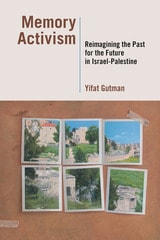
Memory Activism
Reimagining the Past for the Future in Israel-PalestineYifat Gutman
Vanderbilt University Press, 2017
Set in Israel in the first decade of the twenty-first century and based on long-term fieldwork, this rich ethnographic study offers an innovative analysis of the Israeli-Palestinian conflict. It explores practices of "memory activism" by three groups of Jewish-Israeli and Arab-Palestinian citizens--Zochrot, Autobiography of a City, and Baladna--showing how they appropriated the global model of truth and reconciliation while utilizing local cultural practices such as tours and testimonies.
These activist efforts gave visibility to a silenced Palestinian history in order to come to terms with the conflict's origins and envision a new resolution for the future. This unique focus on memory as a weapon of the weak reveals a surprising shift in awareness of Palestinian suffering among the Jewish majority of Israeli society in a decade of escalating violence and polarization--albeit not without a backlash.
Contested memories saturate this society. The 1948 war is remembered as both Independence Day by Israelis and al-Nakba ("the catastrophe") by Palestinians. The walking tour and survivor testimonies originally deployed by the state for national Zionist education that marginalized Palestinian citizens are now being appropriated by activists for tours of pre-state Palestinian villages and testimonies by refugees.
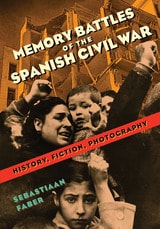
Memory Battles of the Spanish Civil War
History, Fiction, PhotographySebastiaan Faber
Vanderbilt University Press, 2017
Faber traces the curious trajectories of iconic Spanish Civil War photographs by Robert Capa, Gerda Taro, and David Seymour; critically reads a dozen recent Spanish novels and essays; interrogates basic scholarly assumptions about history, memory, and literature; and interviews nine scholars, activists, and documentarians who in the past decade and a half have helped redefine Spain's relationship to its past. In this book Faber argues that recent political developments in Spain--from the grassroots call for the recovery of historical memory to the indignados movement and the foundation of Podemos--provide an opportunity for scholars in the humanities to engage in a more activist, public, and democratic practice.
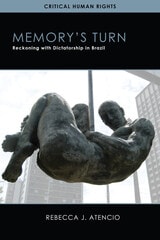
Memory’s Turn
Reckoning with Dictatorship in BrazilRebecca J. Atencio
University of Wisconsin Press, 2014
In clear and engaging prose, Rebecca J. Atencio tells the story of the slow turn to memory in Brazil, a turn that has taken place in both politics and in cultural production. She shows how testimonial literature, telenovelas, literary novels, theatrical plays, and memorials have interacted with policies adopted by the Brazilian state, often in unexpected ways. Under the right circumstances, official and cultural forms of reckoning combine in Brazil to produce what Atencio calls cycles of cultural memory. Novel meanings of the past are forged, and new cultural works are inspired, thus creating the possibility for further turns in the cycle.
The first book to analyze Brazil’s reckoning with dictatorship through both institutional and cultural means, Memory’s Turn is a rich, informative exploration of the interplay between these different modes of memory reconstruction.
Winner, Alfred B. Thomas Award, Southeastern Council of Latin American Studies
Honorable Mention, Roberto Reis Book Prize, Brazilian Studies Association
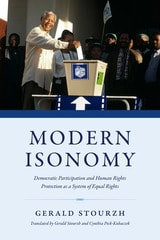
Modern Isonomy
Democratic Participation and Human Rights Protection as a System of Equal RightsGerald Stourzh
University of Chicago Press, 2021
The ideal, Stourzh argues, is a state, and indeed a world, in which individual rights, including the right to participate in politics equally, are clearly defined and possessed by all. Stourzh begins with ancient Greek thought contrasting isonomy—which is associated with the rule of the many—with “gradated societies,” oligarchies, and monarchies. He then discusses the American experiment with the development of representative democracy as well as the French Revolution, which proclaimed that all people are born and remain free and with equal rights. But progress on the creation and protection of rights for all has been uneven. Stourzh discusses specifically the equalization of slaves, peasants, women, Jews, and indigenous people. He demonstrates how deeply intertwined the protection of equal rights is with the development of democracy and gives particular attention to the development of constitutional adjudication, notably the constitutional complaint of individuals. He also discusses the international protection human rights. Timely and thought-provoking, Modern Isonomy is an erudite exploration of political and human rights.
Music and Cultural Rights
Edited by Andrew N. Weintraub and Bell Yung
University of Illinois Press, 2009
Contributors are Nimrod Baranovitch, Adriana Helbig, Javier F. Leon, Ana María Ochoa, Silvia Ramos, Helen Rees, Felicia Sandler, Amy Ku'uleialoha Stillman, Ricardo D. Trimillos, Andrew N. Weintraub, and Bell Yung.
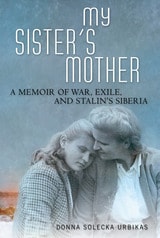
My Sister's Mother
A Memoir of War, Exile, and Stalin’s SiberiaDonna Solecka Urbikas
University of Wisconsin Press, 2019
In 1940, Janina Ślarzynska and her five-year-old daughter Mira were taken by Soviet secret police (NKVD) from their small family farm in eastern Poland and sent to Siberia with hundreds of thousands of others. So began their odyssey of hunger, disease, cunning survival, desperate escape across a continent, and new love amidst terrible circumstances.
But in the 1950s, baby boomer Donna yearns for a “normal” American family while Janina and Mira are haunted by the past. In this unforgettable memoir, Donna recounts her family history and her own survivor’s story, finally understanding the damaged mother who had saved her sister.
Finalist, Best Traditional Non-Fiction Book, Chicago Writers Association