Results by title
125 books match the query 'Human-animal relationships' and 6 start with m
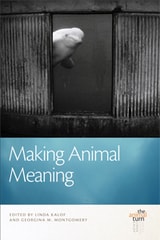
Making Animal Meaning
Linda Kalof
Michigan State University Press, 2012
An elucidating collection of ten original essays, Making Animal Meaning reconceptualizes methods for researching animal histories and rethinks the contingency of the human-animal relationship. The vibrant and diverse field of animal studies is detailed in these interdisciplinary discussions, which include voices from a broad range of scholars and have an extensive chronological and geographical reach. These exciting discourses capture the most compelling theoretical underpinnings of animal significance while exploring meaning-making through the study of specific spaces, species, and human-animal relations. A deeply thoughtful collection — vital to understanding central questions of agency, kinship, and animal consumption — these essays tackle the history and philosophy of constructing animal meaning.
Making Kin not Population
Reconceiving GenerationsEdited by Adele Clarke and Donna Haraway
Prickly Paradigm Press, 2018
Making Kin Not Population ends the silence on these issues with essays from leading anti-racist, ecologically-concerned, feminist scholars. Though not always in accord, these contributors provide bold analyses of complex issues of intimacy and kinship, from reproductive justice to environmental justice, and from human and nonhuman genocides to new practices for making families and kin. This timely work offers vital proposals for forging innovative personal and public connections in the contemporary world.
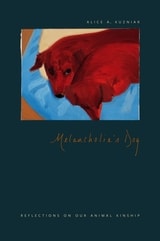
Melancholia's Dog
Reflections on Our Animal KinshipAlice A. Kuzniar
University of Chicago Press, 2006
An attempt to understand human attachment to the canis familiaris in terms of reciprocity and empathy, Melancholia’sDog tackles such difficult concepts as intimacy and kinship with dogs, the shame associated with identification with their suffering, and the reasons for the profound mourning over their deaths. In addition to philosophy and psychoanalysis, Alice A. Kuzniar turns to the insights and images offered by the literary and visual arts—the short stories of Ivan Turgenev and Franz Kafka, the novels of J. M. Coetzee and Rebecca Brown, the photography of Sally Mann and William Wegman, and the artwork of David Hockney and Sue Coe. Without falling into sentimentality or anthropomorphization, Kuzniar honors and learns from our canine companions, above all attending to the silences and sadness brought on by the effort to represent the dog as perfectly and faithfully as it is said to love.
More-than-Human Aging
Animals, Robots, and Care in Later LifeCristina Douglas
Rutgers University Press, 2025
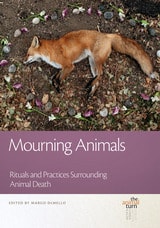
Mourning Animals
Rituals and Practices Surrounding Animal DeathMargo DeMello
Michigan State University Press, 2016
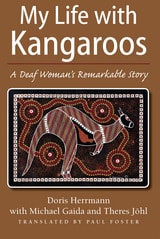
My Life with Kangaroos
A Deaf Woman’s Remarkable StoryDoris Herrmann
Gallaudet University Press, 2013
Doris Herrmann was born deaf in 1933 in Basel, Switzerland, and from the age of three, she possessed a mystical attraction to kangaroos. She recalls seeing them at that age for the first time at the Basel Zoo, and spending every spare moment visiting them from then on. Eventually, her fascination grew into passionate study of their behavior. Her dedication caught the attention of the zookeepers who provided her greater access to these extraordinary animals. Despite her challenges with communication, Herrmann wrote a scientific paper about the kangaroo’s pouch hygiene when raising a joey. Soon, experts from around the world came to visit this precocious deaf girl who knew about kangaroos.
Herrmann appreciated the opportunities opening up to her, but her real dream was to travel to Australia to study kangaroos in the wild. For years she worked and yearned, until Dr. Karl H. Winkelsträter a renowned authority on kangaroos, suggested an independent study in Australia at a place called Pebbly Beach. In 1969, at the age of 35, Herrmann finally traveled to the native land of kangaroos. During the next four decades, she would make many more trips to observe and write about kangaroos.
My Life with Kangaroos explores every facet of Herrmann’s connection to these engaging marsupials. Her single-minded devotion not only made her a leading self-made scholar on kangaroos, it transformed her own personality and her relationships with others. As she forged bonds with kangaroos named Dora, Jacqueline, Manuela, and many others, she engendered great affection and respect in the people around her, truly a remarkable story of success.