Results by title
200 books match the query 'Indians of Mexico' and 16 start with m
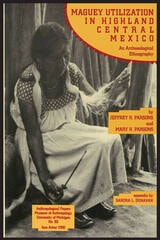
Maguey Utilization in Highland Central Mexico
An Archaeological EthnographyJeffrey R. Parsons and Mary H. Parsons
University of Michigan Press, 1990
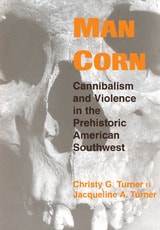
Man Corn
Cannibalism and Violence in the Prehistoric American SouthwestChristy G Turner
University of Utah Press, 1999
Until quite recently, Southwest prehistory studies have largely missed or ignored evidence of violent competition. Christy and Jacqueline Turner’s study of prehistoric violence, homicide, and cannibalism explodes the myth that the Anasazi and other Southwest Indians were simple, peaceful farmers. Using detailed osteological analyses and other lines of evidence the Turners show that warfare, violence, and their concomitant horrors were as common in the ancient Southwest as anywhere else in the world.
The special feature of this massively documented study is its multi-regional assessment of episodic human bones assemblages (scattered floor deposits or charnel pits) by taphonomic analysis, which considers what happens to bones from the time of death to the time of recovery. During the past thirty years, the authors and other analysts have identified a minimal perimortem taphonomic signature of burning, pot polishing, anvil abrasions, bone breakage, cut marks, and missing vertebrae that closely match the signatures of animal butchering and is frequently associated with additional evidence of violence. More than seventy-five archaeological sited containing several hundred individuals are carefully examined for the cannibalism signature. Because this signature has not been reported for any sites north of Mexico, other than those in the Southwest, the authors also present detailed comparisons with Mesoamerican skeletal collections where human sacrifice and cannibalism were known to have been practiced. The authors review several hypotheses for Southwest cannibalism: starvation, social pathology, and institutionalized violence and cannibalism. In the latter case, they present evidence for a potential Mexican connection and demonstrate that most of the known cannibalized series are located temporally and spatially near Chaco great houses.
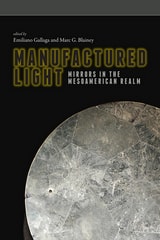
Manufactured Light
Mirrors in the Mesoamerican RealmEmiliano Gallaga
University Press of Colorado, 2015
Complex and time-consuming to produce, iron-ore mirrors stand out among Prehispanic artifacts for their aesthetic beauty, their symbolic implications, and the complexity and skill of their assembly. Manufactured Light presents the latest archaeological research on these items, focusing on the intersection of their significance and use and on the technological aspects of the manufacturing processes that created them.
The volume covers the production, meaning, and utilization of iron-ore mirrors in various Mesoamerican communities. Chapters focus on topics such as experimental archaeology projects and discussions of workshops in archaeological contexts in the Maya, Central Mexico, and northwest Mexico regions. Other chapters concentrate on the employment and ideological associations of these mirrors in Prehispanic times, especially as both sacred and luxury items. The final chapters address continuities in the use of mirrors from Prehispanic to modern times, especially in contemporary indigenous communities, with an emphasis on examining the relationship between ethnographic realities and archaeological interpretations.
While the symbolism of these artifacts and the intricacy of their construction have long been recognized in archaeological discussions, Manufactured Light is the first synthesis of this important yet under-studied class of material culture. It is a must-read for students and scholars of Mesoamerican archaeology, ethnography, religion, replicative experimentation, and lithic technology.
Contirbutors include: Marc G. Blainey, Thomas Calligaro, Carrie L. Dennett, Emiliano Gallaga, Julie Gazzola, Sergio Gómez Chávez, Olivia Kindl, Brigitte Kovacevich, Achim Lelgemann, José J. Lunazzi, John J. McGraw, Emiliano Melgar, Joseph Mountjoy, Reyna Solis, and Karl Taube.
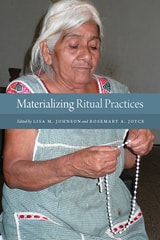
Materializing Ritual Practices
Lisa M. Johnson
University Press of Colorado, 2021
Ritual action produces sequences of creation, destruction, and transformation, which involve a variety of materials that are active and agential. The materialities of ritual may persist at temporal scales long beyond the lives of humans or be as ephemeral as spoken words, music, and scents. In this book, archaeologists and ethnographers, including specialists in narrative, music, and ritual practice, explore the rhythms and materiality of rituals that accompany everyday actions, like the construction of houses, healing practices, and religious festivals, and that paced commemoration of rulers, ancestor veneration, and relations with spiritual beings in the past.
Connecting the kinds of observed material discursive practices that ethnographers witness to the sedimented practices from which archaeologists infer similar practices in the past, Materializing Ritual Practices addresses how specific materialities encourage repetition in ritual actions and, in other circumstances, resist changes to ritual sequences. The volume will be of interest to cultural anthropologists, archaeologists, and linguists with interests in Central America, ritual, materiality, and time.
Contributors: M. Charlotte Arnauld, Giovani Balam Caamal, Isaac Barrientos, Cedric Becquey, Johann Begel, Valeria Bellomia, Juan Carillo Gonzalez, Maire Chosson, Julien Hiquet, Katrina Kosyk, Olivier Le Guen, Maria Luisa Vasquez de Agredos Pascual, Alessandro Lupo, Philippe Nondedeo, Julie Patrois, Russel Sheptak, Valentina Vapnarsky, Francisca Zalaquett Rock
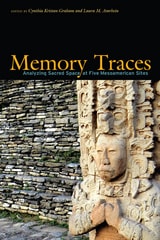
Memory Traces
Analyzing Sacred Space at Five Mesoamerican SitesCynthia Kristan-Graham
University Press of Colorado, 2015
In Memory Traces, art historians and archaeologists come together to examine the nature of sacred space in Mesoamerica. Through five well-known and important centers of political power and artistic invention in Mesoamerica—Tetitla at Teotihuacan, Tula Grande, the Mound of the Building Columns at El Tajín, the House of the Phalli at Chichén Itzá, and Tonina—contributors explore the process of recognizing and defining sacred space, how sacred spaces were viewed and used both physically and symbolically, and what theoretical approaches are most useful for art historians and archaeologists seeking to understand these places.
Memory Traces acknowledges that the creation, use, abandonment, and reuse of sacred space have a strongly recursive relation to collective memory and meanings linked to the places in question and reconciles issues of continuity and discontinuity of memory in ancient Mesoamerican sacred spaces. It will be of interest to students and scholars of Mesoamerican studies and material culture, art historians, architectural historians, and cultural anthropologists.
Contributors: Laura M. Amrhein, Nicholas P. Dunning, Rex Koontz, Cynthia Kristan-Graham, Matthew G. Looper, Travis Nygard, Keith M. Prufer, Matthew H. Robb, Patricia J. Sarro, Kaylee Spencer, Eric Weaver, Linnea Wren
Memory, Myth, and Time in Mexico
From the Aztecs to IndependenceBy Enrique Florescano
University of Texas Press, 1994
In Memory, Myth, and Time in Mexico, noted Mexican scholar Enrique Florescano’s Memoria mexicana becomes available for the first time in English. A collection of essays tracing the many memories of the past created by different individuals and groups in Mexico, the book addresses the problem of memory and changing ideas of time in the way Mexicans conceive of their history. Original in perspective and broad in scope, ranging from the Aztec concept of the world and history to the ideas of independence, this book should appeal to a wide readership.
Mesoamerican Healers
Edited by Brad R. Huber and Alan R. Sandstrom
University of Texas Press, 2001
Healing practices in Mesoamerica span a wide range, from traditional folk medicine with roots reaching back into the prehispanic era to westernized biomedicine. These sometimes cooperating, sometimes competing practices have attracted attention from researchers and the public alike, as interest in alternative medicine and holistic healing continues to grow.
Responding to this interest, the essays in this book offer a comprehensive, state-of-the-art survey of Mesoamerican healers and medical practices in Mexico and Guatemala. The first two essays describe the work of prehispanic and colonial healers and show how their roles changed over time. The remaining essays look at contemporary healers, including bonesetters, curers, midwives, nurses, physicians, social workers, and spiritualists. Using a variety of theoretical approaches, the authors examine such topics as the intersection of gender and curing, the recruitment of healers and their training, healers' compensation and workload, types of illnesses treated and recommended treatments, conceptual models used in diagnosis and treatment, and the relationships among healers and between indigenous healers and medical and political authorities.
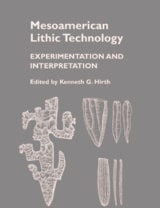
Mesoamerican Lithic Technology
Kenneth Hirth
University of Utah Press, 2003
Any overview of prehispanic society in the Americas would identify its obsidian core-blade production as a unique and highly inventive technology. Normally termed prismatic blades, these long, parallel-sided flakes are among the sharpest cutting tools ever produced by humans. Their standardized form permitted interchangeable use, and such blades became the cutting tool of choice throughout Mesoamerica between 600–800 B.C. Because considerable production skill is required, increased demand may have stimulated the appearance of craft specialists who played an integral role in Mesoamerican society. Some investigators have argued that control over obsidian also had a significant effect on the development and organization of chiefdom and state-level societies.
While researchers have long recognized the potential of obsidian studies, recent work has focused primarily on compositional analysis to reconstruct trade and distribution networks. Study of blade production has received much less attention, and many aspects of this highly evolved craft are still lost.
This volume seeks to identify current research questions in Mesoamerican lithic technology and to demonstrate that replication studies coupled with experimental research design are valuable analytical approaches to such questions.
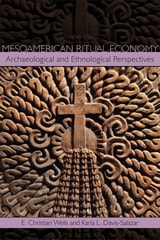
Mesoamerican Ritual Economy
Archaeological and Ethnological PerspectivesE. Christian Wells
University Press of Colorado, 2007
Exploring the intersection of spirituality and materiality, Mesoamerican Ritual Economy will be of interest to all scholars studying how worldview and belief motivate economic behavior. The authors consider a diverse set of Mesoamerican cultural patterns in order to investigate the ways in which ritual and economic practices influenced each other in the operation of communities, small-scale societies, and state-level polities. Contributors include: Sarah B. Barber, Frances F. Berdan, Karla L. Davis-Salazar, Barbara W. Fash, William L. Fash, Antonia E. Foias, Arthur A. Joyce, Brigitte Kovacevich, Ben A. Nelson, Enrique Rodríguez-Alegría, Katherine A. Spielmann, John M. Watanabe, E. Christian Wells.
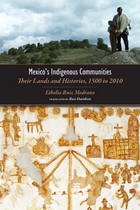
Mexico's Indigenous Communities
Their Lands and Histories, 1500-2010Ethelia Ruiz Medrano
University Press of Colorado, 2010
Ethelia Ruiz Medrano focuses on a series of individual cases, falling within successive historical epochs, that illustrate how the practice of drawing up and preserving historical documents-in particular, maps, oral accounts, and painted manuscripts-has been a determining factor in the history of Mexico's Indian communities for a variety of purposes, including the significant issue of land and its rightful ownership. Since the sixteenth century, numerous Indian pueblos have presented colonial and national courts with historical evidence that defends their landholdings.
Because of its sweeping scope, groundbreaking research, and the author's intimate knowledge of specific communities, Mexico's Indigenous Communities is a unique and exceptional contribution to Mexican history. It will appeal to students and specialists of history, indigenous studies, ethnohistory, and anthropology of Latin America and Mexico
Missionaries, Miners, and Indians
Spanish Contact with the Yaqui Nation of Northwestern New Spain, 1533–1820Evelyn Hu-DeHart
University of Arizona Press, 1981
More than a tale of Yaqui Indian resistance, Missionaries, Miners, and Indians documents the history of the Jesuit missions during a period of encroaching secularization. The Yaqui rebellion of 1740, analyzed here in detail, enabled the Yaqui to work for the mines without repudiating the missions; however, the erosion of the mission system ultimately led to the Jesuits’ expulsion from New Spain in 1767, and through their own perseverance, the Yaqui were able to bring their culture intact into the nineteenth century.
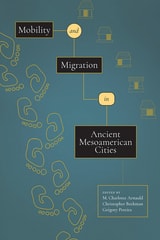
Mobility and Migration in Ancient Mesoamerican Cities
M. Charlotte Arnauld
University Press of Colorado, 2024
In a series of data-rich chapters that address specific evidence for movement in their respective study areas, an international group of scholars assesses mobility through the isotopic and demographic analysis of human remains, stratigraphic identification of gaps in occupation, and local intensification of water capture in the Maya lowlands. Others examine migration through the integration of historic and archaeological evidence in Michoacán and Yucatán and by registering how daily life changed in response to the influx of new people in the Basin of Mexico.
Offering a range of critical insights into the vital and under-studied role that mobility and migration played in complex agrarian societies, Mobility and Migration in Ancient Mesoamerican Cities will be of value to Mesoamericanist archaeologists, ethnohistorians, and bioarchaeologists and to any scholars working on complex societies.
Contributors:
Jaime J. Awe, Meggan Bullock, Sarah C. Clayton, Andrea Cucina, Véronique Darras, Nicholas P. Dunning, Mélanie Forné, Marion Forest, Carolyn Freiwald, Elizabeth Graham, Nancy Gonlin, Julie A. Hoggarth, Linda Howie, Elsa Jadot, Kristin V. Landau, Eva Lemonnier, Dominique Michelet, David Ortegón Zapata, Prudence M. Rice, Thelma N. Sierra Sosa, Michael P. Smyth, Vera Tiesler, Eric Weaver
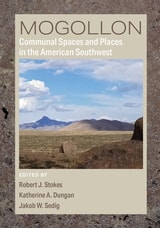
Mogollon Communal Spaces and Places in the Greater American Southwest
Edited by Robert J. Stokes, Katherine A. Dungan, and Jakob W. Sedig
University of Utah Press, 2023
This volume presents the latest research on the development and use of communal spaces and places across the Mogollon region, located in what is now the southwestern United States and northwestern Mexico. New data demonstrate that these spaces and places, though diverse in form and function, were essential to community development and cohesion, particularly during critical formative periods associated with increasing sedentism and farming, and during comparable periods of social change.
The authors ask questions crucial to understanding past communities: What is a communal space or place? How did villagers across the Mogollon region use such places? And how do modern archaeologists investigate the past to learn how ancient people thought about themselves and the world around them? Contributors use innovative approaches to explore the development patterns and properties of communal spaces and places, as well as how and why these places were incorporated into the daily lives of village residents. Buildings and other types of communal spaces are placed into broader cultural and social contexts, acknowledging the enduring importance of the kiva-type structure to many Native American societies of the southwestern United States and northwestern Mexico.
Monte Alban's Hinterland, Part I
The Prehispanic Settlement Patterns of the Central and Southern Parts of the Valley of Oaxaca, MexicoRichard E. Blanton, Stephen Kowalewski, Gary Feinman, and Jill Appel
University of Michigan Press, 1982
Mortuary Practices and Social Differentiation at Casas Grandes, Chihuahua, Mexico
John C. Ravesloot
University of Arizona Press, 1988
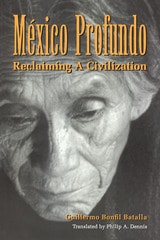
México Profundo
Reclaiming a CivilizationBy Guillermo Bonfil Batalla
University of Texas Press, 1996
This translation of a major work in Mexican anthropology argues that Mesoamerican civilization is an ongoing and undeniable force in contemporary Mexican life.
For Guillermo Bonfil Batalla, the remaining Indian communities, the "de-Indianized" rural mestizo communities, and vast sectors of the poor urban population constitute the México profundo. Their lives and ways of understanding the world continue to be rooted in Mesoamerican civilization. An ancient agricultural complex provides their food supply, and work is understood as a way of maintaining a harmonious relationship with the natural world. Health is related to human conduct, and community service is often part of each individual's life obligation. Time is circular, and humans fulfill their own cycle in relation to other cycles of the universe.
Since the Conquest, Bonfil argues, the peoples of the México profundo have been dominated by an "imaginary México" imposed by the West. It is imaginary not because it does not exist, but because it denies the cultural reality lived daily by most Mexicans.
Within the México profundo there exists an enormous body of accumulated knowledge, as well as successful patterns for living together and adapting to the natural world. To face the future successfully, argues Bonfil, Mexico must build on these strengths of Mesoamerican civilization, "one of the few original civilizations that humanity has created throughout all its history."