220 books match the query 'Israel' and 14 start with m
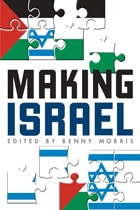
cover of Making Israel

Making Israel

Benny Morris, Editor

University of Michigan Press, 2007

Benny Morris is the founding father of the New Historians, a group of Israeli scholars who have challenged long-established perceptions about the origins of the Israeli-Palestinian conflict. Their research rigorously documented crimes and atrocities committed by the Israeli armed forces, including rape, torture, and ethnic cleansing. With Making Israel, Morris brings together the first collection of translated articles on the New History by leading Zionist and revisionist Israeli historians, providing Americans with a firsthand view of this important debate and enabling a better understanding of how the New Historians have influenced Israelis' awareness of their own past.
 
"The study of Israeli history, society, politics, and economics over the past two decades has been marked by a fierce and sometimes highly personal debate between 'traditionalists'---scholars who generally interpreted Israeli history and society within the Zionist ethos---and 'revisionists'---scholars who challenged conventional Zionist narratives of Israeli history and society. Making Israel brings together traditionalists and revisionists who openly and directly lay out their key insights about Israel's origins. It also introduces multidisciplinary perspectives on Israel by historians and sociologists, each bringing into the debate its own jargon, its own epistemology and methodology, and its own array of substantive issues. This is essential reading for anybody who wants to understand the different interpretations of Israeli society and perhaps the central debate among students of modern Israel."
---Zeev Maoz, Professor of Political Science at the University of California, Davis, and Distinguished Fellow at the Interdisciplinary Center, Herzliya
 
"Israel's 'new historians' have done a great service to their country, and to all who care about the Arab-Israeli conflict. By challenging myths, reexamining evidence, and asking truly important questions about the past they help to confront the present with honesty and realism. This book provides a sampling of the best of what these courageous voices have to offer."
---William B. Quandt, University of Virginia

 
Benny Morris is Professor of Middle East history at Ben-Gurion University in Beersheba, Israel, and is the author of Righteous Victims: A History of the Zionist-Arab Conflict, 1881-1999.
[more]
cover of Marriage and Divorce in the Jewish State: Israel's Civil War

Marriage and Divorce in the Jewish State

Israel's Civil War

Susan M. Weiss and Netty C. Gross-Horowitz

Brandeis University Press, 2012
Israel currently has two recognized systems of law operating side by side: civil and religious. Israeli religious courts possess the exclusive right to conduct and terminate marriages. There is no civil marriage or divorce in Israel, irrespective of one’s religious inclinations. All Muslims must marry and divorce in accordance with shariya laws, all Catholics in accordance with canon law, and all Jews in accordance with Torah law (halakha). The interpretation and implementation of Torah law is in the hands of the Orthodox religious establishment, the only stream of Judaism that enjoys legal recognition in Israel. The rabbinic courts strenuously oppose any changes to this so-called status quo arrangement between religious and secular authorities. In fact, religious courts in Israel are currently pressing for expanded jurisdiction beyond personal status, stressing their importance to Israel’s growing religious community. This book shows how religious courts, based on centuries-old patriarchal law, undermine the full civil and human rights of Jewish women in Israel. Making a broad argument for civil marriage and divorce in Israel, the authors also emphasize that religious marriages and divorces, when they do occur, must benefit from legislation that makes divorce easier to obtain. Making this issue their focal point, they speak to a larger question: Is Israel a democracy or a theocracy?
[more]
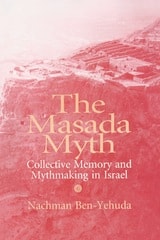
cover of Masada Myth: Collective Memory and Mythmaking in Israel

Masada Myth

Collective Memory and Mythmaking in Israel

Nachman Ben-Yehuda

University of Wisconsin Press, 1996

    In 73 A.D., legend has it, 960 Jewish rebels under siege in the ancient desert fortress of Masada committed suicide rather than surrender to a Roman legion. Recorded in only one historical source, the story of Masada was obscure for centuries. In The Masada Myth, Israeli sociologist Nachman Ben-Yehuda tracks the process by which Masada became an ideological symbol for the State of Israel, the dramatic subject of movies and miniseries, a shrine venerated by generations of Zionists and Israeli soldiers, and the most profitable tourist attraction in modern Israel.
    Ben-Yehuda describes how, after nearly 1800 years, the long, complex, and unsubstantiated narrative of Josephus Flavius was edited and augmented in the twentieth century to form a simple and powerful myth of heroism. He looks at the ways this new mythical narrative of Masada was created, promoted, and maintained by pre-state Jewish underground organizations, the Israeli army, archaeological teams, mass media, youth movements, textbooks, the tourist industry, and the arts. He discusses the various organizations and movements that created “the Masada experience” (usually a ritual trek through the Judean desert followed by a climb to the fortress and a dramatic reading of the Masada story), and how it changed over decades from a Zionist pilgrimage to a tourist destination.
    Placing the story in a larger historical, sociological, and psychological context, Ben-Yehuda draws upon theories of collective memory and mythmaking to analyze Masada’s crucial role in the nation-building process of modern Israel and the formation of a new Jewish identity. An expert on deviance and social control, Ben-Yehuda looks in particular at how and why a military failure and an enigmatic, troubling case of mass suicide (in conflict with Judaism’s teachings) were reconstructed and fabricated as a heroic tale.
[more]
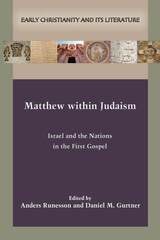
cover of Matthew within Judaism: Israel and the Nations in the First Gospel

Matthew within Judaism

Israel and the Nations in the First Gospel

Anders Runesson

SBL Press, 2020

In this collection of essays, leading New Testament scholars reassess the reciprocal relationship between Matthew and Second Temple Judaism. Some contributions focus on the relationship of the Matthean Jesus to torah, temple, and synagogue, while others explore theological issues of Jewish and gentile ethnicity and universalism within and behind the text.
[more]
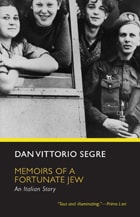
cover of Memoirs of a Fortunate Jew: An Italian Story

Memoirs of a Fortunate Jew

An Italian Story

Dan Vittorio Segre

University of Chicago Press, 2008

“I was probably less than five years old when my father fired a shot at my head.” From this first line, Dan Vittorio Segre’s memoir moves from one startling turning point to the next. The child of aristocratic parents, Segre fled Fascist Italy and Mussolini’s anti-Semitic laws only to be thrust into the pioneering culture of Palestine, completely unprepared for the dangers of life in Israel during World War II. Beautifully narrated, Memoirs of a Fortunate Jew is an ironic, philosophical meditation on the historical reverberations of the twentieth century.
 
“Taut and illuminating . . . memorable . . . written with the humility of he who confesses himself and with the honesty of he who bore witness.”—Primo Levi
 
“The writing of memoirs is a difficult art that Dan Segre fully possesses. Under his pen, history and psychology merge in one captivating narrative which illuminates the turmoils, fears and triumphs of his generation.”—Elie Wiesel
 
“Beautifully written. . . . [A] labyrinthine, spell-binding autobiography, full of passionate tenderness.”—New York Review of Books
 
“An unusually attractive book—attractive in its irony, its energy and its moral insight. Mr. Segre had some rich material to work with, and he has done it justice.”—New York Times 


[more]
cover of Memory Activism: Reimagining the Past for the Future in Israel-Palestine

Memory Activism

Reimagining the Past for the Future in Israel-Palestine

Yifat Gutman

Vanderbilt University Press, 2017

SAGE Memory Studies Journal & Memory Studies Association Outstanding First Book Award, Honorable Mention, 2019

Set in Israel in the first decade of the twenty-first century and based on long-term fieldwork, this rich ethnographic study offers an innovative analysis of the Israeli-Palestinian conflict. It explores practices of "memory activism" by three groups of Jewish-Israeli and Arab-Palestinian citizens--Zochrot, Autobiography of a City, and Baladna--showing how they appropriated the global model of truth and reconciliation while utilizing local cultural practices such as tours and testimonies.

These activist efforts gave visibility to a silenced Palestinian history in order to come to terms with the conflict's origins and envision a new resolution for the future. This unique focus on memory as a weapon of the weak reveals a surprising shift in awareness of Palestinian suffering among the Jewish majority of Israeli society in a decade of escalating violence and polarization--albeit not without a backlash.

Contested memories saturate this society. The 1948 war is remembered as both Independence Day by Israelis and al-Nakba ("the catastrophe") by Palestinians. The walking tour and survivor testimonies originally deployed by the state for national Zionist education that marginalized Palestinian citizens are now being appropriated by activists for tours of pre-state Palestinian villages and testimonies by refugees.
[more]
cover of Messianism, Zionism, and Jewish Religious Radicalism

Messianism, Zionism, and Jewish Religious Radicalism

Aviezer Ravitzky

University of Chicago Press, 1996

The Orthodox Jewish tradition affirms that Jewish exile will end with the coming of the Messiah. How, then, does Orthodoxy respond to the political realization of a Jewish homeland that is the State of Israel? In this cogent and searching study, Aviezer Ravitzky probes Orthodoxy's divergent positions on Zionism, which range from radical condemnation to virtual beatification.

Ravitzky traces the roots of Haredi ideology, which opposes the Zionist enterprise, and shows how Haredim living in Israel have come to terms with a state to them unholy and therefore doomed. Ravitzky also examines radical religious movements, including the Gush Emunim, to whom the State of Israel is a divine agent. He concludes with a discussion of the recent transformation of Habad Hassidism from conservatism to radical messianism.

This book is indispensable to anyone concerned with the complex confrontation between Jewish fundamentalism and Israeli political sovereignty, especially in light of the tragic death of Israeli Prime Minister Yitzhak Rabin.
[more]
cover of Metropolitan Governance: Different Paths in Contrasting Contexts: Germany and Israel

Metropolitan Governance

Different Paths in Contrasting Contexts: Germany and Israel

Edited by Hubert Heinelt, Eran Razin, and Karsten Zimmermann

Campus Verlag, 2011

As urban areas have grown and sprawl has spread in recent decades, metropolitan governments around the world have begun to look beyond city borders, establishing regional partnerships to help them deal with issues of transit, resource use, and more. Metropolitan Governance examines this trend through a close comparative study of seven metropolitan areas in Israel and Germany. While not neglecting the reasons behind these changes in governance, the authors pay particular attention to their effects on—and diminishing of—democratic participation and accountability.
[more]
cover of Modern Middle Eastern Jewish Thought: Writings on Identity, Politics, and Culture, 1893–1958

Modern Middle Eastern Jewish Thought

Writings on Identity, Politics, and Culture, 1893–1958

Edited by Moshe Behar and Zvi Ben-Dor Benite

Brandeis University Press, 2013

This volume opens the canon of modern Jewish thought to the all too often overlooked writings of Jews from the Arab East, from the close of the nineteenth century to the middle of the twentieth. Whether they identified as Sephardim, Mizrahim, anticolonialists, or Zionists, these thinkers engaged the challenges and transformations of Middle Eastern Jewry in this decisive period. Moshe Behar and Zvi Ben-Dor Benite present Jewish culture and politics situated within overlapping Arabic, Islamic, and colonial contexts. The editors invite the reader to reconsider contemporary evocations of Levantine, Mizrahi, and Arab Jewish identities against the backdrop of writings by earlier Middle Eastern Jewish intellectuals who critically assessed or contested the implications of Western presence and Western Jewish presence in the Middle East; religion and secularization; and the rise of nationalism, communism, and Zionism, as well as the State of Israel.
[more]
cover of More Bad News From Israel

More Bad News From Israel

Greg Philo and Mike Berry

Pluto Press, 2011

Building on rigorous research by the world-renowned Glasgow University Media Group, More Bad News From Israel examines media coverage of the current conflict in the Middle East and the impact it has on public opinion.

The book brings together senior journalists and ordinary viewers to examine how audiences understand the news and how their views are shaped by media reporting. In the largest study ever undertaken in this area, the authors focus on television news. They illustrate major differences in the way Israelis and Palestinians are represented, including how casualties are shown and the presentation of the motives and rationales of both sides. They combine this with extensive audience research involving hundreds of participants from the USA, Britain and Germany. It shows extraordinary differences in levels of knowledge and understanding, especially amongst young people from these countries.

Covering recent developments, including the Israeli attacks on Lebanon and Gaza, this authoritative and up-to-date study will be an invaluable tool for journalists, activists and students and researchers of media studies.
[more]
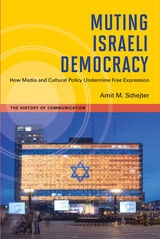
cover of Muting Israeli Democracy: How Media and Cultural Policy Undermine Free Expression

Muting Israeli Democracy

How Media and Cultural Policy Undermine Free Expression

Amit M. Schejter

University of Illinois Press, 2009
The result of years of critical analysis of Israeli media law, this book argues that the laws governing Israeli electronic media are structured to limit the boundaries of public discourse. Amit M. Schejter posits the theory of a "mute democracy," one in which the media are designed to provide a platform for some voices to be heard over others. While Israel's institutions may be democratic, and while the effect of these policies may be limited, this book contends that free speech in Israel is institutionally muted to ensure the continued domination of the Jewish majority and its preferred interpretation of what Israel means as a Jewish-democratic state. Analyzing a wide range of legal documents recorded in Israel from 1961 to 2007, Muting Israeli Democracy demonstrates in scrupulous detail how law and policy are used to promote the hegemonic national culture through the constraints and obligations set on electronic media.
[more]
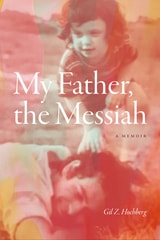
cover of My Father, the Messiah: A Memoir

My Father, the Messiah

A Memoir

Gil Z. Hochberg

Duke University Press, 2026
In her memoir My Father, the Messiah, Gil Hochberg traces a father-daughter relationship as it transforms across decades—from intense closeness in childhood to a fraught distance as Hochberg’s father Yossi becomes increasingly convinced that he is the Messiah. After building a career as a statistician in the US, Yossi returns to Israel and becomes an avid Zionist, while having several psychotic episodes. Hochberg reconstructs her relationship with her father through an archive of letters between the two, as well as her father’s personal writings, painting a tender portrait of the non-normative family life within which Hochberg’s queer identity unfolds and a heart-rending account of her father’s mental decline. Hochberg crafts a powerful story of intimacy and loss that dovetails with sea changes in Israel’s religious and political environment since the 1990s.
[more]
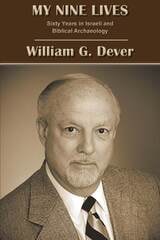
cover of My Nine Lives: Sixty Years in Israeli and Biblical Archaeology

My Nine Lives

Sixty Years in Israeli and Biblical Archaeology

William G. Dever

SBL Press, 2020

Experience a lifetime of adventure

This autobiography of prominent American archaeologist William G. Dever is unabashedly his story, in which he offers candid, often brutally honest, reflections on his life and sixty-five-year career. Dever places himself in the midst of a remarkable generation of giants in archaeology in Israel during a period when the fields of biblical and Israeli archaeology were evolving. With technical expertise developed over a lifetime of working alongside four generations of Israeli and foreign excavators, he recalls their exploits and shares numerous personal stories that few others would know. His memoir concludes with a postscript on the likely future of biblical archaeology and an annotated bibliography for serious readers who wish to explore some of the scholarly literature to flesh out Dever’s narrative.
[more]
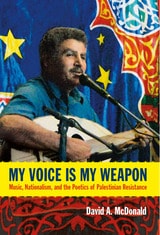
cover of My Voice Is My Weapon: Music, Nationalism, and the Poetics of Palestinian Resistance

My Voice Is My Weapon

Music, Nationalism, and the Poetics of Palestinian Resistance

David A. McDonald

Duke University Press, 2013

In My Voice Is My Weapon, David A. McDonald rethinks the conventional history of the Palestinian crisis through an ethnographic analysis of music and musicians, protest songs, and popular culture. Charting a historical narrative that stretches from the late-Ottoman period through the end of the second Palestinian intifada, McDonald examines the shifting politics of music in its capacity to both reflect and shape fundamental aspects of national identity. Drawing case studies from Palestinian communities in Israel, in exile, and under occupation, McDonald grapples with the theoretical and methodological challenges of tracing "resistance" in the popular imagination, attempting to reveal the nuanced ways in which Palestinians have confronted and opposed the traumas of foreign occupation. The first of its kind, this book offers an in-depth ethnomusicological analysis of the Israeli-Palestinian conflict, contributing a performative perspective to the larger scholarly conversation about one of the world's most contested humanitarian issues.
[more]