356 books match the query 'Jewish Studies' and 12 start with m

cover of Making History / Making Blintzes: How Two Red Diaper Babies Found Each Other and Discovered America

Making History / Making Blintzes

How Two Red Diaper Babies Found Each Other and Discovered America

Flacks, Mickey

Rutgers University Press, 2018

Making History/Making Blintzes is a chronicle of the political and personal lives of progressive activists Richard (Dick) and Miriam (Mickey) Flacks, two of the founders of Students for a Democratic Society (SDS). As active members of the Civil Rights movement and the anti-Vietnam War movement in the 1960s, and leaders in today’s social movements, their stories are a first-hand account of progressive American activism from the 1960s to the present. 

Throughout this memoir, the couple demonstrates that their lifelong commitment to making history through social activism cannot be understood without returning to the deeply personal context of their family history—of growing up “Red Diaper babies” in 1950s New York City, using folk music as self-expression as adolescents in the 1960s, and of making blintzes for their own family through the 1970s and 1980s. As the children of immigrants and first generation Jews, Dick and Mickey crafted their own religious identity as secular Jews, created a critical space for American progressive activism through SDS, and ultimately, found themselves raising an “American” family.  

 
[more]
cover of Memory Effects: The Holocaust and the Art of Secondary Witnessing

Memory Effects

The Holocaust and the Art of Secondary Witnessing

Dora Apel

Rutgers University Press, 2002

Dora Apel analyzes the ways in which artists born after the Holocaust-whom she calls secondary witnesses-represent a history they did not experience first hand. She demonstrates that contemporary artists confront these atrocities in order to bear witness not to the Holocaust directly, but to its "memory effects" and to the implications of those effects for the present and future.

Drawing on projects that employ a variety of unorthodox artistic strategies, the author provides a unique understanding of contemporary representations of the Holocaust. She demonstrates how these artists frame the past within the conditions of the present, the subversive use of documentary and the archive, the effects of the Jewish genocide on issues of difference and identity, and the use of representation as a form of resistance to historical closure.
[more]
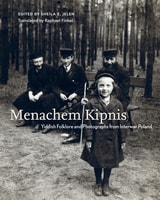
cover of Menachem Kipnis: Yiddish Folklore and Photographs from Interwar Poland

Menachem Kipnis

Yiddish Folklore and Photographs from Interwar Poland

Sheila E. Jelen

Rutgers University Press, 2026

Menachem Kipnis (1878–1942) was one of the early twentieth-century’s greatest Jewish eastern European ethnomusicologists, folklorists, and photographers. He had a weekly column in the Warsaw Yiddish newspaper Haynt, retelling humorous old folk stories about the fictional Polish town of Chelm, populated exclusively by fools. At the same time, his photographs of Jewish life in eastern Europe regularly appeared in the Forverts (Forward), the most popular Yiddish daily newspaper in the United States. Now, for the first time, Kipnis’s stories and photographs are published together in a single book.

Menachem Kipnis brings these photographs and stories into dialogue with one another, bridging the Jewish communities in Poland and in America during the interwar period. This dialogue, between image and text, between European metropolis and American metropolis, captures a key historical moment when American Jews sought to imagine the lives of their coreligionists in the “Old Country” and eastern European urban Jews sought to distinguish themselves from their Jewish compatriots who were still living in the shtetl. Including an introductory essay, annotations, and an epilogue by Sheila E. Jelen, Menachem Kipnis suggests new ways of understanding both visual and literary depictions of eastern European Jewish culture between the two world wars.
[more]
cover of Messianic Zionism in the Digital Age: Jews, Noahides, and the Third Temple Imaginary

Messianic Zionism in the Digital Age

Jews, Noahides, and the Third Temple Imaginary

Rachel Z. Feldman

Rutgers University Press, 2024

Winner of the 2025 American Academy of Religion Award for Excellence in the Study of Religion: Analytical-Descriptive Studies 

Winner of the 2023 Association for Jewish Studies Jordan Schnitzer First Book Prize

Judaism in the twenty-first century has seen the rise of the messianic Third Temple movement, as religious activists based in Israel have worked to realize biblical prophecies, including the restoration of a Jewish theocracy and the construction of the third and final Temple on Jerusalem’s Temple Mount. Through groundbreaking ethnographic research, Messianic Zionism in the Digital Age details how Third Temple visions have gained considerable momentum and political support in Israel and abroad . 
 
The role of technology in this movement’s globalization has been critical. Feldman skillfully highlights the ways in which the internet and social media have contributed to the movement's growth beyond the streets of Jerusalem into communities of former Christians around the world who now identify as the Children of Noah (Bnei Noah). She charts a path for future research while documenting the intimate effects of political theologies in motion and the birth of a new transnational Judaic faith.
 

[more]
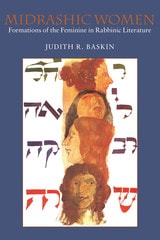
cover of Midrashic Women: Formations of the Feminine in Rabbinic Literature

Midrashic Women

Formations of the Feminine in Rabbinic Literature

Judith R. Baskin

Brandeis University Press, 2002
While most gender-based analyses of rabbinic Judaism concentrate on the status of women in the halakhah (the rabbinic legal tradition), Judith R. Baskin turns her attention to the construction of women in the aggadic midrash, a collection of expansions of the biblical text, rabbinic ruminations, and homiletical discourses that constitutes the non-legal component of rabbinic literature. Examining rabbinic convictions of female alterity, competing narratives of creation, and justifications of female disadvantages, as well as aggadic understandings of the ideal wife, the dilemma of infertility, and women among women and as individuals, she shows that rabbinic Judaism, a tradition formed by men for a male community, deeply valued the essential contributions of wives and mothers while also consciously constructing women as other and lesser than men. Recent feminist scholarship has illuminated many aspects of the significance of gender in biblical and halakhic texts but there has been little previous study of how aggadic literature portrays females and the feminine. Such representations, Baskin argues, often offer a more nuanced and complex view of women and their actual lives than the rigorous proscriptions of legal discourse.
[more]
cover of Modern French Jewish Thought: Writings on Religion and Politics

Modern French Jewish Thought

Writings on Religion and Politics

Edited by Sarah Hammerschlag

Brandeis University Press, 2018
“Modern Jewish thought” is often defined as a German affair, with interventions from Eastern European, American, and Israeli philosophers. The story of France’s development of its own schools of thought has not been substantially treated outside the French milieu. This anthology of modern French Jewish writing offers the first look at how this significant and diverse body of work developed within the historical and intellectual contexts of France and Europe. Translated into English, these documents speak to two critical axes—the first between Jewish universalism and particularism, and the second between the identification and disidentification of French Jews with France as a nation. Offering key works from Simone Weil, Vladimir Jankélévitch, Emmanuel Levinas, Albert Memmi, Hélène Cixous, Jacques Derrida, and many others, this volume is organized in roughly chronological order, to highlight the connections linking religion, politics, and history, as they coalesce around a Judaism that is unique to France.
[more]
cover of Modern Middle Eastern Jewish Thought: Writings on Identity, Politics, and Culture, 1893–1958

Modern Middle Eastern Jewish Thought

Writings on Identity, Politics, and Culture, 1893–1958

Edited by Moshe Behar and Zvi Ben-Dor Benite

Brandeis University Press, 2013

This volume opens the canon of modern Jewish thought to the all too often overlooked writings of Jews from the Arab East, from the close of the nineteenth century to the middle of the twentieth. Whether they identified as Sephardim, Mizrahim, anticolonialists, or Zionists, these thinkers engaged the challenges and transformations of Middle Eastern Jewry in this decisive period. Moshe Behar and Zvi Ben-Dor Benite present Jewish culture and politics situated within overlapping Arabic, Islamic, and colonial contexts. The editors invite the reader to reconsider contemporary evocations of Levantine, Mizrahi, and Arab Jewish identities against the backdrop of writings by earlier Middle Eastern Jewish intellectuals who critically assessed or contested the implications of Western presence and Western Jewish presence in the Middle East; religion and secularization; and the rise of nationalism, communism, and Zionism, as well as the State of Israel.
[more]
cover of Moritz Gottlieb Saphir: Nineteenth-Century Pioneer of Journalism and Food Writing

Moritz Gottlieb Saphir

Nineteenth-Century Pioneer of Journalism and Food Writing

András Koerner

Central European University Press, 2027

The writer and journalist Moritz Gottlieb Saphir (1795–1858) was born to an Orthodox Jewish family in a Hungarian village and studied in a yeshiva but spent his professional life in the cities of Germany and Austria. He was one of the most popular authors and cultural figures in Central and Western Europe in the 19th century, which can be also seen from the fact that Alexandre Dumas, Sr. published a collection of his writings in French complete with a long essay expressing his admiration for Saphir. Together with his friends Heinrich Heine and Ludwig Börne, Saphir was the first Jewish author to achieve international fame. Like them, he converted to the Lutheran faith, but he never denied his Jewish origins and wrote appreciatively of Jewish food traditions.

His literary and journalistic innovations included publishing the first modern newspapers in Berlin, Munich and Vienna, developing a new style of humorous writing, introducing the journalistic genre of the feuilleton to Austria, authoring the first extended prose poem in the German language and writing the first study of vernacular Ashkenazi Jewish cuisine, as well as the first review of a Jewish cookbook and restaurant. Although due to censorship he had to largely eschew political subjects, he courageously fought for press freedom and against anti-Jewish prejudice. Although perhaps not a great writer, he was an important and intriguing figure of European cultural history who certainly doesn’t deserve the neglect his work has suffered since the early 20th century.

András Koerner’s book is the first modern monograph of him, which in addition to a detailed presentation of his eventful, interesting life and an examination of his personality, identity and work also includes the first-ever extensive annotated anthology of him in English.
[more]
cover of Moses Mendelssohn: Writings on Judaism, Christianity, and the Bible

Moses Mendelssohn

Writings on Judaism, Christianity, and the Bible

Edited by Michah Gottlieb

Brandeis University Press, 2011
German Jewish philosopher Moses Mendelssohn (1729–1786) is best known in the English-speaking world for his Jerusalem (1783), the first attempt to present Judaism as a religion compatible with the ideas of the Enlightenment. While incorporating much of Jerusalem, Michah Gottlieb’s volume seeks to expand knowledge of Mendelssohn’s thought by presenting translations of many of his other seminal writings from the German or Hebrew originals. These writings include essays, commentaries, unpublished reflections, and personal letters. Part One includes selections from the three major controversies of Mendelssohn’s life, all of which involved polemical encounters with Christian thinkers. Part Two presents selections from Mendelssohn’s writings on the Bible. Part Three offers texts that illuminate Mendelssohn’s thoughts on a diverse range of religious topics, including God’s existence, the immortality of the soul, and miracles. Designed for class adoption, the volume contains annotations and an introduction by the editor.
[more]
cover of Movie-Made Jews: An American Tradition

Movie-Made Jews

An American Tradition

Helene Meyers

Rutgers University Press, 2021

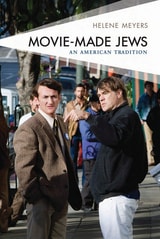
Movie-Made Jews focuses on a rich, usable American Jewish cinematic tradition. This tradition includes fiction and documentary films that make Jews through antisemitism, Holocaust indirection, and discontent with assimilation. It prominently features the unapologetic assertion of Jewishness, queerness, and alliances across race and religion. Author Helene Meyers shows that as we go to our local theater, attend a Jewish film festival, play a DVD, watch streaming videos, Jewishness becomes part of the multicultural mosaic rather than collapsing into a generic whiteness or being represented as a life apart. This engagingly-written book demonstrates that a Jewish movie is neither just a movie nor for Jews only.
 
With incisive analysis, Movie-Made Jews challenges the assumption that American Jewish cinema is a cinema of impoverishment and assimilation. While it’s a truism that Jews make movies, this book brings into focus the diverse ways movies make Jews. 
 
[more]
cover of My Father, the Messiah: A Memoir

My Father, the Messiah

A Memoir

Gil Z. Hochberg

Duke University Press, 2026
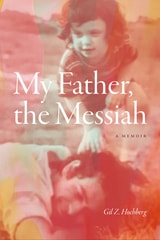
In her memoir My Father, the Messiah, Gil Hochberg traces a father-daughter relationship as it transforms across decades—from intense closeness in childhood to a fraught distance as Hochberg’s father Yossi becomes increasingly convinced that he is the Messiah. After building a career as a statistician in the US, Yossi returns to Israel and becomes an avid Zionist, while having several psychotic episodes. Hochberg reconstructs her relationship with her father through an archive of letters between the two, as well as her father’s personal writings, painting a tender portrait of the non-normative family life within which Hochberg’s queer identity unfolds and a heart-rending account of her father’s mental decline. Hochberg crafts a powerful story of intimacy and loss that dovetails with sea changes in Israel’s religious and political environment since the 1990s.
[more]
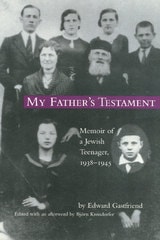
cover of My Fathers Testament

My Fathers Testament

Edward Gastfriend

Temple University Press, 1999

This first-person account, by the youngest of eight children of a pious Jewish family from Sosnoviec in Poland, is remarkable for the faith shown by a teenager faced with the horrifying realities of the Holocaust. Edward Gastfriend, known as Lolek as a boy, remembers in heart-wrenching detail the seven years he survived in German-occupied Poland.

The accelerating Nazi assault on the Jews abruptly shattered Lolek's life. Jews were randomly beaten and arrested, forced out of their homes, deported to slave labor camps, and shot on the streets. During this time, Lolek lost his family, friends, and neighbors, the whole while struggling to hold onto a promise he made to his father before his father was deported. Lolek pledged never to denounce God and to maintain his faith. This covenant proved to be the key to his remarkable survival in several slave labor camps including Auschwitz and several satellite camps of Auschwitz-Birkenau.

My Father's Testament is an intimate portrayal of a teenage boy trying to stay alive without losing his humanity - in hiding, in the camps, and during the death marches at the end of the war.

Embedded in this unique memoir are two other stories of fathers and sons. One lies in the moving Foreword by David R. Gastfriend, Ed's son, now a psychiatrist at Harvard Medical School. The other lies in Bjorn Krondorfer's Afterword. Years after he met Edward Gastfriend, Krondorfer was startled to hear his father mention Blechhammer as one of the places where he was stationed as a young German soldier. Blechhammer was where Lolek was held in a slave labor camp. The coincidence led this German father and son to travel back to the site to confront the Holocaust.

My Father's Testament will engage readers interested in history, the Holocaust, and religion.
[more]