Results by title
100 books match the query 'Kings and rulers' and 6 start with m
Macbeth
William Shakespeare
Arizona Center for Medieval and Renaissance Studies, 2021
In Migdalia Cruz’s Macbeth, the Witches run the world. The Macbeths live out a dark cautionary tale of love, greed, and power, falling from glory into calamity as the Witches spin their fate. Translating Shakespeare’s language for a modern audience, Nuyorican playwright Migdalia Cruz rewrites Macbeth with all the passion of the Bronx.
This translation of Macbeth was presented in 2018 as part of the Play On! Shakespeare project, an ambitious undertaking from the Oregon Shakespeare Festival that commissioned new translations of 39 Shakespeare plays. These translations present the Bard’s work in language accessible to modern audiences while never losing the beauty of Shakespeare’s verse. Enlisting the talents of a diverse group of contemporary playwrights, screenwriters, and dramaturges from diverse backgrounds, this project reenvisions Shakespeare for the twenty-first century. These volumes make these works available for the first time in print—a new First Folio for a new era.
Making a Great Ruler
Grand Duke Vytautas of LithuaniaGiedre Mickunaite
Central European University Press, 2006
Maya Palaces and Elite Residences
An Interdisciplinary ApproachEdited by Jessica Joyce Christie
University of Texas Press, 2003
Maya "palaces" have intrigued students of this ancient Mesoamerican culture since the early twentieth century, when scholars first applied the term "palace" to multi-room, gallery-like buildings set on low platforms in the centers of Maya cities. Who lived in these palaces? What types of ceremonial and residential activities took place there? How do the physical forms and spatial arrangement of the buildings embody Maya concepts of social organization and cosmology?
This book brings together state-of-the-art data and analysis regarding the occupants, ritual and residential uses, and social and cosmological meanings of Maya palaces and elite residences. A multidisciplinary team of senior researchers reports on sites in Belize (Blue Creek), Western Honduras (Copan), the Peten (Tikal, Dos Pilas, Aguateca), and the Yucatan (Uxmal, Chichen-Itza, Dzibilchaltun, Yaxuna). Archaeologist contributors discuss the form of palace buildings and associated artifacts, their location within the city, and how some palaces related to landscape features. Their approach is complemented by art historical analyses of architectural sculpture, epigraphy, and ethnography. Jessica Joyce Christie concludes the volume by identifying patterns and commonalties that apply not only to the cited examples, but also to Maya architecture in general.
Moctezuma's Children
Aztec Royalty under Spanish Rule, 1520–1700By Donald E. Chipman
University of Texas Press, 2005
Though the Aztec Empire fell to Spain in 1521, three principal heirs of the last emperor, Moctezuma II, survived the conquest and were later acknowledged by the Spanish victors as reyes naturales (natural kings or monarchs) who possessed certain inalienable rights as Indian royalty. For their part, the descendants of Moctezuma II used Spanish law and customs to maintain and enhance their status throughout the colonial period, achieving titles of knighthood and nobility in Mexico and Spain. So respected were they that a Moctezuma descendant by marriage became Viceroy of New Spain (colonial Mexico's highest governmental office) in 1696.
This authoritative history follows the fortunes of the principal heirs of Moctezuma II across nearly two centuries. Drawing on extensive research in both Mexican and Spanish archives, Donald E. Chipman shows how daughters Isabel and Mariana and son Pedro and their offspring used lawsuits, strategic marriages, and political maneuvers and alliances to gain pensions, rights of entailment, admission to military orders, and titles of nobility from the Spanish government. Chipman also discusses how the Moctezuma family history illuminates several larger issues in colonial Latin American history, including women's status and opportunities and trans-Atlantic relations between Spain and its New World colonies.
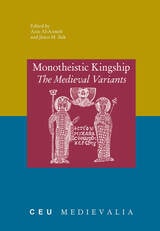
Monotheistic Kingship
The Medieval VariantsAziz Al-Azmeh
Central European University Press, 2004
This volume of essays intends to present diverse aspects of monotheistic kingship during the Middle Ages in two general-theoretical articles and a series of “case studies” on the relationship of religion and rulership. The authors discuss examples of the role of religion—based on both textual and iconic evidence—in Carolingian, Ottonian and late medieval western Europe; in Byzantium and Armenia; Georgia; Hungary; the Khazar Khanate; Poland, and Rus’. Two studies explore the issue in medieval Jewish and Islamic political thought. The editors hope that these special inquiries will engender more comparative studies on the subject.
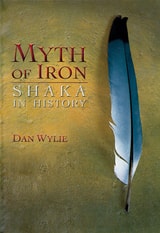
Myth of Iron
Shaka in HistoryDan Wylie
Ohio University Press, 2008
Meanwhile the public image, sometimes monstrous, sometimes heroic, juggernauts on—truly a “myth of iron” that is so intriguing, so dramatic, so archetypal, and sometimes so politically useful that few have subjected it to proper scrutiny.
Myth of Iron: Shaka in History is the first book-length scholarly study of Shaka to be published. It lays out, as far as possible, all the available evidence—mainly hitherto underutilized Zulu oral testimonies, supported by other documentary sources—and decides, item by item, legend by legend, what exactly is known about Shaka’s reign. The picture that emerges in this meticulously researched and absorbing antibiography is very different from the popular narrative.