Results by title
301 books match the query 'Knowledge' and 13 start with m
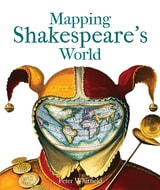
Mapping Shakespeare's World
Peter Whitfield
Bodleian Library Publishing, 2015
Mapping Shakespeare’s World explores these questions with surprising results. It has often been said that setting is irrelevant to Shakespeare’s plays—that, wherever they are set, their enduring appeal lies in their ability to speak to broad questions of human nature. Peter Whitfield shows that, on the contrary, many of Shakespeare’s locations were carefully chosen for their ability to convey subtle meanings an Elizabethan audience would have picked up on and understood. Through the use of paintings, drawings, contemporary maps and geographical texts, Whitfield suggests answers to such questions as where Illyria was located, why The Merry Wives of Windsor could only have taken place in Windsor, and how two utterly different comedies—The Comedy of Errors and Pericles, Prince of Tyre—both came to take place in ancient Ephesus.
Just when one might think there was nothing more to be said about Shakespeare, with Mapping Shakespeare’s World, Whitfield offers a fascinating new point of view.
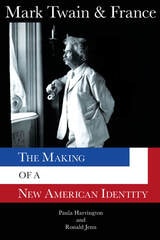
Mark Twain & France
The Making of a New American IdentityPaula Harrington and Ronald Jenn
University of Missouri Press, 2017
While critics have generally dismissed Mark Twain’s relationship with France as hostile, Harrington and Jenn see Twain’s use of the French as a foil to help construct his identity as “the representative American.” Examining new materials that detail his Montmatre study, the carte de visite album, and a chronology of his visits to France, the book offers close readings of writings that have been largely ignored, such as The Innocents Adrift manuscript and the unpublished chapters of A Tramp Abroad, combining literary analysis, socio-historical context and biographical research.
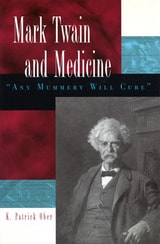
Mark Twain and Medicine
"Any Mummery Will Cure"K. Patrick Ober
University of Missouri Press, 2003
Mark Twain has always been America’s spokesman, and his comments on a wide range of topics continue to be accurate, valid, and frequently amusing. His opinions on the medical field are no exception. While Twain’s works, including his popular novels about Tom Sawyer and Huckleberry Finn, are rich in medical imagery and medical themes derived from his personal experiences, his interactions with the medical profession and his comments about health, illness, and physicians have largely been overlooked.
In Mark Twain and Medicine, K. Patrick Ober remedies this omission. The nineteenth century was a critical time in the development of American medicine, with much competition among the different systems of health care, both traditional and alternative. Not surprisingly, Mark Twain was right in the middle of it all. He experimented with many of the alternative care systems that were available in his day—in part because of his frustration with traditional medicine and in part because he hoped to find the “perfect” system that would bring health to his family.
Twain’s commentary provides a unique perspective on American medicine and the revolution in medical systems that he experienced firsthand. Ober explores Twain’s personal perspective in this area, as he expressed it in fiction, speeches, and letters. As a medical educator, Ober explains in sufficient detail and with clarity all medical and scientific terms, making this volume accessible to the general reader.
Ober demonstrates that many of Twain’s observations are still relevant to today’s health care issues, including the use of alternative or complementary medicine in dealing with illness, the utility of placebo therapies, and the role of hope in the healing process.
Twain’s evaluation of the medical practices of his era provides a fresh, humanistic, and personalized view of the dramatic changes that occurred in medicine through the nineteenth century and into the first decade of the twentieth. Twain scholars, general readers, and medical professionals will all find this unique look at his work appealing.
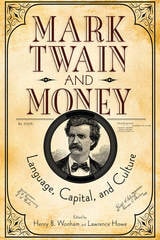
Mark Twain and Money
Language, Capital, and CultureEdited by Henry B. Wonham and Lawrence Howe
University of Alabama Press, 2017
Mark Twain and Money: Language, Capital, and Culture focuses on an overlooked feature of the story of one of America’s most celebrated writers. Investigating Samuel Clemens’s often conflicting but insightful views on the roles of money in American culture and identity, this collection of essays shows how his fascination with the complexity of nineteenth-century economics informs much of Mark Twain’s writing.
While most readers are familiar with Mark Twain the worldly wise writer, fewer are acquainted with Samuel Clemens the avid businessman. Throughout his life, he sought to strike it rich, whether mining for silver in Nevada, founding his own publishing company, or staking out ownership in the Paige typesetting machine. He was ever on the lookout for investment schemes and was intrigued by inventions, his own and those of others, that he imagined would net a windfall. Conventional wisdom has held that Clemens’s obsession with business and material wealth hindered his ability to write more and better books. However, this perspective fails to recognize how his interest in economics served as a rich source of inspiration for his literary creativity and is inseparable from his achievements as a writer. In fact, without this preoccupation with monetary success, Henry B. Wonham and Lawrence Howe argue, Twain’s writing would lack an important connection to a cornerstone of American culture.
The contributors to this volume examine a variety of topics, such as a Clemens family myth of vast landholdings, Clemens’s strategies for protecting the Mark Twain brand, his insights into rapidly evolving nineteenth-century financial practices, the persistence of patronage in the literary marketplace, the association of manhood and monetary success, Clemens’s attitude and actions toward poverty, his response to the pains of bankruptcy through writing, and the intersection of racial identity and economics in American culture. These illuminating essays show how pecuniary matters invigorate a wide range of Twain’s writing from The Gilded Age, Roughing It,The Adventures of Tom Sawyer, The Prince and the Pauper, and A Connecticut Yankee in King Arthur’s Court, to later stories like “The £1,000,000 Banknote” and the Autobiography.
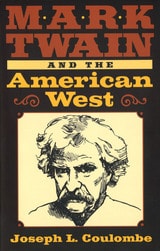
Mark Twain and the American West
Joseph L. Coulombe
University of Missouri Press, 2003

Mark Twain on the Loose
A Comic Writer and the American SelfBruce Michelson
University of Massachusetts Press, 1995
Can we rediscover the wildness in Mark Twain’s humor? Can we understand how that wildness helped make him a national legend and a key figure in the expression of an American self? In Mark Twain on the Loose, Bruce Michelson writes about Twain as a body of literature, as a public personality, and as a myth. Michelson shows that many of Twain’s most ambitious and memorable works, from the very beginning to the end of his career, express a drive for absolute liberation from every social, psychological, and artistic limit.
The outrageous and anarchic sides of Twain play a vital role in his art. But these traits are undervalued even by his admirers, who often favor clean shapes and steady affirmations in Twain’s writing —not the dangerous comic outbreak, or the deep yearning to free the self from every definition and confinement.
Reviewing works from a wide range of Twain’s writings, Michelson brings to light those wild dimensions, their literary consequences, and their cultural importance. He reveals this great author as “the best escape artist in the American canon,” a reflexive, paradoxical, rule-shattering comic genius.
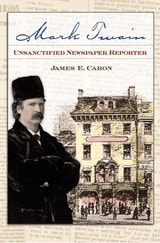
Mark Twain, Unsanctified Newspaper Reporter
James E. Caron
University of Missouri Press, 2008
Before Mark Twain became a national celebrity with his best-selling The Innocents Abroad, he was just another struggling writer perfecting his craft—but already “playin’ hell” with the world. In the first book in more than fifty years to examine the initial phase of Samuel Clemens’s writing career, James Caron draws on contemporary scholarship and his own careful readings to offer a fresh and comprehensive perspective on those early years—and to challenge many long-standing views of Mark Twain’s place in the tradition of American humor.
Tracing the arc of Clemens’s career from self-described “unsanctified newspaper reporter” to national author between 1862 and 1867, Caron reexamines the early and largely neglected writings—especially the travel letters from Hawaii and the letters chronicling Clemens’s trip from California to New York City. Caron connects those sets of letters with comic materials Clemens had already published, drawing on all known items from this first phase of his career—even the virtually forgotten pieces from the San Francisco Morning Call in 1864—to reveal how Mark Twain’s humor was shaped by the sociocultural context and how it catered to his audience’s sensibilities while unpredictably transgressing its standards.
Caron reveals how Sam Clemens’s contemporaries, notably Charles Webb, provided important comic models, and he shows how Clemens not only adjusted to but also challenged the guidelines of the newspapers and magazines for which he wrote, evolving as a comic writer who transmuted personal circumstances into literary art. Plumbing Mark Twain’s cultural significance, Caron draws on anthropological insights from Victor Turner and others to compare the performative aspects of Clemens’s early work to the role of ritual clowns in traditional societies
Brimming with fresh insights into such benchmarks as “Our Fellow Savages of the Sandwich Islands” and “Jim Smiley and His Jumping Frog,” this book is a gracefully written work that reflects both patient research and considered judgment to chart the development of an iconic American talent. Mark Twain, Unsanctified Newspaper Reporter should be required reading for all serious scholars of his work, as well as for anyone interested in the interplay between artistic creativity and the literary marketplace.
Matthew Arnold and the Classical Tradition
Warren D. Anderson
University of Michigan Press, 1988
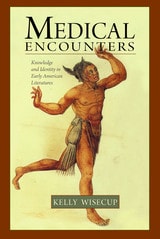
Medical Encounters
Knowledge and Identity in Early American LiteraturesKelly Wisecup
University of Massachusetts Press, 2013
Against the prevailing view that colonial texts provide insight only into their writers' perspectives, Wisecup demonstrates that Europeans, Natives, and Africans held certain medical ideas in common, including a conception of disease as both a spiritual and a physical entity, and a belief in the power of special rituals or prayers to restore health. As a consequence, medical knowledge and practices operated as a shared form of communication on which everyone drew in order to adapt to a world of devastating new maladies and unfamiliar cures.
By signaling one's relation to supernatural forces, to the natural world, and to other people, medicine became an effective means of communicating a variety of messages about power and identity as well as bodies and minds. Native Americans in Virginia and New England, for example, responded to the nearly simultaneous arrival of mysterious epidemics and peoples by incorporating colonists into explanations of disease, while British American colonists emphasized to their audiences back home the value of medical knowledge drawn from cross-cultural encounters in the New World.
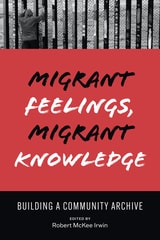
Migrant Feelings, Migrant Knowledge
Building a Community ArchiveRobert McKee Irwin
University of Texas Press, 2022
The digital storytelling project Humanizing Deportation invites migrants to present their own stories in the world’s largest and most diverse archive of its kind. Since 2017, more than 300 community storytellers have created their own audiovisual testimonial narratives, sharing their personal experiences of migration and repatriation. With Migrant Feelings, Migrant Knowledge, the project’s coordinator, Robert Irwin, and other team members introduce the project’s innovative participatory methodology, drawing out key issues regarding the human consequences of contemporary migration control regimes, as well as insights from migrants whose world-making endeavors may challenge what we think we know about migration.
In recent decades, migrants in North America have been treated with unprecedented harshness. Migrant Feelings, Migrant Knowledge outlines this recent history, revealing stories both of grave injustice and of seemingly unsurmountable obstacles overcome. As Irwin writes, “The greatest source of expertise on the human consequences of contemporary migration control are the migrants who have experienced them,” and their voices in this searing collection jump off the page and into our hearts and minds.
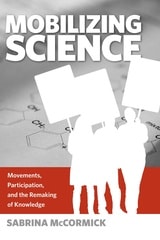
Mobilizing Science
Movements, Participation, and the Remaking of KnowledgeSabrina McCormick
Temple University Press, 2009
Mobilizing Science theoretically and empirically explores the rise of a new kind of social movement—one that attempts to empower citizens through the use of expert scientific research. Sabrina Mccormick advances theories of social movements, development, and science and technology studies by examining how these fields intersect in cases around the globe.
Mccormick grounds her argument in two very different case studies: the anti-dam movement in Brazil and the environmental breast cancer prevention movement in the U.S. These, and many other cases, show that the scientization of society, where expert knowledge is inculcated in multiple institutions and lay people are marginalized, give rise to these new types of movements. While activists who consequently engage in science often instigate new methods that result in new findings and scientific tools, these movements still often fail due to superficial participatory institutions and tightly knit corporate/government relationships.
Money and Modernity
Pound, Williams, and the Spirit of JeffersonAlec Marsh
University of Alabama Press, 1998
Movement and Modernism
Yeats, Eliot, Williams, and Early Twentieth-Century DanceTerri A. Mester
University of Arkansas Press, 1997