Results by title
163 books match the query 'Living' and 4 start with m
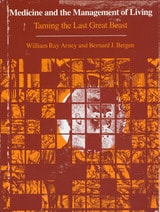
Medicine and the Management of Living
Taming the Last Great BeastWilliam Ray Arney and Bernard J. Bergen
University of Chicago Press, 1984
Medicine and the Management of Living questions how it has been possible for the patient to change from a silenced specimen observed in the clinic to a person whose subjective experience of illness is important to medical practice and discourse. Arney and Bergen ask, What incited the demand that medicine take the whole person, including the patient's presentation of his or her illness, into consideration? And in whose terms are patients speaking about themselves? The authors argue that the inclusion of patients' experiences in medical discourse that has come about since the 1950s is not so much a result of a "patient rebellion" as an activity preciptated by the medical establishment itself. Drawing inspiration from the work of Michel Foucault, Arney and Bergen examine the structure of medical power, contending that new social technologies like support groups make the patient's subjectivity available for medical evaluation, judgment, and manipulation.
Throughout this sensitively written discussion, the authors vivify the issues they raise with excerpts from many sources—the writings of a poet dying of cancer, the comments of doctors pondering their own fatal illnesses, and excerpts from popular magazines, medical journals, and sociological studies. They examine the changing role of the medical profession through history, using a modern advertising image and woodcuts from Vesalius's Renaissance anatomy text to show the symbolic portrayal of health and medicine. Their wide-ranging concerns lead the reader through such topics as teenage pregnancy; the historical treatment of medical anomalies like hermaphrodites and the "elephant man" (John Merrick); and literary representations of illness in Sartre, Chekhov, and Brian Clark's recent Broadway drama, "Whose Life Is It Anyway?"
In a provocative yet thoughtful way, Medicine and the Management of Living points the way for a radical reassessment of medical power and the medical establishment.
Missing Pieces
A Chronicle Of Living With A DisabilityKenneth Zola
Temple University Press, 2003
Mortal Men
Living with Asymptomatic HIVMac Intyre, Richard
Rutgers University Press, 1999
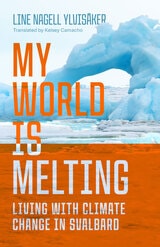
My World Is Melting
Living with Climate Change in SvalbardLine Nagell Ylvisåker, Translated by Kelsey Camacho
University of Wisconsin Press, 2026
In 2015, in a tragic natural disaster, a massive avalanche descended on the small Arctic Norwegian city of Longyearbyen, Svalbard, leveling eleven houses and killing a child and a young father. In this arresting book, journalist Line Nagell Ylvisåker explores the effects of a warming planet up close and personal, from inside a remote community intimately attuned to its environment.
Ylvisåker introduces readers to her friends and neighbors, including dedicated meteorologists racing to anticipate future disasters and a veteran trapper who harbors doubts about climate change even as he bears witness to a constantly shifting landscape. Blending memoir, long-form journalism, and scientific reportage, she provides an intimate picture of life in a place where the effects of climate change can be seen in all their startling reality—and a compelling and hopeful argument for collective and cooperative action across the globe.