Results by title
99 books match the query 'Local' and 11 start with m
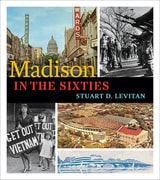
Madison in the Sixties
Stuart D. Levitan
Wisconsin Historical Society Press, 2018
Landmark civil rights laws were passed. Pivotal campus protests were waged. A spring block party turned into a three-night riot. Factor in urban renewal troubles, a bitter battle over efforts to build Frank Lloyd Wright’s Monona Terrace, and the expanding influence of the University of Wisconsin, and the decade assumes legendary status.
In this first-ever comprehensive narrative of these issues—plus accounts of everything from politics to public schools, construction to crime, and more—Madison historian Stuart D. Levitan chronicles the birth of modern Madison with style and well-researched substance. This heavily illustrated book also features annotated photographs that document the dramatic changes occurring downtown, on campus, and to the Greenbush neighborhood throughout the decade. Madison in the Sixties is an absorbing account of ten years that changed the city forever.
Majoritarian Cities
Policy Making and Inequality in Urban PoliticsNeil Kraus
University of Michigan Press, 2013
Neil Kraus evaluates both the influence of public opinion on local policy-making and the extent to which public policy addresses economic and social inequalities. Drawing on several years of fieldwork and multiple sources of data, including surveys and polls; initiatives, referenda, and election results; government documents; focus groups; interviews; and a wide assortment of secondary sources, Kraus presents case studies of two Midwestern cities, Minneapolis, Minnesota, and Gary, Indiana. Specifically, he focuses on several major policy decisions in recent decades concerning education, law enforcement, and affordable housing in Minneapolis; and education and riverboat casino development in Gary.
Kraus finds that, on these issues, local officials frequently take action that reflects public opinion, yet the resulting policies often fail to meet the needs of the disadvantaged or ameliorate the effects of concentrated poverty. In light of citizens’ current attitudes, he concludes that if patterns of inequality are to be more effectively addressed, scholars and policymakers must transform the debate about the causes and effects of inequality in urban and metropolitan settings.
Making Politics Work
Practical Lessons on Politics for Would-Be Education ReformersPaul T. Hill and Ashley E. Jochim
University of Chicago Press, 2025
The education reform project has always been about making America’s schools more effective for the children who attend them. In Making Politics Work, authors Paul T. Hill and Ashley E. Jochim show that this project cannot succeed without mastering what is the single largest constraint on its success: politics.
Drawing upon more than a decade of work with dozens of school systems, Hill and Jochim show how failures to secure political support or mitigate inevitable opposition dooms the education reform project from the start. But this outcome is not inevitable. By tracing the evolution of the “portfolio strategy” across 27 localities that implemented it, they uncover practical lessons that superintendents, state leaders, and foundation officials can use to increase the likelihood that their ideas for improving public education don’t join the list of once-promising initiatives that could not be sustained in the face of intractable political conflict.
Making Politics Work
Practical Lessons on Politics for Would-Be Education ReformersPaul T. Hill and Ashley E. Jochim
University of Chicago Press, 2025
An expansive study shows how politics can work for, not just against, efforts to improve America’s schools.
The education reform project has always been about making America’s schools more effective for the children who attend them. In Making Politics Work, authors Paul T. Hill and Ashley E. Jochim show that this project cannot succeed without mastering what is the single largest constraint on its success: politics.
Drawing upon more than a decade of work with dozens of school systems, Hill and Jochim show how failures to secure political support or mitigate inevitable opposition dooms the education reform project from the start. But this outcome is not inevitable. By tracing the evolution of the “portfolio strategy” across 27 localities that implemented it, they uncover practical lessons that superintendents, state leaders, and foundation officials can use to increase the likelihood that their ideas for improving public education don’t join the list of once-promising initiatives that could not be sustained in the face of intractable political conflict.

Mama Might Be Better Off Dead
The Failure of Health Care in Urban AmericaLaurie Kaye Abraham
University of Chicago Press, 1994
Mama Might Be Better Off Dead immerses readers in the lives of four generations of a poor, African-American family in the neighborhood, who are beset with the devastating illnesses that are all too common in America’s inner-cities. Headed by Jackie Banes, who oversees the care of a diabetic grandmother, a husband on kidney dialysis, an ailing father, and three children, the Banes family contends with countless medical crises. From visits to emergency rooms and dialysis units, to trials with home care, to struggles for Medicaid eligibility, Laurie Kaye Abraham chronicles their access—or more often, lack thereof—to medical care. Told sympathetically but without sentimentality, their story reveals an inadequate health care system that is further undermined by the direct and indirect effects of poverty.
Both disturbing and illuminating, Mama Might Be Better Off Dead is an unsettling, profound look at the human face of health care in America. Published to great acclaim in 1993, the book in this new edition includes an incisive foreword by David Ansell, a physician who worked at Mt. Sinai Hospital, where much of the Banes family’s narrative unfolds.
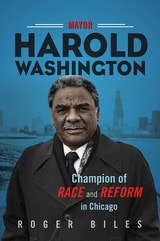
Mayor Harold Washington
Champion of Race and Reform in ChicagoRoger Biles
University of Illinois Press, 2020
Mexican Hometown Associations in Chicagoacán
From Local to Transnational Civic EngagementBada, Xóchitl
Rutgers University Press, 0
Hometown associations (HTAs) consist of immigrants from the same town in Mexico and often begin quite informally, as soccer clubs or prayer groups. As Bada’s work shows, however, HTAs have become a powerful force for change, advocating for Mexican immigrants in the United States while also working to improve living conditions in their communities of origin. Focusing on a group of HTAs founded by immigrants from the state of Michoacán, the book shows how their activism has bridged public and private spheres, mobilizing social reforms in both inner-city Chicago and rural Mexico.
Bringing together ethnography, political theory, and archival research, Bada excavates the surprisingly long history of Chicago’s HTAs, dating back to the 1920s, then traces the emergence of new models of community activism in the twenty-first century. Filled with vivid observations and original interviews, Mexican Hometown Associations in Chicagoacán gives voice to an underrepresented community and sheds light on an underexplored form of global activism.
Mobilizing the Metropolis
How the Port Authority Built New YorkPhilip Mark Plotch and Jen Nelles
University of Michigan Press, 2023
The Port Authority of New York and New Jersey has morphed in ways that would be unrecognizable to its founders. Its mission evolved from improving rail freight to building motor vehicle crossings, airports, office towers, and industrial parks and taking control of a failing commuter rail line. In its early years, the agency was often viewed with admiration; however as it drew up plans, negotiated to take control of airfields and marine terminals, and constructed large bridges and tunnels, the Port Authority became the object of less favorable attention. It was attacked as a “super-government” that must be reined in, while the mayors of New York and Newark argued that it should be broken up with its pieces given to local governments for their own use.
Despite its criticisms and travails, for over half a century the Port Authority overcame hurdles that had frustrated other public and private efforts, built the world's longest suspension bridge, and took a leading role in creating an organization to reduce traffic delays in the New York-New Jersey region. How did the Port Authority achieve these successes? And what lessons does its history offer to other cities and regions in the United States and beyond? In a time when public agencies are often condemned as inefficient and corrupt, this history should provide some positive lessons for governmental officials and social reformers.
In 2021, the Port Authority marked its 100th birthday. Its history reveals a struggle between the public and private sectors, the challenges of balancing democratic accountability and efficiency, and the tension between regional and local needs. From selected Port Authority successes and failures, Philip Mark Plotch and Jen Nelles produce a significant and engaging account of a powerful governmental entity that offers durable lessons on collaboration, leadership, and the challenge of overcoming complex political challenges in modern America.
More Than Blue, More Than Yankee
Complexity and Change in New England PoliticsEdited by Amy Fried and Erin O’Brien
University of Massachusetts Press, 2024
New England politics can, at first blush, appear monochromatic. After all, only one member of the entire region’s delegation to the US Congress is a Republican, and citizens have elected few Republicans to the US House or Senate in the last decade. But this has not always been the case. In 1948, only two states in the region–Rhode Island and Connecticut–had Democratic senators. Yet a closer examination of the region today reveals fascinating political variation. Liberal policies, greater diversity, and engaged political movements are reshaping stereotypical Yankee tendencies of close-fisted government, whiteness, and laconic discourse.
This collection of new essays captures both the political history and contemporary moment in this region and exposes the surprisingly varied political landscape. It examines historical shifts, regional developments, and the politics of its states to argue that New England has been and continues to be an important part of the national political puzzle, from demonstrating democratic principles in early America to producing major contemporary figures such as Elizabeth Warren, Ayanna Pressley, and Susan Collins. The political shifts at work in New England mirror the South’s transformation, but have received much less attention. This volume corrects that omission by profiling political movements and candidates, political rhetoric from activists to pundits, and demographics and voting in each state as well as the region as a whole.
In addition to material by the editors, this important collection includes contributions from Rachael V. Cobb, Jerold Duquette, Christopher J. Galdieri, Jane JaKyung Han, Douglas B. Harris, Luis Jiménez, Scott McLean, James Melcher, Maureen Moakley, Paul Petterson, and Dante J. Scala.
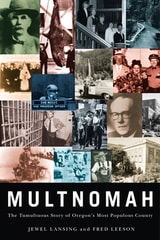
Multnomah
The Tumultuous Story of Oregon's Most Populous CountyJewel Lansing and Fred Leeson
Oregon State University Press, 2012
Covering people and events from 1854 to the present day, this definitive history of Multnomah County provides compelling details about public works triumphs and political scandals.

Music Scenes
Local, Translocal, and VirtualAndy Bennett
Vanderbilt University Press, 2004