Results by title
161 books match the query 'Material culture' and 16 start with m
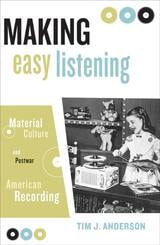
Making Easy Listening
Material Culture and Postwar American RecordingTim Anderson
University of Minnesota Press, 2006
Making Easy Listening presents a social and cultural history of the contentious, diverse, and experimental culture of musical production and enjoyment that aims to understand how recording technologies fit into and influence musicians’, as well as listeners’, lives. With attention to the details of what it means to play a particular record in a distinct cultural context, Anderson connects neglected genres of the musical canon—classical and easy listening music, Broadway musicals, and sound effects records—with the development of sound aesthetics and technical music practices that leave an indelible imprint on individuals. Tracing the countless impacts that this period of innovation exacted on the mass media, Anderson reveals how an examination of this historical era—and recorded music as an object—furthers a deeper understanding of the present-day American music industry.
Tim J. Anderson is assistant professor of communication at Denison University.
Making Senses of the Past
Toward a Sensory ArchaeologyEdited by Jo Day
Southern Illinois University Press, 2013
In ancient Peru, a site provides sensory surprises as voices resound beneath the ground and hidden carvings slowly reveal their secrets. In Canada and New Zealand, the flicker of reflected light from a lake dances on the faces of painted rocks and may have influenced when and why the pigment was applied. In Mesopotamia, vessels for foodstuffs build a picture of a past cuisine that encompasses taste and social activity in the building of communities. While perfume and flowers are examined in various cultures, in the chamber tombs of ancient Roman Palestine, we are reminded that not all smells are pleasant. Making Senses of the Past explores alternative ways to perceive past societies and offers a new way of wiring archaeology that incorporates the senses.
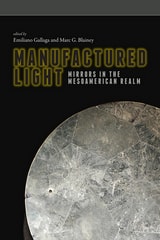
Manufactured Light
Mirrors in the Mesoamerican RealmEmiliano Gallaga
University Press of Colorado, 2015
Complex and time-consuming to produce, iron-ore mirrors stand out among Prehispanic artifacts for their aesthetic beauty, their symbolic implications, and the complexity and skill of their assembly. Manufactured Light presents the latest archaeological research on these items, focusing on the intersection of their significance and use and on the technological aspects of the manufacturing processes that created them.
The volume covers the production, meaning, and utilization of iron-ore mirrors in various Mesoamerican communities. Chapters focus on topics such as experimental archaeology projects and discussions of workshops in archaeological contexts in the Maya, Central Mexico, and northwest Mexico regions. Other chapters concentrate on the employment and ideological associations of these mirrors in Prehispanic times, especially as both sacred and luxury items. The final chapters address continuities in the use of mirrors from Prehispanic to modern times, especially in contemporary indigenous communities, with an emphasis on examining the relationship between ethnographic realities and archaeological interpretations.
While the symbolism of these artifacts and the intricacy of their construction have long been recognized in archaeological discussions, Manufactured Light is the first synthesis of this important yet under-studied class of material culture. It is a must-read for students and scholars of Mesoamerican archaeology, ethnography, religion, replicative experimentation, and lithic technology.
Contirbutors include: Marc G. Blainey, Thomas Calligaro, Carrie L. Dennett, Emiliano Gallaga, Julie Gazzola, Sergio Gómez Chávez, Olivia Kindl, Brigitte Kovacevich, Achim Lelgemann, José J. Lunazzi, John J. McGraw, Emiliano Melgar, Joseph Mountjoy, Reyna Solis, and Karl Taube.
Marking Indigeneity
The Tongan Art of Sociospatial RelationsTevita O. Ka‘ili; Foreword by ‘Okusitino Mahina
University of Arizona Press, 2017
In Marking Indigeneity, Tevita O. Ka‘ili examines the conflicts and reconciliation of indigenous time-space within the Tongan community in Maui, as well as within the time-space of capitalism. Using indigenous theory, he provides an ethnography of the social relations of the highly mobile Tongans.
Focusing on tauhi vā, Ka‘ili notes certain examples of this time marking: the faikava gatherings that last from sunset to sunrise, long eating gatherings, long conversations (talanoa), the all-night funeral wakes, and the early arrival to and late departure from meetings and celebrations. Ka‘ili also describes the performing art of tauhi vā, which creates symmetry through the performance of social duties (fatongia). This gives rise to powerful feelings of warmth, elation, and honor among the performers. Marking Indigeneity offers an ethnography of the extension of time-space that is rooted in ancient Moana oral traditions, thoughtfully illustrating the continuation of these traditions.
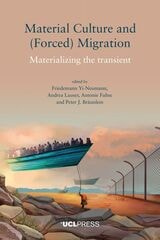
Material Culture and (Forced) Migration
Materializing the TransientEdited by Friedemann Yi-Neumann, Andrea Lauser, Antonie Fuhse, and Peter J. Bräunlein
University College London, 2022
Material Culture and (Forced) Migration argues that materiality is a fundamental dimension of migration. People take things with them, or they lose, find, and engage things along the way. Movements themselves are framed by objects such as borders, passports, tents, camp infrastructures, boats, and mobile phones. This volume brings together chapters on a broad range of movements—from forced migration and displacement to retirement migration. What ties the chapters together is their perspective of material culture.
Centering on four interconnected themes—temporality and materiality, methods of object-based migration research, the affective capacities of objects, and the engagement of things in place-making practices—the volume provides a material culture perspective for migration scholars around the globe, from a wide range of disciplines. The chapters’ focus on everyday objects and practices will appeal to all those interested in the tangible experiences of migration.
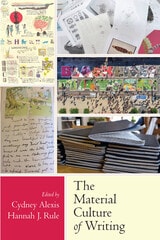
Material Culture of Writing
edited by Cydney Alexis and Hannah J. Rule
University Press of Colorado, 2022
The collection features scholars across the disciplines—such as art, art history, English, museum studies, and writing studies—who work as teachers, historians, museum curators/conservators, and faculty. Each chapter features methods and questions from contributors’ own disciplines while at the same time speaking to writing studies’ interest in writers, writing identity, and writing practice. The authors in this volume also work with a variety of methodologies, including literary analysis, archival research, and qualitative research, providing models for the types of research possible using a material culture studies framework. The collection is organized into three sections—Writing Identity, Writing Work, Writing Genre—each with a contextualizing introduction from the editors that introduces the chapters themselves and imagines possible directions for writing studies research facilitated by material culture studies.
The Material Culture of Writing serves as an accessible introduction to work in material culture studies for writing studies scholars, graduate students, and undergraduates, especially as it makes a distinctive contribution to writing studies in its material culture studies approach. Because of the interdisciplinarity of material culture studies and this volume’s contributors, this collection will appeal to a wide range of scholars and readers, including those interested in writing studies, the history of the book, print culture, genre studies, archival methods, and authorship studies.
Contributors: Cydney Alexis, Debby Andrews, Diane Ehrenpreis, Keri Epps, Desirée Henderson, Kevin James, Jenny Krichevsky, Anne Mackay, Emilie Merrigan, Laura R. Micciche, Hannah J. Rule, Kate Smith
Material Cultures
Why Some Things MatterEdited by Daniel Miller
University of Chicago Press, 1997
The diversity of the essays is mediated by their common commitment to ethnography with a material focus. Rather than examine objects as mirages of media or language, Material Cultures emphasizes how the study of objects not only contributes to an understanding of artifacts but is also an effective means for studying social values and contradictions.
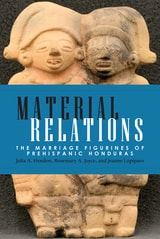
Material Relations
The Marriage Figurines of Prehispanic HondurasJulia A. Hendon
University Press of Colorado, 2014
They examine the production, use, and disposal of marriage figurines from six sites—Campo Dos, Cerro Palenque, Copán, Currusté, Tenampua, and Travesia—and explore their role in rituals and ceremonies, as well as in the forming of social bonds and the celebration of relationships among communities. They find evidence of historical traditions reproduced over generations through material media in social relations among individuals, families, and communities, as well as social differences within this network of connected yet independent settlements.
Material Relations provides a new and dynamic understanding of how social houses functioned via networks of production and reciprocal exchange of material objects and will be of interest to Mesoamerican archaeologists, anthropologists, and art historians.
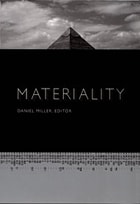
Materiality
Daniel Miller, ed.
Duke University Press, 2005
Considering topics as diverse as theology, technology, finance, and art, the contributors—most of whom are anthropologists—examine the many different ways in which materiality has been understood and the consequences of these differences. Their case studies show that the latest forms of financial trading instruments can be compared with the oldest ideals of ancient Egypt, that the promise of software can be compared with an age-old desire for an unmediated relationship to divinity. Whether focusing on the theology of Islamic banking, Australian Aboriginal art, derivatives trading in Japan, or textiles that respond directly to their environment, each essay adds depth and nuance to the project that Materiality advances: a profound acknowledgment and rethinking of one of the basic properties of being human.
Contributors. Matthew Engelke, Webb Keane, Susanne Küchler, Bill Maurer, Lynn Meskell, Daniel Miller, Hirokazu Miyazaki, Fred Myers, Christopher Pinney, Michael Rowlands, Nigel Thrift
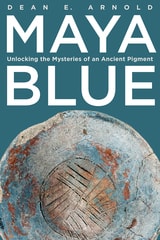
Maya Blue
Unlocking the Mysteries of an Ancient PigmentDean E. Arnold
University Press of Colorado, 2025
Combining the organic dye indigo and the inorganic clay mineral palygorskite in a highly stable chemical hybrid that, unlike indigo, resists attacks by acids, alkalines, and organic solvents and endures without fading, Maya Blue has a rich blue color that has survived for centuries in one of the world’s harshest climates. First used at the site of Calakmul in the tropical forest of southern Mexico during the Late Preclassic period, the Maya’s abiding hue diffused across Mesoamerica over a period of 1,700 years. It appears on Maya pottery, sculpture, murals, and codices and carries multiple meanings, standing as a symbol for cultural cornerstones such as sacrifice and the rain god Chaak. It was discovered in 1931 at Chichén Itzá, and its composition was a mystery for more than three decades, then questions about its source, how and why it achieved such stability, and how and why the Maya made the pigment persisted even longer.
In Maya Blue, Arnold summarizes ethnographic, archaeological, chemical, and material science research over the last century from an anthropological perspective. This thorough, engaging, and accessible book chronicles the history of this pigment as no work has done before.
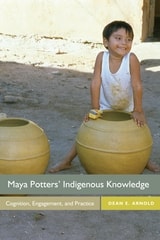
Maya Potters' Indigenous Knowledge
Cognition, Engagement, and PracticeDean E. Arnold
University Press of Colorado, 2017
Based on fieldwork and reflection over a period of almost fifty years, Maya Potters’ Indigenous Knowledge utilizes engagement theory to describe the indigenous knowledge of traditional Maya potters in Ticul, Yucatán, Mexico. In this heavily illustrated narrative account, Dean E. Arnold examines craftspeople’s knowledge and skills, their engagement with their natural and social environments, the raw materials they use for their craft, and their process for making pottery.
Following Lambros Malafouris, Tim Ingold, and Colin Renfrew, Arnold argues that potters’ indigenous knowledge is not just in their minds but extends to their engagement with the environment, raw materials, and the pottery-making process itself and is recursively affected by visual and tactile feedback. Pottery is not just an expression of a mental template but also involves the interaction of cognitive categories, embodied muscular patterns, and the engagement of those categories and skills with the production process. Indigenous knowledge is thus a product of the interaction of mind and material, of mental categories and action, and of cognition and sensory engagement—the interaction of both human and material agency.
Engagement theory has become an important theoretical approach and “indigenous knowledge” (as cultural heritage) is the focus of much current research in anthropology, archaeology, and cultural resource management. While Dean Arnold’s previous work has been significant in ceramic ethnoarchaeology, Maya Potters' Indigenous Knowledge goes further, providing new evidence and opening up different concepts and approaches to understanding practical processes. It will be of interest to a wide variety of researchers in Maya studies, material culture, material sciences, ceramic ecology, and ethnoarchaeology.
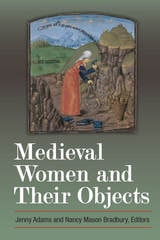
Medieval Women and Their Objects
Jenny Adams and Nancy Mason Bradbury, editors
University of Michigan Press, 2016
The opening section looks at how medieval authors imagined fictional and legendary women using particular objects in ways that reinforce or challenge gender roles. These women bring objects into the orbit of gender identity, employing and relating to them in a literal sense, while also taking advantage of their symbolic meanings. The second section focuses on the use of texts both as objects in their own right and as mechanisms by which other objects are defined. The possessors of objects in these essays lived in the world, their lives documented by historical records, yet like their fictional and legendary counterparts, they too used objects for instrumental ends and with symbolic resonances. The final section considers the objectification of medieval women’s bodies as well as its limits. While this at times seems to allow for a trade in women, authorial attempts to give definitive shapes and boundaries to women’s bodies either complicate the gender boundaries they try to contain or reduce gender to an ideological abstraction. This volume contributes to the ongoing effort to calibrate female agency in the late Middle Ages, honoring the groundbreaking work of Carolyn P. Collette.
Mindprints
Thoreau's Material WorldsIvan Gaskell
University of Chicago Press, 2024
Though we may associate Henry David Thoreau with ascetic renunciation, he accumulated a variety of tools, art, and natural specimens throughout his life as a homebuilder, surveyor, and collector. In some of these objects, particularly Indigenous artifacts, Thoreau perceived the presence of their original makers, and he called such objects “mindprints.” Thoreau believed that these collections could teach him how his experience, his world, fit into the wider, more diverse (even incoherent) assemblage of other worlds created and re-created by other beings every day. In this book, Ivan Gaskell explores how a profound environmental aesthetics developed from this insight and shaped Thoreau’s broader thought.
Modelwork
The Material Culture of Making and KnowingMartin Brückner
University of Minnesota Press, 2021
How making models allows us to recall what was and to discover what still might be
Whether looking inward to the intricacies of human anatomy or outward to the furthest recesses of the universe, expanding the boundaries of human inquiry depends to a surprisingly large degree on the making of models. In this wide-ranging volume, scholars from diverse fields examine the interrelationships between a model’s material foundations and the otherwise invisible things it gestures toward, underscoring the pivotal role of models in understanding and shaping the world around us. Whether in the form of reproductions, interpretive processes, or constitutive tools, models may bridge the gap between the tangible and the abstract.
By focusing on the material aspects of models, including the digital ones that would seem to displace their analogue forebears, these insightful essays ground modeling as a tactile and emphatically humanistic endeavor. With contributions from scholars in the history of science and technology, visual studies, musicology, literary studies, and material culture, this book demonstrates that models serve as invaluable tools across every field of cultural development, both historically and in the present day.
Modelwork is unique in calling attention to modeling’s duality, a dynamic exchange between imagination and matter. This singular publication shows us how models shape our ability to ascertain the surrounding world and to find new ways to transform it.
Contributors: Hilary Bryon, Virginia Tech; Johanna Drucker, UCLA; Seher Erdoğan Ford, Temple U; Peter Galison, Harvard U; Lisa Gitelman, New York U; Reed Gochberg, Harvard U; Catherine Newman Howe, Williams College; Christopher J. Lukasik, Purdue U; Martin Scherzinger, New York U; Juliet S. Sperling, U of Washington; Annabel Jane Wharton, Duke U.
Museum Matters
Making and Unmaking Mexico’s National CollectionsEdited by Miruna Achim, Susan Deans-Smith, Sandra Rozental
University of Arizona Press, 2021
Museum Matters traces the emergence, consolidation, and dispersal of this national museum complex by telling the stories of its objects. Objects that have been separated over time are brought back together in this book in order to shed light on the interactions and processes that have forged things into symbols of science, aesthetics, and politics. The contributors to this volume illuminate how collections came into being or ceased to exist over time, or how objects moved in and out of collections and museum spaces. They explore what it means to move things physically and spatially, as well as conceptually and symbolically.
Museum Matters unravels the concept of the national museum. By unmaking the spaces, frameworks, and structures that form the complicated landscape of national museums, this volume brings a new way to understand the storage, displays, and claims about the Mexican nation’s collections today.
Contributors
Miruna Achim, Christina Bueno, Laura Cházaro, Susan Deans-Smith, Frida Gorbach, Haydeé López Hernández, Carlos Mondragón, Bertina Olmedo Vera, Sandra Rozental, Mario Rufer
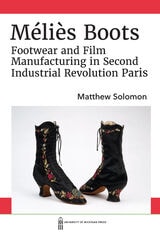
Méliès Boots
Footwear and Film Manufacturing in Second Industrial Revolution ParisMatthew Solomon
University of Michigan Press, 2022
Winner of the 2024 Society for Cinema and Media Studies Katherine Singer Kovacs Book Award
Before he became an influential cinematic innovator, Georges Méliès (1861–1938) was a maker of deluxe French footwear, an illusionist, and a caricaturist. Proceeding from these beginnings, Méliès Boots traces how the full trajectory of Georges Méliès’ career during the late-nineteenth and early-twentieth centuries, along with the larger cultural and historical contexts in which Méliès operated, shaped his cinematic oeuvre. Solomon examines Méliès’ unpublished drawings and published caricatures, the role of laughter in his magic theater productions, and the constituent elements of what Méliès called "the new profession of the cinéaste." The book also reveals Méliès' connections to the Incohérents, a group of ephemeral artists from the 1880s, demonstrating the group’s relevance for Méliès, early cinema, and modernity. By positioning Méliès in relation to the material culture of his time, Solomon demonstrates that Méliès’ work was expressive of a distinctly modern, and modernist, sensibility that appeared in France during the 1880s in the wake of the Second Industrial Revolution.