209 books match the query 'Mathematics' and 13 start with m
cover of Masking Inequality with Good Intentions: Systemic Bias, Counterspies, and Discourse Acquisition in STEM Education

Masking Inequality with Good Intentions

Systemic Bias, Counterspies, and Discourse Acquisition in STEM Education

Heather M. Falconer

University Press of Colorado, 2023

In Masking Inequality with Good Intentions, Heather M. Falconer examines the impact of systemic bias on disciplinary discourse acquisition and identity development by asking “How do the norms and expectations of higher education and STEM, specifically, impact the development of scientific identity and discursive skill?” and “What role do societal markers like race and gender play in the negotiation of identity in STEM learning environments?”

Drawing on the experiences and writings of six students from historically underrepresented backgrounds in STEM, each participating in an undergraduate research program, Falconer discusses how programmatic and pedagogical choices can work to either further marginalize students and disrupt their writing and identity development as scientists or create counterspaces—spaces where students can thrive and push back against dominant, oppressive forces. Practical applications for pedagogy, curriculum, and program design are included.
[more]
cover of Mathematical Physics

Mathematical Physics

Robert Geroch

University of Chicago Press, 1984
Mathematical Physics is an introduction to such basic mathematical structures as groups, vector spaces, topological spaces, measure spaces, and Hilbert space. Geroch uses category theory to emphasize both the interrelationships among different structures and the unity of mathematics. Perhaps the most valuable feature of the book is the illuminating intuitive discussion of the "whys" of proofs and of axioms and definitions. This book, based on Geroch's University of Chicago course, will be especially helpful to those working in theoretical physics, including such areas as relativity, particle physics, and astrophysics.
[more]
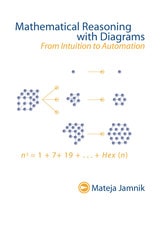
cover of Mathematical Reasoning with Diagrams

Mathematical Reasoning with Diagrams

Mateja Jamnik

CSLI, 2001
Mathematicians at every level use diagrams to prove theorems. Mathematical Reasoning with Diagrams investigates the possibilities of mechanizing this sort of diagrammatic reasoning in a formal computer proof system, even offering a semi-automatic formal proof system—called Diamond—which allows users to prove arithmetical theorems using diagrams.
[more]
cover of Mathematics and Humor

Mathematics and Humor

John Allen Paulos

University of Chicago Press, 1982

John Allen Paulos cleverly scrutinizes the mathematical structures of jokes, puns, paradoxes, spoonerisms, riddles, and other forms of humor, drawing examples from such sources as Rabelais, Shakespeare, James Beattie, René Thom, Lewis Carroll, Arthur Koestler, W. C. Fields, and Woody Allen.

"Jokes, paradoxes, riddles, and the art of non-sequitur are revealed with great perception and insight in this illuminating account of the relationship between humor and mathematics."—Joseph Williams, New York Times

"'Leave your mind alone,' said a Thurber cartoon, and a really complete and convincing analysis of what humour is might spoil all jokes forever. This book avoids that danger. What it does. . .is describe broadly several kinds of mathematical theory and apply them to throw sidelights on how many kinds of jokes work."—New Scientist

"Many scholars nowadays write seriously about the ludicrous. Some merely manage to be dull. A few—like Paulos—are brilliant in an odd endeavor."—Los Angeles Times Book Review
[more]
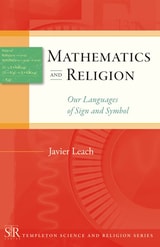
cover of Mathematics and Religion: Our Languages of Sign and Symbol

Mathematics and Religion

Our Languages of Sign and Symbol

Javier Leach

Templeton Press, 2010


Mathematics and Religion: Our Languages of Sign and Symbol is the sixth title published in the Templeton Science and Religion Series, in which scientists from a wide range of fields distill their experience and knowledge into brief tours of their respective specialties. In this volume, Javier Leach, a mathematician and Jesuit priest, leads a fascinating study of the historical development of mathematical language and its influence on the evolution of metaphysical and theological languages.

Leach traces three historical moments of change in this evolution: the introduction of the deductive method in Greece, the use of mathematics as a language of science in modern times, and the formalization of mathematical languages in the nineteenth and twentieth centuries. As he unfolds this fascinating history, Leach notes the striking differences and interrelations between the two languages of science and religion. Until now there has been little reflection on these similarities and differences, or about how both languages can complement and enrich each other.

 

[more]
cover of Mathematics and the Unexpected

Mathematics and the Unexpected

Ivar Ekeland

University of Chicago Press, 1988

"Not the least unexpected thing about Mathematics and the Unexpected is that a real mathematician should write not just a literate work, but a literary one."—Ian Stewart, New Scientist

"In this brief, elegant treatise, assessable to anyone who likes to think, Ivar Ekelund explains some philosophical implications of recent mathematics. He examines randomness, the geometry involved in making predictions, and why general trends are easy to project (it will snow in January) but particulars are practically impossible (it will snow from 2 p.m. to 5 p.m. on the 21st)."—Village Voice
[more]
cover of Mathematics of Modality

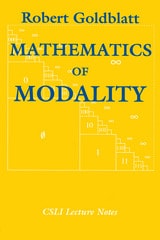
Mathematics of Modality

Robert Goldblatt

CSLI, 1993
Modal logic is the study of modalities—expressions that qualify assertions about the truth of statements—like some ordinary language phrases and mathematically motivated expressions. The study of modalities dates from antiquity, but has been most actively pursued in the last three decades. This volume collects together a number of Golblatt's papers on modal logic, beginning with his work on the duality between algebraic and set-theoretic models, and including two new articles, one on infinitary rules of inference, and the other about recent results on the relationship between modal logic and first-order logic.
[more]
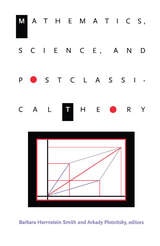
cover of Mathematics, Science, and Postclassical Theory

Mathematics, Science, and Postclassical Theory

Barbara Herrnstein Smith and Arkady Plotnitsky, eds.

Duke University Press, 1997

Mathematics, Science, and Postclassical Theory is a unique collection of essays dealing with the intersections between science and mathematics and the radical reconceptions of knowledge, language, proof, truth, and reality currently emerging from poststructuralist literary theory, constructivist history and sociology of science, and related work in contemporary philosophy. Featuring a distinguished group of international contributors, this volume engages themes and issues central to current theoretical debates in virtually all disciplines: agency, causality, determinacy, representation, and the social dynamics of knowledge.
In a substantive introductory essay, the editors explain the notion of "postclassical theory" and discuss the significance of ideas such as emergence and undecidability in current work in and on science and mathematics. Other essays include a witty examination of the relations among mathematical thinking, writing, and the technologies of virtual reality; an essay that reconstructs the conceptual practices that led to a crucial mathematical discovery—or construction—in the 19th century; a discussion of the implications of Bohr’s complementarity principle for classical ideas of reality; an examination of scientific laboratories as "hybrid" communities of humans and nonhumans; an analysis of metaphors of control, purpose, and necessity in contemporary biology; an exploration of truth and lies, and the play of words and numbers in Shakespeare, Frege, Wittgenstein, and Beckett; and a final chapter on recent engagements, or nonengagements, between rationalist/realist philosophy of science and contemporary science studies.


Contributors. Malcolm Ashmore, Michel Callon, Owen Flanagan, John Law, Susan Oyama, Andrew Pickering, Arkady Plotnitsky, Brian Rotman, Barbara Herrnstein Smith, John Vignaux Smyth, E. Roy Weintraub
[more]
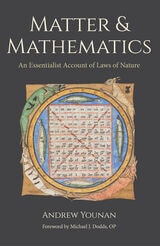
cover of Matter and Mathematics: An Essential Account of Laws of Nature

Matter and Mathematics

An Essential Account of Laws of Nature

Andrew Younan

Catholic University of America Press, 2022
To borrow a phrase from Galileo: What does it mean that the story of the creation is “written in the language of mathematics?” This book is an attempt to understand the natural world, its consistency, and the ontology of what we call laws of nature, with a special focus on their mathematical expression. It does this by arguing in favor of the Essentialist interpretation over that of the Humean and Anti-Humean accounts. It re-examines and critiques Descartes’ notion of laws of nature following from God’s activity in the world as mover of extended bodies, as well as Hume’s arguments against causality and induction. It then presents an Aristotelian-Thomistic account of laws of nature based on mathematical abstraction, necessity, and teleology, finally offering a definition for laws of nature within this framework.
[more]
cover of Modal Logic and Process Algebra

Modal Logic and Process Algebra

Edited by Alban Ponse, Maarten de Rijke, and Yde Venema

CSLI, 1995

Labelled transition systems are mathematical models for dynamic behaviour, or processes, and thus form a research field of common interest to logicians and theoretical computer scientists. In computer science, this notion is a fundamental one in the formal analysis of programming languages, in particular in process theory. In modal logic, transition systems are the central object of study under the name of Kripke models. This volume collects a number of research papers on modal logic and process theory. Its unifying theme is the notion of a bisimulation. Bisimulations are relations over transition systems, and provide a key tool in identifying the processes represented by these structures. The volume offers an up-to-date overview of perspectives on labeled transition systems and bisimulations.
[more]
cover of Modern Factor Analysis

Modern Factor Analysis

Harry H. Harman

University of Chicago Press, 1976

This thoroughly revised third edition of Harry H. Harman's authoritative text incorporates the many new advances made in computer science and technology over the last ten years. The author gives full coverage to both theoretical and applied aspects of factor analysis from its foundations through the most advanced techniques. This highly readable text will be welcomed by researchers and students working in psychology, statistics, economics, and related disciplines.
[more]
cover of Modern Sampling Methods: Theory, Experimentation, Application

Modern Sampling Methods

Theory, Experimentation, Application

Palmer Johnson

University of Minnesota Press, 1959
Modern Sampling Methods: Theory, Experimentation, Application was first published in 1959. Minnesota Archive Editions uses digital technology to make long-unavailable books once again accessible, and are published unaltered from the original University of Minnesota Press editions.Of both theoretical and practical use to statisticians and research workers using sampling techniques, this book describes five new multi-stage sampling models. The models are described, compared, and evaluated through a skillfully designed experiment. The number of stages in all five models is the same; the manner in which they differ is in the particular sampling technique applied at each of the several stages. Recommendations are given on the choice of the most suitable model for a given practical situation. A mathematical appendix presents two lemmas that are useful for derivation of sampling formulas in multi-stage sampling.
[more]
cover of More Concise Algebraic Topology: Localization, Completion, and Model Categories

More Concise Algebraic Topology

Localization, Completion, and Model Categories

J. P. May and K. Ponto

University of Chicago Press, 2011

With firm foundations dating only from the 1950s, algebraic topology is a relatively young area of mathematics. There are very few textbooks that treat fundamental topics beyond a first course, and many topics now essential to the field are not treated in any textbook. J. Peter May’s A Concise Course in Algebraic Topology addresses the standard first course material, such as fundamental groups, covering spaces, the basics of homotopy theory, and homology and cohomology. In this sequel, May and his coauthor, Kathleen Ponto, cover topics that are essential for algebraic topologists and others interested in algebraic topology, but that are not treated in standard texts. They focus on the localization and completion of topological spaces, model categories, and Hopf algebras.
           
The first half of the book sets out the basic theory of localization and completion of nilpotent spaces, using the most elementary treatment the authors know of. It makes no use of simplicial techniques or model categories, and it provides full details of other necessary preliminaries. With these topics as motivation, most of the second half of the book sets out the theory of model categories, which is the central organizing framework for homotopical algebra in general. Examples from topology and homological algebra are treated in parallel. A short last part develops the basic theory of bialgebras and Hopf algebras.
[more]