Results by title
1415 books match the query 'Medical' and 111 start with m

MEDICAL REVOLUTIONARIES
The Enslaved Healers of Eighteenth-Century Saint DomingueKarol K. Weaver
University of Illinois Press, 2006

Mad Dogs and Meerkats
A History of Resurgent Rabies in Southern AfricaKaren Brown
Ohio University Press, 2011
Through the ages, rabies has exemplified the danger of diseases that transfer from wild animals to humans and their domestic stock. In South Africa, rabies has been on the rise since the latter part of the twentieth century despite the availability of postexposure vaccines and regular inoculation campaigns for dogs.
In Mad Dogs and Meerkats: A History of Resurgent Rabies in Southern Africa, Karen Brown links the increase of rabies to the HIV/AIDS epidemic. Her study shows that the most afflicted regions of South Africa have seen a dangerous rise in feral dog populations as people lack the education, means, or will to care for their pets or take them to inoculation centers. Most victims are poor black children. Ineffective disease control, which in part depends on management policies in neighboring states and the diminished medical and veterinary infrastructures in Zimbabwe, has exacerbated the problem.
This highly readable book is the first study of rabies in Africa, tracing its history in South Africa and neighboring states from 1800 to the present and showing how environmental and economic changes brought about by European colonialism and global trade have had long-term effects.
Mad Dogs and Meerkats is recommended for public health policy makers and anyone interested in human-animal relations and how societies and governments have reacted to one of the world’s most feared diseases.
Made to Hear
Cochlear Implants and Raising Deaf ChildrenLaura Mauldin
University of Minnesota Press, 2016
A mother whose child has had a cochlear implant tells Laura Mauldin why enrollment in the sign language program at her daughter’s school is plummeting: “The majority of parents want their kids to talk.” Some parents, however, feel very differently, because “curing” deafness with cochlear implants is uncertain, difficult, and freighted with judgment about what is normal, acceptable, and right. Made to Hear sensitively and thoroughly considers the structure and culture of the systems we have built to make deaf children hear.
Based on accounts of and interviews with families who adopt the cochlear implant for their deaf children, this book describes the experiences of mothers as they navigate the health care system, their interactions with the professionals who work with them, and the influence of neuroscience on the process. Though Mauldin explains the politics surrounding the issue, her focus is not on the controversy of whether to have a cochlear implant but on the long-term, multiyear undertaking of implantation. Her study provides a nuanced view of a social context in which science, technology, and medicine are trusted to vanquish disability—and in which mothers are expected to use these tools. Made to Hear reveals that implantation has the central goal of controlling the development of the deaf child’s brain by boosting synapses for spoken language and inhibiting those for sign language, placing the politics of neuroscience front and center.
Examining the consequences of cochlear implant technology for professionals and parents of deaf children, Made to Hear shows how certain neuroscientific claims about neuroplasticity, deafness, and language are deployed to encourage compliance with medical technology.

Madness and Enterprise
Psychiatry, Economic Reason, and the Emergence of Pathological ValueNima Bassiri
University of Chicago Press, 2024
Madness and Enterprise reveals the economic norms embedded within psychiatric thinking about mental illness in the North Atlantic world. Over the course of the nineteenth century, various forms of madness were subjected to a style of psychiatric reasoning that was preoccupied with money. Psychiatrists across Western Europe and the United States attributed financial and even moral value to an array of pathological conditions, such that some mental disorders were seen as financial assets and others as economic liabilities. By turning to economic conduct and asking whether potential patients appeared capable of managing their financial affairs or even generating wealth, psychiatrists could often bypass diagnostic uncertainties about a person’s mental state.
Through an exploration of the intertwined histories of psychiatry and economic thought, Nima Bassiri shows how this relationship transformed the very idea of value in the modern North Atlantic, as the most common forms of social valuation—moral value, medical value, and economic value—were rendered equivalent and interchangeable. If what was good and what was healthy were increasingly conflated with what was remunerative (and vice versa), then a conceptual space opened through which madness itself could be converted into an economic form and subsequently redeemed—and even revered.

Madness and Enterprise
Psychiatry, Economic Reason, and the Emergence of Pathological ValueNima Bassiri
University of Chicago Press, 2024
This is an auto-narrated audiobook version of this book.
Uncovers a powerful relationship between pathology and money: beginning in the nineteenth century, the severity of mental illness was measured against a patient’s economic productivity.
Madness and Enterprise reveals the economic norms embedded within psychiatric thinking about mental illness in the North Atlantic world. Over the course of the nineteenth century, various forms of madness were subjected to a style of psychiatric reasoning that was preoccupied with money. Psychiatrists across Western Europe and the United States attributed financial and even moral value to an array of pathological conditions, such that some mental disorders were seen as financial assets and others as economic liabilities. By turning to economic conduct and asking whether potential patients appeared capable of managing their financial affairs or even generating wealth, psychiatrists could often bypass diagnostic uncertainties about a person’s mental state.
Through an exploration of the intertwined histories of psychiatry and economic thought, Nima Bassiri shows how this relationship transformed the very idea of value in the modern North Atlantic, as the most common forms of social valuation—moral value, medical value, and economic value—were rendered equivalent and interchangeable. If what was good and what was healthy were increasingly conflated with what was remunerative (and vice versa), then a conceptual space opened through which madness itself could be converted into an economic form and subsequently redeemed—and even revered.

Magdalene House
A Place about MercySarah VanHooser Suiter
Vanderbilt University Press, 2012
However, the story of the Magdalene community is not about these statistics, but about the stories the women tell. They say they thrive in the community because it is a place where they are free to be themselves, safe to give and receive love, and free to speak their trutheven to complain sometimes about how their storytelling is exploited "for the good of the community." A Place about Mercy is a participantobservation account of the history of this remarkable community founded in 1997, its structure, its Thistle Farms beauty products operation, and Reverend Becca Stevens's communal and spiritual vision. The book is finally about what it means to walk the path of healing with a group of unlikely women as guide.
Magdalene House was the subject of a multiplepart documentary on National Public Radio.
Making Americans Healthier
Social and Economic Policy as Health PolicyRobert F. Schoeni
Russell Sage Foundation, 2008
Making Down Syndrome
Motherhood and Kinship Futures in Urban JordanChristine Sargent
Rutgers University Press, 2026
Making Down Syndrome: Motherhood and Kinship Futures in Urban Jordan draws on ethnographic research conducted primarily in Jordan’s capital city of Amman to explore how the label and identity of Down syndrome is gaining increasing cohesiveness. Focused on the experiences of mothers, who serve as an entry point for understanding broader family dynamics and choices, the book argues that practices and ideologies of care play a central role in making Down syndrome’s embodied and political realities. They do so through the momentum of kinship futures, or futures imagined through the prism of kinship roles and relations, which shape how families organize and distribute care between and beyond kinship networks and under conditions of economic and political uncertainty. By approaching everyday life in Jordan through the lens of disability, Making Down Syndrome offers new insights into how people navigate structures of family, gender, power, inequality, and precarity, all while trying to maintain hope for and cultivate better futures.
Making Health Care Whole
Integrating Spirituality into Patient CareChristina Puchalski
Templeton Press, 2021
In the last fifteen years, the field of palliative care has experienced a surge in interest in spirituality as an important aspect of caring for seriously ill and dying patients. While spirituality has been generally recognized as an essential dimension of palliative care, uniformity of spiritual care practice has been lacking across health care settings due to factors like varying understandings and definitions of spirituality, lack of resources and practical tools, and limited professional education and training in spiritual care.

Making Medical Doctors
Science and Medicine at Vanderbilt since FlexnerTimothy C. Jacobson
University of Alabama Press, 1987
Making Medical Doctors is not a conventional institutional history, but rather a study of the union of science and medicine in a particularly illustrative institutional setting. Its general subject is the institution where science and medicine most dramatically came together: the modern medical school and medical center. Its particular subject is the medical school and center of Vanderbilt University, which was rebuilt in the 1920s as a model for medical education and research. Making Medical Doctors also explores the intellectual and financial sources of institutional development: the worlds of Abraham Flexner, Frederick T. Gates, and Henry S. Pritchett, three foundation masters of the early 20th century. It examines closely the vanished medical world of that generation of doctors who reached the height of their influence in the period between the two world wars and describes how they actually did medicine, surgery, and science.
The convergence of science and medicine in the 19th and 20th centuries produced what we know today as modern medicine. The balance of power and interdependence between science and medicine have changed vastly from the 1920s and 1930s, as Vanderbilt’s story clearly illustrates.

Making Myself at Home in a Nursing Home
Vanderbilt University PressSandra J. Gaffney
Vanderbilt University Press, 2012
She describes her situation in these words: "As a nursing home resident, I require total or maximum care. I have limited use of my hands and arms. With special splints, I am able to turn the pages of my books, use the telephone and TV/VCR/FM radio remote control. When my cup is positioned properly, I can drink independently. I am able to walk with a platform walker and the help of two nursing assistants. My walking is not functional; it is only for exercise. After I moved into my third nursing home, I learned to operate a power wheelchair by using an adaptive switch between my knees. ... All other areas of physical care have to be done for me. My speech is impaired. If people listen carefully, they can understand what I am saying. ... I am able to eat regular food and breathe on my own."
Gaffney became an acute observer and strategist about how to live in a nursing home. Her first-person account, dictated to family members and assistants, covers making the decision to enter a nursing home, choosing the right one, and understanding its culture. She talks about how to furnish your room and about all the issues that arise in a resident's typical day. She has much to say about communication with staff and family about "how to help others help me." Gaffney's daughters, Amy and Bridget, and her friend Ellen Potter provide additional perspectives on the caregiving experience.
Making Room in the Clinic
Nurse Practitioners and the Evolution of Modern Health CareFairman, Julie
Rutgers University Press, 2009
Making Their Days Happen
Paid Personal Assistance Services Supporting People with Disability Living in Their Homes and CommunitiesLisa I. Iezzoni
Temple University Press, 2022
Most Americans—even those with significant disability—want to live in their homes and communities. Unpaid family members or friends often work as “informal” caregivers, helping those who need assistance— and many feel they have no option but to serve. In contrast, paid personal assistance services workers (PAS) provide a lifeline to those consumers with complex needs and limited social networks. However, there is a crisis looming in the increasing needs for paid PAS and the limited available PAS workforce.
Making Their Days Happen explores disability, health, and civil rights, along with relevant federal and state labor policies related to personal assistance services. Lisa Iezzoni addresses the legal context of paid PAS as well as financing mechanisms for obtaining home-based personal assistance. She also draws upon interviews she conducted with paid PAS consumers and PAS workers to explore PAS experiences and their perspectives about their work.
Offering recommendations for improving future experiences of PAS consumers and providers, Iezzoni emphasizes that people with disabilities want to be a part of society, and PAS workers who do this low-wage work find satisfaction in helping them achieve their goals.

Making Uncertainty
Tuberculosis, Substance Use, and Pathways to Health in South AfricaAnna Versfeld
Rutgers University Press, 2023
Making and Unmaking Public Health in Africa
Ethnographic and Historical PerspectivesRuth J. Prince
Ohio University Press, 2013
This volume explores how medical professionals and patients, government officials, and ordinary citizens approach questions of public health as they navigate contemporary landscapes of NGOs and transnational projects, faltering state services, and expanding privatization. Its contributors analyze the relations between the public and the private providers of public health, from the state to new global biopolitical formations of political institutions, markets, human populations, and health. Tensions and ambiguities animate these complex relationships, suggesting that the question of what public health actually is in Africa cannot be taken for granted. Offering historical and ethnographic analyses, the volume develops an anthropology of public health in Africa.
Contributors: P. Wenzel Geissler; Murray Last; Rebecca Marsland; Lotte Meinert; Benson A. Mulemi; Ruth J. Prince; and Noemi Tousignant.

Making the American Mouth
Dentists and Public Health in the Twentieth CenturyPicard, Alyssa
Rutgers University Press, 2009
Making the American Mouth is at once a history of United States dentistry and a study of a billion-dollar industry. Alyssa Picard chronicles the forces that limited Americans' access to dental care in the early twentieth century and the ways dentists worked to expand that access--and improve the public image of their profession. Comprehensive in scope, this work describes how dentists' early public health commitments withered under the strain of fights over fluoride, mid-century social movements for racial and gender equity, and pressure to insure dental costs. It explains how dentists came to promote cosmetic services, and why Americans were so eager to purchase them. As we move into the twentyfirst century, dentists' success in shaping their industry means that for many, the perfect American smile will remain a distant--though tantalizing--dream.
Malady of Monoculture
Pellagra, Public Health, and the Pathologies of Cotton's CapitalismDana Landress
University of Chicago Press, 2027
How the cotton industry restricted sharecroppers’ access to nutritious food, a public health crisis that spurred a wave of influential and inspiring activism.
Pellagra, a nutritional deficiency disease, was once widespread in the southern United States, where it was concentrated in areas of high-yield cotton production. This wasn’t a coincidence. In the early twentieth century, pellagra was ubiquitous in regions where monocultural cotton production foreclosed cotton workers’ access to nutritious foods. Planters paid sharecroppers and millworkers in their own currency—tokens, coins, and other substitutes for money—and sold them unhealthy and overpriced food in company-owned stores. Employers kept workers poor through wage theft, predatory credit systems, and labor coercion, all of which maintained a system of food scarcity.
In Malady of Monoculture, Dana Landress reveals how the unrelenting demands of the cotton economy during the Jim Crow South created a public health crisis in the form of pellagra. She carefully details a “closed food system” that restricted workers’ diets through employer-generated currency; the use of food as an instrument of labor compulsion; manufactured debt structures; alliances between government and private industry; and restrictions on foraging, gardening, and land use. Though official public health programs framed pellagra in personal and behavioral terms, those afflicted with the illness actively challenged the closed food system through union organizing, community health care, freedom farms, and collective action lawsuits. Excavating the landmark contributions of Black nutritionists to the field of public health, Landress spotlights the many constituencies that worked tirelessly to combat hunger and foregrounds their creativity, resilience, and determination.
Malaria on the Move
Rural Communities and Public Health in Zimbabwe, 1890-2015Kundai Manamere
Ohio University Press, 2025
Maldito Cáncer
Testimonios of Latinx Solidarity, Love, and ResistanceNatalia Deeb-Sossa
University of Arizona Press, 2027
This poignant collection brings together powerful testimonios from Chicanx and Latinx patients, family members, caregivers, and community advocates who have faced el maldito cáncer. Authors share first-person narratives of illness, fear, love, solidarity, and resilience, illuminating how Latinx communities navigate cancer journeys within a complex and often inequitable health-care system.
The contributors—ranging from students and community members to renowned scholars and artists—offer their stories through essays, creative nonfiction, poetry, bilingual chapters, and drawings.
These testimonios honor the diverse ways Latinxs process and communicate the emotional, physical, and cultural realities of cancer. Each section is framed by a short editor introduction that highlights key themes and invites readers to reflect on the resonant insights each story brings. Across four sections—patient voices, family members, community perspectives, and closing reflections—the book reveals how individuals confront illness with courage and how families and communities create networks of care grounded in culture, love, and collective strength.
Exposing physical and emotional vulnerabilities, instances of pain, suffering, worry, and anguish, Maldito Cáncer also opens a space for healing and connection. It offers a new lens to understanding cancer through culturally informed, justice-centered narratives. These acts of testimoniando offer a gift to us: resistance, connection, and hope.
Contributors
Alfonso Aranda
Cathy Arellano
Estela Mara Bensimon
Cindy Camacho-Gutierrez
Daniela A. Carreon
Angie Chabram
Natalia Deeb-Sossa
Yvette G. Flores
Fran García Vásquez
Jennifer Gottlieb
Osa Hidalgo de la Riva
Ekta Kandhway
Skye Kelty
Jorge Antonio Losoya
Dalia Magaña
Maribel Martínez
Pedro Noguera
Lorraine Ramos
Mónica Torreiro-Casal
Rita E. Urquijo-Ruiz
Patricia Zavella
Malignant Growth
Creating the Modern Cancer Research Establishment, 1875–1915Alan I Marcus
University of Alabama Press, 2018
In Malignant Growth: Creating the Modern Cancer Research Establishment, 1875–1915, Alan I Marcus explores a relatively understudied period in the history of cancer by providing a careful investigation of the first public crusade to determine the cause of cancer. The search for cancer’s cause during the heady era of bacteriology was colored by the Germ Theory of Disease. Researchers had demonstrated in malady after malady that each disease was the result of a singular and specific pathogenic agent. That model led investigators to optimistically conclude that they would soon find the cause of what was termed the “emperor of all maladies,” cases of which were apparently increasing at a prodigious rate worldwide.
In this accessible history of science and medicine, Marcus exposes the complex story of the efforts made from 1875 through 1915 to first conquer and, failing that, to control cancer—a dual approach that remains in force to this day. He reveals the messiness of real-time scientific research, tracing the repeated lurches of promise, discoveries of hope, and the inevitable despair that always followed. Other barriers existed to the research, such as inconsistency in test standards and inter-laboratory competition and mistrust. Researchers approached cancer from such disparate specialties as clinical medicine, zoology, botany, chemistry, nutrition, bacteriology, pathology, and microbiology. Although they came from diverse fields, each steadfastly maintained that cancer operated in an analogous fashion to other bacteriological diseases.
Virtually every country and a slew of various clinicians and investigators waged this first war on cancer, operating in remarkably diverse scientific venues. Cancer laboratories and hospitals, as well as organizations like the American Cancer Society, were born out of this first offensive on cancer. Even as cancer continues to proliferate today, these institutions that initially formed to defeat cancer more than a hundred years ago persist and continue to expand.
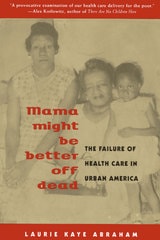
Mama Might Be Better Off Dead
The Failure of Health Care in Urban AmericaLaurie Kaye Abraham
University of Chicago Press, 1993
The story takes place in North Lawndale, a neighborhood that lies in the shadows of Chicago's Loop. Although surrounded by some of the city's finest medical facilities, North Lawndale is one of the sickest, most medically underserved communities in the country. Headed by Jackie Banes, who oversees the care of a diabetic grandmother, a husband on kidney dialysis, an ailing father, and three children, the Banes family contends with countless medical crises. From visits to emergency rooms and dialysis units, to trials with home care, to struggles for Medicaid eligibility, Abraham chronicles their access (or lack of access) to medical care.
Told sympathetically but without sentimentality, their story reveals an inadequate health care system that is further undermined by the direct and indirect effects of poverty. When people are poor, they become sick easily. When people are sick, their families quickly become poorer.
Embedded in the family narrative is a lucid analysis of the gaps, inconsistencies, and inequalities the poor face when they seek health care. This book reveals what health care policies crafted in Washington, D. C. or state capitals look like when they hit the street. It shows how Medicaid and Medicare work and don't work, the Catch-22s of hospital financing in the inner city, the racial politics of organ transplants, the failure of childhood immunization programs, the vexed issues of individual responsibility and institutional paternalism. One observer puts it this way: "Show me the poor woman who finds a way to get everything she's entitled to in the system, and I'll show you a woman who could run General Motors."
Abraham deftly weaves these themes together to make a persuasive case for health care reform while unflinchingly presenting the complexities that will make true reform as difficult as it is necessary. Mama Might Be Better Off Dead is a book with the power to change the way health care is understood in America. For those seeking to learn what our current system of health care promises and what it delivers, it offers a place for the debate to begin.
Mama Might Be Better Off Dead
The Failure of Health Care in Urban AmericaLaurie Kaye Abraham
University of Chicago Press, 1994
Mama Might Be Better Off Dead immerses readers in the lives of four generations of a poor, African-American family in the neighborhood, who are beset with the devastating illnesses that are all too common in America’s inner-cities. Headed by Jackie Banes, who oversees the care of a diabetic grandmother, a husband on kidney dialysis, an ailing father, and three children, the Banes family contends with countless medical crises. From visits to emergency rooms and dialysis units, to trials with home care, to struggles for Medicaid eligibility, Laurie Kaye Abraham chronicles their access—or more often, lack thereof—to medical care. Told sympathetically but without sentimentality, their story reveals an inadequate health care system that is further undermined by the direct and indirect effects of poverty.
Both disturbing and illuminating, Mama Might Be Better Off Dead is an unsettling, profound look at the human face of health care in America. Published to great acclaim in 1993, the book in this new edition includes an incisive foreword by David Ansell, a physician who worked at Mt. Sinai Hospital, where much of the Banes family’s narrative unfolds.
Mammals of the Neotropics, Volume 2
The Southern Cone: Chile, Argentina, Uruguay, ParaguayKent H. Redford and John F. Eisenberg
University of Chicago Press, 1992
This second of a projected three volumes covers southern South America. The authors discuss the historical biogeography and contemporary habitats of the region and then
provide individual accounts for nearly 360 indigenous species, including information on size, appearance, ecology, behavior, and life history. Range maps, line drawings, and color plates supplement the text. To place the species accounts in a broader context, the authors consider the diversity of animals within each taxonomic group, examine the Neotropical species from a worldwide geographical perspective, and review taxonomic questions and
controversies. Two final chapters deal with the community ecology of mammals and the effects humans have had on the mammalian fauna of the southern cone.

Mammals of the Neotropics, Volume 3
Ecuador, Bolivia, BrazilJohn F. Eisenberg and Kent H. Redford
University of Chicago Press, 2000
Third in a series that reviewers have described as "state of the art" (Journal of Biogeography) and "invaluable to anyone interested in the mammalian fauna of the Neotropics" (Quarterly Review of Biology), this volume follows the format of its acclaimed predecessors. Chapters present not only up-to-date taxonomic information but also ecological and behavioral characteristics, conservation status, and distribution maps for most species. Numerous illustrations are provided to assist in field and laboratory identification, including exquisite color and black-and-white plates by Fiona Reid. New to this volume are chapters contributed by experts on the mammalian fossil record of this region and on its current biodiversity and biogeography. An appendix summarizes changes to the nomenclature that have altered the scientific names used in the first two volumes.
Volumes 1 and 2 of Mammals of the Neotropics, which are also available, describe the mammals of Panama, Colombia, Venezuela, Guyana, Suriname, and French Guiana (volume 1) and Chile, Argentina, Uruguay, and Paraguay (volume 2). The fourth and final volume of this series will cover the mammals of Mexico and Central America.

Mammography Wars
Analyzing Attention in Cultural and Medical DisputesAsia Friedman
Rutgers University Press, 2023
Mammography is a routine health screening performed forty million times each year in the United States, yet it remains one of the most deeply contested topics in medicine, with national health care organizations supporting conflicting guidelines. In Mammography Wars, sociologist Asia Friedman examines cultural and medical disagreements over mammography. At issue is whether to screen women under age fifty, which is rooted in deeper questions about early detection and the assumed linear and progressive development of breast cancer. Based on interviews with doctors and scientists, interviews with women ages 40 to 50, and newspaper coverage of mammography, Friedman uses the sociology of attention to map the cognitive structure of the “mammography wars,” offering insights into the entrenched nature of debates over mammography that often get missed when applying a medical lens. Friedman’s analysis also suggests the sociology of attention’s unique potential for analyzing cultural conflicts beyond mammography, and even beyond medicine.
Man-Made Medicine
Women’s Health, Public Policy, and ReformKary L. Moss, ed.
Duke University Press, 1996
These essays by physicians, lawyers, activists, and scholars present a rare interdisciplinary approach to a complex set of issues. Gender stereotyping and bias in the collection, analysis, and reporting of scientific data and in the ways health-related news is covered by the media are examined. The exclusion of women from the health care policy-making process and the effect such exclusion has on the determination of priorities among potential areas of research are also explored. With discussions of the plight of specific populations of women whose health care needs are not being sufficiently met—for example, immigrants, prisoners, the mentally ill, or women with HIV/AIDS, disabilities, or reproductive health problems—this book considers matters of race and class within the parameters of gender as it builds a fundamental challenge to the existing health care system. A range of current reform proposals are also evaluated in terms of their potential impact on women.
Suggesting no less than a radical rethinking of women’s medicine, Man-Made Medicine gives essential direction to the discussions that will shape the future of health care in this country. It will be of great interest to a wide audience, including health care advocates, policymakers, scholars, and readers generally concerned with women’s health issues.
Contributors. Ellen Barry, Laurie Beck, Joan Bertin, Janet Calvo, Wendy Chavkin, Kay Dickersin, Abigail English, Elizabeth Fee, Carol Gill, Nancy Krieger, Joyce McConnell, Judy Norsigian, Ann Scales, Susan Stefan, Lauren Schnaper, Catherine Teare

Managing Madness in the Community
The Challenge of Contemporary Mental Health CareKerry Michael Dobransky
Rutgers University Press, 0
In the wake of movies like One Flew Over the Cuckoo’s Nest and Shutter Island, most people picture the severely or chronically mentally ill being treated in cold, remote, and forbidding facilities. But the reality is very different. Today the majority of deeply troubled mental patients get treatment in nonprofit community organizations. And it is to two such organizations in the Midwest that this study looks for answers. Drawing upon a wealth of unique evidence—fifteen months of ethnographic observations, 91 interviews with clients and workers, and a range of documents—Managing Madness in the Community lays bare the sometimes disturbing nature and effects of our overly complex and disconnected mental health system.
Kerry Michael Dobransky examines the practical strategies organizations and their clients use to manage the often-conflicting demands of a host of constituencies, laws, and regulations. Bringing to light the challenges confronting patients and staff of the community-based institutions that bear the brunt of caring for the mentally ill, his book provides a useful broad framework that will help researchers and policymakers understand the key forces influencing the mental health services system today.

Managing Motherhood, Managing Risk
Fertility and Danger in West Central TanzaniaDenise Roth Allen
University of Michigan Press, 2004
In Managing Motherhood, Managing Risk, Denise Roth Allen persuasively argues that development interventions in the Third World often have unintended and unacknowledged consequences. Based on twenty-two months of fieldwork in the Shinyanga Region of west central Tanzania, this rich and engaging ethnography of women's fertility-related experiences highlights the processes by which a set of seemingly well-intentioned international maternal health policy recommendations go awry when implemented at the local level.
An exploration of how threats to maternal health have been defined and addressed at the global, national, and local levels, Managing Motherhood, Managing Risk presents two contrasting, and oftentimes competing, definitions of risk: those that form the basis of international recommendations and national maternal health policies and those that do not. The effect that these contrasting definitions of risk have on women's fertility-related experiences at the local level are explored throughout the book.
This study employs an innovative approach to the analysis of maternal health risk, one that situates rural Tanzanian women's fertility-related experiences within a broader historical and sociocultural context. Beginning with an examination of how maternal health risk was defined and addressed during the early years of British colonial rule in Tanganyika and moving to a discussion of an internationally conceived maternal health initiative that was launched on the world stage in the late 1980s, the author explores the similarities in the language used and solutions proposed by health development experts over time.
This set of "official" maternal health risks is then compared to an alternative set of risks that emerge when attention is focused on women's experiences of pregnancy and childbirth at the local level. Although some of these latter risks are often spoken about as deriving from spiritual or supernatural causes, the case studies presented throughout the second half of the book reveal that the concept of risk in the context of pregnancy and childbirth is much more complex, involving the interplay of spiritual, physical, and economic aspects of everyday life.
Manic Minds
Mania's Mad History and Its Neuro-FutureLisa M. Hermsen
Rutgers University Press, 2012
Spanning several centuries, Manic Minds traces the multiple ways in which the word "mania" has been used by popular, medical, and academic writers. It reveals why the rhetorical history of the word is key to appreciating descriptions and meanings of the "manic" episode." Lisa M. Hermsen examines the way medical professionals analyzed the manic condition during the nineteenth and twentieth centuries and offers the first in-depth analysis of contemporary manic autobiographies: bipolar figures who have written from within the illness itself.

Manitoba Medicine
A Brief HistoryIan Carr
University of Manitoba Press, 1999
Mapping "Race"
Critical Approaches to Health Disparities ResearchGómez, Laura E
Rutgers University Press, 2013
Contributors: John A. Garcia, Arline T. Geronimus, Laura E. Gómez, Joseph L. Graves Jr., Janet E. Helms, Derek Kenji Iwamoto, Jonathan Kahn, Jay S. Kaufman, Mai M. Kindaichi, Simon J. Craddock Lee, Nancy López, Ethan H. Mereish, Matthew Miller, Gabriel R. Sanchez, Aliya Saperstein, R. Burciaga Valdez, Vicki D. Ybarra
Mapping Medical Anthropology for the Twenty-First Century
Matthew J. Wolf-Meyer
Rutgers University Press, 2026
Mapping Medical Anthropology for the Twenty-First Century provides readers with a comprehensive survey of topics, methodologies, and theories in the discipline, drawing on contributions from leading anthropologists around the world. As a discipline, medical anthropology provides situational analysis of health, disease, and disability to show how the experiences of medical experts, patients, and their broader communities are informed by their social and cultural contexts. Adopting a keywords-driven approach, Mapping Medical Anthropology for the Twenty-First Century provides readers with an introduction to the concepts and approaches that have animated medical anthropology over the course of the twentieth century. Authors put these keywords into dialogue with their ethnographic and archival research to demonstrate how these concepts can be expanded to address contemporary phenomena related to health, disease, and disability. Mapping Medical Anthropology for the Twenty-First Century provides newcomers to medical anthropology with a robust introduction to the discipline, while providing experienced readers a set of chapters that explore the discipline in novel and exciting ways.

Maraña
War and Disease in the Jungles of ColombiaLina Pinto-García
University of Chicago Press, 2025
Cutaneous leishmaniasis, transmitted by female sandflies, produces skin lesions of varying size and shape. In Colombia, the insect vector of the disease is native to the same forested environments that have served as the main stage for one of the longest and most violent wars in Latin American history. As a result, the populations most affected by leishmaniasis in Colombia are members of the state army and nonstate armed groups.
Lina Pinto-García explores how leishmaniasis and the armed conflict are inextricably connected and mutually reinforcing. Maraña means “tangle” in Spanish but is also commonly used in Colombia to name the entangled greenery, braided lianas, and dense foliage that characterize the tropical forests where leishmaniasis transmission typically occurs. Pinto-García argues that leishmaniasis and the war are not merely linked but enmarañadas to each other through narratives, technologies, and practices produced by the state, medicine, biomedical research, and the armed conflict itself. All told, Maraña is a passionate study of how war has shaped the production of scientific knowledge about leishmaniasis and access to its treatments in Colombia.
Markets and Medicine
The Politics of Health Care Reform in Britain, Germany, and the United StatesSusan Giaimo
University of Michigan Press, 2002
Masks, Misinformation, and Making Do
Appalachian Health-Care Workers and the COVID-19 PandemicWendy Welch
Ohio University Press, 2023
Matchless Organization
The Confederate Army Medical DepartmentGuy R. Hasegawa, Foreword by F. Terry Hambrecht
Southern Illinois University Press, 2021
Despite the many obstacles it had to overcome—including a naval blockade, lack of a strong industrial base, and personnel unaccustomed to military life—the Richmond-based Confederate Army Medical Department developed into a robust organization that nimbly adapted to changing circumstances. In the first book to address the topic, Guy R. Hasegawa describes the organization and management of the Confederate army’s medical department. At its head was Surgeon General Samuel Preston Moore, a talented multitasker with the organizational know-how to put in place qualified medical personnel to care for sick and wounded Confederate soldiers.
Hasegawa investigates how political considerations, personalities, and, as the war progressed, the diminishing availability of human and material resources influenced decision-making in the medical department. Amazingly, the surgeon general’s office managed not only to provide care but also to offer educational opportunities to its personnel and collect medical and surgical data for future use, regardless of constant and growing difficulties.
During and after the war, the medical department of the Confederate army was consistently praised as being admirably organized and efficient. Although the department was unable to match its Union counterpart in manpower and supplies, Moore’s intelligent management enabled it to help maintain the fighting strength of the Confederate army.
Materia Medica
Black Women, White Doctors, and Spectacular GynecologyNicole N. Ivy
Duke University Press, 2026

Mathematical Models in the Health Sciences
A Computer-Aided ApproachEugene Ackerman
University of Minnesota Press, 1979
Maya Bonesetters
Manual Healers in a Changing GuatemalaBy Servando Z. Hinojosa; Illustrations by Servando G. Hinojosa
University of Texas Press, 2020
Scholarship on Maya healing traditions has focused primarily on the roles of midwives, shamans, herbalists, and diviners. Bonesetters, on the other hand, have been largely excluded from conversations about traditional health practitioners and community health resources. Maya Bonesetters is the first book-length study of bonesetting in Guatemala and situates the manual healing tradition within the current cultural context—one in which a changing medical landscape potentially threatens bonesetters’ work yet presents an opportunity to strengthen its relevance.
Drawing on extensive field research in highland Guatemala, Servando Z. Hinojosa introduces readers to a seldom documented, though nonetheless widespread, variety of healer. This book examines the work of Kaqchikel and Tz’utujiil Maya bonesetters, analyzes how they diagnose and treat injuries, and contrasts the empirical and sacred approaches of various healers. Hinojosa shows how bonesetters are carefully adapting certain biomedical technologies to meet local expectations for care and concludes that, despite pressures and criticisms from the biomedical community, bonesetting remains culturally meaningful and vital to Maya people, even if its future remains uncertain.
Meaning in Suffering
Caring Practices in the Health ProfessionsEdited by Nancy Johnston and Alwilda Scholler-Jaquish
University of Wisconsin Press, 2007

Measuring Functioning and Well-Being
The Medical Outcomes Study ApproachAnita L. Stewart and John E. Ware Jr., eds.
Duke University Press, 1992
The contributors address conceptual and methodological issues involved in measuring such important health status concepts as: physical, social, and role functioning; psychological distress and well-being; general health perceptions; energy and fatigue; sleep; and pain. The authors present psychometric results and explain how to administer, score, and interpret the measures.
Comprising the work of a number of highly respected scholars in the field of health assessment, Measuring Functioning and Well-Being will be of great interest and value to the growing number of researchers, policymakers, and clinicians concerned with the management and evaluation of health care.
Measuring Mamma's Milk
Fascism and the Medicalization of Maternity in ItalyElizabeth Dixon Whitaker
University of Michigan Press, 2000
Measuring and Modeling Health Care Costs
Edited by Ana Aizcorbe, Colin Baker, Ernst R. Berndt, and David M. Cutler
University of Chicago Press, 2018
The research in Measuring and Modeling Health Care Costs seeks to connect our knowledge of expenditures with what we are able to measure of results, probing questions of methodology, changes in the pharmaceutical industry, and the shifting landscape of physician practice. The research in this volume investigates, for example, obesity’s effect on health care spending, the effect of generic pharmaceutical releases on the market, and the disparity between disease-based and population-based spending measures. This vast and varied volume applies a range of economic tools to the analysis of health care and health outcomes.
Practical and descriptive, this new volume in the Studies in Income and Wealth series is full of insights relevant to health policy students and specialists alike.
Measuring the Gains from Medical Research
An Economic ApproachEdited by Kevin M. Murphy and Robert H. Topel
University of Chicago Press, 2003
From an economic perspective, they find, the answer is a resounding "yes": in fact, considering the extraordinary value of improvements to health, we may even be spending too little on medical research. The evidence these papers present and the conclusions they reach are both surprising and convincing: that growth in longevity since 1950 has been as valuable as growth in all other forms of consumption combined; that medical advances producing 10% reductions in mortality from cancer and heart disease alone would add roughly $10 trillion-a year's GDP-to the national wealth; or that the average new drug approved by the FDA yields benefits worth many times its cost of development.
The papers in this book are packed with these and many other surprising revelations, their sophisticated analysis persuasively demonstrating the massive economic benefits we can gain from investments in medical research. For anyone concerned about the cost and the value of such research-from policy makers to health care professionals and economists-this will be a landmark book.
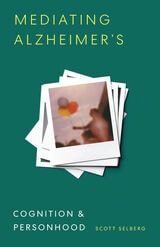
Mediating Alzheimer's
Cognition and PersonhoodScott Selberg
University of Minnesota Press, 2022
An exploration of the representational culture of Alzheimer’s disease and how media technologies shape our ideas of cognition and aging
With no known cause or cure despite a century of research, Alzheimer’s disease is a true medical mystery. In Mediating Alzheimer’s, Scott Selberg examines the nature of this enduring national health crisis by looking at the disease’s relationship to media and representation. He shows how collective investments in different kinds of media have historically shaped how we understand, treat, and live with this disease.
Selberg demonstrates how the cognitive abilities that Alzheimer’s threatens—memory, for example—are integrated into the operations of representational technologies, from Polaroid photographs to Post-its to digital artificial intelligence. Focusing on a wide variety of media technologies, such as neuroimaging, art therapy, virtual reality, and social media, he shows how these cognitively oriented media ultimately help define personhood for people with Alzheimer’s. Media have changed the practices of successful aging in the United States, and Selberg takes us deep into how technologies like digital brain-training and online care networks shape ideas of cognition and healthy aging.
Packed with startlingly fresh insights, Mediating Alzheimer’s contributes to debates around bioethics, the labor of caregiving, and a national economy increasingly invested in communication and digital media. Probing the very technologies that promise to save and understand our brains, it gives us new ways of understanding Alzheimer’s disease and aging in America.

Medicaid And The Limits of State Health Reform
Michael S. Sparer
Temple University Press, 1996
With the defeat of national health reform, many liberals have looked to the states as the source of health policy innovation. At the same time, many in the new Republican majority and several governors also support increased state control. In contrast, Michael S. Sparer convincingly argues that states by themselves can neither satisfy the liberal hope for universal coverage nor the conservative hope for cost containment. He also points to two critical drawbacks to a state-dominated health care system: the variation in coverage among states and the intergovernmental tension that would inevitably accompany such a change.
Supporting his arguments, Sparer analyzes the contradictions in operations and policies between the New York and California Medicaid programs. For instance, why does New York spend an average of $7,286 on its Medicaid beneficiaries and California an average of $2,801? The answer, the author suggests, is rooted in bureaucratic politics. California officials enjoy significant bureaucratic autonomy, while the system in New York is fragmented, decentralized, and interest-group dominated. The book supports this conclusion by exploring nursing home and home care policy, hospital care policy, and managed care policy in the two states. Sparer's dissection of the consequences of state-based reform make a persuasive case for national health insurance.
Medical Care Output and Productivity
Edited by David M. Cutler and Ernst R. Berndt
University of Chicago Press, 2001
This volume takes aim at that problem, while taking stock of where we are in our attempts to solve it. Much of this analysis focuses on the capacity to measure the value of technological change and other health care innovations. A key finding suggests that growth in health care spending has coincided with an increase in products and services that together reduce mortality rates and promote additional health gains. Concerns over the apparent increase in unit prices of medical care may thus understate positive impacts on consumer welfare. When appropriately adjusted for such quality improvements, health care prices may actually have fallen. Provocative and compelling, this volume not only clarifies one of the more nebulous issues in health care analysis, but in so doing addresses an area of pressing public policy concern.
Medical Editing
A Guide to Learning the Craft and Building Your CareerBarbara Gastel
University of Chicago Press, 2025
Medical editing is a thriving and wide-ranging specialty within the editorial profession. Its practitioners occupy a unique ecosystem that involves its own style manuals and the ability to work with highly technical medical terminology and issues, and its work helps ensure that health practitioners, researchers, and the public receive sound, understandable medical information. Today, opportunities abound for medical editors—who come from many backgrounds and work in many settings, such as medical journals, medical institutions, and the freelance realm.
Written by an experienced and award-winning editor, Medical Editing: A Guide to Learning the Craft and Building Your Career provides a thorough introduction to the profession. At levels ranging from the punctuation mark to the publication, Barbara Gastel provides accessible and concrete instruction in editing medical writing. Distinctively, the book also explores ethical issues encountered in medical editing and other topics such as working effectively with medical authors, editing medical writing by and for nonnative users of English, and editing medical conference presentations.
For those considering entering medical editing or transitioning from other employment, the book also provides helpful career guidance. Readers will learn about the range of medical editing positions, receive advice on taking medical editing tests for employment, learn about certificates and certifications in the field, and more.
Enhanced by examples, exercises, and humor, Medical Editing will benefit both prospective and beginning medical editors while serving as a useful resource for experienced editors, teachers of courses in related fields, and supervisors mentoring interns or new hires.
Medical Entanglements
Rethinking Feminist Debates about HealthcareKristina Gupta
Rutgers University Press, 2020
Medical Lives and Scientific Medicine at Michigan, 1891-1969
Joel D. Howell, Editor
University of Michigan Press, 1993