Results by title
273 books match the query 'Memoir' and 24 start with m
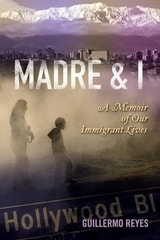
Madre and I
A Memoir of Our Immigrant LivesGuillermo Reyes
University of Wisconsin Press, 2010
In one memorable scene, after realizing that her friend Carmen is cleaning the house of one of the producers of Annie Hall, María recruits her to take her picture as she poses dramatically with Mr. Joffe’s Oscar in hand. It is María’s defiant yet determined attitude amidst her sacrifices that allows for Guillermo’s spirited coming of age and coming out.
Their common ground is the drama of their encounters with discovery, heartbreak, and passion—the explosive emotions that light up the stage of their two-actor theater.
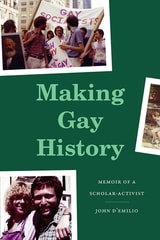
Making Gay History
Memoir of a Scholar-ActivistJohn D'Emilio
Duke University Press, 2026
Making Gay History continues John D’Emilio’s story, following his memoir of his early years, Memories of a Gay Catholic Boyhood. Here, D’Emilio recounts his career as a public historian, activist, and academic, relating his own queer history alongside the development of the LGBTQ movement in the United States. D’Emilio was part of the first burgeoning period of LGBTQ studies while still a graduate student in New York City. From there, he takes readers through his experiences as an out professor at UNC Greensboro, his activism in Washington, DC, and finally, his employment at the University of Illinois as an LGBTQ historian, a position that was unimaginable at the start of his career. At the same time, he narrates his own coming out, his successes and struggles with LGBTQ advocacy, and the loves and losses faced throughout his adult life, telling an intertwined personal and national history of queer hearts and minds.
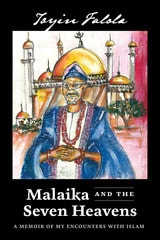
Malaika and the Seven Heavens
A Memoir of My Encounters with IslamToyin Falola
University of Michigan Press, 2025
Although faith is a lifelong journey, Falola identifies key moments in his upbringing that shaped his perception of faith, such as observing Islamic prayers, witnessing the significance of pilgrimage, engaging with spiritual leaders, and interacting with both Muslims and non-Muslims. By blending personal observations and reflections with the broader historical and cultural contexts of Islam, the book provides a unique perspective on the lived experiences of Muslims. In addition, Falola’s comparative perspective on the interaction of Christianity, Islam, and African Traditional Religion illustrates how these faiths influence and coexist with one another. Chapters explore firsthand experiences at madrassas, Islamic education, the influence of Islamic music on Yoruba culture, the historical importance of places like Oja Oba in Ibadan, the role of women in Islam, the intersection of traditional medicine with Islamic healing practices, and the broader social and political implications of Islam in Nigerian cities such as Ilorin and Lagos. Ultimately, Malaika and the Seven Heavens aims to foster a deeper appreciation for our shared humanity, inspire meaningful conversations that bridge cultural divides, and enrich our collective knowledge.
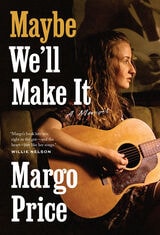
Maybe We'll Make It
A MemoirMargo Price
University of Texas Press, 2022
An October 2022 IndieNext pick
”[An] engaging and beautifully narrated quest for personal fulfillment and musical recognition...This is a fast-paced tale in which music and love always take center stage...A truly gifted musician, Price writes about her journey with refreshing candor.”—Kirkus, starred review
”Brutally honest…a vivid and poignant memoir.”—The Guardian
Country music star Margo Price shares the story of her struggle to make it in an industry that preys on its ingenues while trying to move on from devastating personal tragedies.
When Margo Price was nineteen years old, she dropped out of college and moved to Nashville to become a musician. She busked on the street, played open mics, and even threw out her TV so that she would do nothing but write songs. She met Jeremy Ivey, a fellow musician who would become her closest collaborator and her husband. But after working on their craft for more than a decade, Price and Ivey had no label, no band, and plenty of heartache.
Maybe We’ll Make It is a memoir of loss, motherhood, and the search for artistic freedom in the midst of the agony experienced by so many aspiring musicians: bad gigs and long tours, rejection and sexual harassment, too much drinking and barely enough money to live on. Price, though, refused to break, and turned her lowest moments into the classic country songs that eventually comprised the debut album that launched her career. In the authentic voice hailed by Pitchfork for tackling "Steinbeck-sized issues with no-bullshit humility," Price shares the stories that became songs, and the small acts of love and camaraderie it takes to survive in a music industry that is often unkind to women. Now an award-winning artist with a global fanbase, Price tells a love story of music, collaboration, and the struggle to build a career while trying to maintain her singular voice and style.
Meeting Sophie
A Memoir of AdoptionNancy McCabe
University of Missouri Press, 2003
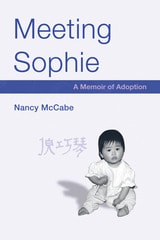
The baby is screaming again. My baby. I hoist her off the narrow hotel bed--again--and try to cradle her as I rock my torso back and forth in an uncomfortable straight-backed chair.
This baby does not cradle. She doesn't know how to cuddle, to be soothed in anyone's arms. She howls and arches away, squirms and flops, a sixteen-pound fish out of water. I'm not used to holding babies, and she's not used to be being held, but when I try to put her down, she wails. My arms feel chafed, raw, and my wrists ache from the hours of straining to hang on to her.
Huge tears pool in her eyes. These tears could break my heart. These screams could break my eardrums.
Memoir of Hungary
1944-1948Sándor Márai
Central European University Press, 1996
This scathing, at times humorous, and always insightful memoir by exiled Hungarian novelist Sándor Márai, provides one of the most poignant and human portraits of life in Hungary between the German occupation in 1944 and the solidification of communist power in 1948. Both a fervent anti-fascist and anti-communist, Márai draws a vivid portrait of the Hungarian peasantry and middle-class during this period, while delivering a telling indictment of the communist system from which he fled. Witty, aphoristic and psychologically clear-sighted, this memoir depicts the tragedy and pathos of a crucial period in the post-war history of a nation which has been 'central' to both the communists and the post-communist history of our times.
Memoir of Italo Svevo
Livia Veneziani Svevo
Northwestern University Press, 2001
Memoir of My Youth in Cuba
A Soldier in the Spanish Army during the Separatist War, 1895–1898Dolores J. Walker
University of Alabama Press, 2017
A historically significant memoir offering a firsthand perspective on life, identity, and cultural transformation in nineteenth-century Cuba.
Memoir of My Youth in Cuba: A Soldier in the Spanish Army during the Separatist War, 1895–1898 is a translation of the memoir Memorias de mi juventud en Cuba: Un soldado del ejército español en la guerra separatista (1895–1898) by Josep Conangla. The English edition is based on the Spanish version edited by Joaquín Roy, who found the memoir and was given access to the Conangla family archives. Conangla’s memoir, now available in English, is an important addition to the accounts of Spanish and Cuban soldiers who served in Cuba’s second War of Independence.
Spaniard Josep Conangla was conscripted at the age of twenty and sent to Cuba. In the course of his time there, he reaffirmed his pacifism and support of Cuban independence. The young man was a believer who unfailingly connected his view of events to the Christian humanitarianism on which he prided himself. Conangla’s advanced education and the influence of well-placed friends facilitated his assignment to safe bureaucratic positions during the war, ensuring that he would not see combat. From his privileged position, he was a keen observer of his surroundings. He described some of the decisions he made—which at times put him at odds with the military bureaucracy he served—along with what he saw as the consequences of General Valeriano Weyler’s decree mandating the reconcentración, an early version of concentration camps. What Conangla saw fueled his revulsion at the collusion of the Spanish state and its state-sponsored religion in that policy. “Red Mass,” published six years after the War of Independence and included in his memoir, is a vivid expression in verse of his abhorrence.
Conangla’s recollections of the contacts between Spaniards and Cubans in the areas to which he was assigned reveal his ability to forge friendships even with Creole opponents of the insurrection. As an aspiring poet and writer, Conangla included material on fellow writers, Cuban and Spanish, who managed to meet and exchange ideas despite their circumstances. His accounts of the Spanish defeat, the scene in Havana around the end of the war, along with his return to Spain, are stirring.
Men I Hate
A Memoir in EssaysLynette D'Amico
The Ohio State University Press, 2026
Can a lesbian who loves a trans man still call herself a lesbian? Against the backdrop of a traditional Sicilian American upbringing, Lynette D’Amico identified as a lesbian despite the expectation that her future hinged on the man she married. As a teenager, she fled her St. Louis home in the dark of night to escape her fate. No boys allowed, until one day D’Amico’s life was completely upended when her lover and spouse of twenty years—P. Carl, the acclaimed author of Becoming a Man: The Story of a Transition—told her he was a man.
Seemingly overnight, D’Amico no longer recognized her spouse in photos of past vacations or of the couple celebrating their legal gay marriage. In Men I Hate, she asks: What happens when the people we are closest to change? As D’Amico tries to engage more deeply with the man she is married to, she looks at all the men—historical figures, politicians, men in her family—in search of clear dividing lines between good men and bad, between the men she loves and the men she hates. These lines dissolve as she writes her way toward an understanding of the words marriage,husband, and home—and how we reconcile who we are with who we become.
Minding the Store
A MemoirStanley Marcus
University of North Texas Press, 1997
Miriam Hearing Sister
A MemoirMiriam Zadek
Gallaudet University Press, 2022
The prevailing ideological movements of the time permeate her family life. Zadek reveals the traumatic impact of eugenics and the fears surrounding the genetic transmission of deafness. She considers the effects of adhering to the oral method of communication in her home when sign language could have given her family the ability to interact with each other more fully. In this environment, Zadek became an astute communicator and learned to adapt to both the hearing and the deaf world, where she was known as “Miriam Hearing Sister.” Her memoir is an elegant literary work that offers an understanding of how biases and stigmas resonate and evolve, and it showcases her loving family of strong women who pushed against stereotypes and have thrived across generations.
Missing Persons
A MemoirGayle Greene
University of Nevada Press, 2017
The memoir is structured as an account of her mother's and aunt’s final days and the year that follows, a year in which she reconstructs her life. This is a powerful story about family, what it means to have one, to lose one, never to have made one, and what, if anything, might take its place. It’s the story of a vexed mother-daughter relationship that mellows with age. It is also a search for home, as the very landscape shifts around her and the vast orchards are dug up and paved over for tract housing, strip malls, freeways, and the Santa Clara Valley, once known as the Valley of Heart’s Delight, is transformed to “Silicon.”
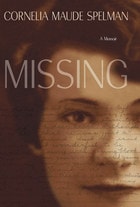
Missing
A MemoirCornelia Maude Spelman
Northwestern University Press, 2010
Acclaimed children’s book author Cornelia Maude Spelman’s memoir of her family springs from a meeting and subsequent friendship with the late, legendary New Yorker editor William MaxwellIn the 1920s, he and her parents had been friends as undergraduates at the University of Illinois at Urbana-Champaign. When Spelman hints at what she thinks of as the failure of her parents’ lives, he counters that “in a good novel one doesn’t look for a success story, but for a story that moves one with its human drama and richness of experience.”
At their final meeting, Maxwell encourages her to tell her mother’s story. Missing is Spelman’s response to Maxwell’s wisdom. With the pacing of the mystery novels her mother loved, and using everything from letters and interviews to the family’s quotidian paper trail—medical records, telegrams, and other oft-overlooked clues to a family’s history—Spelman reconstructs her mother’s life and untimely death. Along the way, she unravels mysteries of her family, including the fate of her long lost older brother.
Spelman skillfully draws the reader into the elation and sorrow that accompany the discovery of a family’s past. A profoundly loving yet honest elegy, Missing is, like the woman it memorializes, complex and beautiful.
Mistaken for an Empire
A Memoir in TonguesChristine Imperial
The Ohio State University Press, 2023
More Than Words
A Memoir of a Writing LifeJerry Apps
Wisconsin Historical Society Press, 2022
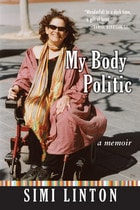
My Body Politic
A MemoirSimi Linton
University of Michigan Press, 2005
-Daniel Berrigan, S.J.
"The struggles, joys, and political awakening of a firecracker of a narrator. . . . Linton has succeeded in creating a life both rich and enviable. With her crackle, irreverence, and intelligence, it's clear that the author would never be willing to settle. . . . Wholly enjoyable."
-Kirkus Reviews
"Linton is a passionate guide to a world many outsiders, and even insiders, find difficult to navigate. . . . In this volume, she recounts her personal odyssey, from flower child . . . to disability-rights/human rights activist."
-Publishers Weekly
"Witty, original, and political without being politically correct, introducing us to a cast of funny, brave, remarkable characters (including the professional dancer with one leg) who have changed the way that 'walkies' understand disability. By the time Linton tells you about the first time she was dancing in her wheelchair, you will feel like dancing, too."
---Carol Tavris, author of Anger: The Misunderstood Emotion
"This astonishing book has perfect pitch. It is filled with wit and passion. Linton shows us how she learned to 'absorb disability,' and to pilot a new and interesting body. With verve and wonder, she discovers her body's pleasures, hungers, surprises, hurts, strengths, limits, and uses."
-Rosemarie Garland-Thomson, author of Extraordinary Bodies: Figuring Physical Disability in American Culture and Literature
"An extraordinarily readable account of life in the fast lane... a brilliant autobiography and a great read."
-Sander L. Gilman, author of Fat Boys: A Slim Book
While hitchhiking from Boston to Washington, D.C., in 1971 to protest the war in Vietnam, Simi Linton was involved in a car accident that paralyzed her legs and took the lives of her young husband and her best friend. Her memoir begins with her struggle to regain physical and emotional strength and to resume her life in the world. Then Linton takes us on the road she traveled (with stops in Berkeley, Paris, Havana) and back to her home in Manhattan, as she learns what it means to be a disabled person in America.
Linton eventually completed a Ph.D., remarried, and began teaching at Hunter College. Along the way she became deeply committed to the disability rights movement and to the people she joined forces with. The stories in My Body Politic are populated with richly drawn portraits of Linton's disabled comrades, people of conviction and lusty exuberance who dance, play-and organize--with passion and commitment.
My Body Politic begins in the midst of the turmoil over Vietnam and concludes with a meditation on the U.S. involvement in the current war in Iraq and the war's wounded veterans. While a memoir of the author's gradual political awakening, My Body Politic is filled with adventure, celebration, and rock and roll-Salvador Dali, James Brown, and Jimi Hendrix all make cameo appearances. Linton weaves a tale that shows disability to be an ordinary part of the twists and turns of life and, simultaneously, a unique vantage point on the world.
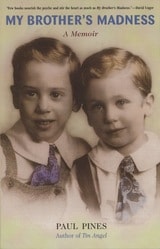
My Brother's Madness
A MemoirPaul Pines
Northwestern University Press, 2007
My Brother's Madness is part thriller, part exploration that not only describes the causes, character, and journey of mental illness, but also makes sense of it. It is ultimately a story of our own humanity, and answers the question, Am I my brother's keeper?
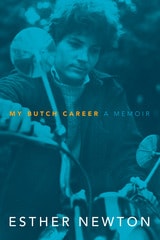
My Butch Career
A MemoirEsther Newton
Duke University Press, 2018
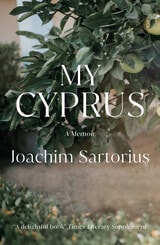
My Cyprus
A MemoirJoachim Sartorius
Haus Publishing, 2021
The island of Cyprus has been a site of global history and conquest, and its strategic position means it has been coveted by one foreign power after another. The Phoenicians, Greeks, Romans, Byzantines, Venetians, Genoese, Ottomans, and British have all left their mark. Along with the Roman and Byzantine ruins of Salamis, the island holds impressive monuments dating from the Frankish and Venetian times: the Abbey of Bellapais, the fortified harbor of Kyrenia, and the magnificent cathedrals of Nicosia and Famagusta, the setting for Shakespeare’s Othello.
Having lived in Cyprus for three years, Joachim Sartorius returns to the island’s cultures and legends and brings to life the colors and lights of the Levant area of the Middle East. He sifts through the sediments of the island’s history, including its division after the Turkish invasion of 1974 and the difficulties that followed. Rather than focusing solely on historical or political factors, this book is the work of a poet, who, with the help of both Greek and Turkish Cypriot friends, tries to understand this unique place.
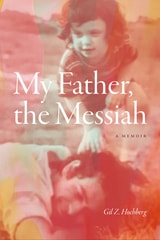
My Father, the Messiah
A MemoirGil Z. Hochberg
Duke University Press, 2026
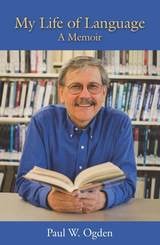
My Life of Language
A Memoirogden
Gallaudet University Press, 2017
Paul W. Ogden has dedicated his life to educating young deaf and hard of hearing people and raising awareness of what it means to be deaf in a hearing world. He has taught and mentored a generation of teachers, and his classic volume, The Silent Garden, has served as a guide for parents and educators for over thirty years. Now he tells his personal story of challenges faced and lessons learned, revealing that the critical, guiding factors for him have always been language and successful communication.
Born in a time when many deaf children had no access to language, Paul learned spoken and written language skills at a young age through the painstaking efforts of his mother. His tight-knit family, which included one deaf and two hearing older brothers, facilitated open and constant communication using a variety of methods. His father was a pastor who was involved in the civil rights movement. He struggled with depression, an illness that would take the life of one of Paul’s brothers. As a student at a residential deaf school where the use of American Sign Language (ASL) was suppressed, Paul continued to build on the speech and lipreading skills he had learned at home. He returned home for high school and graduated as co-valedictorian—unaware of the standing ovation he received as he walked to the podium.
Following a rewarding experience as an undergraduate at Antioch College, Paul went on to earn a PhD from the University of Illinois, a rare accomplishment for a deaf person at that time. During his graduate studies, he finally had the opportunity to learn ASL. As an award-winning professor of Deaf Studies at California State University, Fresno, he successfully petitioned for the university to recognize ASL as a language, and he established the Silent Garden program, which has grown into a flourishing provider of training and resources to support the Deaf community. In My Life of Language, Paul offers eloquent reflections on both the joyful and difficult periods of his life as he navigated relationships, faced discrimination, questioned his faith, and found great happiness in his marriage.
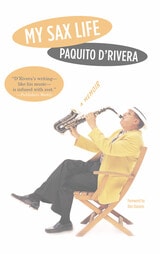
My Sax Life
A MemoirPaquito D'Rivera
Northwestern University Press, 2008
Winner of 2005 Grammy Award for Best Instrumental Composition
Winner of 2005 National Medal of Arts
My Sax Life is the award-winning memoir of famed Cuban musician Paquito D'Rivera. A best-selling artist with more than thirty solo albums to his credit, D'Rivera has performed at the White House and the Blue Note, and with orchestras, jazz ensembles, and chamber groups around the world. Propelled by jazz-fueled high spirits, D'Rivera's story soars and spins from memory to memory in a collage of his remarkable life. D'Rivera recalls his early nightclub appearances as a child, performing with clowns and exotic dancers, as well as his search for artistic freedom in communist Cuba and his hungry explorations of world music after his defection. Opinionated but always good-humored, My Sax Life is a fascinating statement on art and the artist's life.
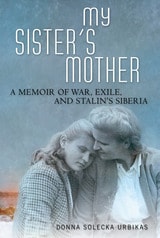
My Sister's Mother
A Memoir of War, Exile, and Stalin’s SiberiaDonna Solecka Urbikas
University of Wisconsin Press, 2019
In 1940, Janina Ślarzynska and her five-year-old daughter Mira were taken by Soviet secret police (NKVD) from their small family farm in eastern Poland and sent to Siberia with hundreds of thousands of others. So began their odyssey of hunger, disease, cunning survival, desperate escape across a continent, and new love amidst terrible circumstances.
But in the 1950s, baby boomer Donna yearns for a “normal” American family while Janina and Mira are haunted by the past. In this unforgettable memoir, Donna recounts her family history and her own survivor’s story, finally understanding the damaged mother who had saved her sister.
Finalist, Best Traditional Non-Fiction Book, Chicago Writers Association
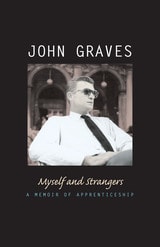
Myself and Strangers
A Memoir of ApprenticeshipBy John Graves
University of Texas Press, 2005
In Myself and Strangers, John Graves, the highly regarded author of Goodbye to a River and other classic works, recalls the decade-long apprenticeship in which he found his voice as a writer. He recounts his wanderings from Texas to Mexico, New York, and Spain, where, like Hemingway, he hoped to find the material with which to write books that mattered. With characteristic honesty, Graves admits the false starts and dead ends that dogged much of his writing, along with the exhilaration he felt when the words finally flowed. He frankly describes both the pleasures and the restlessness of expatriate life in Europe after World War II—as well as his surprising discovery, when family obligations eventually called him home to Texas, that the years away had prepared him to embrace his native land as the fit subject matter for his writing. For anyone seeking the springs that fed John Graves' best-loved books, this memoir of apprenticeship will be genuinely rewarding.