153 books match the query 'Metaphysics' and 16 start with m
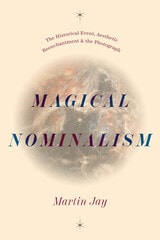
cover of Magical Nominalism: The Historical Event, Aesthetic Reenchantment, and the Photograph

Magical Nominalism

The Historical Event, Aesthetic Reenchantment, and the Photograph

Martin Jay

University of Chicago Press, 2025

A bold and wide-ranging study across centuries, examining the conflict between “conventional” and “magical” nominalism in philosophy, history, aesthetics, political theory, and photography.

In this magisterial new book, intellectual historian Martin Jay traces the long-standing competition between two versions of nominalism—the “conventional” and the “magical.” Since at least William of Ockham, according to Jay, the conventional form of nominalism has contributed to the disenchantment of the world, by viewing general terms as nothing more than mere names we use to group particular objects together, rejecting the idea that they refer to a further, “higher” reality. Magical nominalism, instead, performs a reenchanting function, by investing proper names, disruptive events, and singular objects with an auratic power of their own. Drawing in part on Jewish theology, it challenges the elevation of the constitutive subject resulting from Ockham’s reliance on divine will in his critique of real universals.
 
Starting with the fourteenth-century revolution of nominalism against Scholastic realism, Jay unpacks various “counterrevolutions” against nominalism itself, including a magical alternative to its conventional form. Focusing on fundamental debates over the relationship between language, thought, and reality, Jay illuminates connections across thinkers, disciplines, and vast realms of human experience. Ranging from theology and philosophy of history to aesthetics and political theory, this book engages with a range of artists and thinkers, including Adorno, Ankersmit, Badiou, Barthes, Bataille, Benjamin, Blumenberg, Derrida, Duchamp, Foucault, Kracauer, Kripke, and Lyotard. Ultimately, Magical Nominalism offers a strikingly original way to understand humanity’s intellectual path to modernity.

[more]
cover of Manifesto of a Passionate Moderate: Unfashionable Essays

Manifesto of a Passionate Moderate

Unfashionable Essays

Susan Haack

University of Chicago Press, 1998

Forthright and wryly humorous, philosopher Susan Haack deploys her penetrating analytic skills on some of the most highly charged cultural and social debates of recent years. Relativism, multiculturalism, feminism, affirmative action, pragmatisms old and new, science, literature, the future of the academy and of philosophy itself—all come under her keen scrutiny in Manifesto of a Passionate Moderate.

"The virtue of Haack's book, and I mean virtue in the ethical sense, is that it embodies the attitude that it exalts. . . Haack's voice is urbane, sensible, passionate—the voice of philosophy that matters. How good to hear it again."—Jonathan Rauch, Reason

"A tough mind, confident of its power, making an art of logic . . . a cool mastery."—Paul R. Gross, Wilson Quarterly

"Few people are better able to defend the notion of truth, and in strong, clear prose, than Susan Haack . . . a philosopher of great distinction."—Hugh Lloyd-Jones, National Review

"If you relish acute observation and straight talk, this is a book to read."—Key Reporter (Phi Beta Kappa)

"Everywhere in this book there is the refreshing breeze of common sense, patiently but inexorably blowing."—Roger Kimball, Times Literary Supplement

"A refreshing alternative to the extremism that characterizes so much rhetoric today."—Kirkus Reviews

[more]
cover of Martin Heidegger

Martin Heidegger

George Steiner

University of Chicago Press, 1987

A compact, lucid introduction to the work of one of the most important, challenging, and controversial philosophers of the twentieth century 

Acquaintance with the work of Martin Heidegger is indispensable to an understanding of contemporary thought and culture. His work has had a profound influence on a number of disciplines, including theology, Sartrean existentialism, linguistics, Hellenic studies, the structuralist and hermeneutic schools of textual interpretation, literary theory, and literature itself. With characterisitc lucidity and style, George Steiner makes this philosopher’s immensely difficult body of work accessible to the general reader. The breadth of Steiner’s learning and interests also allows him to place Heidegger in a broader Continental literary-cultural context. In a new Introduction, Steiner addresses language and philosophy and the rise of Nazism
 
[more]
cover of Metaphysical Disputation I: On the Nature of First Philosophy or Metaphysics

Metaphysical Disputation I

On the Nature of First Philosophy or Metaphysics

Francisco Suarez

Catholic University of America Press, 2021
Francisco Suárez (1548-1617) was one of the most important philosophers and theologians of Early Modern Scholasticism. Although Suárez spent most of his academic career as a professor of theology, he is better known today for his Metaphysical Disputations (Salamanca, 1597). The present volume contains a facing-page English translation of Metaphysical Disputation I, which is introductory and devoted to the nature of metaphysics itself. In it, Suárez first specifies this science’s object and nature (Sections 1 and 2) and then discusses its unity (Section 3), its end, utility and functions (Section 4), its status as the most perfect natural science and true wisdom (Section 5), and finally the thesis that it is the science most of all desired by means of a natural appetite (Section 6). Those interested in late scholastic conceptions of metaphysics and their influence on the better known metaphysical systems of the seventeenth century – e.g., Descartes’s – will find the volume especially useful. The Latin text contained in this volume introduces a significant number of corrections to the text of the Vivès edition, the one standardly used by scholars of Suárez, and thus more faithfully reproduces the text of the first edition. The volume also contains a lengthy introduction that provides a detailed survey of the disputation’s principal claims and arguments.
[more]
cover of Metaphysical Disputation II: On the Essential Concept or Concept of Being

Metaphysical Disputation II

On the Essential Concept or Concept of Being

Francisco Suarez

Catholic University of America Press, 2022
Francisco Suárez (1548-1617) was one of the most important philosophers and theologians of early modern Aristotelian scholasticism. Although Suárez spent most of his academic career as a professor of theology, he is better known today for his Metaphysical Disputations (Salamanca, 1597). The present volume contains a facing-page English translation of Metaphysical Disputation II, which is devoted to the nature of real being, the subject of metaphysics. In it, Suárez is especially concerned, first, to argue there is a single nature of being common to all real beings, and second, to show what this nature consists in. The Latin text contained in this volume introduces a significant number of corrections to the text of the Vivès edition, the one standardly used by scholars of Suárez, and thus more faithfully reproduces the text of the first edition. The volume also contains a lengthy introduction that provides a detailed survey of the disputation’s principal claims and arguments.
[more]
cover of Metaphysical Disputations III and IV: On Being's Passions in General and Its Principles and On Transcendental Unity in General

Metaphysical Disputations III and IV

On Being's Passions in General and Its Principles and On Transcendental Unity in General

Francisco Suarez

Catholic University of America Press, 2023

Francisco Suárez (1548-1617) was one of the most important philosophers and theologians of Early Modern Scholasticism. Although Suárez spent most of his academic career as a professor of theology, he is better known today for his Metaphysical Disputations (Salamanca, 1597). The present volume contains a facing-page English translation of Metaphysical Disputations III & IV. Metaphysical Disputation III offers a general treatment of the properties of being as such, while Metaphysical Disputation IV deals with one of these properties in particular, transcendental unity. The Latin text contained in this volume introduces a significant number of corrections to the text of the Vivès edition, the one standardly used by scholars of Suárez, and thus more faithfully reproduces the text of the first edition. The volume also contains a lengthy introduction that provides a detailed survey of the disputations’ principal claims and arguments.
[more]
cover of Metaphysical Horror

Metaphysical Horror

Leszek Kolakowski

University of Chicago Press, 2001

For over a century, philosophers have argued that philosophy is impossible or useless, or both. Although the basic notion dates back to the days of Socrates, there is still heated disagreement about the nature of truth, reality, knowledge, the good, and God. This may make little practical difference to our lives, but it leaves us with a feeling of radical uncertainty, a feeling described by Kolakowski as "metaphysical horror." "The horror is this," he says, "if nothing truly exists except the Absolute, the Absolute is nothing; if nothing truly exists except myself, I am nothing." The aim of this book, for Kolakowski, is finding a way out of this seeming dead end.

In a trenchant analysis that serves as an introduction to nearly all of Western philosophy, Kolakowski confronts these dilemmas head on through examinations of several prominent philosophers including Descartes, Spinoza, Husserl, and many of the Neo-Platonists. He finds that philosophy may not provide definitive answers to the fundamental questions, yet the quest itself transforms our lives. It may undermine most of our certainties, yet it still leaves room for our spiritual yearnings and religious beliefs.

The final sentence of the book captures the hopefulness that has survived the horror of nothingness when Kolakowski asks: "Is it not reasonable to suspect that if existence were pointless and the universe devoid of meaning, we would never have achieved not only the ability to imagine otherwise, but even the ability to entertain this very thought—to wit, that existence is pointless and the universe devoid of meaning?" The answer, of course, is clear. Now it is up to readers to take up the challenge of his arguments.
[more]
cover of Metaphysical Themes in Thomas Aquinas

Metaphysical Themes in Thomas Aquinas

John F. Wippel

Catholic University of America Press, 1995
In this volume, John Wippel has collected a number of his essays dealing with Aquinas's metaphysical thought. The volume begins with a presentation and critical evaluation of certain twentieth-century attempts to describe the philosophical thought of Thomas Aquinas as a "Christian philosophy."
[more]
cover of Metaphysical Themes in Thomas Aquinas II

Metaphysical Themes in Thomas Aquinas II

John F. Wippel

Catholic University of America Press, 2007

This volume contains eleven articles and book chapters written by John Wippel since the publication of his Metaphysical Themes in Thomas Aquinas in 1984.
[more]
cover of Metaphysical Themes in Thomas Aquinas III

Metaphysical Themes in Thomas Aquinas III

John F. Wippel

Catholic University of America Press, 2020

Metaphysical Themes in Thomas Aquinas III is Msgr. John Wippel’s third volume dedicated to the metaphysical thought of Thomas Aquinas. After an introduction, this volume of collected essays begins with Wippel’s interpretation of the discovery of the subject of metaphysics by a special kind of judgment (“separation”). In subsequent chapters, Wippel turns to the relationship between faith and reason, exploring what are known as the preambles of faith. This is followed by two chapters on the important contributions by Cornelio Fabro on Aquinas’s distinction between essence and esse and on participation. The volume continues with articles on Aquinas’s view of creation as a preamble of faith, Aquinas’s much-disputed defense of unicity of substantial form in creatures, his account of the separated soul’s natural knowledge, and Aquinas’s understanding of evil in his De Malo 1. The volume concludes with an article comparing Bonaventure, Aquinas, and Godfrey of Fontaines on the metaphysical composition of angelic beings. Most of these issues were disputed during Aquinas’s time by some of his contemporaries, and the proper understanding of each continues to be debated by various students of his thought today. Wippel’s purpose, therefore, is to help clarify our understanding of Aquinas’s thought on each of these topics, a task that requires the careful analysis of primary sources and of secondary literature and attention to the relative chronology of his writing.
[more]
cover of Metaphysics

Metaphysics

Aristotle

University of Michigan Press, 1952

Aristotle's great work translated into English with an index giving Greek, Latin, and English forms of key terms
[more]
cover of Metaphysics

Metaphysics

Bruce Aune

University of Minnesota Press, 1985

Comprehensive introductory survey of the key concepts and problems in traditional and contemporary metaphysics.

A comprehensive introductory study of the key concepts and problems in traditional and contemporary metaphysics. Aune presents and defends a point of view that is naturalistic, nominalistic and pragmatic-an approach that has the overall advantage of providing a coherent, structured view of the topics he discusses.
[more]
cover of Metaphysics as Mediating Dialogue

Metaphysics as Mediating Dialogue

Olivia Blanchette

Catholic University of America Press, 2023
Metaphysics is not often spoken of as a venue for dialogue about anything, let alone culture or religion, which are more readily associated with phenomenology or hermeneutics in contemporary thinking. This collection of essays, however, by the late Boston College philosopher Oliva Blanchette, maintains the absolute necessity of metaphysics as a prerequisite for examining any particular ‘realm of being,’ in all areas of human inquiry, from the particular sciences to historical cultures and religions. Blanchette proposes metaphysics as a fundamental and necessary level of intelligence presupposed in any exercise of judgment, discourse, or dialogue, among rational beings. At the same time, he defends the idea that dialogue is the first and most fundamental form in which such reasoning takes place in human experience, on a radically intersubjective level through language. Metaphysics is not an abstraction removed from human experience. Rather, it is a science in its own right defining itself in relation to ‘being as being’, its subject matter, as it depends on all the particular sciences and bodies of knowledge. Firmly standing on the ground of human experience, and on the human person as primary analogate of being, it opens up an entire realm of questioning that the particular sciences and bodies of knowledge, operating in functional separation, cannot pose on their own, especially when they take, in a reductionist fashion, their own object to be the prime analogate. Metaphysics, in fact, insinuates itself into each and every particular science in exploring its own subject matter of ‘being as being’ in the analogical sense, advancing to more and more complex stages of analogy through dialogue among different spirits and cultures, and reaching its terminus in the transcendent aspect of spirit and religion. In this sense, metaphysics has much to say to theologians: without metaphysics, theology reduces to mere superstition.
[more]
cover of Metaphysics, Materialism, and the Evolution of Mind: The Early Writings of Charles Darwin

Metaphysics, Materialism, and the Evolution of Mind

The Early Writings of Charles Darwin

Charles Darwin

University of Chicago Press, 1980

First published in 1974 as a companion volume to Darwin on Man by Howard E. Gruber, Paul Barrett’s transcriptions of Darwin’s M and N notebooks served to shed new light on the evolutionist’s methods and motivation.

According to Stephen Jay Gould in the New York Times Book Review, “Darwin kept [these notebooks] primarily in 1838, when he was 29 years old. In them, he recorded his early conviction of evolutionary continuity between humans and all other animals. . . . These notebooks display all the features of humanistic intellect that his detractors denied. We find erudition in his comments on Plato, Locke, Hume, Adam Smith, Whewell, Burke, Montaigne, Lessing and Spencer. . . . We appreciate an artistic bent in his delight with nature and her prophet Wordsworth. . . . We grasp the breadth of his bold attempt to clothe all human thought and behaviour in a new evolutionary garb. . . . Charles Darwin was reconstructing the world and he knew exactly what he was doing.” 
[more]
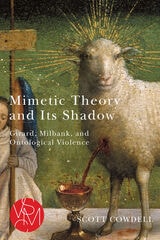
cover of Mimetic Theory and Its Shadow: Girard, Milbank, and Ontological Violence

Mimetic Theory and Its Shadow

Girard, Milbank, and Ontological Violence

Scott Cowdell

Michigan State University Press, 2023

Leading Girardian theologian Scott Cowdell seeks to resolve a long-standing challenge to mimetic theory: that it entails a fundamental brutishness—an ontological violence. Girard’s account of scapegoating violence, seen as providing the initial stability for our species to emerge and consolidate, hardly seems compatible with Christian belief in God’s good creation, with violence only appearing after a subsequent Fall. The brilliant but controversial theologian John Milbank has long raised this concern about Girard, grounded in a remarkably sophisticated (though seldom fathomed) philosophical theology. Unpacking Milbank’s program, along with Girard’s recasting of Continental philosophy in light of mimetic theory, Cowdell finds a way between two apparently irreconcilable positions. With irenic spirit but analytic tenacity, he probes for ways through Milbank’s arguments while pressing on growth points in Girard’s. Cowdell’s proposals involve reframing divine creation in light of salvation history, reimagining divine participation by thinking Christ and evolution together, and developing a semiotic approach to mimetic theory that delivers ontological peace hermeneutically. Cowdell shows how Girard’s vision of human transformation through faith in Christ reveals a different world beyond ontological violence while preserving the divine participation that Milbank champions.
[more]
cover of Mortality and Morality: A Search for Good After Auschwitz

Mortality and Morality

A Search for Good After Auschwitz

Hans Jonas

Northwestern University Press, 1996

Mortality and Morality both consummates and demonstrates the basic thrust of Jonas's thought: the inseparability of ethics and metaphysics, the reality of values at the center of being.
[more]