Results by title
58 books match the query 'Meteorology & Climatology' and 4 start with m
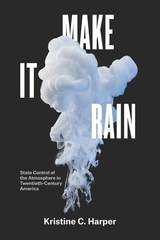
Make It Rain
State Control of the Atmosphere in Twentieth-Century AmericaKristine C. Harper
University of Chicago Press, 2017
Weather control. Juxtaposing those two words is enough to raise eyebrows in a world where even the best weather models still fail to nail every forecast, and when the effects of climate change on sea level height, seasonal averages of weather phenomena, and biological behavior are being watched with interest by all, regardless of political or scientific persuasion. But between the late nineteenth century—when the United States first funded an attempt to “shock” rain out of clouds—and the late 1940s, rainmaking (as it had been known) became weather control. And then things got out of control.
In Make It Rain, Kristine C. Harper tells the long and somewhat ludicrous history of state-funded attempts to manage, manipulate, and deploy the weather in America. Harper shows that governments from the federal to the local became helplessly captivated by the idea that weather control could promote agriculture, health, industrial output, and economic growth at home, or even be used as a military weapon and diplomatic tool abroad. Clear fog for landing aircraft? There’s a project for that. Gentle rain for strawberries? Let’s do it! Enhanced snowpacks for hydroelectric utilities? Check. The heyday of these weather control programs came during the Cold War, as the atmosphere came to be seen as something to be defended, weaponized, and manipulated. Yet Harper demonstrates that today there are clear implications for our attempts to solve the problems of climate change.
In Make It Rain, Kristine C. Harper tells the long and somewhat ludicrous history of state-funded attempts to manage, manipulate, and deploy the weather in America. Harper shows that governments from the federal to the local became helplessly captivated by the idea that weather control could promote agriculture, health, industrial output, and economic growth at home, or even be used as a military weapon and diplomatic tool abroad. Clear fog for landing aircraft? There’s a project for that. Gentle rain for strawberries? Let’s do it! Enhanced snowpacks for hydroelectric utilities? Check. The heyday of these weather control programs came during the Cold War, as the atmosphere came to be seen as something to be defended, weaponized, and manipulated. Yet Harper demonstrates that today there are clear implications for our attempts to solve the problems of climate change.
[more]
Masters of Uncertainty
Weather Forecasters and the Quest for Ground TruthPhaedra Daipha
University of Chicago Press, 2015
Though we commonly make them the butt of our jokes, weather forecasters are in fact exceptionally good at managing uncertainty. They consistently do a better job calibrating their performance than stockbrokers, physicians, or other decision-making experts precisely because they receive feedback on their decisions in near real time. Following forecasters in their quest for truth and accuracy, therefore, holds the key to the analytically elusive process of decision making as it actually happens.
In Masters of Uncertainty, Phaedra Daipha develops a new conceptual framework for the process of decision making, after spending years immersed in the life of a northeastern office of the National Weather Service. Arguing that predicting the weather will always be more craft than science, Daipha shows how forecasters have made a virtue of the unpredictability of the weather. Impressive data infrastructures and powerful computer models are still only a substitute for the real thing outside, and so forecasters also enlist improvisational collage techniques and an omnivorous appetite for information to create a locally meaningful forecast on their computer screens. Intent on capturing decision making in action, Daipha takes the reader through engrossing firsthand accounts of several forecasting episodes (hits and misses) and offers a rare fly-on-the-wall insight into the process and challenges of producing meteorological predictions come rain or come shine. Combining rich detail with lucid argument, Masters of Uncertainty advances a theory of decision making that foregrounds the pragmatic and situated nature of expert cognition and casts into new light how we make decisions in the digital age.
In Masters of Uncertainty, Phaedra Daipha develops a new conceptual framework for the process of decision making, after spending years immersed in the life of a northeastern office of the National Weather Service. Arguing that predicting the weather will always be more craft than science, Daipha shows how forecasters have made a virtue of the unpredictability of the weather. Impressive data infrastructures and powerful computer models are still only a substitute for the real thing outside, and so forecasters also enlist improvisational collage techniques and an omnivorous appetite for information to create a locally meaningful forecast on their computer screens. Intent on capturing decision making in action, Daipha takes the reader through engrossing firsthand accounts of several forecasting episodes (hits and misses) and offers a rare fly-on-the-wall insight into the process and challenges of producing meteorological predictions come rain or come shine. Combining rich detail with lucid argument, Masters of Uncertainty advances a theory of decision making that foregrounds the pragmatic and situated nature of expert cognition and casts into new light how we make decisions in the digital age.
[more]

Microwave Circuit Theory and Foundations of Microwave Metrology
Glenn F. Engen
The Institution of Engineering and Technology, 1992
No system in science or engineering can be successfully designed, analysed and specified unless it is backed up by precise quantitative measurements. This is particularly difficult in the field of microwaves where, more often than not, the parameter(s) of interest cannot be observed directly but must be inferred from the measurement of other related parameters. Although the advent of the automated network analyser has eliminated much of the previous drudgery, the problems of interpreting the digitally displayed information still remain. One purpose of this book is to provide the reader with a thorough understanding of the microwave circuit model and its limitations, and thus eliminate the many potential pitfalls that otherwise await the unwary experimenter.
[more]
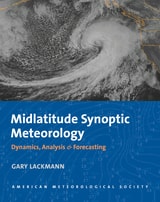
Midlatitude Synoptic Meteorology
Dynamics, Analysis, and ForecastingGary Lackmann
American Meteorological Society, 2011
The past decade has been characterized by remarkable advances in meteorological observation, computing techniques, and data-visualization technology. However, the benefit of these advances can only be fully realized with the introduction of a systematic, applied approach to meteorological education that allows well-established theoretical concepts to be applied to modernized observational and numerical datasets.
This textbook links theoretical concepts to modern technology and facilitates the meaningful application of concepts, theories, and techniques using real data. As such, it will both serve those planning careers in meteorological research and weather prediction, and provide a template for the application of modern technology in a classroom and laboratory setting.
Synoptic-dynamic meteorology, synoptically driven mesoscale phenomena, weather forecasting, and numerical weather prediction are covered in depth in this text, which is intended for undergraduates and beginning graduate students in the atmospheric sciences.
[more]