Results by title
479 books match the query 'Methodology' and 29 start with m
Macroanalysis
Digital Methods and Literary HistoryMatthew L. Jockers
University of Illinois Press, 2013
Making Sense of Business Reference
A Guide for Librarians and Research ProfessionalsCelia Ross
American Library Association, 2020
“It reads as if you have an expert coach in business reference helping you each step of the way." That’s how Academic BRASS summarized the first edition of this unique, unparalleled resource authored by Ross, a past winner of the Gale Cengage Learning Award for Excellence in Business Librarianship. Now she’s revised and updated it to tackle even more “bizref” headscratchers related to investment and finance, consumer behavior and statistics, company, and industry research. In addition to general reference strategies in each chapter that give you the lay of the land, inside you’ll find
- overviews of more than fifty databases for articles, company and industry, directories, consumer, international, or raw data;
- 33 real-life "Stumper" questions, all new for this edition, drawn from librarians in the field;
- why asking “who cares about this kind of question” reveals potential sources;
- techniques for applying reference interview techniques to business questions;
- advice on where to find the numbers for answering finance questions;
- expanded coverage of venture capital research and business information literacy;
- “Start Making Sense” suggestions for further skill-building; and
- questions to consider when building a bizref collection.
This is the guide to keep at your side when serving business students, job-seekers, investors, or entrepreneurs in your library.

Making Sense of Business Reference
A Guide for Librarians and Research ProfessionalsCelia Ross
American Library Association, 2013
Making Senses of the Past
Toward a Sensory ArchaeologyEdited by Jo Day
Southern Illinois University Press, 2013
In ancient Peru, a site provides sensory surprises as voices resound beneath the ground and hidden carvings slowly reveal their secrets. In Canada and New Zealand, the flicker of reflected light from a lake dances on the faces of painted rocks and may have influenced when and why the pigment was applied. In Mesopotamia, vessels for foodstuffs build a picture of a past cuisine that encompasses taste and social activity in the building of communities. While perfume and flowers are examined in various cultures, in the chamber tombs of ancient Roman Palestine, we are reminded that not all smells are pleasant. Making Senses of the Past explores alternative ways to perceive past societies and offers a new way of wiring archaeology that incorporates the senses.
Managing Grey Literature
Technical Services PerspectivesMichelle Leonard
American Library Association, 2021
An important resource for scholarly research, grey literature is relevant to every discipline. It’s also often more current than commercial publications. Unfortunately, though it provides a richness of content, this type of scholarly resource is often overlooked when conducting research. This book aims to change that, describing the importance of grey literature and offering a holistic approach to successfully integrating it into library collections. Readers will learn
- an overview of grey literature that discusses its importance to researchers, scholars, and students;
- collections policies for selection and deselection, complete with a suggested workflow;
- information about vendors, OA, and other aspects of acquisitions;
- guidance on cataloging, such as collection categories in the public-facing catalog, and preservation; and
- methods for promoting grey literature in library collections, including institutional repositories; and
- tips for marketing, branding, outreach, and best communication practices for colleagues, administrators, and patrons.
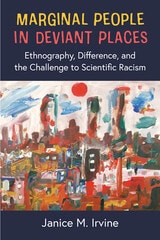
Marginal People in Deviant Places
Ethnography, Difference, and the Challenge to Scientific RacismJanice M. Irvine
University of Michigan Press, 2022
Place plays a crucial role in this work as Irvine examines its role in shaping ethnographies about outsiders and therefore understandings of social difference. Irvine has visited the sites of each of the ethnographies about which she writes, collecting photos, videos, and archival materials that will help readers understand the importance of place in the generation of particular ethnographic stories. The open-access online edition of this book is richly illustrated to help convey the deep sense of emplacement of the ethnographies discussed in this book and includes a series of interviews with sociologists about how they conduct their work and understand their forebears.
Marginalism and Discontinuity
Tools for the Crafts of Knowledge and DecisionMartin H. Krieger
Russell Sage Foundation, 1989
Marxism and the Interpretation of Culture
Edited by Cary Nelson and Lawrence Grossberg
University of Illinois Press, 1988
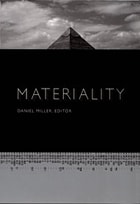
Materiality
Daniel Miller, ed.
Duke University Press, 2005
Considering topics as diverse as theology, technology, finance, and art, the contributors—most of whom are anthropologists—examine the many different ways in which materiality has been understood and the consequences of these differences. Their case studies show that the latest forms of financial trading instruments can be compared with the oldest ideals of ancient Egypt, that the promise of software can be compared with an age-old desire for an unmediated relationship to divinity. Whether focusing on the theology of Islamic banking, Australian Aboriginal art, derivatives trading in Japan, or textiles that respond directly to their environment, each essay adds depth and nuance to the project that Materiality advances: a profound acknowledgment and rethinking of one of the basic properties of being human.
Contributors. Matthew Engelke, Webb Keane, Susanne Küchler, Bill Maurer, Lynn Meskell, Daniel Miller, Hirokazu Miyazaki, Fred Myers, Christopher Pinney, Michael Rowlands, Nigel Thrift
Memory against Culture
Arguments and RemindersJohannes Fabian
Duke University Press, 2007
Fabian returns to his landmark book Time and the Other to consider how the role of the other in anthropological inquiry has been transformed over the past two decades. He explores the place of linguistics in contemporary language-centered anthropology, and he ponders how studies of material culture imbue objects with “otherness.” Meditating on the place of memory and forgetting in ethnography, he draws from his own ethnographic work in the Congo to ask why Africa, the site of so much early anthropological study, continues to be forgotten in the wake of colonization. Arguing for the importance of remembering Africa, Fabian focuses on the relationship between thought and memory in the Swahili language. In so doing, he suggests new methods for investigating memory practices across cultures. Turning to the practice of ethnography, he examines the role of the Internet and the place of field notes and other memoranda in ethnographic writing. At once wide-ranging and incisive, Memory against Culture is a significant reflection on the state of the field by one of its most thoughtful and engaged practitioners.
Mentorship/Methodology
Reflections, Praxis, and FuturesLeigh Gruwell
Utah State University Press, 2024
The contributors consider how methodology informs mentorship, how mentorship activates methodology, and how to locate the future of the field in these moments of intersection. Mentorship, through the research and relationships it nourishes, creates the future of writing studies—or, conversely, reproduces the past. At the juncture where this happens, the contributors inquire, Where have current arrangements of mentorship/methodology taken writing studies? Where do these points of intersection exist in performance and practice, in theory, in research? What images of the field do they produce? How can scholars better articulate and write about these moments or spaces in which mentorship and methodology collide in productive disciplinary work?
By making the “slash” more visible, Mentorship/Methodology provides significant opportunities to support and cultivate diverse ways of knowing and being in rhetoric and composition, both locally and globally. The volume will appeal to students and scholars of rhetoric, composition, and technical and professional communication, as well as readers interested in conversations about mentorship and methodology.
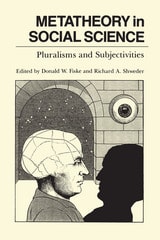
Metatheory in Social Science
Pluralisms and SubjectivitiesEdited by Donald W. Fiske and Richard A. Shweder
University of Chicago Press, 1986
While various points of view are expressed in these nineteen essays, they have in common several themes, including the comparison of social and natural science, the role of knowledge in meeting the demands of society and its pressing problems, and the nature and role of subjectivity in science. Some authors hold that subjectivity cannot be studied scientifically; others argue that it can and must be if progress in knowledge is to be made. The essays demonstrate the philosophical pluralism they discuss and give a wide range of alternative positions on the future of the social and behavioral sciences in a postpositivist intellectual world.
Method and Theory in Paleoethnobotany
John M. Marston
University Press of Colorado, 2014
A diverse and highly regarded group of scholars reference a broad array of literature from around the world as they cover their areas of expertise in the practice and theory of paleoethnobotany—starch grain analysis, stable isotope analysis, ancient DNA, digital data management, and ecological and postprocessual theory.
The only comprehensive edited volume focusing on method and theory to appear in the last twenty-five years, Method and Theory in Paleoethnobotany addresses the new areas of inquiry that have become central to contemporary archaeological debates, as well as the current state of theoretical, methodological, and empirical work in paleoethnobotany.

Methodological Matters
Narratives for Emerging Researchers in Rhetoric and CompositionErin Kathleen Bahl
Utah State University Press, 2026
Methodological Matters offers a series of investigative reflections from experienced and emerging researchers to provide guidance for researchers who are navigating important complexities early in their careers. Each chapter explores a larger research-related question by narrating how one researcher negotiated a unique methodological challenge while working on a dissertation in the field of rhetoric and composition.
Given the constraints placed on new researchers’ time and resources, one way to navigate research-related precarities is to learn from others who have successfully traversed the same investigative terrain. This volume curates investigative reflections from researchers who, at the time of writing, were in the process of completing (or had just completed) their dissertations. Three parts explore issues of identity, craft, and practice in conducting research as an emerging scholar in rhetoric and composition, and the collection concludes with critical reflections on the role of precarity in conducting research.
Both a curated series of investigative reflections from emerging researchers and a resource guide with tangible tools for use in graduate seminars and fieldwork, Methodological Matters amplifies voices of those who learned how to do research in precarious contexts while simultaneously situated within the sometimes frustrating developmental phase located between “student” and “practitioner.”
Methodology and Epistemology for Social Sciences
Selected PapersDonald T. Campbell
University of Chicago Press, 1988
Methods That Matter
Integrating Mixed Methods for More Effective Social Science ResearchEdited by M. Cameron Hay
University of Chicago Press, 2016
Historically, the largest division between social science methods has been that between quantitative and qualitative measures. For people trained in psychology or sociology, the bias has been toward the former, using surveys and experiments that yield readily comparable numerical results. For people trained in anthropology, it has been toward the latter, using ethnographic observations and interviews that offer richer nuances of meaning but are difficult to compare across societies. Discussing their own endeavors to combine the quantitative with the qualitative, the authors invite readers into a conversation about the best designs and practices of mixed methodologies to stimulate creative ideas and find new pathways of insight. The result is an engaging exploration of a promising new approach to the social sciences.
Methods and Methodologies in Heritage Studies
Edited by Rachel King and Trinidad Rico
University College London, 2024
Methods and Methodologies in Heritage Studies offers succinct and accessible analyses of the current debates, intellectual legacies, and practical innovations on heritage value today. Using archaeology, anthropology, history, and geography, this multidisciplinary textbook is designed to support students, researchers, and practitioners, inviting them to review discussions of key problems and argumentative interventions in heritage studies.

Methods and Methodology in Composition Research
Gesa Kirsch and Patricia A. Sullivan
Southern Illinois University Press, 1992
In original essays, fourteen nationally known scholars examine the practical, philosophical, and epistemological implications of a variety of research traditions. Included are discussions of historical, theoretical, and feminist scholarship; case-study and ethnographic research; text and conversation analysis; and cognitive, experimental, and descriptive research. Issues that cross methodological boundaries, such as the nature of collaborative research and writing, methodological pluralism, the classification and coding of research data, and the politics of composition research, are also examined. Contributors reflect on their own research practices, and so reflect the current state of composition research itself.
Methods for Transdisciplinary Research
A Primer for PracticeMatthias Bergmann, Thomas Jahn, Tobias Knobloch, Wolfgang Krohn, Christian Pohl, and Engelbert Schramm
Campus Verlag, 2012
Milton Friedman
Economics in Theory and PracticeAbraham Hirsch and Neil de Marchi
University of Michigan Press, 1991
Mixed Methods Research
Exploring the Interactive ContinuumCarolyn S. Ridenour and Isadore Newman
Southern Illinois University Press, 2008
In Mixed Methods Research: Exploring the Interactive Continuum, the second edition of Qualitative-Quantitative Research Methodology, authors Carolyn S. Ridenour and Isadore Newman reject the artificial dichotomy between qualitative and quantitative research strategies in the social and behavioral sciences and argue that the two approaches are neither mutually exclusive nor interchangeable; rather, the actual relationship between the two paradigms is one of isolated events on a continuum of scientific inquiry.
In their original model for research—the “interactive continuum”—Ridenour and Newman emphasize four major points: that the research question dictates the selection of research methods; that consistency between question and design can lead to a method of critiquing research studies in journals; that the interactive continuum model is built around the place of theory; and that the assurance of validity of research is central to all studies. With this edition, the authors incorporate the concept of research purpose into their analysis.
To contextualize their new argument and to propose strategies for enhancement, Ridenour and Newman review the historical and contemporary debates around research frameworks and define the nature of scientific validity. Establishing five criteria that render a study “scientific,” they propose ways to strengthen validity in research design. They argue that by employing multiple methods, researchers may enhance the quality of their research outcomes. By integrating the quantitative research standards of internal and external validity and the qualitative research standards of trustworthiness, Ridenour and Newman suggest a principle for mixed methods research.
Ridenour and Newman apply this theoretical concept to a systematic analysis of four published research studies, with special emphasis on the consistency among research purpose, question, and design.
Ridenour and Newman have completely rewritten their conclusions in light of their evolving analyses. They incorporate their most recent ideas into the qualitative-quantitative continuum and emphasize the “model of consistency” as key for research to meet the standard of “scientific.”
This book occupies a vital place at the junction of methodological theory and scientific practice and makes connections between the traditionally separate realms of quantitative and qualitative research.
Model Behavior
Animal Experiments, Complexity, and the Genetics of Psychiatric DisordersNicole C. Nelson
University of Chicago Press, 2018
Behavior genetics is a particularly challenging field for making a clear-cut case that mouse experiments work, because researchers believe that both the phenomena they are studying and the animal models they are using are complex. These assumptions of complexity change the nature of what laboratory work produces. Whereas historical and ethnographic studies traditionally portray the laboratory as a place where scientists control, simplify, and stabilize nature in the service of producing durable facts, the laboratory that emerges from Nelson’s extensive interviews and fieldwork is a place where stable findings are always just out of reach. The ongoing work of managing precarious experimental systems means that researchers learn as much—if not more—about the impact of the environment on behavior as they do about genetics. Model Behavior offers a compelling portrait of life in a twenty-first-century laboratory, where partial, provisional answers to complex scientific questions are increasingly the norm.
Model Cases
On Canonical Research Objects and SitesMonika Krause
University of Chicago Press, 2021
In Model Cases, Monika Krause asks about the concrete material research objects behind shared conversations about classes of objects, periods, and regions in the social sciences and humanities. It is well known that biologists focus on particular organisms, such as mice, fruit flies, or particular viruses when they study general questions about life, development, and disease. Krause shows that scholars in the social sciences and humanities also draw on some cases more than others, selecting research objects influenced by a range of ideological but also mundane factors, such as convenience, historicist ideas about development over time, schemas in the general population, and schemas particular to specific scholarly communities.
Some research objects are studied repeatedly and shape our understanding of more general ideas in disproportionate ways: The French Revolution has profoundly influenced our concepts of revolution, of citizenship, and of political modernity, just like studies of doctors have set the agenda for research on the professions. Based on an extensive analysis of the role of model cases in different fields, Krause argues that they can be useful for scholarly communities if they are acknowledged and reflected as particular objects; she also highlights the importance of research strategies based on neglected research objects and neglected combinations of research objects and scholarly concerns.
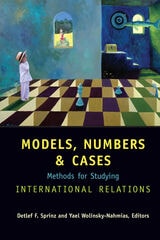
Models, Numbers, and Cases
Methods for Studying International RelationsDetlef F. Sprinz and Yael Wolinsky-Nahmias, Editors
University of Michigan Press, 2004
Detlef Sprinz is a Senior Fellow at the Department of Global Change and Social Systems of the Potsdam Institute for Climate Impact Research and teaches on the Faculty of Social Science at the University of Potsdam, Germany.
Yael Wolinsky-Nahmias is Senior Lecturer and Associate Chair in the Department of Political Science at Northwestern University.

Modern Pathfinders
Creating B Etter Research GuidesJason Puckett
Assoc of College & Research Libraries, 2015
Modern Pathfinders
Creating Better Research GuidesJason Puckett
Assoc of College & Research Libraries, 2015
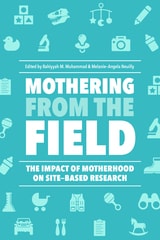
Mothering from the Field
The Impact of Motherhood on Site-Based ResearchEdited by Bahiyyah Miallah Muhammad and Mélanie-Angela Neuilly
Rutgers University Press, 2019
Mothering from the Field offers both a mosaic of perspectives from current women scientists’ experiences of conducting field research across a variety of sub-disciplines while raising children, and an analytical framework to understand how we can redefine methodological and theoretical contributions based on mothers’ experiences in order not just to promote healthier, more inclusive, nurturing, and supportive environments in physical, life, and social sciences, but also to revolutionize how we conceptualize research.

Moving Beyond Prozac, DSM, and the New Psychiatry
The Birth of PostpsychiatryBradley Lewis
University of Michigan Press, 2006
--Paul McHugh, Johns Hopkins University School of Medicine
"Remarkable in its breadth-an interesting and valuable contribution to the burgeoning literature of the philosophy of psychiatry."
--Christian Perring, Dowling College
Moving Beyond Prozac, DSM, and the New Psychiatry looks at contemporary psychiatric practice from a variety of critical perspectives ranging from Michel Foucault to Donna Haraway. This contribution to the burgeoning field of medical humanities contends that psychiatry's move away from a theory-based model (one favoring psychoanalysis and other talk therapies) to a more scientific model (based on new breakthroughs in neuroscience and pharmacology) has been detrimental to both the profession and its clients. This shift toward a science-based model includes the codification of the Diagnostic and Statistical Manual of Mental Disorders to the status of standard scientific reference, enabling mental-health practitioners to assign a tidy classification for any mental disturbance or deviation. Psychiatrist and cultural studies scholar Bradley Lewis argues for "postpsychiatry," a new psychiatric practice informed by the insights of poststructuralist theory.
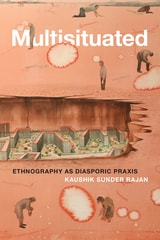
Multisituated
Ethnography as Diasporic PraxisKaushik Sunder Rajan
Duke University Press, 2021