Results by title
67 books match the query 'Mexican American women' and 7 start with m
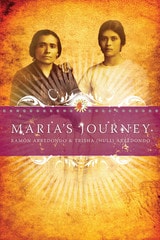
Maria's Journey
Ramon Arredondo and Trisha (Hull) Arredondo
Indiana Historical Society Press, 2010

Married To A Daughter Of The Land
Spanish-Mexican Women And Interethnic Marriage In California, 1820-80Maria Raquel Casas
University of Nevada Press, 2009
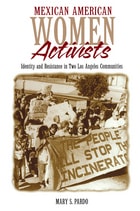
Mexican American Women Activists
Mary Pardo
Temple University Press, 1998
By focusing on women in two contiguous but very different communities -- the working-class, inner-city neighborhood of Boyle Heights in Eastside Los Angeles and the racially mixed middle-class suburb of Monterey Park -- Pardo is able to bring class as ell as gender and ethnic concerns to bear on her analysis in ways that shed light on the complexity of mobilizing for urban change.
Unlike many studies, the stories told here focus on women's strengths rather than on their problems. We follow the process by which these women empowered themselves by using their own definitions of social justice and their own convictions about the importance of traditional roles. Rather than becoming political participants in spite of their family responsibilities, women in both neighborhoods seem to have been more powerful because they had responsibilities, social networks, and daily routines separate from the men in their communities.
Pardo asserts that the decline of real wages and the growing income gap means that unforunately most women will no longer be able to focus their energies on unpaid community work. She reflects on the consequences of this change for women's political involvement, as well as on the politics of writing about women and politics.
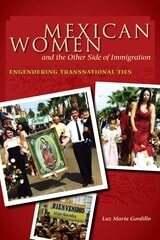
Mexican Women and the Other Side of Immigration
Engendering Transnational TiesBy Luz María Gordillo
University of Texas Press, 2010
Weaving narratives with gendered analysis and historiography of Mexicans in the Midwest, Mexican Women and the Other Side of Immigration examines the unique transnational community created between San Ignacio Cerro Gordo, Jalisco, and Detroit, Michigan, in the last three decades of the twentieth century, asserting that both the community of origin and the receiving community are integral to an immigrant's everyday life, though the manifestations of this are rife with contradictions.
Exploring the challenges faced by this population since the inception of the Bracero Program in 1942 in constantly re-creating, adapting, accommodating, shaping, and creating new meanings of their environments, Luz María Gordillo emphasizes the gender-specific aspects of these situations. While other studies of Mexican transnational identity focus on social institutions, Gordillo's work introduces the concept of transnational sexualities, particularly the social construction of working-class sexuality. Her findings indicate that many female San Ignacians shattered stereotypes, transgressing traditionally male roles while their husbands lived abroad. When the women themselves immigrated as well, these transgressions facilitated their adaptation in Detroit. Placed within the larger context of globalization, Mexican Women and the Other Side of Immigration is a timely excavation of oral histories, archival documents, and the remnants of three decades of memory.
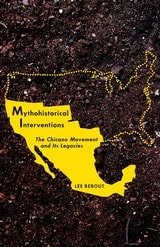
Mythohistorical Interventions
The Chicano Movement and Its LegaciesLee Bebout
University of Minnesota Press, 2010
Examining the deployment of the Aztec eagle by the United Farm Workers union, the poem Yo Soy Joaquín, the document El Plan de Santa Barbara, and icons like La Malinche and La Virgen de Guadalupe, Bebout reveals the centrality of culture to the Chicano movement. For Bebout, the active implementation of cultural narrative was strategically significant in several ways. First, it allowed disparate movement participants to imagine themselves as part of a national, and nationalist, community of resistance. Second, Chicano use of these narratives contested the images that fostered Anglo-American hegemony.
Bringing his analysis up to the present, Bebout delineates how demographic changes have, on the one hand, encouraged the possibility of a panethnic Latino community, while, on the other hand, anti-Mexican nativists attempt to resurrect Chicano myths as a foil to restrict immigration from Mexico.
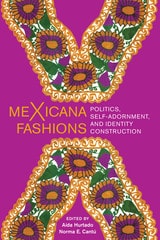
meXicana Fashions
Politics, Self-Adornment, and Identity ConstructionEdited by Aída Hurtado and Norma E. Cantú
University of Texas Press, 2020
2020 Second Place, Best Nonfiction Multi Author, International Latino Book Awards
Collecting the perspectives of scholars who reflect on their own relationships to particular garments, analyze the politics of dress, and examine the role of consumerism and entrepreneurialism in the production of creating and selling a style, meXicana Fashions examines and searches for meaning in these visible, performative aspects of identity.
Focusing primarily on Chicanas but also considering trends connected to other Latin American communities, the authors highlight specific constituencies that are defined by region (“Tejana style,” “L.A. style”), age group (“homie,” “chola”), and social class (marked by haute couture labels such as Carolina Herrera and Oscar de la Renta). The essays acknowledge the complex layers of these styles, which are not mutually exclusive but instead reflect a range of intersections in occupation, origin, personality, sexuality, and fads. Other elements include urban indigenous fashion shows, the shifting quinceañera market, “walking altars” on the Days of the Dead, plus-size clothing, huipiles in the workplace, and dressing in drag. Together, these chapters illuminate the full array of messages woven into a vibrant social fabric.
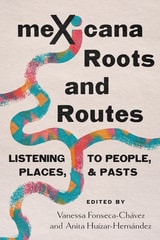
meXicana Roots and Routes
Listening to People, Places, and PastsEdited by Vanessa Fonseca-Chávez and Anita Huízar-Hernández
University of Arizona Press, 2025
In this collection, established and emerging scholars draw upon their rootedness in the U.S. Southwest and U.S.-Mexico borderlands. The meXicana contributors use personal and scholarly inquiry to discuss what it means to cultivate spaces of belonging, navigate language policies, and explore and excavate silences in various spaces, among other important themes.
From the recruitment of Latinas for the U.S. Benito Juárez Squadron in World War II, to the early twentieth-century development of bilingual education in Arizona, to new and insightful analyses of Bracero Program participants and their families, the book details little-known oral histories and archival material to present a rich account of lives along the border with emphasis on women and the working class.
As the inaugural publication of the Arizona Crossroads series, readers will find Arizona featured as a central node of borderlands roots and routes. Each section of the book intentionally centers Arizona within broader comparative and cross-state dialogues, alongside chapters that reflect regional concerns in other southwestern states, including Texas, California, Colorado, and New Mexico. Throughout, this volume highlights the ways in which personal experience, community building, and scholarly perspectives can provide a powerful space for community voices.
Contributors
Vanessa Fonseca-Chávez
Lillian Gorman
Gloria Holguín Cuádraz
Anita Huízar-Hernández
Christine Marin
Valerie A. Martínez
Alina R. Méndez
Karen R. Roybal
Yvette J. Saavedra
Liliana Toledo-Guzmán
Andrea Tovar