Results by title
364 books match the query 'Michigan' and 42 start with m

Making Fathers Pay
The Enforcement of Child SupportDavid L. Chambers
University of Chicago Press, 1979
Making Fathers Pay is David L. Chambers's study of the child-support collection process in Michigan, the state most successful in inducing fathers to pay. He begins by reporting the perilous financial problems of divorced mothers with children, problems faced even by mothers who work full time and receive child support. The study then examines the characteristics of fathers who do and do not pay support and the characteristics of collections systems that work.
Chambers's findings are based largely on records of fathers' support payments in twenty-eight Michigan counties, some of which jail hundreds of men for nonpayment every year. Chambers finds that in places well organized to collect support, jailing nonpayers seems to produce higher payments from men jailed and from men not jailed, but only at a high social cost. He also raises grave doubts about the fairness of the judicial process that leads to jail. While Chambers's total sample includes 12,000 men, he interweaves through his text moving interviews with members of one family caught in the painful predicaments that men, women, and children face upon separation.
To increase support for children at lower social costs, Chambers advocates a national system of compulsory deductions from the wages of non-custodial parents who earn more than enough for their own subsistence.
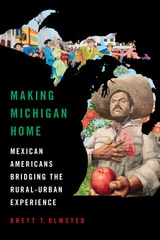
Making Michigan Home
Mexican Americans Bridging the Rural-Urban ExperienceBrett T. Olmsted
University of Illinois Press, 2025
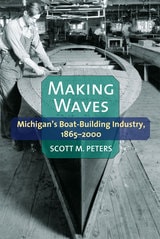
Making Waves
Michigan’s Boat-Building Industry, 1865-2000Scott M. Peters
University of Michigan Press, 2015
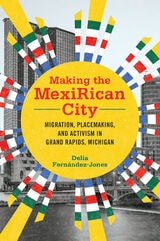
Making the MexiRican City
Migration, Placemaking, and Activism in Grand Rapids, MichiganDelia Fernández-Jones
University of Illinois Press, 2023
A Choice Outstanding Academic Title for 2023
Large numbers of Latino migrants began to arrive in Grand Rapids, Michigan, in the 1950s. They joined a small but established Spanish-speaking community of people from Texas, Mexico, and Puerto Rico. Delia Fernández-Jones merges storytelling with historical analysis to recapture the placemaking practices that these Mexicans, Tejanos, and Puerto Ricans used to create a new home for themselves. Faced with entrenched white racism and hostility, Latinos of different backgrounds formed powerful relationships to better secure material needs like houses and jobs and to recreate community cultural practices. Their pan-Latino solidarity crossed ethnic and racial boundaries and shaped activist efforts that emphasized working within the system to advocate for social change. In time, this interethnic Latino alliance exploited cracks in both overt and structural racism and attracted white and Black partners to fight for equality in social welfare programs, policing, and education.
Groundbreaking and revelatory, Making the MexiRican City details how disparate Latino communities came together to respond to social, racial, and economic challenges.

Maltese in Michigan
Joseph M. Lubig
Michigan State University Press, 2011
Maltese in Michigan is an enlivening volume depicting the struggles and accomplishments of a singular culture, an immigrant narrative at once recognizable and enigmatic. Without realizing it, most Americans are probably familiar with the Maltese people through the cross displayed by firefighters, which bears a strong similarity in design and meaning to the one used by the Knights of Malta. The noble qualities embodied by the Maltese Cross are reflected in the pride and accomplishments of Maltese immigrants in Michigan, a small but vibrant ethnic group. Rooted in the post–World War II experiences of the 20th century, the Maltese established themselves in the city of Detroit, and thrived due to a strong work ethic and Catholic faith, while maintaining a strong central identity. This volume is a tribute to the Maltese of Michigan and all who have begun anew in an unfamiliar land and culture.

Manoomin
The Story of Wild Rice in MichiganBarbara J Barton
Michigan State University Press, 2018

Many a Hand
Michigan and the Civil WarRoger L. Rosentreter
Michigan State University Press, 2026
When war came to the nation in 1861, Michiganians rallied around the Stars and Stripes and readily agreed with a veteran politician who declared, “He who is not for his country is against her.” Even as the conflict grew bloody and costly, they remained committed to suppressing the rebellion. By war’s end, an astonishing 50 percent of its military-age males had enlisted in the army. This Michigan Civil War chronicle is more than a story about soldiers’ heroism on distant battlefields. It also includes the often-overlooked role of women—some of whom refused to stay home and went to war. Also buried in the historical record are accounts of white soldiers whose views on slavery and African Americans, especially those in uniform, were transformed. There is also a much-needed exploration of Michigan’s response to the shocking assassination of a beloved president. Many a Hand captures these stories in a single volume.

Mary Schafer, American Quilt Maker
Gwen Marston
University of Michigan Press, 2004
Extensively illustrated, with over 100 drawings and 11 unique Mary Schafer patterns, Mary Schafer, American Quilt Maker is a must-have book for anyone passionate about American quilting.
While we take that passion for granted today, author Gwen Marston shows that it wasn't always so; indeed, one woman, Mary Schafer, was largely responsible for the restoration of interest in one of our greatest folk arts -- long before the American bicentennial turned quilting into what seemed like an overnight sensation.
Marston presents Schafer as an unassuming scholar: the anonymous quilter, remaining humble and somewhat retiring. Behind the modest façade, however, Schafer displayed a remarkable devotion to research, historical accuracy, and community through her efforts to make quilting available to as many people as possible.
Nonquilters will find Mary Schafer, American Quilt Maker a welcome addition to their collection of the work of masters of American folk art, while quilting aficionados will appreciate it not only for the story it tells, but for the generous selection of patterns and illustrations it offers.
Gwen Marston is a nationally known quilt maker, teacher, and author. She is the author of over fifteen books on quilting, including Liberated String Quilts, 70 Classic Quilting Patterns, and Amish Quilting Patterns.

Me llamo Marcela
My Story as a Heritage SpeakerWritten by Marcela T. Garcés and illustrated by Andrés E. Garcés
The Ohio State University Press, 2024

Medical Lives and Scientific Medicine at Michigan, 1891-1969
Joel D. Howell, Editor
University of Michigan Press, 1993

Metropolitan Jews
Politics, Race, and Religion in Postwar DetroitLila Corwin Berman
University of Chicago Press, 2015
Complex and subtle, Metropolitan Jews pushes urban scholarship beyond the tenacious black/white, urban/suburban dichotomy. It demands a more nuanced understanding of the process and politics of suburbanization and will reframe how we think about the American urban experiment and modern Jewish history.

Mexican Women and the Other Side of Immigration
Engendering Transnational TiesBy Luz María Gordillo
University of Texas Press, 2010
Weaving narratives with gendered analysis and historiography of Mexicans in the Midwest, Mexican Women and the Other Side of Immigration examines the unique transnational community created between San Ignacio Cerro Gordo, Jalisco, and Detroit, Michigan, in the last three decades of the twentieth century, asserting that both the community of origin and the receiving community are integral to an immigrant's everyday life, though the manifestations of this are rife with contradictions.
Exploring the challenges faced by this population since the inception of the Bracero Program in 1942 in constantly re-creating, adapting, accommodating, shaping, and creating new meanings of their environments, Luz María Gordillo emphasizes the gender-specific aspects of these situations. While other studies of Mexican transnational identity focus on social institutions, Gordillo's work introduces the concept of transnational sexualities, particularly the social construction of working-class sexuality. Her findings indicate that many female San Ignacians shattered stereotypes, transgressing traditionally male roles while their husbands lived abroad. When the women themselves immigrated as well, these transgressions facilitated their adaptation in Detroit. Placed within the larger context of globalization, Mexican Women and the Other Side of Immigration is a timely excavation of oral histories, archival documents, and the remnants of three decades of memory.

Mexicans and Mexican Americans in Michigan
Rudolph V. Alvarado
Michigan State University Press, 2003
Unlike most of their immigrant counterparts, up until the turn of the twentieth century most Mexicans and Mexican Americans did not settle permanently in Michigan but were seasonal laborers, returning to homes in the southwestern United States or Mexico in the winter. Nevertheless, during the past century the number of Mexicans and Mexican Americans settling in Michigan has increased dramatically, and today Michigan is undergoing its third “great wave” of Mexican immigration. Though many Mexican and Mexican American immigrants still come to Michigan seeking work on farms, many others now come seeking work in manufacturing and construction, college educations, opportunities to start businesses, and to join family members already established in the state. In Mexicans and Mexican Americans in Michigan, Rudolph Valier Alvarado and Sonya Yvette Alvarado examine the settlement trends and growth of this population, as well as the cultural and social impact that the state and these immigrants have had on one another. The story of Mexicans and Mexican Americans in Michigan is one of a steadily increasing presence and influence that well illustrates how peoples and places combine to create traditions and institutions.

Michigan Family Farms and Farm Buildings
Landscapes of the Heart and MindHemalata Dandekar
University of Michigan Press, 2010
Eight family-farm case studies display farm buildings' relationship to the land they sit on, their function on the farm, the materials they're made with, the farm enterprises themselves, and the families who own them. Photographs, plans, elevations, and sections of typical, exemplary traditional farm buildings show the aesthetic and architectural qualities of those types of buildings across the state.
The ways in which the buildings serve the productive activities of the farm, shelter and nourish the people and livestock, yield a living, and enable the aspirations of farm people are shown in the words and photographs of the farmers themselves. The buildings form a window into the lives of Michigan's family farms and into the hearts and minds of the people who have lived and worked in them their entire lives.

Michigan Ferns and Lycophytes
A Guide to Species of the Great Lakes RegionDaniel D. Palmer
University of Michigan Press, 2018
Unlike the well-studied flowering plants and gymnosperms, Michigan’s ferns and lycophytes have long lacked a reliable, up-to-date guidebook, and this book fills that gap. Covering all 120 taxa found in the state, it features detailed keys, species descriptions, and range maps alongside precise illustrations. Readers learn about the etymology of species’ common and scientific names as well as interesting facts about their historic uses by humans and place within the Michigan ecosystem. The book also provides information on the challenging taxonomy of many ferns and lycophytes, with special attention given to the species likely to hybridize and those prone to misidentification. This is a must-have reference for anyone who wishes to learn about these important components of the Great Lakes flora.

Michigan Free
Your Comprehensive Guide to Free Travel, Recreation, and Entertainment OpportunitiesEric Freedman
University of Michigan Press, 1993

Michigan Government, Politics, and Policy
John S. Klemanski and David A. Dulio, editors
University of Michigan Press, 2017
As the state continues to deal with many of these challenges, Michiganders more than ever need a clear picture of how their state’s political institutions, actors, and processes work. To that end, this book provides a comprehensive analysis of Michigan’s politics and government that will help readers better understand the state’s history and its future prospects. Chapters elucidate the foundational aspects of the state’s government (the Michigan Constitution and intergovernmental relations); its political institutions (the state legislature, governor, and court system); its politics (political parties and elections); and its public policy (education, economic development, and budget and fiscal policy). The book’s four themes—historical context, decline, responses to challenges, and state-local government relations—run throughout and are buttressed by coverage of recent events. Moreover, they are brought together in a compelling chapter with a particular focus on the Flint water crisis.
An ideal fit for courses on state and local government, this thorough, well-written text will also appeal to readers simply interested in learning more about the inner workings of government in the Great Lakes State.

Michigan Herb Cookbook
Suzanne Breckenridge and Marjorie Snyder
University of Michigan Press, 2001
If you're interested in cooking with herbs and want to use the best of Michigan and the Midwest's seasonal foods, then this is the cookbook for you.
The recipe section is written for both the novice and the more experienced cook. Each recipe has helpful information about serving suggestions and menu ideas. Scattered throughout the book are handy tips related to foods, herbs, and cooking. In addition, Michigan Herb Cookbook includes a section on herb growing and designing in which planting, growing, freezing, drying, and storage tips for over thirty herbs are explained in detail.
You will find over 150 recipes in the book's seven chapters. More than half are low-fat, and there are many vegetarian favorites. Also, a chapter devoted to condiments and "little extras" contains various herb blend, vinegar, chutney, pesto, and sauce recipes, such as Sun-Dried-Tomato Pesto and Roasted Red Pepper Sage Sauce.
Suzanne Breckenridge, formerly a ceramics and cooking instructor, is now a food stylist and caterer. Marjorie Snyder is a freelance food writer, a cooking teacher at a junior college, and cofounder and president of the Madison Wisconsin Herb Society.

Michigan Legends
Folktales and Lore from the Great Lakes StateSheryl James
University of Michigan Press, 2013
Over the course of its history, the state of Michigan has produced its share of folktales and lore. Many are familiar with the Ojibwa legend of Sleeping Bear Dunes, and most have heard a yarn or two told of Michigan’s herculean lumberjack, Paul Bunyan.
But what about Detroit’s Nain Rouge, the red-eyed imp they say bedeviled the city’s earliest residents? Or Le Griffon, the Great Lakes’ original ghost ship that some believe haunts the waters to this day? Or the Bloodstoppers, Upper Peninsula folk who’ve been known to halt a wound’s bleeding with a simple touch thanks to their magic healing powers?
In Michigan Legends, Sheryl James collects these and more stories of the legendary people, events, and places from Michigan’s real and imaginary past. Set in a range of historical time periods and locales as well as featuring a collage of ethnic traditions—including Native American, French, English, African American, and Finnish—these tales are a vivid sample of the state’s rich cultural heritage. This book will appeal to all Michiganders and anyone else interested in good folktales, myths, legends, or lore.
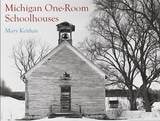
Michigan One-Room Schoolhouses
Mary Keithan
University of Michigan Press, 2008
Nostalgic reminders of a time now past, one-room schoolhouses are deeply embedded in our heritage. Decades after their original purpose and inhabitants have vanished, they dot the rural landscape in all conditions, from neglected and near collapse to handsomely renovated places repurposed into a new existence as living quarters. Today no matter their state they stand as miniature gems of nineteenth-century American history as well as charming examples of rural architecture---above all, things to be treasured and preserved. Mary Keithan's Michigan One-Room Schoolhouses is a beautifully illustrated chronicle that details nearly a hundred of the state's early schoolhouses. Together with information about each schoolhouse's architecture and history, including interviews with former students and teachers, Keithan's photographs bring these structures back to life and assure their place in history.
Mary Keithan is a professional photographer living in Ray, Michigan. Her previous books include Michigan's Heritage Barns and A Time in Michigan: A Photographic Series. New York Times critic Vicki Goldberg selected Keithan's 1995 image "Desert Storm Barn" for the Light Impression Biennial.

Michigan Railroads & Railroad Companies
Graydon M. Meints
Michigan State University Press, 1992
Michigan Railroads and Railroad Companies is an invaluable reference manual for everyone interested in regional transportation history, the history of railroading, and Michigan history in general. It contains complete, cross-referenced listings for every company formed to operate a railroad in the state of Michigan. In addition to the comprehensive entries for major lines, Graydon Meints has included details about the many small, common-carrier steam and electric companies, logging roads, and numerous other primitive and contemporary rail systems. This encyclopedic reference guide also contains information on the so-called "paper railroads," companies that were projected but which never laid a foot of track.
Michigan Railroads is divided into three parts. One includes alphabetical entries for the actual and intended railroad companies themselves, the date and purpose for their organization, and a brief history from their origins to their dispositions. Included in this portion of the work are a number of railroad "family trees" showing the corporate antecedents of the largest of the rail lines operating in the state today. Another contains a chronology of significant corporate events; it works as a useful finding aid for accessing source data contained in the first section. A third contains a statewide county-by-county listing of railroads, both paper and real.

Michigan Railway Company
The Northern and Southern DivisionsNorman L. Krentel
Michigan State University Press, 2024
This also explores how electric railway history is intertwined with the state of Michigan. The interurban electric rail system supported automobile manufacturing, allowing for the shipment of parts supplies, and finished automobiles through Michigan, Indiana, Ohio, and Kentucky. Major auto plants like REO and Oldsmobile had rail sidetracks served by Michigan Railway’s interurban freight trains. Electric railway history is thus an essential, previously overlooked factor in Michigan’s industrial development.

Michigan Shrubs and Vines
A Guide to Species of the Great Lakes RegionBurton V. Barnes, Christopher W. Dick, and Melanie E. Gunn
University of Michigan Press, 2016

Michigan Supreme Court Historical Reference Guide, 2nd Edition
David Chardavoyne
Michigan State University Press, 2015

Michigan Trees, Revised and Updated
A Guide to the Trees of the Great Lakes RegionBurton V. Barnes and Warren H. Wagner, Jr.
University of Michigan Press, 2004
Now in its tenth decade of publication, Michigan Trees has been, since it was first introduced in 1913, the must-have reference book for anyone who wants to know about the trees of this unique North American region.
In this new and updated edition, several new species have been added to the lineup, as well as sections on tree ecology and fall color. Written and illustrated in a style that appeals at once to academic botanists and armchair arborphiles alike, Michigan Trees gives readers everything they need to know for identifying trees in the Great Lakes state. Included with each description are fascinating notes and asides (for example, this tidbit on the jack pine: "Parklike or savanna stands in north-central Michigan are prime habitat for the rare Kirtland's warbler that breeds nowhere else in the world."). Also includes a tree key and identification section illustrated with elegantly simple line drawings that reveal the tiny, signature details that make each tree unique.
Burton V. Barnes is Professor of Forestry at the University of Michigan. Formerly a research forester, he is best known for his research and publications in forest ecology and forest genetics.
Warren H. Wagner, Jr. was a world authority on ferns. He had been Professor Emeritus of Botany and Natural Resources at the University of Michigan before his death at the age of 80 in 2000.
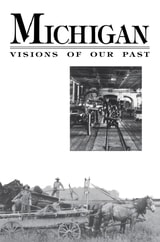
Michigan Visions of Our Past
Richard J. Hathaway
Michigan State University Press, 1989
Throughout the history of michigan, many problems occur and recur: satisfying a diverse population, economic booms and busts, business and labor conflicts, religion in public education, environmental concerns.
A number of writers collaborated to bring such themes to light in 18 illuminating essays. The collection provides a tool for the teacher, a sourse for the scholar, and a pleasurable trip through Michigan history. Michigan: Visions of Our Past, also provides a challenge; a challenge to citizens to understand the past, and apply its lessons to the future of Michigan.

Michigan and the Cleveland Era
Sketches of University of Michigan Staff Members and Alumni Who Served the Cleveland Administrations 1885-89, 1893-97Edited by Earl D. Babst and Lewis G. Vander Velde
University of Michigan Press, 1948
Michigan at the Millennium
A Benchmark and Analysis of Its Fiscal and Economic StructureCharles L. Ballard
Michigan State University Press, 2003
Michigan at the Millennium provides objective background and analysis on a wide variety of key economic and fiscal issues. The chapters are written by economists and policy analysts at leading universities and other institutions in Michigan. Written in clear, non-technical language, the articles are aimed at an audience that includes members of the legislative and executive branches of state government, members of the judicial system, local government officials, policy analysts, and informed citizens.
This volume follows in the tradition of the landmark 1982 study, Michigan’s Fiscal and Economic Structure, edited by Harvey E. Brazer. The first section of the volume focuses on broad aspects of the economy, people, and land of Michigan, including chapters on demographics, the labor force, land use, the manufacturing sector, high-technology industries, and health care. Section two focuses on public expenditures and public services, and includes chapters on economic-development efforts, K–12 education, the transportation system, the welfare system, policies for low-wage workers and displaced workers, and pensions. The third section is concerned with taxes and other government revenues. It includes chapters on the Headlee Amendment, income taxes, sales and use taxes, property taxes, the Single Business Tax, intergovernmental fiscal relations, and other sources of revenue.

Michigan mammals
Rollin H. Baker
Michigan State University Press, 1983

Michigan's Capitol
Construction and RestorationWilliam Seale
University of Michigan Press, 1995
Michigan's Capitol: Construction and Restoration is the history of a great American landmark, one among fifty statehouses. Construction of Michigan's State Capitol began in 1871, six years after the close of the Civil War, and was brought to completion less than a decade later. It has survived for more than a century to become the object of one of America's most authentic restorations. This volume allows the reader to chronicle the building and restoration of Michigan's Capitol through words and magnificent color and black-and-white photographs. An archive of treasured historical images, beginning with a group scene at the time the cornerstone was placed, is also included alongside original architectural drawings and sketches.
Michigan's Capitol: Construction and Restoration is not only the history of a great vision realized, but a celebration of the rediscovery and revival of that vision in the 1980s and 1990s culminating in one of the most comprehensive restorations ever carried out on an American building. The author, William Seale, a part of the restoration team for Michigan's Capitol from the start, has written extensively about many American buildings, including the White House.
Written in a lively, narrative style accessible to readers of all ages, Michigan's Capitol: Construction and Restoration is an especially useful introduction to the art of building as well as the politics of public building.

Michigan's Company K
Anishinaabe Soldiers, Citizenship, and the Civil WarMichelle K Cassidy
Michigan State University Press, 2023

Michigan's Con-Con 11
Women and State Constitution-making in 1961Lynn Liberato
Michigan State University Press, 2025

Michigan's County Courthouses
John Fedynsky
University of Michigan Press, 2011
John Fedynsky documents in narrative and photos every county courthouse of Michigan's eighty-three counties, as well as the Michigan Hall of Justice. These buildings are symbols: physically they stand, but figuratively they speak. They embody the purposes for which they were created: law, order, justice, and the promise of a better tomorrow.
Fedynsky tells the story of each building. For Michigan, the typical evolution begins in the cabin, tavern, or hotel of a prominent local settler and progresses through incarnations of simple log or wooden clapboard, and then opulent stone or brick, before the structure arrives in modern and utilitarian form. But there are myriad exceptions to this rule, and they add to the diversity of Michigan's county courthouses.
In Fedynsky's descriptions, verifiable facts and local lore weave together in dramatic tales of outrageous crime, courtroom intrigue, backroom dealing, jury determination, and judicial prerogative. Released jail inmates assist with evacuating and extinguishing a courthouse fire, residents during a natural disaster seek and find physical refuge behind the sure walls of the courthouse, and vigilant legions of homebound defenders are stationed in wartime throughout the courthouse towers scanning the skies for signs of foreign aircraft.
Then there are the homey touches that emphasize the "house" half of Michigan's courthouses: local folks dropping off plants in the courthouse atrium to use it as a winter greenhouse, cows grazing on the public square, county fairs in or near the courthouse, and locally made artwork hanging in public hallways. The courthouses bear within their walls a richness of soul endowed by the good people who make each one special.
Cover design by Heidi Dailey
Cover photos: John Fedynsky

Michigan's Economic Future
A New LookCharles Ballard
Michigan State University Press, 2010
This accessible, engaging text examines the impact of the trends that have shaped Michigan’s economy, and offers innovative solutions to the current economic crisis. Charles Ballard’s illuminating book explores the structure of Michigan’s economy, including its roots in agriculture, the rise and fall of the automotive industry, and the long-term decline of manufacturing. Ballard proposes that investing in education to create a highly skilled workforce can help Michigan’s people to compete in the rapidly evolving global economy. Discussing the state’s transportation infrastructure, environment, public expenditures, and tax system, Ballard describes how changes in attitudes, policies, and political institutions will help to promote economic recovery and growth.

Michigan's State Forests
A Century of StewardshipWilliam B. Botti
Michigan State University Press, 2006
It has been said that Michigan’s nineteenth century white pine stands were the finest the world has ever seen. Dense, parklike stands, more than 150 feet tall, covered vast areas northward from the Bay City– Muskegon line. The sheer quantity of timber lured many adventurous entrepreneurs and enterprising farmers to Michigan. Lumber became a mainstay of Michigan’s economy as logging interests and railroad entrepreneurs became adept at harvesting, transporting, and processing pine logs. Many considered the pine to be practically limitless.
In October of 1871, the first indication of a troubled future occurred when Michigan settlers experienced fires unlike any they had ever seen. Following two months of serious drought, and fed by hundreds of small fires set by land-clearing operations, much of northern Lower Michigan erupted in flames; dry winds fanned the many small fires into one unbelievable conflagration that swept entirely across the Lower Peninsula, from Lake Michigan to Lake Huron. Many towns were reduced to ashes, among them Holland, Glen Haven, Huron City, Sand Beach, White Rock, and Forestville. Navigation was interrupted on Lake Huron and as far downriver as Detroit because of the heavy smoke. More than 200 people lost their lives.
Michigan’s State Forests recounts how an abandoned, cutover, and often burned wilderness has been converted once again into highly productive and protected public lands. For more than 100 years, these lands have been preserved, managed and developed to form one of Michigan’s great assets, not only for economic development but also as enhancements to our quality of life.

Michigan's Town and Country Inns, 5th Edition
Susan Newhof
University of Michigan Press, 2013
The fifth edition of Michigan’s Town & Country Inns is a guide to more than 50 inns, bed-and-breakfast homes, and historic lodgings in the Upper and Lower Peninsulas of Michigan.
Choose from lighthouses anchored to the rugged shores of Lake Superior, Victorian mansions built by lumber and mining barons, rustic log lodges, and romantic small town hideaways. Meet the innkeepers themselves, who range from retired military officers and corporate heads to artists and poets. You’ll find detailed descriptions of the accommodations along with information about rates, suitability for children, and policies on smoking and pets. Get a sense of the flavor and mood of each and learn about fun things to do in the surrounding areas. Numerous photos enhance the descriptions and provide a visitor’s-eye view of some of the most unusual and delightful places to stay in Michigan.

Michigan's economic future
challenges and opportunitiesCharles L. Ballard
Michigan State University Press, 2006
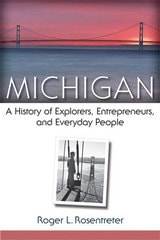
Michigan
A History of Explorers, Entrepreneurs, and Everyday PeopleRoger L. Rosentreter
University of Michigan Press, 2013
The history of Michigan is a fascinating story of breathtaking geography enriched by an abundant water supply, of bold fur traders and missionaries who developed settlements that grew into major cities, of ingenious entrepreneurs who established thriving industries, and of celebrated cultural icons like the Motown sound. It is also the story of the exploitation of Native Americans, racial discord that resulted in a devastating riot, and ongoing tensions between employers and unions. Michigan: A History of Explorers, Entrepreneurs, and Everyday People recounts this colorful past and the significant role the state has played in shaping the United States. Well-researched and engagingly written, the book spans from Michigan’s geologic formation to important 21st-century developments in a concise but detailed chronicle that will appeal to general readers, scholars, and students interested in Michigan’s past, present, and future.

Michigan’s War
The Civil War in DocumentsJohn W. Quist
Ohio University Press, 2018
When it came to the Civil War, Michiganians never spoke with one voice. At the beginning of the conflict, family farms defined the southern Lower Peninsula, while a sparsely settled frontier characterized the state’s north. Although differing strategies for economic development initially divided Michigan’s settlers, by the 1850s Michiganians’ attention increasingly focused on slavery, race, and the future of the national union. They exchanged charges of treason and political opportunism while wrestling with the meanings of secession, the national union, emancipation, citizenship, race, and their changing economy. Their actions launched transformations in their communities, their state, and their nation in ways that Americans still struggle to understand.
Building upon the current scholarship of the Civil War, the Midwest, and Michigan’s role in the national experience, Michigan’s War is a documentary history of the Civil War era as told by the state’s residents and observers in private letters, reminiscences, newspapers, and other contemporary sources. Clear annotations and thoughtful editing allow teachers and students to delve into the political, social, and military context of the war, making it ideal for classroom use.
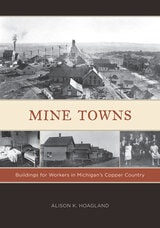
Mine Towns
Buildings for Workers in Michigan’s Copper CountryAlison K. Hoagland
University of Minnesota Press, 2010
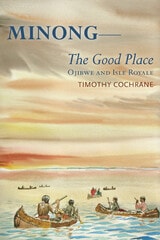
Minong
The Good Place Ojibwe and Isle RoyaleTimothy Cochrane
Michigan State University Press, 2009
Minong (the Ojibwe name for Isle Royale) is the search for the history of the Ojibwe people's relationship with this unique island in the midst of Lake Superior. Cochrane uses a variety of sources: Ojibwe oral narratives, recently rediscovered Jesuit records and diaries, reports of the Hudson's Bay post at Fort William, newspaper accounts, and numerous records from archives in the United States and Canada, to understand this relationship to a place. What emerges is a richly detailed account of Ojibwe activities on Minong—and their slow waning in the latter third of the nineteenth century.
Piece by piece, Cochrane has assembled a narrative of a people, an island, and a way of life that transcends borders, governments, documentation, and tidy categories. His account reveals an authentic 'history': the missing details, contradictions, deviations from the conventions of historical narrative—the living entity at the intersection of documentation by those long dead and the narratives of those still living in the area. Significantly, it also documents how non-natives symbolically and legally appropriated Isle Royale by presenting it to fellow non-natives as an island that was uninhabited and unused.
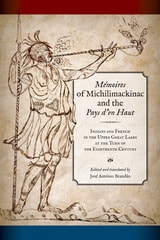
Mémoires of Michilimackinac and the Pays d'en Haut
Indians and French in the Upper Great Lakes at the Turn of the Eighteenth CenturyJosé António Brandao
Michigan State University Press, 2019