Results by title
105 books match the query 'Mormon Church' and 12 start with m
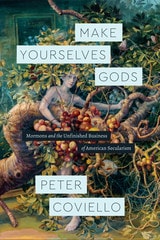
Make Yourselves Gods
Mormons and the Unfinished Business of American SecularismPeter Coviello
University of Chicago Press, 2019
Over these turbulent decades, Mormons would appear by turns as heretics, sex-radicals, refugees, anti-imperialists, colonizers, and, eventually, reluctant monogamists and enfranchised citizens. Reading Mormonism through a synthesis of religious history, political theology, native studies, and queer theory, Peter Coviello deftly crafts a new framework for imagining orthodoxy, citizenship, and the fate of the flesh in nineteenth-century America. What emerges is a story about the violence, wild beauty, and extravagant imaginative power of this era of Mormonism—an impassioned book with a keen interest in the racial history of sexuality and the unfinished business of American secularism.
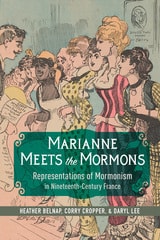
Marianne Meets the Mormons
Representations of Mormonism in Nineteenth-Century FranceHeather Belnap, Corry Cropper, and Daryl Lee
University of Illinois Press, 2022
Surprising and innovative, Marianne Meets the Mormons looks at how nineteenth-century French observers engaged with the idea of Mormonism in order to reframe their own cultural preoccupations.

Mercy without End
Toward a More Inclusive ChurchLavina Fielding Anderson
Signature Books, 2020
These eighteen essays span more than thirty years of Lavina Fielding Anderson’s concerns about and reflections on issues of inclusiveness in the Church of Jesus Christ of Latter-day Saints, including her own excommunication for “apostasy” in 1993, followed by twenty-five years of continued attendance at weekly LDS ward meetings. Written with a taste for irony and an eye for documentation, the essays are timeless snapshots of sometimes controversial issues, beginning with official resistance to professionally researched Mormon history in the 1980s. They underscore unanswered questions about gender equality and repeatedly call attention to areas in which the church does not live up to its better self. Compassionately and responsibly, it calls Anderson’s beloved religion back to its holiest nature.
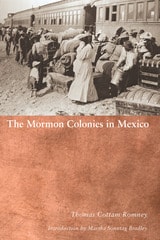
Mormon Colonies in Mexico
Thomas Cottam Romney
University of Utah Press, 2005
"Romney’s unique vantage point is the strongest draw of this narrative: Romney and his family lived much of their life in the Mexican Mormon colonies. But the narrative’s value is much broader and deeper than just that. Romney’s insights into Mexican politics and personalities, and his view of the course of history from inside rather than from outside, are fascinating, colorful and opinionated. He was clear about who he admired and why, and who he did not."
—from the Foreword
In the 1880s, as a precondition to granting Utah statehood, the United States government enacted laws to put a stop to the Mormon practice of polygamy. Those who continued to practice this principle were forced underground as federal marshals roamed the territory searching for "polygs." In response, the Church of Jesus Christ of Latter-day Saints looked for safe places to send its members; many found refuge across the border in Mexico.
Unavailable since its original publication in 1938, this important document of a little-known chapter in Mormon history is now reprinted with a foreword by Martha Sonntag Bradley. Romney was raised and spent much of his life in the colonies, making this book a significant contribution to LDS history. It chronicles a new kind of Mormon pioneer facing the hardships of an unfamiliar land, a tenuous relationship with the government, and the necessary fortitude to hold fast to one’s belief in the face of difficulty and trial.
Mormon History
Ronald W. Walker, David J. Whittaker, James B. Allen
University of Illinois Press, 2010
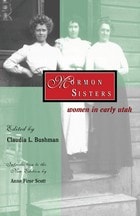
Mormon Sisters
Women In Early UtahClaudia Bushman
Utah State University Press, 1997
Mormonism Unvailed
Eber D. Howe, with critical comments by Dan VogelEber Dudley Howe
Signature Books, 2015
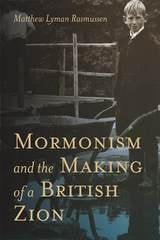
Mormonism and the Making of a British Zion
Matthew L. Rasmussen
University of Utah Press, 2016
After many British believers left for America, church membership in England fell so sharply that the movement in Britain seemed to be on the brink of collapse. Yet British Mormonism gradually resurged and continues today. How did this religious minority flourish when so many nineteenth-century revivalist movements did not? Rasmussen explains Mormonism’s inception, perpetuation, and maturation in Britain in a compelling case study of a “new religious movement” with staying power. From its establishment in 1837 to its maturation in 1998, the Mormon perspective of Britain shifted dramatically. This book chronicles that shift, and illustrates how doctrinal adaptation has enabled Mormonism in Britain to persist.
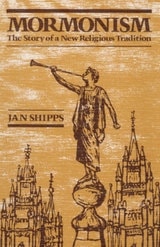
Mormonism
THE STORY OF A NEW RELIGIOUS TRADITIONJan Shipps
University of Illinois Press, 1985

Mormons and Mormonism
An Introduction to an American World ReligionEdited by Eric A. Eliason
University of Illinois Press, 2001
This volume explains how the earliest Mormons viewed their religion and suggests that the Book of Mormon appeared to them as an exciting document of social protest. Contributors consider the history of persecution of the Mormons, the church's relationship with the state of Utah and with other divisions of Christianity, and culture clashes in the church's missionary efforts. Mormons and Mormonism also places beliefs such as vicarious baptism for the dead in a larger context of community and religious ideals.
The founding of Mormonism and its rapid emergence as a new world religion are among the most intriguing aspects of American religious history and among the most neglected in the religion classroom. This much-needed volume lays the groundwork for a better understanding of the LDS Church and its historical and potential impact on the United States and the world.
Mormons, Musical Theater, and Belonging in America
Jake Johnson
University of Illinois Press, 2019
Moth and Rust
Mormon Encounters with DeathSteven Carter
Signature Books, 2017
about death: it’s a veil or a mission call to the spirit
world. But our actual encounters with the reality of
death inevitably change us in ways that are difficult
to articulate.
In this collection, Mormon writers wrestle with
mortality and its aftermath. A family sings a hesitant
rendition of Happy Birthday to a grief-stricken
mother who buried her toddler just a few hours earlier;
an agnostic son decides he’s Mormon enough to
arrange a funeral for his believing father.
Some essays use death as a means to understand
faith. One author imagines a world where Heavenly
Mother visits her children in the form of their
female ancestors, appearing to her descendants in
times of grief or pain.
Others address practicalities: how do you protect
your children from death while still allowing them
to experience the world; how do you get through
one more nausea-ridden day of cancer treatment?
Still others delve into death’s questions: does the
overwhelming suffering that occurs in the animal
kingdom have a function in the “plan of happiness”?
Sometimes humorous, sometimes heartbreaking,
always thought-provoking, these personal essays,
poems, and stories may never be heard at a Mormon
funeral. But they probably should be.