Results by title
92 books match the query 'Multiculturalism' and 13 start with m
Managing Diversity in Organizations
Robert T. Golembiewski
University of Alabama Press, 1995
Managing Diversity in Organizations focuses on a key issue that organizations are facing—diversity. It is here, and it is growing. The only question now is how well we deal with diversity, especially in organizational contexts.
Golembiewski identifies the many forces and factors propelling us into the age of diversity in organizations—ethical, political, philosophic, demographic, and so on—and details the historical and contemporary approaches. Most practice has focused on a "level playing field" or equal opportunity and "tilting the playing field" or equal outcomes. This volume focuses on diversity as a strategic device rather than as a nicety rooted in behavioral and organizational research. Managing diversity successfully in organizations requires a thorough understanding of management infrastructure that is consistent with diversity--especially structures of work, policies, and procedures that institutionalize and build diversity.
Mapping Multiculturalism
Gordon, Avery F.
University of Minnesota Press, 1996
Mediating the South Korean Other
Representations and Discourses of Difference in the Post/Neocolonial Nation-StateDavid C. Oh, Editor
University of Michigan Press, 2022
This collection brings together leading and emerging scholars of multiculturalism in Korean media culture to examine mediated constructions of the “other,” taking into account the nation’s postcolonial and neocolonial relationships and its mediated construction of self. “Anthrocategorism ,” a more nuanced translation of injongchabyeol, is proffered as a new framework for understanding difference in ways that are locally meaningful in a society and media system in which racial or even ethnic differences are not the most salient. The collection points to the construction of racial others that elevates, tolerates, and incorporates difference; the construction of valued and devalued ethnic others, and the ambivalent construction of co-ethnic others as sympathetic victims or marginalized threats.
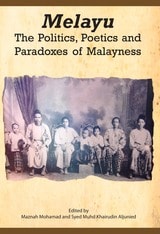
Melayu
The Politics, Poetics and Paradoxes of MalaynessEdited by Maznah Mohamad and Syed Muhd Khairudin Aljunied
National University of Singapore Press, 2012
In Melayu: The Politics, Poetics and Paradoxes of Malayness, the contributors examine the checkered, wavering and changeable understanding of the word Melayu by considering hitherto unexplored case studies dealing with use of the term in connection with origins, nations, minority-majority politics, Filipino Malays, Riau Malays, Orang Asli, Straits Chinese literature, women's veiling, vernacular television, social dissent, literary women, and modern Sufism. Taken as a whole, this volume offers a creative approach to the study of Malayness while providing new perspectives to the studies of identity formation and politics of ethnicity that have wider implications beyond the Southeast Asian region.
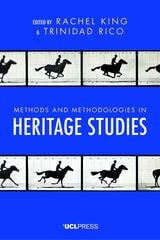
Methods and Methodologies in Heritage Studies
Edited by Rachel King and Trinidad Rico
University College London, 2024
Methods and Methodologies in Heritage Studies offers succinct and accessible analyses of the current debates, intellectual legacies, and practical innovations on heritage value today. Using archaeology, anthropology, history, and geography, this multidisciplinary textbook is designed to support students, researchers, and practitioners, inviting them to review discussions of key problems and argumentative interventions in heritage studies.
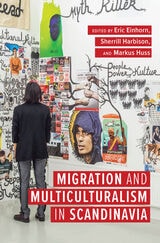
Migration and Multiculturalism in Scandinavia
Edited by Eric Einhorn, Sherrill Harbison, and Markus Huss
University of Wisconsin Press, 2022
Drawing from personal experiences and theoretical perspectives in such varied fields as sociology, political science, literature, and media studies, nineteen scholars assess recent shifts in Scandinavian societies and how they intertwine with broader transformations in Europe and beyond. Chapters explore a variety of topics, including themes of belonging and identity in Norway, the experiences and activism of the Nordic countries’ Indigenous populations, and parallels between the racist far-right resurgence in Sweden and the United States.
Contributors: Ellen A. Ahlness, Julie K. Allen, Grete Brochmann, Eric Einhorn, Sherrill Harbison, Anne Heith, Markus Huss, Peter Leonard, Barbara Mattsson, Kelly McKowen, Andreas Önnerfors, Elisabeth Oxfeldt, Tony Sandset, Carly Elizabeth Schall, Ryan Thomas Skinner, Admir Skodo, Benjamin R. Teitelbaum, Sayaka Osanami Törngren, Ethelene Whitmire
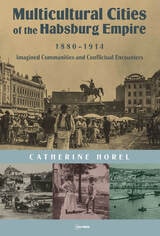
Multicultural Cities of the Habsburg Empire, 1880–1914
Imagined Communities and Conflictual EncountersCatherine Horel
Central European University Press, 2023
Catherine Horel has undertaken a comparative analysis of the societal, ethnic, and cultural diversity in the last decades of the Habsburg Monarchy as represented in twelve cities: Arad, Bratislava, Brno, Chernivtsi, Lviv, Oradea, Rijeka, Sarajevo, Subotica, Timișoara, Trieste, and Zagreb. By purposely selecting these cities, the author aims to counter the disproportionate attention that the largest cities in the empire receive.
With a focus on the aspects of everyday life faced by the city inhabitants (associations, schools, economy, and municipal politics) the book avoids any idealization of the monarchy as a paradise of peaceful multiculturalism, and also avoids exaggerating conflicts. The author claims that the world of the Habsburg cities was a dynamic space where many models coexisted and created vitality, emulation, and conflict. Modernization brought about the dissolution of old structures, but also mobility, the progress of education, the explosion of associative life, and constantly growing cultural offerings.
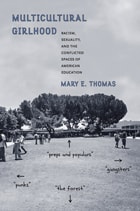
Multicultural Girlhood
Racism, Sexuality, and the Conflicted Spaces of American EducationMary E. Thomas
Temple University Press, 2011
High school turf wars are often a teenage rite of passage, but there are extremes—as when a race riot at a Los Angeles campus in the spring of 2005 resulted in a police lockdown. In her fascinating book,Multicultural Girlhood, Mary Thomas interviewed 26 Latina, Armenian, Filipina, African-American, and Anglo girls at this high school to gauge their responses to the campus violence. They all denounced the outbreak, calling for multicultural understanding and peaceful coexistence.
However, as much as the girls want everyone to just “get along,” they also exhibit strong racist beliefs and validate segregated social spaces on campus and beyond. How can teenagers and “girl power” work together to empower instead of alienate multicultural groups? In her perceptive book, Thomas foregrounds the spaces of teen girlhood and the role that space plays in girls' practices that perpetuate social difference, and she explains the ways we navigate the intellectual terrain between scholarship and school yard.
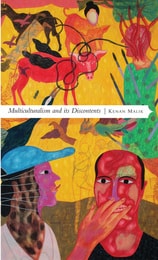
Multiculturalism and its Discontents
Rethinking Diversity after 9/11Kenan Malik
Seagull Books, 2013
In the wake of September 11, 2001 and the many terrorist attacks that have occurred since then, there has been much debate about the degree of diversity that Western nations can tolerate. In Multiculturalism and its Discontents, Kenan Malik looks closely at the role of multiculturalism within terrorism and societal discontent. He examines whether it is possible—or desirable—to try to build a cohesive society bound by common values and he delves into the increasing anxiety about the presence of the Other within our borders.
Multiculturalism and its Discontents not only explores the relationship between multiculturalism and terrorism, but it analyzes the history of the idea of multiculturalism alongside its political roots and social consequences.
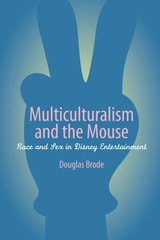
Multiculturalism and the Mouse
Race and Sex in Disney EntertainmentBy Douglas Brode
University of Texas Press, 2006
In his latest iconoclastic work, Douglas Brode—the only academic author/scholar who dares to defend Disney entertainment—argues that "Uncle Walt's" output of films, television shows, theme parks, and spin-off items promoted diversity decades before such a concept gained popular currency in the 1990s. Fully understood, It's a Small World—one of the most popular attractions at the Disney theme parks—encapsulates Disney's prophetic vision of an appealingly varied world, each race respecting the uniqueness of all the others while simultaneously celebrating a common human core. In this pioneering volume, Brode makes a compelling case that Disney's consistently positive presentation of "difference"—whether it be race, gender, sexual orientation, ideology, or spirituality—provided the key paradigm for an eventual emergence of multiculturalism in our society.
Using examples from dozens of films and TV programs, Brode demonstrates that Disney entertainment has consistently portrayed Native Americans, African Americans, women, gays, individual acceptance of one's sexual orientation, and alternatives to Judeo-Christian religious values in a highly positive light. Assuming a contrarian stance, Brode refutes the overwhelming body of "serious" criticism that dismisses Disney entertainment as racist and sexist. Instead, he reveals through close textual analysis how Disney introduced audiences to such politically correct principles as mainstream feminism. In so doing, Brode challenges the popular perception of Disney fare as a bland diet of programming that people around the world either uncritically deem acceptable for their children or angrily revile as reactionary pabulum for the masses.
Providing a long overdue and thoroughly detailed alternative, Brode makes a highly convincing argument that with an unwavering commitment to racial diversity and sexual difference, coupled with a vast global popularity, Disney entertainment enabled those successive generations of impressionable youth who experienced it to create today's aura of multiculturalism and our politically correct value system.
Multiculturalism and the Politics of Guilt
Toward a Secular TheocracyPaul Edward Gottfried
University of Missouri Press, 2003
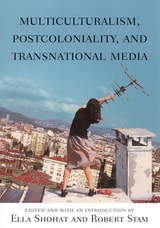
Multiculturalism, Postcoloniality, and Transnational Media
Edited by Ella Shohat and Robert Stam
Rutgers University Press, 2003
To explore this complexity, the editors have forged links between usually compartmentalized fields (especially media studies, literary theory, visual culture, and critical anthropology) and areas of inquiry-particularly postcolonial and diasporic studies and a diverse set of ethnic and area studies. This book, which links all these issues in suggestive ways, provides an indispensable guide for students and scholars in a wide variety of disciplines. Essays in this groundbreaking volume include Julianne Burton-Carvajal on ethnic identity in Lone Star; Manthia Diawara on diasporic documentary; Hamid Naficy on independent transnational film genres; Robyn Wiegman on whiteness studies; Faye Ginsburg on indigenous media; and Jennifer Gonzßles on race in cyberspace; Ana M. Lopez on modernity and Latin American cinema; and Inderpal Grewal and Caren Kaplan on Warrior Marks and multiculturalism and globalization.

Myth, Magic, and Farce
Four Multicultural Plays by Sterling HoustonSterling Houston
University of North Texas Press, 2005