Results by title
132 books match the query 'Myth' and 16 start with m
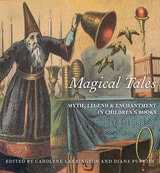
Magical Tales
Myth, Legend, and Enchantment in Children's BooksEdited by Carolyne Larrington and Diane Purkiss
Bodleian Library Publishing, 2013
Magical Tales traces the origin of the genre back through Norse mythology, Arthurian legend, and medieval literature. Drawing on manuscripts and rare books in the renowned collection of the Bodleian Library, the essays turn the spotlight on spell books; grimoires, or magical textbooks; and books of legend and myth whose themes writers like J. R. R. Tolkien and C. S. Lewis incorporated into their work, inspiring generations of writers that extend to the present day. In serving as a source of inspiration for later literary works, the contributors show, myths and legends have themselves been altered in interesting ways.
Richly illustrated, Magical Tales offers an enchanting take on the development of this wildly popular genre.
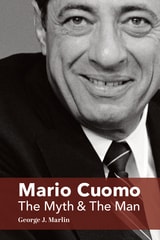
Mario Cuomo
The Myth and the ManGeorge J.
St. Augustine's Press, 2020
As governor, Mario Cuomo is remembered most for his advocacy of the “personally-opposed-but” position on abortion that led to confrontations with Catholic Church hierarchy, and for dithering about his presidential ambitions, that led the media to dub him the “Hamlet on the Hudson.” His political style reminded many of Machiavelli; Cuomo styled himself a successor to St. Thomas More.
In this political profile, George J. Marlin sets the record straight on Mario Cuomo.
Marlin traces Cuomo’s political rise and documents how and why he abandoned his public opposition to abortion to be elected New York’s chief executive.
In great detail, Marlin describes the protracted conflict between Cuomo and his church on abortion and refutes the governor’s claim that his “position on abortion is absolutely theologically sound.”
Marlin critiques Cuomo’s famous 1984 Democratic convention speech as nothing more than the usual high-toned partisan liberal bromides that offered little, if anything, that hadn’t been touted by his party for half a century.
The book also uncovers New York State’s fiscal, economic, and social decline during Cuomo’s 12 years as governor. It explains why voters repudiated Cuomo’s version of a welfare state when he sought a fourth term in 1994 and why, in the words of his son, Governor Andrew Cuomo, his father was “more accomplished as a speech-giver than as a governor.”
Marlin skillfully separates the Cuomo “Public Intellectual” myth from the political man.
Mario Cuomo, three times Governor of New York, an eloquent hard edged Catholic from Queens, dominated not only his home state but national liberal politics in the age of Reagan. Whether the subject was police or theology, Cuomo rhetorically overpowered the reporters who covered him. But he’s finally met his match in George Marlin’s Mario Cuomo The Myth and the Man. Marlin’s extraordinary equipment; a former candidate for Mayor of N.Y.C., former executive director of the New York and New Jersey Port Authority, author of books on Catholic voters and the Archbishops of New York, has made him the ideal author of what’s sure to be seen as the definitive political biography of Mario Cuomo. — Fred Siegel, Author, The Prince of the City: Giuliani, New York, and the Genius of American Life and The Future Once Happened Here: New York, D.C., L.A., and the Fate of America’s Big Cities.
“It’s easy to forget what an important and fascinating figure Mario Cuomo was during New York’s raucous political heyday of the 1970s, 80s and 90s, when the likes of Hugh Carey, Ed Koch, Al D’Amato, and Rudy Giuliani strode the political stage. Thankfully, George Marlin’s wonderful new Cuomo biography will help everyone remember both the good and bad of the remarkable man who served three terms as governor, turned down a seat on the Supreme Court and rejected the chance to run for President. Here are both Cuomo’s successes and failures — and of the latter there were many. An important work that helps restore our collective memory. — Fredric U. Dicker, the New York Post’s longtime state editor and a TV and radio commentator, covered six governors during 40 years at the state Capitol in Albany.
George Marlin is virtually peerless in blending high principle with knowledge of street-level politics and the nuts-and-bolts of otherwise mundane governance to produce readable, yet deeply insightful, social and political portraits. Mario Cuomo: The Myth and the Man, examines in fine detail one of one of New York state’s most consequential, if also deeply flawed, 20th-century gubernatorial incumbencies. Plus, readers get a bonus: Insight into what shaped the career of Mario Cuomo’s Democratic superstar son, Andrew. Marlin has been in the trenches himself and thus can separate blarney from beefsteak – which this fine volume once again demonstrates. —Bob McManus, Contributing Editor, The City Journal, was the New York Post’s Editorial Page Editor (2000-2013), and The Albany Times Union’s Executive City Editor (1975-1981).
“George Marlin not only captures the political life and journey of Mario Cuomo, but details his policy approach that led to the near demise of the Empire State. Fortunately, the Conservative Party of New York was there to carry the torch and provide the margin of victory for George Pataki ending the senior Cuomo’s reign.” —Michael Long, State Chairman, Conservative Party of New York (1988-2019)
“For both better and worse, Mario Cuomo was the quintessential American Catholic politician of an entire postwar generation: ambitious, brilliant, articulate, serious about his faith, and flexible in how and where he applied it. George Marlin is a writer of considerable skill, and he uses here it to produce a provocative, absorbing portrait of the man and his career. —Francis X. Maier, Senior Fellow in Catholic Studies at the Ethics and Public Policy Center
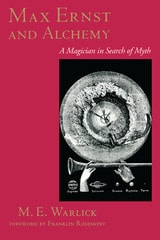
Max Ernst and Alchemy
A Magician in Search of MythBy M. E. Warlick
University of Texas Press, 2001
Surrealist artist Max Ernst defined collage as the "alchemy of the visual image." Students of his work have often dismissed this comment as simply a metaphor for the transformative power of using found images in a new context. Taking a wholly different perspective on Ernst and alchemy, however, M. E. Warlick persuasively demonstrates that the artist had a profound and abiding interest in alchemical philosophy and often used alchemical symbolism in works created throughout his career.
A revival of interest in alchemy swept the artistic, psychoanalytic, historical, and scientific circles of the late nineteenth and early twentieth centuries, and Warlick sets Ernst's work squarely within this movement. Looking at both his art (many of the works she discusses are reproduced in the book) and his writings, she reveals how thoroughly alchemical philosophy and symbolism pervade his early Dadaist experiments, his foundational work in surrealism, and his many collages and paintings of women and landscapes, whose images exemplify the alchemical fusing of opposites. This pioneering research adds an essential key to understanding the multilayered complexity of Ernst's works, as it affirms his standing as one of Germany's most significant artists of the twentieth century.
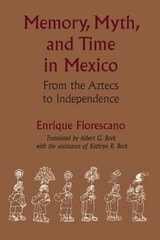
Memory, Myth, and Time in Mexico
From the Aztecs to IndependenceBy Enrique Florescano
University of Texas Press, 1994
In Memory, Myth, and Time in Mexico, noted Mexican scholar Enrique Florescano’s Memoria mexicana becomes available for the first time in English. A collection of essays tracing the many memories of the past created by different individuals and groups in Mexico, the book addresses the problem of memory and changing ideas of time in the way Mexicans conceive of their history. Original in perspective and broad in scope, ranging from the Aztec concept of the world and history to the ideas of independence, this book should appeal to a wide readership.

Myth and Archive
A Theory of Latin American NarrativeRoberto González-Echevarría
Duke University Press, 1998
Providing ways to link literary and nonliterary narratives, González Echevarría examines a variety of archival writings—from the chronicles of the discovery and conquest of the New World to scientific travel narratives and records of criminal confessions—and explores the relationship of these writings to novels by authors such as García Márquez, Borges, Barnet, Sarmiento, Carpentier, and Garcilaso de la Vega. Moving beyond demonstrating that early forms of creative narrative had their geneses in the sixteenth-century authoritative discourse of the Spanish Empire, González Echevarría shows how this same originating process has been repeated in other key moments in the history of the Latin American narrative. He shows how the discourse of scientific discovery was the model for much nineteenth-century literature, as well as how anthropological writings on the nature of language and myth have come to shape the ideology and form of literature in the twentieth century. This most recent form of Latin American narrative creates its own mythic form through an atavistic return to its legal origins—the archive.
This acclaimed book—originally published in 1990—will be of continuing interest to historians, anthropologists, literary theorists, and students of Latin American culture.

Myth and History in the Historiography of Early Burma
Paradigms, Primary Sources, and PrejudicesMichael A. Aung-Thwin
Ohio University Press, 1998
After careful re-reading and analysis of original Old Burmese and other primary sources, the author discovered that four out of the five events considered to be the most important in the history of early Burma, and believed to have been historically accurate, are actually late-nineteenth and twentieth-century inventions of colonial historians caught in their own intellectual and political world.
Only one of these is a genuine indigenous Burmese myth, but it too has been embellished by modern historians.
The author discusses each of these five myths and concludes with an assessment of the current situation in Burma in the context of the new myths springing up today, thereby bringing the thirteenth century into the twentieth.
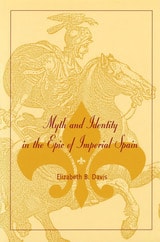
Myth and Identity in the Epic of Imperial Spain
Elizabeth B. Davis
University of Missouri Press, 2026
The first in-depth analysis of some of the most important epic poems of the Spanish Golden Age, Myth and Identity in the Epic of Imperial Spain breathes new life into five of these long- neglected texts. Elizabeth Davis demonstrates that the epic must not be overlooked, for doing so creates a significant gap in one's ability to appraise not only the cultural practice of the imperial age, but also the purest expression of its ideology.
Davis's study focuses on heroic poetry written from 1569 to 1611, including Alonso de Ercilla's La Araucana, undeniably the most significant epic poem of its time. Also included are Diego de Hojeda's La Christiada, Juan Rufo's La Austriada,. Lope de Vega's Jerusalén Conquistada, and Cristóbal de Virués's Historia del Monserrate.
Examining these epics as the major site for the construction of cultural identities and Renaissance nationalist myths, Davis analyzes the means by which the epic constructs a Spanish sense of self. Because this sense of identity is not easily susceptible to direct representation, it is often derived in opposition to an "other," which serves to reaffirm Spanish cultural superiority. The Spanish Christian caballeros are almost always pitted against Amerindians, Muslims, Jews, or other adversaries portrayed as backward or heathen for their cultural and ethnic differences.
The pro-Castilian elite of sixteenth-century Spain faced the daunting task of constructing unity at home in the process of expansion and conquest abroad, yet ethnic and regional differences in the Iberian Peninsula made the creation of an imperial identity particularly difficult. The epic, as Davis shows, strains to convey the overriding image of a Spain that appears more unified than the Spanish empire ever truly was.
An important reexamination of the Golden Age canon, Myth and Identity in the Epic of Imperial Spain brings a new twist to the study of canon formation. While Davis does not ignore more traditional approaches to the literary text, she does apply recent theories, such as deconstruction and feminist criticism, to these poems, resulting in an innovative examination of the material.
Confronting such issues as canonicity, gender, the relationship between literature and Golden Age culture, and that between art and power, this publication offers scholars a new perspective for assessing Golden Age and Transatlantic studies.
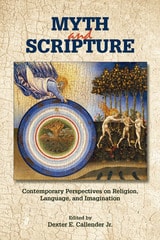
Myth and Scripture
Contemporary Perspectives on Religion, Language, and ImaginationDexter E. Callender, Jr.
SBL Press, 2014
An interdisciplinary collection for scholars and students interested in the connections between myth and scripture
In this collection scholars suggest that using “myth” creates a framework within which to set biblical writings in both cultural and literary comparative contexts. Reading biblical accounts alongside the religious narratives of other ancient civilizations reveals what is commonplace and shared among them. The fruit of such work widens and enriches our understanding of the nature and character of biblical texts, and the results provide fresh evidence for how biblical writings became “scripture.”
Features:
- Essays that explore how myth sheds light on the emergence of scripture
- Examples drawn from the Ancient Near East, Hebrew Bible, New Testament, and Greco-Roman world
- Articles by experts from a range of disciplines

Myth and Southern History, Volume 1
The Old SouthEdited by Patrick Gerster and Nicholas Cords
University of Illinois Press, 1989
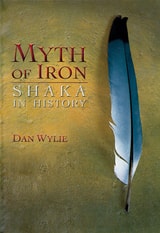
Myth of Iron
Shaka in HistoryDan Wylie
Ohio University Press, 2008
Meanwhile the public image, sometimes monstrous, sometimes heroic, juggernauts on—truly a “myth of iron” that is so intriguing, so dramatic, so archetypal, and sometimes so politically useful that few have subjected it to proper scrutiny.
Myth of Iron: Shaka in History is the first book-length scholarly study of Shaka to be published. It lays out, as far as possible, all the available evidence—mainly hitherto underutilized Zulu oral testimonies, supported by other documentary sources—and decides, item by item, legend by legend, what exactly is known about Shaka’s reign. The picture that emerges in this meticulously researched and absorbing antibiography is very different from the popular narrative.
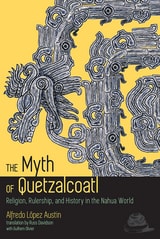
Myth of Quetzalcoatl
Religion, Rulership, and History in the Nahua WorldAlfredo López Austin
University Press of Colorado, 2015
The Myth of Quetzalcoatl is a translation of Alfredo López Austin’s 1973 book Hombre-Dios: Religión y politica en el mundo náhuatl. Despite its pervasive and lasting influence on the study of Mesoamerican history, religion in general, and the Quetzalcoatl myth in particular, this work has not been available in English until now.
The importance of Hombre-Dios and its status as a classic arise from its interdisciplinary approach, creative use of a wide range of source material, and unsurpassed treatment of its subject—the nature and content of religious beliefs and rituals among the native populations of Mesoamerica and the manner in which they fused with and helped sanctify political authority and rulership in both the pre- and post-conquest periods. Working from a wide variety of previously neglected documentary sources, incorporating myth, archaeology, and the ethnography of contemporary Native Americans including non-Nahua peoples, López Austin traces the figure of Quetzalcoatl as a “Man-God” from pre-conquest times, while Russ Davidson’s translator’s note, Davíd Carrasco's foreword, and López Austin’s introduction place the work within the context of modern scholarship.
López Austin’s original work on Quetzalcoatl is a pivotal work in the field of anthropology, and this long-overdue English translation will be of significance to historians, anthropologists, linguists, and serious readers interested in Mesoamerica.
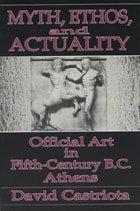
Myth, Ethos, and Actuality
Official Art in Fifth Century B.C. AthensDavid Castriota
University of Wisconsin Press, 1992
Using material remains, as well as the evidence of contemporary Greek history, rhetoric, and poetry, David Castriota interprets the Athenian monuments as vehicles of an official ideology intended to celebrate and justify the present in terms of the past.
Castriota focuses on the strategy of ethical antithesis that asserted Greek moral superiority over the “barbaric” Persians, whose invasion had been repelled a generation earlier. He examines how, in major public programs of painting and sculpture, the leading artists of the period recast the Persians in the guise of wild and impious mythic antagonists to associate them with the ethical flaws or weaknesses commonly ascribed to women, animals, and foreigners. The Athenians, in contrast, were compared to mythic protagonists representing the excellence and triumph of Hellenic culture.
Castriota’s study is innovative in emphasizing the ethical implication of mythic precedents, which required substantial alterations to render them more effective as archetypes for the defense of Greek culture against a foreign, morally inferior enemy. The book looks in new ways at how the patrons and planners sought to manipulate viewer response through the selective presentation or repackaging of mythic traditions.

Myth, Magic, and Farce
Four Multicultural Plays by Sterling HoustonSterling Houston
University of North Texas Press, 2005
Myth
A HandbookWilliam G. Doty
University of Alabama Press, 2007
An accessible introduction to the role of myth historically and in popular culture.
Myth: A Handbook by William G. Doty is a foundational and wide-ranging exploration of myth as one of humanity’s most enduring and powerful forms of expression. Designed for students and scholars across the humanities and social sciences, this authoritative volume offers both a comprehensive introduction to myth studies and a sophisticated framework for interpreting myth in diverse cultural contexts.
Doty approaches myth not as a static body of ancient stories, but as a dynamic and evolving system of meaning—one that reflects the values, beliefs, and psychological structures of the societies that produce and preserve it. Drawing from a rich interdisciplinary base that includes anthropology, literary criticism, psychology, religious studies, and cultural theory, the book examines how myths operate symbolically, structurally, and socially. Readers are guided through major theoretical approaches to myth, from classical interpretations to modern critical frameworks, enabling them to engage thoughtfully with myth as both narrative and cultural artifact.
One of the book’s central strengths is its emphasis on methodology. Rather than presenting myth as a fixed subject, Doty equips readers with analytical tools to interpret myths across different traditions and historical periods. He explores how myths encode meaning through symbols and archetypes, how they reinforce or challenge cultural norms, and how they adapt over time to address shifting social realities. By emphasizing interpretation over simple retelling, Doty transforms myth from a collection of stories into a living field of inquiry.
The handbook also addresses key questions that continue to resonate in contemporary scholarship: What distinguishes myth from legend or folklore? How do myths shape identity—individual, communal, and national? In what ways do myths persist in modern literature, film, and popular culture? Through clear explanations and carefully structured discussions, Doty demonstrates that myth remains deeply relevant, not only in understanding ancient civilizations but also in analyzing modern narratives and cultural expressions.
Accessible yet intellectually rigorous, Myth: A Handbook has become a widely respected resource in university classrooms, providing students with the conceptual grounding needed to engage critically with mythological material. At the same time, its clarity and breadth make it valuable for general readers interested in the deeper meanings behind the stories that have shaped human thought across time and place.
Ultimately, Doty’s work reveals that myth is not confined to the past—it is an essential framework through which humans interpret experience, construct meaning, and understand their place in the world. This handbook stands as an indispensable guide to that process, illuminating the enduring significance of myth in both ancient traditions and contemporary life.
Mythography
The Study of Myths and RitualsWilliam G. Doty
University of Alabama Press, 2000
This new edition of William Doty's critically acclaimed study provides a comprehensive guidebook to the many schools of interpretation in this burgeoning field
William Doty's popular text has been hailed as the most comprehensive work of its kind. Extensively rewritten and completely restructured, the new edition provides further depth and perspective and is even more accessible to students of myth. It includes expanded coverage of postmodern and poststructuralist perspectives, the Gernet Center, mythic iconography, neo-Jungian approaches, and cultural studies, and it summarizes what is new in the study of Greek myth, iconography, French classical scholarship, and ritual studies. It also features a comprehensive index of names and topics, a glossary, an up-to-date annotated bibliography, and a guide to myth on the Internet.
Presenting all major myth theorists from antiquity to the present, Mythography is an encyclopedic work that offers a cross-disciplinary approach to the study of myth. By reflecting the dramatic increase in interest in myth among both scholars and general readers since publication of the first edition, it remains a key study of modern approaches to myth and
an essential guide to the wealth of mythographic research available today.
Myths America Lives By
White Supremacy and the Stories That Give Us MeaningRichard T. Hughes
University of Illinois Press, 2018