Results by title
344 books match the query 'Nationalism' and 22 start with m

Macedonia
The Politics of Identity and DifferenceJane K. Cowan
Pluto Press, 2000

Macropolitics of Nineteenth-Century Literature
Nationalism, Exoticism, ImperialismJonathan Arac and Harriet Ritvo, eds.
Duke University Press, 0
The dozen essays gathered here span the entire era of colonization and discuss the British Isles, Europe, the United States, India, the Caribbean, and Africa. Addressing the works of Wordsworth, Shelley, Dickens, Melville, Flaubert, Conrad, and Charlotte Brontë, as well as explorers’ reports, Bible translations, popular theater, and folklore, the contributors consider such topics as the political function of aesthetic containment, the redefinitions of nationality under the pressure of imperial ambition, and the coexistence of imperial and revolutionary tendencies. New historical data and new interpretive perspectives alter our conception of established masterpieces and provoke new understandings of the political and cultural context within which these works emerged. This anthology demonstrates that the macropolitical concept of imperialism can provide a new understanding of nineteenth-century cultural production by integrating into a single process the well-established topics of nationalism and exoticism.
First published in 1991 (University of Pennsylvania Press), Macropolitics of Nineteenth-Century Literature is now available in paperback. Offering agenda-setting essays in cultural and Victorian studies, it will be of interest to students and scholars of British and American literature, literary theory, and colonial and postcolonial studies.
Contributors. Jonathan Arac, Chris Bongie, Wai-chee Dimock, Bruce Greenfield, Mark Kipperman, James F. Knapp, Loren Kruger, Lisa Lowe, Susan Meyer, Jeff Nunokawa, Harriet Ritvo, Marlon B. Ross, Nancy Vogeley, Sue Zemka
Making Sense of Collectivity
Ethnicity, Nationalism and GlobalisationEdited by Sinisa Malesevic and Mark Haugaard
Pluto Press, 2002
Marx at the Margins
On Nationalism, Ethnicity, and Non-Western SocietiesKevin B. Anderson
University of Chicago Press, 2010
In Marx at the Margins, Kevin Anderson uncovers a variety of extensive but neglected texts by the well-known political economist which cast what we thought we knew about his work in a startlingly different light. Analyzing a variety of Marx’s writings, including journalistic work written for the New York Tribune, Anderson presents us with a Marx quite at odds with our conventional interpretations. Rather than providing us with an account of Marx as an exclusively class-based thinker, Anderson here offers a portrait of Marx for the twenty-first century: a global theorist whose social critique was sensitive to the varieties of human social and historical development, including not just class, but nationalism, race, and ethnicity, as well.
Marx at the Margins ultimately argues that alongside his overarching critique of capital, Marx created a theory of history that was multi-layered and not easily reduced to a single model of development or revolution. Through highly-informed readings on work ranging from Marx’s unpublished 1879–82 notebooks to his passionate writings about the antislavery cause in the United States, this volume delivers a groundbreaking and canon-changing vision of Karl Marx that is sure to provoke lively debate in Marxist scholarship and beyond.
Marx at the Margins
On Nationalism, Ethnicity, and Non-Western SocietiesKevin B. Anderson
University of Chicago Press, 2016

Mass Performance
Systems and CitizensKimberly Jannarone
University of Michigan Press, 2025
Although not a comprehensive study of such events, Jannarone’s analysis of the selected mass performance systems yields new theoretical perspectives on these phenomena, a central focus of her study being how political leaders find ways to create a physically coordinated mass body politic, even during times of hardship and war. By interpreting and historicizing mass assemblies of bodies, this study analyzes the choreographies and organizations that brought thousands of people together as an ensemble and kept them together in meaning-making motion.
Masses and Man
Nationalist and Fascist Perceptions of RealityGeorge L. Mosse
University of Wisconsin Press, 2024
Masses and Man comprises three parts. The first lays out a cultural history of nationalism, essentially the first of its kind, emphasizing the importance of sacred expressions like myths, symbols, and rituals as appropriated in a political context. The second zeroes in on fascism’s most dramatic irruptions in European history in the rise of Italian Fascism and the Nazi Party in Germany, elucidating these as not just political movements but also cultural and even aesthetic ones. The third part considers nationalism and fascism from the particular standpoint of German Jews.
Taken in full, the volume offers an eloquent summation of Mosse’s groundbreaking insights into European nationalism, fascism, and Jewish history in the twentieth century. A new critical introduction by Enzo Traverso helpfully situates Mosse’s work in context and exposes the many ways in which Masses and Man, first published in 1980, remains relevant today.
Materializing Identities in Socialist and Post-Socialist Cities
Edited by Jaroslav Ira and Jirí Janác
Karolinum Press, 2017
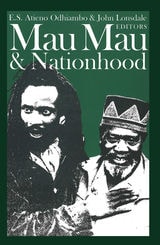
Mau Mau and Nationhood
Arms, Authority, and NarrationE. S. Atieno Odhiambo
Ohio University Press, 2003
Fifty years after the declaration of the state of emergency, Mau Mau still excites argument and controversy, not least in Kenya itself. Mau Mau and Nationhood is a collection of essays providing the most recent thinking on the uprising and its aftermath.
The work of well-established scholars as well as of young researchers with fresh perspectives, Mau Mau and Nationhood achieves a multilayered analysis of a subject of enduring interest. According to Terence Ranger, Emeritus Rhodes Professor, Oxford, “In some ways the historiography of Mau Mau is a supreme example not only of ambiguity and complexity, but also of redemption of a topic once thought incapable of rational analysis.”

Measuring America
How Economic Growth Came to Define American Greatness in the Late Twentieth CenturyAndrew L. Yarrow
University of Massachusetts Press, 2010
The United States has always fancied itself a nation apart—"exceptional" in its values, traditions, and way of life. For most of the country's history, ideas about what made America distinctive generally were framed in terms of a liberal idealism rooted in the thought of John Locke and articulated by Jefferson, Madison, and other Founders. While some commentators also observed that the United States was a land of plenty, it wasn't until the mid-twentieth century that material abundance emerged as the principal standard of American “greatness,” as measured by a host of new economic indicators.
Beginning in earnest in the wake of World War II, opinion-shapers in politics, business, academia, the media, the schools, and public diplomacy gloried in the nation's booming economy. Where “plenty” had once been a largely abstract concept, it was now quantifiable, thanks to new national income accounting and other economic data collection and analysis techniques. One could tally up production and consumption of an ever-expanding cornucopia of goods and services that made up the gross national product (GNP), the king of postwar statistics. American preeminence and American identity were increasingly linked with this measurable prosperity, presented in the language of a newly influential economics profession.
In Measuring America, Andrew L. Yarrow explores this history, telling two parallel, interlocking stories—of how economic ideas came to have vastly greater influence on American culture after World War II, and how those ideas dovetailed with a growing belief that the meaning and value of the United States resided in its material output. How and why this new way of “measuring America” developed, how it was expressed, and what it has meant and means for Americans today are the subject of this well-researched and insightful book.
Media, Nationalism and European Identities
Karol Jakubowicz
Central European University Press, 2011
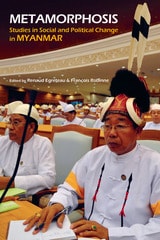
Metamorphosis
Studies in Social and Political Change in MyanmarEdited by Renaud Egreteau and François Robinne
National University of Singapore Press, 2015
But underlying recent political transitions are other wrenching social changes and shocks, a set of transformations less clearly mapped out. Relations between ethnic and religious groups, in the context of Burma’s political model of a state composed of ethnic groups, are a particularly important “unsolved equation”.
The editors use the notion of metamorphosis to look at Myanmar today and tomorrow—a term that accommodates linear change, stubborn persistence and the possibility of dramatic transformation. Divided into four sections, on politics, identity and ethnic relations, social change in fields like education and medicine, and the evolutions of religious institutions, the volume takes a broad view, combining an anthropological approach with views from political scientists and historians. This volume is an essential guide to the political and social challenges ahead for Myanmar.
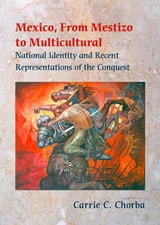
Mexico, From Mestizo to Multicultural
National Identity and Recent Representations of the ConquestCarrie C. Chorba
Vanderbilt University Press, 2006
Throughout the twentieth century, the post-revolutionary Mexican State had used mestizaje as a symbol of national unity and social integration. By the end of the millennium, however, Mexico had gone from a PRI-dominated, economically protectionist nation to a more democratic, economically globalizing one. More importantly, the homogenizing, mestizophile national identity that pervaded Mexico throughout the past century had given way to official admission of Mexico's ethnic and linguistic diversity--or 'pluriculture' according to President Salinas's 1992 constitutional revision.
This book is the first interdisciplinary study of literary, cinematic, and graphic images of Mexican national identity in the 1980s and '90s. Discussing, in depth, writings, films, and cartoons from a vast array of contemporary sources, Carrie C. Chorba creates a social history of this important shift.
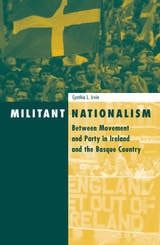
Militant Nationalism
Between Movement and Party in Ireland and the Basque CountryCynthia Irvin
University of Minnesota Press, 1999
A comparative analysis of two militant nationalist groups.
Why do some militant nationalists turn to electoral politics while others resist-and even seek to destroy-that arena? Cynthia L. Irvin examines two cases of electoral interventions by nationalist organizations engaged in violent political competition: in Northern Ireland and in the Basque provinces of Spain. Based on her findings, she offers insights into the circumstances that lead such groups to abandon violence in favor of institutional political struggle.
Using fieldwork done in Northern Ireland and the Basque Country, Irvin develops a model linking the internal dynamics of Sinn Fein and Herri Batasuna (the electoral arm of the militant Basque separatists) to changes in their external environments. In this unusual comparative analysis, she draws on interviews with more than 100 Sinn Fein and Herri Batasuna activists and on a unique survey of 140 Herri Batasuna activists. This approach moves Irvin’s work beyond previous analyses, which have relied on either descriptive and historical accounts or formal models of insurgent violence. This detailed account has broad implications for the study of social movements and ethnic identity, providing a valuable new perspective into the strategic interactions and often conflict-ridden relationship between social movements and political parties. ISBN 0-8166-3114-X Cloth £00.00 $49.95xxISBN 0-8166-3115-8 Paper £00.00 $19.95x304 Pages 26 Tables 5 7/8 x 9 MaySocial Movements, Protest, and Contention Series, volume 9Translation inquiries: University of Minnesota Press
Model-Minority Imperialism
Victor Bascara
University of Minnesota Press, 2006
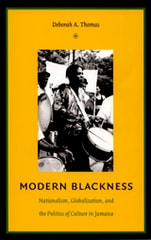
Modern Blackness
Nationalism, Globalization, and the Politics of Culture in JamaicaDeborah A. Thomas
Duke University Press, 2004
Thomas combines historical research with fieldwork she conducted in Jamaica between 1993 and 2003. Drawing on her research in a rural hillside community just outside Kingston, she looks at how Jamaicans interpreted and reproduced or transformed on the local level nationalist policies and popular ideologies about progress. With detailed descriptions of daily life in Jamaica set against a backdrop of postcolonial nation-building and neoliberal globalization, Modern Blackness is an important examination of the competing identities that mobilize Jamaicans locally and represent them internationally.
Modernism
Representations of National CultureAhmet Ersoy
Central European University Press, 2010
Modernism
The Creation of Nation-StatesMichal Kopecek
Central European University Press, 2010

Museum Politics
Power Plays At The ExhibitionTimothy W. Luke
University of Minnesota Press, 2002
The first sustained critique of the ways museum exhibits shape cultural assumptions and political values
Each year the more than seven thousand museums in the United States attract more attendees than either movies or sports. Yet until recently, museums have escaped serious political analysis. The past decade, however, has witnessed a series of unusually acrimonious debates about the social, political, and moral implications of museum exhibitions as varied as the Enola Gay display at the Smithsonian’s Air and Space Museum and the Sensation exhibit at the Brooklyn Museum of Art.
In this important volume, Timothy W. Luke explores museums’s power to shape collective values and social understandings, and argues persuasively that museum exhibitions have a profound effect on the body politic. Through discussions of topics ranging from how the National Holocaust Museum and the Museum of Tolerance in Los Angeles have interpreted the Holocaust to the ways in which the American Museum of Natural History, the Missouri Botanical Gardens, and Tucson’s Arizona-Sonora Desert Museum have depicted the natural world, Luke exposes the processes through which museums challenge but more often affirm key cultural and social realities.
Muslim Land, Christian Labor
Transforming Ottoman Imperial Subjects into Bulgarian National Citizens, c. 1878-1939Anna M. Mirkova
Central European University Press, 2017

My Voice Is My Weapon
Music, Nationalism, and the Poetics of Palestinian ResistanceDavid A. McDonald
Duke University Press, 2013
Myths America Lives By
White Supremacy and the Stories That Give Us MeaningRichard T. Hughes
University of Illinois Press, 2018