152 books match the query 'New York (N.Y.)' and 11 start with m
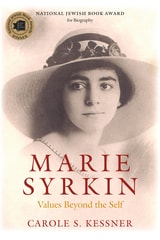
cover of Marie Syrkin: Values Beyond the Self

Marie Syrkin

Values Beyond the Self

Carole S. Kessner

Brandeis University Press, 2008

A compelling biography of an important eyewitness to the twentieth century.

Marie Syrkin’s life spanned ninety years of the twentieth century, 1899–1989. As a polemical journalist, socialist Zionist, poet, educator, literary critic, translator, and idiosyncratic feminist, she was an eyewitness to and reporter on most of the major events in America, Israel, and Europe. Beautiful as well as brilliant, she had a rich personal life as a lover, wife, mother, and friend. During her lifetime Syrkin’s name was widely recognized in the world of Jewish life and letters. Yet, since Syrkin’s death, recognition of her name is no longer quite so immediate. Carole S. Kessner’s biography restores Syrkin’s fascinating life and legacy for a new generation.
 
[more]
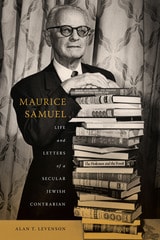
cover of Maurice Samuel: Life and Letters of a Secular Jewish Contrarian

Maurice Samuel

Life and Letters of a Secular Jewish Contrarian

Alan T. Levenson

University of Alabama Press, 2022

An intellectual biography that reassesses one of the premier Jewish humanists of the mid-twentieth century

In Maurice Samuel: Life and Letters of a Secular Jewish Contrarian, Alan T. Levenson captures the life, works, and milieu of the Romanian-born, English-educated, American belletrist Maurice Samuel. A diaspora intellectual—or a rooted cosmopolitan, as Levenson describes him—Samuel made an indelible mark on many features of contemporary Jewish thought and culture. A generalist in an age of experts, an independent scholar in an age of rabbis and professors, Samuel was one of the most productive and visible members of the group dubbed the “other” New York Jewish intellectuals.

His fame as a public intellectual and popular speaker were well warranted: no mere popularizer, Samuel contributed significantly to four seemingly unrelated but critical areas of modern Jewish thought. Samuel is characterized by some as principally a Zionist, by others as an accomplished translator and many Americans’ first entrée into the world of Yiddish literature, by still others as a polemicist and campaigner against anti-Semitism, and finally as a media-savvy Biblical critic, essayist, and radio personality. But he was all of these things, since Samuel succeeded in an era when it was possible to be a public intellectual without being an expert.

Drawing on Samuel’s vast literary opus, as well as previously unexplored archival material from three continents, this study writes Samuel back into the history of mid-twentieth-century American letters. Levenson argues that Samuel’s varied and substantive contributions demand reconsideration of our assumptions about the means and ends of cultural transmission, and merit him a place as one of twentieth-century American Jewry’s most significant cultural and intellectual voices.
 

[more]
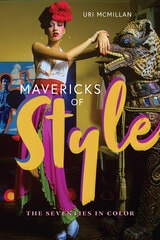
cover of Mavericks of Style: The Seventies in Color

Mavericks of Style

The Seventies in Color

Uri McMillan

Duke University Press, 2025
In Mavericks of Style, Uri McMillan tells the story of New York City’s downtown art and fashion scene of the 1970s through the lives and careers of experimental Black and Brown artists. McMillan focuses on model and musician Grace Jones, fashion illustrator Antonio Lopez, fashion designer Stephen Burrows, and their orbit of friends, showing how they restlessly moved across genres and disciplines, transgressing boundaries between the commercial and the avant-garde. Bypassing the exclusive art world and cultivating uniquely personal styles, these artists thrived on friendship and collaboration in their experimental use of bold color, gold lamé, and Instamatic photography. McMillan transports readers to the spaces Jones, Lopez, and Burrows frequented and worked in, from hair salons, nondescript artist studios, and buzzy boutiques to funky discos and high fashion runways. By foregrounding their impact on the decade’s aesthetics, McMillan complicates and expands the understanding of these artists, offering a new vision of New York’s art world in sultry, bombastic color.
[more]
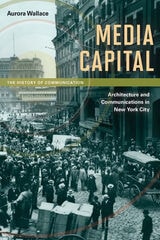
cover of Media Capital: Architecture and Communications in New York City

Media Capital

Architecture and Communications in New York City

Aurora Wallace

University of Illinois Press, 2012
In a declaration of the ascendance of the American media industry, nineteenth-century press barons in New York City helped to invent the skyscraper, a quintessentially American icon of progress and aspiration. Early newspaper buildings in the country's media capital were designed to communicate both commercial and civic ideals, provide public space and prescribe discourse, and speak to class and mass in equal measure. This book illustrates how the media have continued to use the city as a space in which to inscribe and assert their power.
 
With a unique focus on corporate headquarters as embodiments of the values of the press and as signposts for understanding media culture, Media Capital demonstrates the mutually supporting relationship between the media and urban space. Aurora Wallace considers how architecture contributed to the power of the press, the nature of the reading public, the commercialization of media, and corporate branding in the media industry. Tracing the rise and concentration of the media industry in New York City from the mid-nineteenth century to the present, Wallace analyzes physical and discursive space, as well as labor, technology, and aesthetics, to understand the entwined development of the mass media and late capitalism.

[more]
cover of Mercy Mercy Me

Mercy Mercy Me

Elena Georgiou

University of Wisconsin Press, 2003
"The debut of a lucid, lusty new voice in American poetry. Honesty is her trademark, tempered by the rolling music of her voice. This book unveils the story of a vigorous soul's journey in and out of love. Whether her speaker is buying lunch at a falafel stand or bumping into the ghost of Marvin Gaye in a supermarket, Georgiou's zesty clarity prevails, sweetened by her impeccable ear and fired, as it always is, by her burning heart. A Cypriot by way of London, now happily a New Yorker, Georgiou fearlessly tackles the raw hungers of friendship and romance with a poetry of rare independence and vulnerability, sass, and sophistication."—Molly Peacock
[more]
cover of Migration, Transnationalization & Race: In A Changing New York

Migration, Transnationalization & Race

In A Changing New York

Hector Cordero-Guzman

Temple University Press, 2001

When you think of American immigration, what images come to mind? Ellis Island. East Side tenements. Pushcarts on Eighth Avenue. Little Italy. Chinatown. El Barrio. New York City has always been central to the immigrant experience in the United States. In the last three decades, the volume of immigration has increased as has the diversity of immigrant origins and experiences. Contemporary immigration conjures up old images but also some new ones: the sweatshops and ethnic neighborhoods are still there, but so are cell phones, faxes, e-mails, and the more intense and multilayered involvement ofimmigrants in the social, economic, and political life of both home and host societies.

In this ambitious book, nineteen scholars from a broad range of disciplines bring our understanding of New York's immigrant communities up to date by exploring the interaction between economic globalization and transnationalization, demographic change, and the evolving racial, ethnic, gender dynamics in the City. Urban and suburban, Asian, European, Latin American, and Caribbean, men and women and children—the essays here analyze the complex forces that shape the contemporary immigrant experience in New York City and the links between immigrant communities in New York and their countries of origin.
[more]
cover of Modernism and the Harlem Renaissance

Modernism and the Harlem Renaissance

Houston A. Baker Jr.

University of Chicago Press, 1989
"Mr. Baker perceives the harlem Renaissance as a crucial moment in a movement, predating the 1920's, when Afro-Americans embraced the task of self-determination and in so doing gave forth a distinctive form of expression that still echoes in a broad spectrum of 20th-century Afro-American arts. . . . Modernism and the Harlem Renaissance may well become Afro-America's 'studying manual.'"—Tonya Bolden, New York Times Book Review
[more]
cover of Money Has No Smell: The Africanization of New York City

Money Has No Smell

The Africanization of New York City

Paul Stoller

University of Chicago Press, 2002

In February 1999 the tragic New York City police shooting of Amadou Diallo, an unarmed street vendor from Guinea, brought into focus the existence of West African merchants in urban America. In Money Has No Smell, Paul Stoller offers us a more complete portrait of the complex lives of West African immigrants like Diallo, a portrait based on years of research Stoller conducted on the streets of New York City during the 1990s.

Blending fascinating ethnographic description with incisive social analysis, Stoller shows how these savvy West African entrepreneurs have built cohesive and effective multinational trading networks, in part through selling a simulated Africa to African Americans. These and other networks set up by the traders, along with their faith as devout Muslims, help them cope with the formidable state regulations and personal challenges they face in America. As Stoller demonstrates, the stories of these West African traders illustrate and illuminate ongoing debates about globalization, the informal economy, and the changing nature of American communities.
[more]
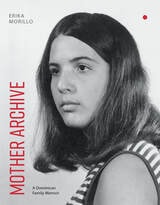
cover of Mother Archive: A Dominican Family Memoir

Mother Archive

A Dominican Family Memoir

Erika Morillo

University of Iowa Press, 2024

2025 OCM Bocas Prize for Caribbean Literature Shortlist, Nonfiction

2024 NBCC Award Finalist, Autobiography

A family murder kept secret, the mysterious disappearance of her father, the systematic erasing of family photographs, a turbulent relationship with her mother, layers of trauma and abuse. In Mother Archive, Erika Morillo reconciles these demons of her past by searching for and seeking out the roots of her family. Intertwining memories with archival family photographs, news clippings, film stills, and artistic images, Morillo revisits her childhood growing up in the Dominican Republic, a place and time riddled with a history of violence and a tradition of erasure.
         Spanning three generations across three different countries, this memoir works as a map in which the author traces incidents in her family history to help her understand herself and her own experience as a mother.
 
[more]
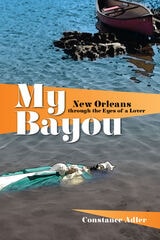
cover of My Bayou: New Orleans through the Eyes of a Lover

My Bayou

New Orleans through the Eyes of a Lover

Constance Adler

Michigan State University Press, 2012

A vividly described and intensely personal memoir, My Bayou charts a personal and spiritual transformation along the fabled banks of Bayou Saint John in New Orleans. When Constance Adler moves to New Orleans, she begins what becomes a lasting love affair with the city, and especially the bayou—a living entity and the beating heart of local culture. Rites of passage, celebrations, mysterious accidents, and magic all take place on its banks, leading Adler to a vibrant awareness of the power of being part of a community. That faith is tested in the wake of Hurricane Katrina, and is ultimately proven right, as Bayou Saint John begins to rebuild.
[more]
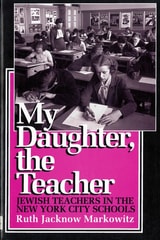
cover of My Daughter, the Teacher: Jewish Teachers in the New York City Schools

My Daughter, the Teacher

Jewish Teachers in the New York City Schools

Markowitz, Ruth Jacknow

Rutgers University Press, 1993

'My son, the doctor' and 'my daughter, the teacher' were among the most cherished phrases of Jewish immigrant parents," writes Ruth Markowitz in recounting this story of Jewish women who taught school in New York. Teaching was an attractive profession to the daughters of immigrants. It provided status, security, was compatible with marriage, and licenses did not require expensive training. In the interwar years, Jewish women in New York entered teaching in large and unprecedented numbers. In fact, by 1960 the majority of all New York teachers were Jewish women. By interviewing sixty-one retired teachers, Ruth Markowitz re-created their lives and the far-reaching influence they had on public education.These women faced many barriers--from lack of parental and financial support to discrimination--as they pursued their educations. Those women who completed their training still had difficulty finding teaching positions, especially during the Depression. Once hired, the teachers' days were filled with overcrowded classes, improperly maintained facilities, enormous amounts of paperwork, few free periods, and countless extracurricular obligations. They also found themselves providing social services; Markowitz finds a large number of teachers who took a special interest in minority children.The teachers Markowitz interviewed often agree with the assessment others have made that the 1930s were in their own way a golden age in the schools. The retired teachers remember the difficult times, but also their love of teaching and the difference they made in the classrooms. Their energy, initiative, and drive will help inspire teachers today, who face the serious problems of drugs, teenage pregnancy, and violence in their classrooms.
[more]