Results by title
58 books match the query 'Novelists, American' and 5 start with m

Maverick Heart
The Further Adventures Of Zane GreyStephen J. May
Ohio University Press, 2000
In 1927, at the peak of his career, Zane Grey bought a three-masted schooner, which he sailed to the Galapagos Islands, later journeying to Tahiti, New Zealand, Australia, and Fiji.
As colorful as his characters were, so too was their creator. A consummate explorer, Zane Grey toured the world, was an acclaimed expert on salt- and freshwater fishing, and incorporated the sights and sounds he witnessed into his writings.
As a companion to his biographical work of Grey’s literary life, Zane Grey: Romancing the West, author Stephen J. May now gives as a remarkable look into another aspect of Grey’s existence, the side little known but central to the measure of the man.
Maverick Heart makes use of Grey’s own memoirs and letters to give an enlightening portrait of this larger-than-life American character and a telling insight into one of the key shapers of the cultural heritage of our country.

Max Brand
Western Giant: The Life and Times of Frederick Schiller FaustWilliam F. Nolan
University of Wisconsin Press, 1985
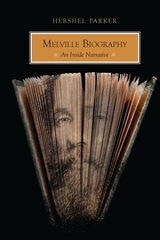
Melville Biography
An Inside NarrativeHershel Parker
Northwestern University Press, 2013
Melville Biography: An Inside Narrative is Hershel Parker’s history of the writing of Melville biographies, enriched by a lifetime of intimate working partnerships with great Melville scholars of different generations and by the author’s experience of successive phases of literary criticism. Throughout this bold book, Hershel Parker champions archival-based biography and the all-but-lost art of embodying such scholarship in literary criticism. First is a mesmerizing autobiographical account of what went into creating the award-winning and comprehensive Herman Melville: A Biography. Then Parker traces six decades of the “unholy war” waged against biographical scholarship, in which critics repeatedly imposed the theory of organic unity on Melville’s disrupted life—not just on his writings—while truncating his body of work and ignoring his study of art and aesthetics. In this connection, Parker celebrates discoveries made by “divine amateurs,” before throwing open his workshop to challenge ambitious readers with research projects. This is a book for Melville fans and Parker fans, as well as for readers, writers, and would-be writers of biography.
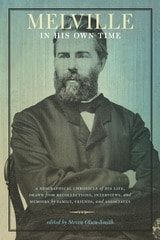
Melville in His Own Time
A Biographical Chronicle of His Life, Drawn from Recollection, Interviews, and Memoirs by Family, Friends, and AssociatesSteven Olsen-Smith
University of Iowa Press, 2015
Melville’s mastery of the English language and heterodox views made him a source of both controversy and fascination to western readers, until his increasing commitment to artistry and contempt for artificial conventions led him to write Moby-Dick (1851) and its successor Pierre (1852). Although the former is considered his masterwork today, the books offended mid-nineteenth-century cultural sensibilities and alienated Melville from the American literary marketplace. The resulting eclipse of his popular reputation was deepened by his voluntary withdrawal from society, so that obituaries written after his death in 1891 frequently expressed surprise that he hadn’t died long before.
With most of his personal papers and letters lost or destroyed, his library of marked and annotated books dispersed, and first-hand accounts of him scattered, brief, and frequently conflicting, Melville’s place in American literary scholarship illustrates the importance of accurately edited documents and the value of new information to our understanding of his life and thought. As a chronologically organized collection of surviving testimonials about the author, Melville in His Own Time continues the tradition of documentary research well-exemplified over the past half-century by the work of Jay Leyda, Merton M. Sealts, and Hershel Parker. Combining recently discovered evidence with new transcriptions of long-known but rarely consulted testimony, this collection offers the most up-to-date and correct record of commentary on Melville by individuals who knew him.
Mother of Detective Fiction
The Life and Works of Anna Katharine GreenPatricia D. Maida
University of Wisconsin Press, 1989
In examining the life and works of Anna Katharine Green, one discovers a slice of American life: in the social events of New York City, in the plight of young working women, in the moral dilemmas of upright citizens pursuing the American dream.