51 books match the query 'Ojibwa Indians' and 2 start with m
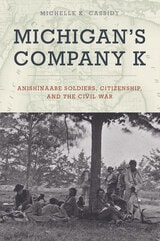
cover of Michigan's Company K: Anishinaabe Soldiers, Citizenship, and the Civil War

Michigan's Company K

Anishinaabe Soldiers, Citizenship, and the Civil War

Michelle K Cassidy

Michigan State University Press, 2023
As much as the Civil War was a battle over the survival of the United States, for the men of Company K of the First Michigan Sharpshooters, it was also one battle in a longer struggle for the survival of Anishinaabewaki, the homelands of the Anishinaabeg—Ojibwe, Odawa, and Boodewaadamii peoples . The men who served in what was often called ‘the Indian Company’ chose to enlist in the Union army to contribute to their peoples’ ongoing struggle with the state and federal governments over status, rights, resources, and land in the Great Lakes. This meticulously researched history begins in 1763 with Pontiac’s War, a key moment in Anishinaabe history. It then explores the multiple strategies the Anishinaabeg deployed to remain in Michigan despite federal pressure to leave. Anishinaabe men claimed the rights and responsibilities associated with male citizenship—voting, owning land, and serving in the army—while actively preserving their status as ‘Indians’ and Anishinaabe peoples. Indigenous expectations of the federal government, as well as religious and social networks, shaped individuals’ decisions to join the U.S. military. The stories of Company K men also broaden our understanding of the complex experiences of Civil War soldiers. In their fight against removal, dispossession, political marginalization, and loss of resources in the Great Lakes, the Anishinaabeg participated in state and national debates over citizenship, allegiance, military service, and the government’s responsibilities to veterans and their families.
[more]
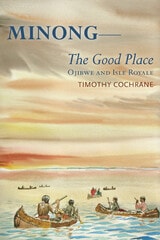
cover of Minong: The Good Place Ojibwe and Isle Royale

Minong

The Good Place Ojibwe and Isle Royale

Timothy Cochrane

Michigan State University Press, 2009

Minong (the Ojibwe name for Isle Royale) is the search for the history of the Ojibwe people's relationship with this unique island in the midst of Lake Superior. Cochrane uses a variety of sources: Ojibwe oral narratives, recently rediscovered Jesuit records and diaries, reports of the Hudson's Bay post at Fort William, newspaper accounts, and numerous records from archives in the United States and Canada, to understand this relationship to a place. What emerges is a richly detailed account of Ojibwe activities on Minong—and their slow waning in the latter third of the nineteenth century.
     Piece by piece, Cochrane has assembled a narrative of a people, an island, and a way of life that transcends borders, governments, documentation, and tidy categories. His account reveals an authentic 'history': the missing details, contradictions, deviations from the conventions of historical narrative—the living entity at the intersection of documentation by those long dead and the narratives of those still living in the area. Significantly, it also documents how non-natives symbolically and legally appropriated Isle Royale by presenting it to fellow non-natives as an island that was uninhabited and unused.

[more]