Results by title
194 books match the query 'People' and 4 start with m

Madison Chefs
Stories of Food, Farms, and PeopleLindsay Christians and Chris Hynes
University of Wisconsin Press, 2021
Why do Salvatore’s tomato pies have the sauce on the top? Where did chef Tami Lax learn to identify mushrooms in the woods? How did Morris develop its signature ramen?
Farm-to-table is a cliché, but its roots among the farmers and chefs of south-central Wisconsin are deep, vibrant, and resilient. From brats and burgers to bibimbap, Madison’s food scene looks substantially different than it did just a decade ago. Though the city has always been ahead of the locavore movement, a restaurant boom in the 2010s radically changed the dining landscape. Even when individual eateries close or chefs move on, their ideas, connections, and creativity have lasting power. Much larger cities have been unable to match the culinary variety, innovation, and depth of talent found in Wisconsin’s state capital.
Lindsay Christians’s in-depth look at nine creative, intense, and dedicated chefs captures the reason why Madison’s food culture remains a gem in America’s Upper Midwest. This beautifully illustrated book will leave you salivating—or making reservations.
[more]
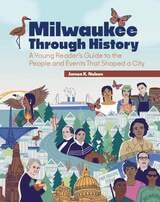
Milwaukee Through History
A Young Reader's Guide to the People and Events That Shaped a CityJames K. Nelsen
Wisconsin Historical Society Press, 2025
New perspectives on state and national history through the lens of Wisconsin's oldest city
This richly illustrated book for middle grade and high school learners uses primary sources and archival photos to explore Milwaukee’s role in Wisconsin and US history. Milwaukee Through History highlights the city’s multiple transformations—from a resource-rich homeland of Ho-Chunk, Menominee, Ojibwe, Potawatomi, and other Native peoples to an immigrant hub to an industrial boomtown and, finally, to a vibrant tourist destination that continues to grapple with issues of poverty and inequality.
Readers will discover key people, places, events, and innovations that made Milwaukee—and national—history, including:
• Freedom seeker Joshua Glover
• Industrial giants like Harley Davidson & Allen Bradley
• Whitnall Park and the North Point Water Tower
• Labor movements and the fair housing marches
• Civil rights leader Vel Phillips
Author James K. Nelsen sheds new light on important events and milestones in history, including the American Revolution, the War of 1812, the Civil War, and the Great Migration. Written with middle and high school readers in mind, the book will appeal to people of all ages who are curious about Milwaukee’s history and culture. Milwaukee Through History is both an engaging supplement to Wisconsin and US history curricula and a great read for anyone seeking a deeper understanding of a diverse and dynamic city.
[more]
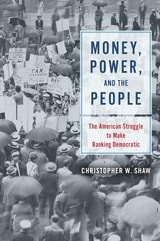
Money, Power, and the People
The American Struggle to Make Banking DemocraticChristopher W. Shaw
University of Chicago Press, 2019
Banks and bankers are hardly the most beloved institutions and people in this country. With its corruptive influence on politics and stranglehold on the American economy, Wall Street is held in high regard by few outside the financial sector. But the pitchforks raised against this behemoth are largely rhetorical: we rarely see riots in the streets or public demands for an equitable and democratic banking system that result in serious national changes.
Yet the situation was vastly different a century ago, as Christopher W. Shaw shows. This book upends the conventional thinking that financial policy in the early twentieth century was set primarily by the needs and demands of bankers. Shaw shows that banking and politics were directly shaped by the literal and symbolic investments of the grassroots. This engagement remade financial institutions and the national economy, through populist pressure and the establishment of federal regulatory programs and agencies like the Farm Credit System and the Federal Deposit Insurance Corporation. Shaw reveals the surprising groundswell behind seemingly arcane legislation, as well as the power of the people to demand serious political repercussions for the banks that caused the Great Depression. One result of this sustained interest and pressure was legislation and regulation that brought on a long period of relative financial stability, with a reduced frequency of economic booms and busts. Ironically, this stability led to the decline of the very banking politics that brought it about.
Giving voice to a broad swath of American figures, including workers, farmers, politicians, and bankers alike, Money, Power, and the People recasts our understanding of what might be possible in balancing the needs of the people with those of their financial institutions.
[more]
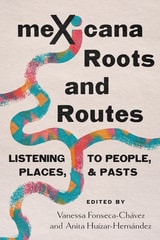
meXicana Roots and Routes
Listening to People, Places, and PastsEdited by Vanessa Fonseca-Chávez and Anita Huízar-Hernández
University of Arizona Press, 2025
Community voices are often an underrepresented aspect of our historical and cultural knowledge of the U.S. Southwest.
In this collection, established and emerging scholars draw upon their rootedness in the U.S. Southwest and U.S.-Mexico borderlands. The meXicana contributors use personal and scholarly inquiry to discuss what it means to cultivate spaces of belonging, navigate language policies, and explore and excavate silences in various spaces, among other important themes.
From the recruitment of Latinas for the U.S. Benito Juárez Squadron in World War II, to the early twentieth-century development of bilingual education in Arizona, to new and insightful analyses of Bracero Program participants and their families, the book details little-known oral histories and archival material to present a rich account of lives along the border with emphasis on women and the working class.
As the inaugural publication of the Arizona Crossroads series, readers will find Arizona featured as a central node of borderlands roots and routes. Each section of the book intentionally centers Arizona within broader comparative and cross-state dialogues, alongside chapters that reflect regional concerns in other southwestern states, including Texas, California, Colorado, and New Mexico. Throughout, this volume highlights the ways in which personal experience, community building, and scholarly perspectives can provide a powerful space for community voices.
Contributors
Vanessa Fonseca-Chávez
Lillian Gorman
Gloria Holguín Cuádraz
Anita Huízar-Hernández
Christine Marin
Valerie A. Martínez
Alina R. Méndez
Karen R. Roybal
Yvette J. Saavedra
Liliana Toledo-Guzmán
Andrea Tovar
[more]