Results by title
58 books match the query 'Pop Vocal' and 4 start with m
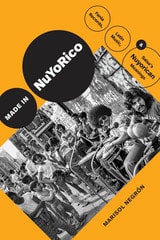
Made in NuYoRico
Fania Records, Latin Music, and Salsa’s Nuyorican MeaningsMarisol Negrón
Duke University Press, 2024
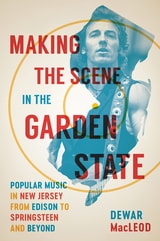
Making the Scene in the Garden State
Popular Music in New Jersey from Edison to Springsteen and BeyondDewar MacLeod
Rutgers University Press, 2020
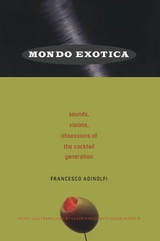
Mondo Exotica
Sounds, Visions, Obsessions of the Cocktail GenerationFrancesco Adinolfi Edited and translated by Karen Pinkus with Jason Vivrette
Duke University Press, 2008
Adinolfi interviewed a number of exotica greats, and Mondo Exotica incorporates material from his interviews with Martin Denny, Esquivel, the Italian film composers Piero Piccioni and Piero Umiliani, and others. It begins with an extended look at the postwar popularity of exotica in the United States. Adinolfi describes how American bachelors and suburbanites embraced the Polynesian god Tiki as a symbol of escape and sexual liberation; how Les Baxter’s album Ritual of the Savage (1951) ushered in the exotica music craze; and how Martin Denny’s Exotica built on that craze, hitting number one in 1957. Adinolfi chronicles the popularity of performers from Yma Sumac, “the Peruvian Nightingale,” to Esquivel, who was described by Variety as “the Mexican Duke Ellington,” to the chanteuses Eartha Kitt, Julie London, and Ann-Margret. He explores exotica’s many sub-genres, including mood music, crime jazz, and spy music. Turning to Italy, he reconstructs the postwar years of la dolce vita, explaining how budget spy films, spaghetti westerns, soft-core porn movies, and other genres demonstrated an attraction to the foreign. Mondo Exotica includes a discography of albums, compilations, and remixes.
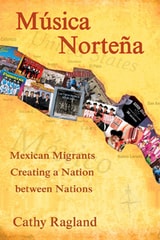
Musica Nortena
Mexican Americans Creating a Nation Between NationsCathy Ragland
Temple University Press, 2009
Música norteña, a musical genre with its roots in the folk ballad traditions of northern Mexico and the Texas-Mexican border region, has become a hugely popular musical style in the U.S., particularly among Mexican immigrants. Featuring evocative songs about undocumented border-crossers, drug traffickers, and the plight of immigrant workers, música norteña has become the music of a "nation between nations." Música Norteña is the first definitive history of this transnational music that has found enormous commercial success in norteamérica.
Cathy Ragland, an ethnomusicologist and former music critic, serves up the fascinating fifty-year story of música norteña, enlivened by interviews with important musicians and her own first-hand observations of live musical performances. Beyond calling our attention to musical influences, ragland shows readers the social and economic forces at work behind the music. By comparing música norteña with other popular musical forms, including conjunto tejano, she helps us understand and appreciate the musical ties that bind the Mexican diaspora.