Results by title
81 books match the query 'Post-communism' and 2 start with m
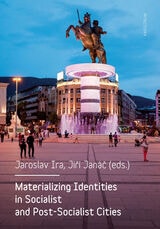
Materializing Identities in Socialist and Post-Socialist Cities
Edited by Jaroslav Ira and Jirí Janác
Karolinum Press, 2017
Following the so-called “Material Turn” of historiography, this book explores the materialization of identity in urban space—specifically in Eastern Europe and Central Asia. Urban spaces played an important role in the formation of national identities in post-socialist successor states across the region, while at the same time the articulation of national identities markedly affected the appearance of these post-socialist cities. Beginning with an overview of socialist and post-socialist cities in recent urban history, contributors trace the post-socialist intertwining of space and identities in case studies that include Astana and Almaty in Kazakhstan, Chișinău and Tiraspol in Moldova, and Skopje in Macedonia, while also linking this phenomenon to socialist urbanism, as in postwar Minsk, Belarus.
[more]
Mission Accomplished
On Founding Constitutional Adjudication in Central EuropeRadoslav Procházka
Central European University Press, 2002
Examines constitutional jurisdiction in the so-called Visegrad Four: Poland, Hungary, the Czech Republic and Slovakia. The creation of constitutional courts was one of the major milestones in the re-creation of the democratic system in these countries. In Europe constitutional courts exert much of the functions of the Supreme Court of the US. However, the immediate western European samples showed marked differences, which is why besides similarities, the theory and practice of constitutional law show differences in these four countries. Procházka analyses and explains these similarities and differences.
Mission Accomplished contributes to the literature on comparative constitutional law by offering insights into the constitutional discourses that go beyond the discussion of notorious cases and events in these four countries. Procházka argues that the various historical, cultural, socio-psychological, political and institutional contexts have translated into different modes of constitutional adjudication and interpretation.
[more]