Results by title
471 books match the query 'Power' and 22 start with m
Making Race, Making Power
North Carolina's Road to DisfranchisementKent Redding
University of Illinois Press, 2003
Far from being a low-level, localized trend, the struggle for power in North Carolina would be felt across the entire country as race-and class-based organizing challenged the dominant models of making and holding power.
Redding reveals how the ruling class operates with motivations and methods very similar to those of the black voters and Populist farmers they fought against. He tracks how the elites co-opted the innovative mobilizing strategies of the subaltern groups to effectively use their own weapons against them.
At the core of Making Race, Making Power is an insightful dissection of the concrete connections between political strategies of solidarity and exclusion and underlying patterns of race relations.
Malaysiakini and the Power of Independent Media in Malaysia
Janet Steele
National University of Singapore Press, 2023
Founded in 1999 by Steven Gan and Premesh Chandran, Malaysiakini was one of many online portals that sprung up in the wake of Reformasi, a period of public protests sparked by Prime Minister Mahathir Mohammad’s 1998 firing of his deputy Anwar Ibrahim. At first, there was no reason to think that Malaysiakini would be anything momentous. However, Malaysiakini wanted to do something much more important than just reporting on Reformasi—its founders intended to bring independent journalism to Malaysia in hopes of changing the country for the better.
Based on more than fifteen years of observation of Malaysiakini's newsroom practices, Malaysiakini and the Power of Independent Media in Malaysia is an intimate portrait of the people and issues behind Malaysia’s only truly independent media outlet. The author illustrates Malaysiakini’s unique mix of idealism in action, studying how sensitive issues such as race, religion, politics, and citizenship are discussed in the newsroom. This attention to the inner workings of one of the most important media institutions in the region yields not only a deep newsroom ethnography but a nuanced, rich history of modern Malaysia.
Mapping Yorùbá Networks
Power and Agency in the Making of Transnational CommunitiesKamari Maxine Clarke
Duke University Press, 2004
Examining how the development of a deterritorialized network of black cultural nationalists became aligned with a lucrative late-twentieth-century roots heritage market, Clarke explores the dynamics of Òyótúnjí Village’s religious and tourist economy. She discusses how the community generates income through the sale of prophetic divinatory consultations, African market souvenirs—such as cloth, books, candles, and carvings—and fees for community-based tours and dining services. Clarke accompanied Òyótúnjí villagers to Nigeria, and she describes how these heritage travelers often returned home feeling that despite the separation of their ancestors from Africa as a result of transatlantic slavery, they—more than the Nigerian Yorùbá—are the true claimants to the ancestral history of the Great Òyó Empire of the Yorùbá people. Mapping Yorùbá Networks is a unique look at the political economy of homeland identification and the transnational construction and legitimization of ideas such as authenticity, ancestry, blackness, and tradition.

Masking And Power
Carnival And Popular Culture In The CaribbeanGerard Aching
University of Minnesota Press, 2002
An ambitious reassessment of the political uses of masking.
Does the mask reveal more than it conceals? What, this book asks, becomes visible and invisible in the masking practiced in Caribbean cultures-not only in the familiar milieu of the carnival but in political language, social conduct, and cultural expressions that mimic, misrepresent, and mislead? Focusing on masking as a socially significant practice in Caribbean cultures, Gerard Aching’s analysis articulates masking, mimicry, and misrecognition as a means of describing and interrogating strategies of visibility and invisibility in Cuba, Trinidad and Tobago, Martinique, and beyond.
Masking and Power uses ethnographic fieldwork, psychoanalysis, and close literary readings to examine encounters between cultural insiders as these locals mask themselves and one another either to counter the social invisibility imposed on them or to maintain their socioeconomic privileges. Aching exposes the ways in which strategies of masking and mimicry, once employed to negotiate subjectivities within colonial regimes, have been appropriated for state purposes and have become, with the arrival of self-government in the islands, the means by which certain privileged locals make a show of national and cultural unity even as they engage in the privatization of popular culture and its public performances.
Maya Market Women
Power and Tradition in San Juan Chamelco, GuatemalaS. Ashley Kistler
University of Illinois Press, 2014
As cultural mediators, Chamelco's market women offer a model of contemporary Q'eqchi' identity grounded in the strength of the Maya historical legacy. Guatemala's Maya communities have faced nearly five hundred years of constant challenges to their culture, from colonial oppression to the instability of violent military dictatorships and the advent of new global technologies. In spite of this history, the people of San Juan Chamelco, Guatemala, have effectively resisted significant changes to their cultural identities. Chamelco residents embrace new technologies, ideas, and resources to strengthen their indigenous identities and maintain Maya practice in the 21st century, a resilience that sets Chamelco apart from other Maya towns.
Unlike the region's other indigenous women, Chamelco's Q'eqchi' market women achieve both prominence and visibility as vendors, dominating social domains from religion to local politics. These women honor their families' legacies through continuation of the inherited, high-status marketing trade. In Maya Market Women, S. Ashley Kistler describes how market women gain social standing as mediators of sometimes conflicting realities, harnessing the forces of global capitalism to revitalize Chamelco's indigenous identity. Working at the intersections of globalization, kinship, gender, and memory, Kistler presents a firsthand look at Maya markets as a domain in which the values of capitalism and indigenous communities meet.
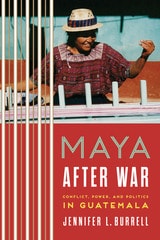
Maya after War
Conflict, Power, and Politics in GuatemalaBy Jennifer L. Burrell
University of Texas Press, 2013
Guatemala’s thirty-six-year civil war culminated in peace accords in 1996, but the postwar transition has been marked by continued violence, including lynchings and the rise of gangs, as well as massive wage-labor exodus to the United States. For the Mam Maya municipality of Todos Santos Cuchumatán, inhabited by a predominantly indigenous peasant population, the aftermath of war and genocide resonates with a long-standing tension between state techniques of governance and ancient community-level power structures that incorporated concepts of kinship, gender, and generation. Showing the ways in which these complex histories are interlinked with wartime and enduring family/class conflicts, Maya after War provides a nuanced account of a unique transitional postwar situation, including the complex influence of neoliberal intervention.
Drawing on ethnographic field research over a twenty-year period, Jennifer L. Burrell explores the after-war period in a locale where community struggles span culture, identity, and history. Investigating a range of tensions from the local to the international, Burrell employs unique methodologies, including mapmaking, history workshops, and an informal translation of a historic ethnography, to analyze the role of conflict in animating what matters to Todosanteros in their everyday lives and how the residents negotiate power. Examining the community-based divisions alongside national postwar contexts, Maya after War considers the aura of hope that surrounded the signing of the peace accords, and the subsequent doubt and waiting that have fueled unrest, encompassing generational conflicts. This study is a rich analysis of the multifaceted forces at work in the quest for peace, in Guatemala and beyond.
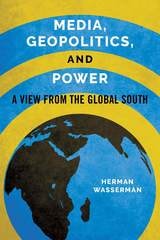
Media, Geopolitics, and Power
A View from the Global SouthHerman Wasserman
University of Illinois Press, 2018
Herman Wasserman analyzes the debates surrounding South Africa's new media presence against the backdrop of rapidly changing geopolitics. His exploration reveals how South African disputes regarding access to, and representation in, the media reflect the domination and inequality in the global communication sphere. Optimists see post-apartheid media as providing a vital space that encourages exchanges of opinion in a young democracy. Critics argue the public sphere mirrors South Africa's past divisions and privileges the viewpoints of the elite. Wasserman delves into the ways these simplistic narratives obscure the country's internal tensions, conflicts, and paradoxes even as he charts the diverse nature of South African entry into the global arena.

Media, Monarchy and Power
Neil Blain and Hugh O'Donnell
Intellect Books, 2013
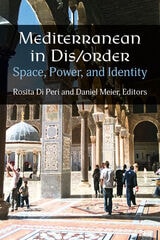
Mediterranean in Dis/order
Space, Power, and IdentityRosita Di Peri and Daniel Meier, Editors
University of Michigan Press, 2023
Mediterranean in Dis/order reveals the connection between space and politics by examining the role that space has played in insurgencies, conflicts, uprisings, and mobilities in the Mediterranean region. With this approach, the authors are able to challenge well-established beliefs about the power structure of the state across different disciplines (including political science, history, sociology, geography, and anthropology), and its impact on the conception, production, and imagination of space in the broader Mediterranean. Further, they contribute to particular areas of studies, such as migration, political Islam, mobilization, and transition to democracy, among others. The book, infusing critical theory, unveils original and revelatory case studies in Tunisia, Libya, Lebanon, Turkey, Syria, Morocco, and the EU Mediterranean policy, through a various set of actors and practices—from refugees and migrations policies, to Islamist or students’ movements, architectural sites, or movies. This multidisciplinary perspective on space and power provides a valuable resource for practitioners interested in how space, context, and time interact to produce institutions, political subjectivities, and asymmetries of power, particularly since the turning point of the Arab uprisings. The book also helps readers understand the conditions under which the uprisings develop, giving a clearer picture about various national, regional, and international dynamics.
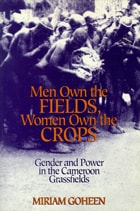
Men Own The Fields, Women Own The Crops
Gender And Power In The Cameroon GrassfieldsMiriam Goheen
University of Wisconsin Press, 1996
Based on a decade of fieldwork, this work tracks the negotiations between chiefs and subchiefs and women and men over ritual power, economic power, and administrative power. Though Nso men obviously dominate their society at both the local level and nationally, women have had power of their own by virtue of their status as women. Men may own the land, for example, but women control the crops through their labor . Goheen explains clearly the place of gender in very complex historical processes, such as land tenure systems, title societies, chieftancy, marriage systems, changing ideas of symbolic capital, and internal and external politics.
In examining women’s resistance to traditional patterns of marriage, Goheen raises the question of whether such actions truly change the balance of power between the sexes, or whether resistance to marriage is instead fostering the formation of a new elite class, since it is only the better-educated women of wealthier families who can change the dynamic of power and labor within the household.
The issues raised in this book are not unique to Nso but apply throughout the African subcontinent. Written in a straightforward way with much of the theoretical argument in footnotes, Men Own the Fields, Women Own the Crops marshals important arguments of wide relevance in present-day Africa.
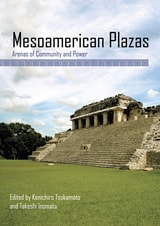
Mesoamerican Plazas
Arenas of Community and PowerEdited by Kenichiro Tsukamoto and Takeshi Inomata
University of Arizona Press, 2014
The primary question that has motivated the contributors is how Mesoamerican plazas became arenas for the creation and negotiation of social relations and values in a community. The thirteen contributions stress the significance of interplay between power relations and embodied practices set in specific historical and material settings, as outlined by practice theory and performance theory. This approach allows the contributors to explore broader anthropological issues, such as the negotiation of power relations, community making, and the constitution of political authorities.
Overall, the contributions establish that physical interactions among people in communal events were not the outcomes of political machinations held behind the scenes, but were the actual political processes through which people created, negotiated, and subverted social realities. If so, spacious plazas that were arguably designed for interactions among a large number of individuals must have also provided critical arenas for the constitution and transformation of society.
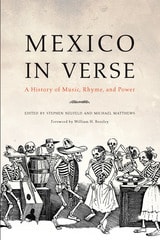
Mexico in Verse
A History of Music, Rhyme, and PowerEdited by Stephen Neufeld and Michael Matthews; Foreword by William H. Beezley
University of Arizona Press, 2015
Focusing on modern Mexico, from 1840 to the 1980s, this volume examines the cultural venues in which people articulated their understanding of the social, political, and economic change they witnessed taking place during times of tremendous upheaval, such as the Mexican-American War, the Porfiriato, and the Mexican Revolution. The words of diverse peoples—people of the street, of the field, of the cantinas—reveal the development of the modern nation. Neufeld and Matthews have chosen sources so far unexplored by Mexicanist scholars in order to investigate the ways that individuals interpreted—whether resisting or reinforcing—official narratives about formative historical moments.
The contributors offer new research that reveals how different social groups interpreted and understood the Mexican experience. The collected essays cover a wide range of topics: military life, railroad accidents, religious upheaval, children’s literature, alcohol consumption, and the 1985 earthquake. Each chapter provides a translated song or poem that encourages readers to participate in the interpretive practice of historical research and cultural scholarship. In this regard, Mexico in Verse serves both as a volume of collected essays and as a classroom-ready primary document reader.
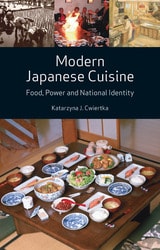
Modern Japanese Cuisine
Food, Power and National IdentityKatarzyna J. Cwiertka
Reaktion Books, 2015
Katarzyna J. Cwiertka demonstrates that key shifts in the Japanese diet were, in many cases, a consequence of modern imperialism. Exploring reforms in military catering and home cooking, wartime food management and the rise of urban gastronomy, Cwiertka shows how Japan’s numerous regional cuisines were eventually replaced by a set of foods and practices with which the majority of Japanese today ardently identify.
The result of over a decade of research, Modern Japanese Cuisine is a fascinating look at the historical roots of some of the world’s best cooking and will provide appetizing reading for scholars of Japanese culture and foodies alike.
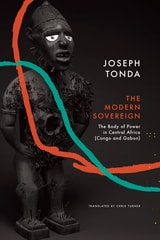
Modern Sovereign
The Body of Power in Central Africa (Congo and Gabon)Joseph Tonda
Seagull Books, 2020
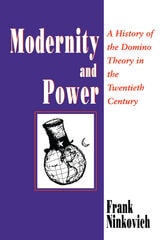
Modernity and Power
A History of the Domino Theory in the Twentieth CenturyFrank Ninkovich
University of Chicago Press, 1994
To emphasize the central role of symbolism and ideological assumptions in twentieth-century American statesmanship, Ninkovich focuses on the domino theory—a theory that departed radically from classic principles of political realism by sanctioning intervention in world regions with few financial or geographic claims on the national interest. Ninkovich insightfully traces the development of this global strategy from its first appearance early in the century through the Vietnam war.
Throughout the book, Ninkovich draws on primary sources to recover the worldview of the policy makers. He carefully assesses the coherence of their views rather than judge their actions against "objective" realities. Offering a new alternative to realpolitic and economic explanations of foreign policy, Modernity and Power will change the way we think about the history of U.S. international relations.

Money and Power
Great Predators in the Political Economy of DevelopmentSarah Bracking
Pluto Press, 2009
Sarah Bracking explores the role of governments and development finance institutions in managing the markets in which the poorest countries operate. These institutions -- the 'Great Predators' -- are trapping the populations of the south in a permanent cycle of austerity.
Bracking examines the political economy relations between states. She shows how pseudo-public 'development' institutions retain complete economic control over Southern markets, yet the international system is itself unregulated. Operating in the interests of North America and the European Union, they have a political purpose, and yet serve to cloud the brute power relations between states.
This book will be of interest to anyone studying debt and development, global financial institutions, and the way the world economy is regulated and governed.
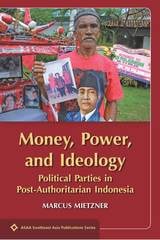
Money, Power, and Ideology
Political Parties in Post-Authoritarian IndonesiaMarcus Mietzner
National University of Singapore Press, 2013
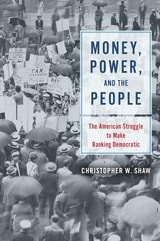
Money, Power, and the People
The American Struggle to Make Banking DemocraticChristopher W. Shaw
University of Chicago Press, 2019
Yet the situation was vastly different a century ago, as Christopher W. Shaw shows. This book upends the conventional thinking that financial policy in the early twentieth century was set primarily by the needs and demands of bankers. Shaw shows that banking and politics were directly shaped by the literal and symbolic investments of the grassroots. This engagement remade financial institutions and the national economy, through populist pressure and the establishment of federal regulatory programs and agencies like the Farm Credit System and the Federal Deposit Insurance Corporation. Shaw reveals the surprising groundswell behind seemingly arcane legislation, as well as the power of the people to demand serious political repercussions for the banks that caused the Great Depression. One result of this sustained interest and pressure was legislation and regulation that brought on a long period of relative financial stability, with a reduced frequency of economic booms and busts. Ironically, this stability led to the decline of the very banking politics that brought it about.
Giving voice to a broad swath of American figures, including workers, farmers, politicians, and bankers alike, Money, Power, and the People recasts our understanding of what might be possible in balancing the needs of the people with those of their financial institutions.
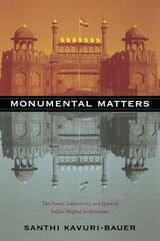
Monumental Matters
The Power, Subjectivity, and Space of India's Mughal ArchitectureSanthi Kavuri-Bauer
Duke University Press, 2011
She examines the representation and eventual preservation of the monuments, from their disrepair in the colonial past to their present status as protected heritage sites. Drawing on theories of power, subjectivity, and space, Kavuri-Bauer’s interdisciplinary analysis encompasses Urdu poetry, British landscape painting, imperial archaeological surveys, Indian Muslim identity, and British tourism, as well as postcolonial nation building, World Heritage designations, and conservation mandates. Since Independence, the state has attempted to construct a narrative of Mughal monuments as symbols of a unified, secular nation. Yet modern-day sectarian violence at these sites continues to suggest that India’s Mughal monuments remain the transformative spaces—of social ordering, identity formation, and national reinvention—that they have been for centuries.
Mormon Women at the Crossroads
Global Narratives and the Power of ConnectednessCaroline Kline
University of Illinois Press, 2022
Winner of the Mormon History Association Best International Book Award
The Church of Jesus Christ of Latter-day Saints continues to contend with longstanding tensions surrounding gender and race. Yet women of color in the United States and across the Global South adopt and adapt the faith to their contexts, many sharing the high level of satisfaction expressed by Latter-day Saints in general. Caroline Kline explores the ways Latter-day Saint women of color in Mexico, Botswana, and the United States navigate gender norms, but also how their moral priorities and actions challenge Western feminist assumptions. Kline analyzes these traditional religious women through non-oppressive connectedness, a worldview that blends elements of female empowerment and liberation with a broader focus on fostering positive and productive relationships in different realms. Even as members of a patriarchal institution, the women feel a sense of liberation that empowers them to work against oppression and against alienation from both God and other human beings.
Vivid and groundbreaking, Mormon Women at the Crossroads merges interviews with theory to offer a rare discussion of Latter-day Saint women from a global perspective.

Mr. Chairman
Power in Dan Rostenkowski's AmericaJames L. Merriner
Southern Illinois University Press, 2002
The story of Dan Rostenkowski’s rise and fall provides one of the keys to how power is sought, won, exercised, and distributed in contemporary America, argues political journalist James L. Merriner.
A literal son of the Chicago political machine, Rostenkowski was installed in politics by his father, Alderman Joseph P. Rostenkowski, and by his mentor, Mayor Richard I. Daley. In his thirty-six year congressional career, he served nine presidents, forming close friendships with many of them. His legislative masterpiece was the 1986 tax reform law. Eight years later, he was indicted on federal charges for misusing tax dollars and campaign funds.
In his dealings with the man who tumbled dramatically from his high position as chair of the powerful House Ways and Means Committee all the way down to a cell in a federal prison in Wisconsin, Merriner finds Rostenkowski candid, straightforward, and authentic— "except when it came to his own finances."
Rostenkowski is not a complex man in need of psychoanalysis on the part of his biographer, and Merriner does not indulge in much of that. Purely, simply, and openly, Rostenkowski wanted power. He wanted wealth. He got both, and Merriner shows us how.
Merriner sees mythic qualities in Rostenkowski, characterizing him as the "tall bold slugger" of Carl Sandburg’s 1916 poem about Chicago. Noting that this master politician climbed to fantastic peaks only to fall hard and fast, Merriner points out that "Rostenkowski’s life ascended from power in the political science sense to tragedy in the classical sense." The Justice Department and the electorate sacrificed Rostenkowski as an embodiment of the excesses of big government. Like the Greek chorus of tragedy, major media reported the scandal to the masses.
Yet Merriner does not strain to make his subject fit a classical mold. He tells instead the "story of a great man who was also a little man, a statesman and a crook, an emotional man, an American original." This was also a man unbeaten by his troubles, a man who emerged from prison unabashed.
This illustrated biography is not authorized by Rostenkowski, who declined Merriner’s interview requests after June 1995. His sources are the public record, previous interviews with Rostenkowski and with many other sources before and after 1995, and his own political acumen gained from decades on the political scene.

Murder Was Not a Crime
Homicide and Power in the Roman RepublicBy Judy E. Gaughan
University of Texas Press, 2009
Embarking on a unique study of Roman criminal law, Judy Gaughan has developed a novel understanding of the nature of social and political power dynamics in republican government. Revealing the significant relationship between political power and attitudes toward homicide in the Roman republic, Murder Was Not a Crime describes a legal system through which families (rather than the government) were given the power to mete out punishment for murder.
With implications that could modify the most fundamental beliefs about the Roman republic, Gaughan's research maintains that Roman criminal law did not contain a specific enactment against murder, although it had done so prior to the overthrow of the monarchy. While kings felt an imperative to hold monopoly over the power to kill, Gaughan argues, the republic phase ushered in a form of decentralized government that did not see itself as vulnerable to challenge by an act of murder. And the power possessed by individual families ensured that the government would not attain the responsibility for punishing homicidal violence.
Drawing on surviving Roman laws and literary sources, Murder Was Not a Crime also explores the dictator Sulla's "murder law," arguing that it lacked any government concept of murder and was instead simply a collection of earlier statutes repressing poisoning, arson, and the carrying of weapons. Reinterpreting a spectrum of scenarios, Gaughan makes new distinctions between the paternal head of household and his power over life and death, versus the power of consuls and praetors to command and kill.