Results by title
53 books match the query 'Prostitution' and 3 start with m
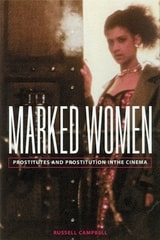
Marked Women
Prostitutes and Prostitution in the CinemaRussell Campbell
University of Wisconsin Press, 2006
Julia Roberts played a prostitute, famously, in Pretty Woman. So did Jodie Foster in Taxi Driver, Jane Fonda in Klute, Anna Karina in Vivre sa vie, Greta Garbo in Anna Christie, and Charlize Theron, who won an Academy Award for Monster. This engaging and generously illustrated study explores the depiction of female prostitute characters and prostitution in world cinema, from the silent era to the present-day industry. From the woman with control over her own destiny to the woman who cannot get away from her pimp, Russell Campbell shows the diverse representations of prostitutes in film.
Marked Women classifies fifteen recurrent character types and three common narratives, many of them with their roots in male fantasy. The “Happy Hooker,” for example, is the liberated woman whose only goal is to give as much pleasure as she receives, while the “Avenger,” a nightmare of the male imagination, represents the threat of women taking retribution for all the oppression they have suffered at the hands of men. The “Love Story,” a common narrative, represents the prostitute as both heroine and anti-heroine, while “Condemned to Death” allows men to manifest, in imagination only, their hostility toward women by killing off the troubled prostitute in an act of cathartic violence.
The figure of the woman whose body is available at a price has fascinated and intrigued filmmakers and filmgoers since the very beginning of cinema, but the manner of representation has also been highly conflicted and fiercely contested. Campbell explores the cinematic prostitute as a figure shaped by both reactionary thought and feminist challenges to the norm, demonstrating how the film industry itself is split by fascinating contradictions.
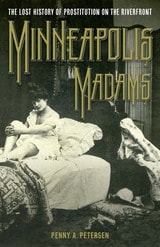
Minneapolis Madams
The Lost History of Prostitution on the RiverfrontPenny A. Petersen
University of Minnesota Press, 2013
Sex, money, and politics—no, it’s not a thriller novel. Minneapolis Madams is the surprising and riveting account of the Minneapolis red-light district and the powerful madams who ran it. Penny Petersen brings to life this nearly forgotten chapter of Minneapolis history, tracing the story of how these “houses of ill fame” rose to prominence in the late nineteenth century and then were finally shut down in the early twentieth century.
In their heyday Minneapolis brothels were not only open for business but constituted a substantial economic and political force in the city. Women of independent means, madams built custom bordellos to suit their tastes and exerted influence over leading figures and politicians. Petersen digs deep into city archives, period newspapers, and other primary sources to illuminate the Minneapolis sex trade and its opponents, bringing into focus the ideologies and economic concerns that shaped the lives of prostitutes, the men who used their services, and the social-purity reformers who sought to eradicate their trade altogether. Usually written off as deviants, madams were actually crucial components of a larger system of social control and regulation. These entrepreneurial women bought real estate, hired well-known architects and interior decorators to design their bordellos, and played an important part in the politics of the developing city.
Petersen argues that we cannot understand Minneapolis unless we can grasp the scope and significance of its sex trade. She also provides intriguing glimpses into racial interactions within the vice economy, investigating an African American madam who possibly married into one of the city’s most prestigious families. Fascinating and rigorously researched, Minneapolis Madams is a true detective story and a key resource for anyone interested in the history of women, sexuality, and urban life in Minneapolis.
Mobile Orientations
An Intimate Autoethnography of Migration, Sex Work, and Humanitarian BordersNicola Mai
University of Chicago Press, 2018
Using a bold blend of personal narrative and autoethnography, Mai provides intimate portrayals of sex workers from sites including the Balkans, the Maghreb, and West Africa who decided to sell sex as the means to achieve a better life. Mai explores the contrast between how migrants understand themselves and their work and how humanitarian and governmental agencies conceal their stories, often unwittingly, by addressing them all as helpless victims. The culmination of two decades of research, Mobile Orientations sheds new light on the desires and ambitions of migrant sex workers across the world.