Results by title
54 books match the query 'Punishment' and 2 start with m
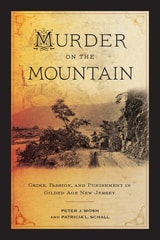
Murder on the Mountain
Crime, Passion, and Punishment in Gilded Age New JerseyPeter J. Wosh
Rutgers University Press, 2022
Was Margaret the calculating murderess and adulteress portrayed by the press? Or was she a battered wife pushed to the edge? Or was she, as she claimed to the end, innocent? Murder on the Mountain considers all sides of this fascinating and mysterious true crime story. In turn, it examines why this murder trial became front-page news, as it resonated with public discussions about capital punishment, mental health, anti-immigrant sentiment, domestic violence, and women’s independence. This is a gripping and thought-provoking study of a murder that shocked the nation.
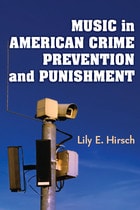
Music in American Crime Prevention and Punishment
Lily E. Hirsch
University of Michigan Press, 2014
Although the use of music for extramusical purposes has been a part of American culture for some time, the phenomenon remained largely unknown to the general public until revelations became widespread of startling military practices during the second Iraq War. In Music in American Crime Prevention and Punishment, Lily E. Hirsch explores the related terrain at the intersection of music and law, demonstrating the ways in which music has become a tool of law enforcement and justice through: police and community leaders’ use of classical music in crime deterrence and punishment; the use of rap lyrics as prosecutorial evidence; allegations of music as incitement to violence; and the role of music in U.S. prisons and in detention centers in Guantanamo, Iraq, and Afghanistan.
In the course of her study, Hirsch asks several questions: How does the law treat music? When and why does music participate in the law? How does music influence the legal process? How does the legal process influence music? And how do these appropriations affect the Romantic ideals underlying our view of music?