Results by title
137 books match the query 'Science & Technology' and 4 start with m
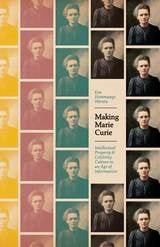
Making Marie Curie
Intellectual Property and Celebrity Culture in an Age of InformationEva Hemmungs Wirtén
University of Chicago Press, 2015
Making Marie Curie explores what went into the creation of this icon of science. It is not a traditional biography, or one that attempts to uncover the “real” Marie Curie. Rather, Eva Hemmungs Wirtén, by tracing a career that spans two centuries and a world war, provides an innovative and historically grounded account of how modern science emerges in tandem with celebrity culture under the influence of intellectual property in a dawning age of information. She explores the emergence of the Curie persona, the information culture of the period that shaped its development, and the strategies Curie used to manage and exploit her intellectual property. How did one create and maintain for oneself the persona of scientist at the beginning of the twentieth century? What special conditions bore upon scientific women, and on married women in particular? How was French identity claimed, established, and subverted? How, and with what consequences, was a scientific reputation secured?
In its exploration of these questions and many more, Making Marie Curie provides a composite picture not only of the making of Marie Curie, but the making of modern science itself.

Max Nohl’s Underwater Adventures
Jane Kelley
Wisconsin Historical Society Press, 2027
Dive into the thrilling adventures of the daring explorer who pushed the limits of underwater exploration.
From discovering a pocket of air beneath a half-sunken rowboat as a young boy to setting a world diving record hundreds of feet below the surface of Lake Michigan, Max Nohl never stopped chasing the mysteries of our lakes, seas, and oceans. In Max Nohl’s Underwater Adventures, young readers will dive into the remarkable true story of the man who helped to modernize scuba diving and expand our ability to explore the watery depths.
Inventor, engineer, and explorer, Nohl was pushing the limits of human courage beneath the waves long before scuba diving became a recreational pastime. Readers of this biography for ages 8–11 will follow his riveting shipwreck treasure hunts, daring salvage expeditions, close encounters with sharks, and dramatic escapes from the many dangers under the sea.
But Nohl was more than an adventurer and thrill-seeker. Determined to make diving safer, he studied engineering at MIT and invented new equipment and techniques, including self-contained underwater breathing systems and helium-oxygen mixtures that opened the door to deeper exploration. He also helped pioneer advances in underwater camera equipment that allowed Hollywood moviemakers and others to capture watery scenes on film. Looking beyond Nohl’s own life story, this biography includes sidebars that give readers a peek into the history of deep-sea diving, tales of Great Lakes shipwrecks, and exploits of other record-breaking divers.
Filled with peril, discovery, ingenuity, and larger-than-life escapades, Max Nohl’s Underwater Adventures introduces young readers to an innovator whose curiosity and determination helped to unlock one of Earth’s last great frontiers—the mysterious world beneath the sea.
Molecular Politics
Developing American and British Regulatory Policy for Genetic Engineering, 1972-1982Susan Wright
University of Chicago Press, 1994
In this comparative study of the development of regulatory policy for genetic engineering in the United States and the United Kingdom, Susan Wright analyzes government responses to the struggles among corporations, scientists, universities, trade unions, and public interest groups over regulating this new field. Drawing on archival materials, government records, and interviews with industry executives, politicians, scientists, trade unionists, and others on both sides of the Atlantic, Molecular Politics provides a comprehensive account of a crucial set of policy decisions and explores their implications for the political economy of science.
By combining methods from political science and the history of science, Wright advances a provocative interpretation of the evolution of genetic engineering policy and makes a major contribution to science and public policy studies.
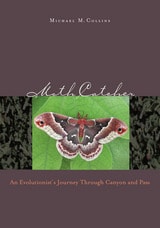
Moth Catcher
An Evolutionist's Journey Through Canyon And PassMichael M. Collins
University of Nevada Press, 2007
The memoir of a scientist and the wild silk moths he studies
Biologist Michael Collins has been studying wild silk moths since he was a boy. This family — which includes the largest and most colorful of the North American moths — led Collins into a long career as a scientist, and has provided him with significant insights into the process by which new species evolve. Moth Catcher is Collins’s engaging account of his development as a scientist and of his groundbreaking research. The canyon and pass environments of the American West offer a setting in which, since the last Ice Age, organisms have adapted to new surroundings and where many have formed new species. Collins has discovered in the Sierra Nevada that geneticists call a “hybrid zone” where two species interbreed. This hybrid zone is unusual because both sexes are fertile, unlike lab-bred hybrids between the same silk moth species. Collins explains how such hybrid populations serve as laboratories in nature where the process of speciation can be observed and studied. This book offers a fascinating view into the work of a field scientist and the ways that evolution continues to operate around us. Collins’s colorful accounts of his fieldwork will delight any reader who loves the outdoors and is captivated by the diversity and interrelations of the life forms found there. And his passion for his research and the fragile, exquisite creatures that he studies will inspire a new appreciation of the wonders of the natural world and the myriad life forms that occupy it.