Results by title
71 books match the query 'Social networks' and 6 start with m
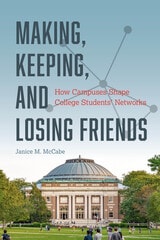
Making, Keeping, and Losing Friends
How Campuses Shape College Students' NetworksJanice M. McCabe
University of Chicago Press, 2025
We’re all familiar with the sentiment that “college is the best time of your life.” Along with a newfound sense of freedom, students have a unique opportunity to forge lifelong friendships at a point in life when friendship is particularly important. Why is it, then, that so many college students are falling victim to what the US Surgeon General termed an “epidemic of loneliness and isolation”? How do different aspects of college life help or hinder students’ ability to form deep connections?
In Making, Keeping, and Losing Friends: How Campuses Shape College Students’ Networks, sociologist Janice M. McCabe shows that the way a college is structured—whether students live in dorms or commute, study abroad or stay close to campus, have plentiful common areas for clubs to meet or not—can either encourage or hinder the making of meaningful friendships. Based on interviews with 95 students on three distinct campuses—a small private college (Dartmouth College), a large public university (University of New Hampshire), and a non-residential community college (Manchester Community College)—McCabe captures a wide range of experiences and discovers how features of the campuses make it easier or harder for students to make and keep friends. She shows how and why, across all three institutions, some students thrive in deep and lasting friendships with their peers.
As McCabe’s research reveals, we need to look at the structures of students’ networks, the institutions they attend, and the importance of their identities in these places if we are to truly uncover and address the loneliness epidemic facing today’s young adults.
Markets of Dispossession
NGOs, Economic Development, and the State in CairoJulia Elyachar
Duke University Press, 2005
Julia Elyachar studied the efforts of bankers, social scientists, ngo members, development workers, and state officials to turn the craftsmen and unemployed youth of Cairo into the vanguard of a new market society based on microenterprise. She considers these efforts in relation to the alternative notions of economic success held by craftsmen in Cairo, in which short-term financial profit is not always highly valued. Through her careful ethnography of workshop life, Elyachar explains how the traditional market practices of craftsmen are among the most vibrant modes of market life in Egypt. Long condemned as backward, these existing market practices have been seized on by social scientists and development institutions as the raw materials for experiments in “free market” expansion. Elyachar argues that the new economic value accorded to the cultural resources and social networks of the poor has fueled a broader process leading to their economic, social, and cultural dispossession.
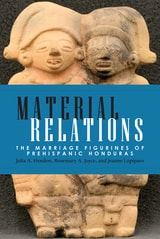
Material Relations
The Marriage Figurines of Prehispanic HondurasJulia A. Hendon
University Press of Colorado, 2014
They examine the production, use, and disposal of marriage figurines from six sites—Campo Dos, Cerro Palenque, Copán, Currusté, Tenampua, and Travesia—and explore their role in rituals and ceremonies, as well as in the forming of social bonds and the celebration of relationships among communities. They find evidence of historical traditions reproduced over generations through material media in social relations among individuals, families, and communities, as well as social differences within this network of connected yet independent settlements.
Material Relations provides a new and dynamic understanding of how social houses functioned via networks of production and reciprocal exchange of material objects and will be of interest to Mesoamerican archaeologists, anthropologists, and art historians.
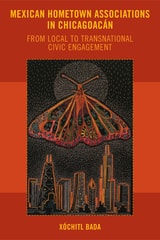
Mexican Hometown Associations in Chicagoacán
From Local to Transnational Civic EngagementBada, Xóchitl
Rutgers University Press, 0
Hometown associations (HTAs) consist of immigrants from the same town in Mexico and often begin quite informally, as soccer clubs or prayer groups. As Bada’s work shows, however, HTAs have become a powerful force for change, advocating for Mexican immigrants in the United States while also working to improve living conditions in their communities of origin. Focusing on a group of HTAs founded by immigrants from the state of Michoacán, the book shows how their activism has bridged public and private spheres, mobilizing social reforms in both inner-city Chicago and rural Mexico.
Bringing together ethnography, political theory, and archival research, Bada excavates the surprisingly long history of Chicago’s HTAs, dating back to the 1920s, then traces the emergence of new models of community activism in the twenty-first century. Filled with vivid observations and original interviews, Mexican Hometown Associations in Chicagoacán gives voice to an underrepresented community and sheds light on an underexplored form of global activism.
Migrant World Making
Sergio F Juárez
Michigan State University Press, 2023

Mujeres de Maiz en Movimiento
Spiritual Artivism, Healing Justice, and Feminist PraxisEdited by Amber Rose González, Felicia ‘Fe’ Montes, and Nadia Zepeda
University of Arizona Press, 2024
MdM’s political-ethical-spiritual commitments, cultural production, and everyday practices are informed by Indigenous and transnational feminist of color artistic, ceremonial, activist, and intellectual legacies. Contributors fuse stories of celebration, love, and spirit-work with an incisive critique of interlocking oppressions, both intimate and structural, encouraging movement toward “a world where many worlds fit.”
The multidisciplinary, intergenerational, and critical-creative nature of the project coupled with the unique subject matter makes the book a must-have for high school and college students, activist-scholars, artists, community organizers, and others invested in social justice and liberation.