Results by title
150 books match the query 'Social psychology' and 9 start with m

Madness Is Civilization
When the Diagnosis Was Social, 1948-1980Michael E. Staub
University of Chicago Press, 2011
In the 1960s and 1970s, a popular diagnosis for America’s problems was that society was becoming a madhouse. In this intellectual and cultural history, Michael E. Staub examines a time when many believed insanity was a sane reaction to obscene social conditions, psychiatrists were agents of repression, asylums were gulags for society’s undesirables, and mental illness was a concept with no medical basis.
The first study to describe how social diagnostic thinking emerged, Madness Is Civilization casts new light on the politics of the postwar era.

Manhood Impossible
Men's Struggles to Control and Transform Their Bodies and WorkMelzer, Scott
Rutgers University Press, 2018
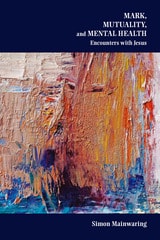
Mark, Mutuality, and Mental Health
Encounters with JesusSimon Mainwaring
SBL Press, 2014
An incitement to re-assess how society relates to persons with poor mental health
Mainwaring explores the societal contexts of those who suffer poor mental health, and in particular the relational dynamics of how identity, agency, and dialogue are negotiated in personal encounters. This work seeks to serve as an experiment, such that interested readers might better understand the dynamics of relational power that pervade encounters with persons with poor mental health.
Features:
- Foucauldian analysis of the relational dynamics of poor mental health used to re-imagine hegemonic relational dynamics
- Close readings of encounters between individual characters to evaluate how mutuality operates in those encounters
- Study of mutuality as it has emerged in mental health literature, feminist theologies, and theologies of disability

Mieres Reborn
The Reinvention of a Catalan CommunityA. F. Robertson
University of Alabama Press, 2012
Mieres Reborn reveals how patient observation and an analysis of one small community have much to tell us about human progress more generally.
Not long ago Mieres, a village in the eastern foothills of the Pyrenees, seemed destined to die. As in countless thousands of rural communities around the world, young people in Mieres over the years have moved to the towns and cities, leaving behind abandoned fields and meadows, derelict houses, and their aging and disconsolate parents and grandparents.
Close observation of this social microcosm over two decades reveals the capacity of ordinary people in a locality to reinvent themselves, reconstruct relationships with the wider world, and confront new threats to their collective survival. A. F. Robertson describes how the determination that Mieres should survive is most evident in a vigorous round of fiestas, fairs, and other public events in which natives, exiles, and newcomers work to create a lively sense of belonging. Since the 1980s, Mieres has been enlivened by a reverse flow of migrants from the cities, new settlers who have brought an infusion of youth to the community, devised new livelihoods, revitalized the village school, energized the native ”Mierencs,” and provided the impetus for a rediscovery of historical roots and political identity.
The regeneration of life in the countryside, in part a reaction to urban expansion and decay, is a global phenomenon of increasing political, economic, and social significance.

Mind, Self, and Society
From the Standpoint of a Social BehavioristGeorge Herbert Mead
University of Chicago Press, 1967
"If philosophical eminence be measured by the extent to which a man's writings anticipate the focal problems of a later day and contain a point of view which suggests persuasive solutions to many of them, then George Herbert Mead has justly earned the high praise bestowed upon him by Dewey and Whitehead as a 'seminal mind of the very first order.'"—Sidney Hook, The Nation
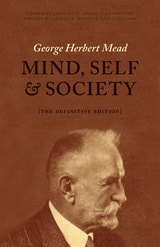
Mind, Self, and Society
The Definitive EditionGeorge Herbert Mead
University of Chicago Press, 2015
This collection gets to the heart of Mead’s meditations on social psychology and social philosophy. Its penetrating, conversational tone transports the reader directly into Mead’s classroom as he teases out the genesis of the self and the nature of the mind. The book captures his wry humor and shrewd reasoning, showing a man comfortable quoting Aristotle alongside Alice in Wonderland.
Included in this edition are an insightful foreword from leading Mead scholar Hans Joas, a revealing set of textual notes by Dan Huebner that detail the text’s origins, and a comprehensive bibliography of Mead’s other published writings. While Mead’s lectures inspired hundreds of students, much of his brilliance has been lost to time. This new edition ensures that Mead’s ideas will carry on, inspiring a new generation of thinkers.

Mixed Emotions
Beyond Fear and Hatred in International ConflictAndrew A. G. Ross
University of Chicago Press, 2013
From passionate protests to poignant speeches, Andrew A. G. Ross analyzes high-emotion events with an eye to how they shape public sentiment and finds that there is no single answer. The politically powerful play to the public’s emotions to advance their political aims, and such appeals to emotion also often serve to sustain existing values and institutions. But the affective dimension can produce profound change, particularly when a struggle in the present can be shown to line up with emotionally resonant events from the past. Extending his findings to well-studied conflicts, including the War on Terror and the violence in Rwanda and the Balkans, Ross identifies important sites of emotional impact missed by earlier research focused on identities and interests.
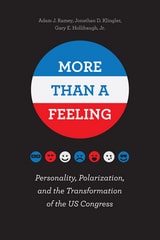
More Than a Feeling
Personality, Polarization, and the Transformation of the US CongressAdam J. Ramey, Jonathan D. Klingler, and Gary E. Hollibaugh Jr.
University of Chicago Press, 2017
With More Than a Feeling, Adam J. Ramey, Jonathan D. Klingler, and Gary E. Hollibaugh, Jr. have developed an innovative framework incorporating what are known as the Big Five dimensions of personality—openness to experience, conscientiousness, extraversion, agreeableness, and neuroticism—to improve our understanding of political behavior among members of Congress. To determine how strongly individuals display these traits, the authors identified correlates across a wealth of data, including speeches, campaign contributions and expenditures, committee involvement, willingness to filibuster, and even Twitter feeds. They then show how we might expect to see the influence of these traits across all aspects of Congress members’ political behavior—from the type and quantity of legislation they sponsor and their style of communication to whether they decide to run again or seek a higher office. They also argue convincingly that the types of personalities that have come to dominate Capitol Hill in recent years may be contributing to a lot of the gridlock and frustration plaguing the American political system.

Multiple Paths of Midlife Development
Edited by Margie E. Lachman and Jacquelyn Boone James
University of Chicago Press, 1997
Much of the past work on midlife has been limited by its use of cross-sectional data, its focus on clinical populations, and the analysis of only one target group. Using a diverse set of longitudinal data, this volume provides a broader perspective by examining the similarities and differences in the midlife experience as a function of gender, social class, and birth cohort.
Of interest to scholars as well as to those interested in the midlife period for clinical or personal reasons, this volume informs us of the enormous potential and promise amid the gains and losses of the middle years.