Results by title
165 books match the query 'Social sciences' and 13 start with m
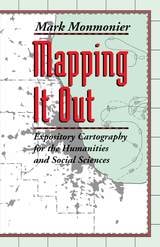
Mapping It Out
Expository Cartography for the Humanities and Social SciencesMark Monmonier
University of Chicago Press, 1993
In his acclaimed How to Lie with Maps, Mark Monmonier showed how maps can distort facts. In Mapping it Out: Expository Cartography for the Humanities and Social Sciences, he shows authors and scholars how they can use expository cartography—the visual, two-dimensional organization of information—to heighten the impact of their books and articles.
This concise, practical book is an introduction to the fundamental principles of graphic logic and design, from the basics of scale to the complex mapping of movement or change. Monmonier helps writers and researchers decide when maps are most useful and what formats work best in a wide range of subject areas, from literary criticism to sociology. He demonstrates, for example, various techniques for representing changes and patterns; different typefaces and how they can either clarify or confuse information; and the effectiveness of less traditional map forms, such as visibility base maps, frame-rectangle symbols, and complementary scatterplot designs for conveying complex spatial relationships.
There is also a wealth of practical information on map compilation, cartobibliographies, copyright and permissions, facsimile reproduction, and the evaluation of source materials. Appendixes discuss the benefits and limitations of electronic graphics and pen-and-ink drafting, and how to work with a cartographic illustrator.
Clearly written, and filled with real-world examples, Mapping it Out demystifies mapmaking for anyone writing in the humanities and social sciences.
"A useful guide to a subject most people probably take too much for granted. It shows how map makers translate abstract data into eye-catching cartograms, as they are called. It combats cartographic illiteracy. It fights cartophobia. It may even teach you to find your way."—Christopher Lehmann-Haupt, The New York Times
Marxism and the Interpretation of Culture
Edited by Cary Nelson and Lawrence Grossberg
University of Illinois Press, 1988

Meta-Analysis for Explanation
A CasebookThomas D. Cook
Russell Sage Foundation, 1992
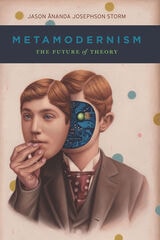
Metamodernism
The Future of TheoryJason Ananda Josephson Storm
University of Chicago Press, 2021
Metamodernism works through the postmodern critiques and uncovers the mechanisms that produce and maintain concepts and social categories. In so doing, Storm provides a new, radical account of society’s ever-changing nature—what he calls a “Process Social Ontology”—and its materialization in temporary zones of stability or “social kinds.” Storm then formulates a fresh approach to philosophy of language by looking beyond the typical theorizing that focuses solely on human language production, showing us instead how our own sign-making is actually on a continuum with animal and plant communication.
Storm also considers fundamental issues of the relationship between knowledge and value, promoting a turn toward humble, emancipatory knowledge that recognizes the existence of multiple modes of the real. Metamodernism is a revolutionary manifesto for research in the human sciences that offers a new way through postmodern skepticism to envision a more inclusive future of theory in which new forms of both progress and knowledge can be realized.

Metatheory in Social Science
Pluralisms and SubjectivitiesEdited by Donald W. Fiske and Richard A. Shweder
University of Chicago Press, 1986
While various points of view are expressed in these nineteen essays, they have in common several themes, including the comparison of social and natural science, the role of knowledge in meeting the demands of society and its pressing problems, and the nature and role of subjectivity in science. Some authors hold that subjectivity cannot be studied scientifically; others argue that it can and must be if progress in knowledge is to be made. The essays demonstrate the philosophical pluralism they discuss and give a wide range of alternative positions on the future of the social and behavioral sciences in a postpositivist intellectual world.
Methodology and Epistemology for Social Sciences
Selected PapersDonald T. Campbell
University of Chicago Press, 1988
Methods That Matter
Integrating Mixed Methods for More Effective Social Science ResearchEdited by M. Cameron Hay
University of Chicago Press, 2016
Historically, the largest division between social science methods has been that between quantitative and qualitative measures. For people trained in psychology or sociology, the bias has been toward the former, using surveys and experiments that yield readily comparable numerical results. For people trained in anthropology, it has been toward the latter, using ethnographic observations and interviews that offer richer nuances of meaning but are difficult to compare across societies. Discussing their own endeavors to combine the quantitative with the qualitative, the authors invite readers into a conversation about the best designs and practices of mixed methodologies to stimulate creative ideas and find new pathways of insight. The result is an engaging exploration of a promising new approach to the social sciences.

Micro-Politics
Agency in a Postfeminist EraPatricia S. Mann
University of Minnesota Press, 1994
Micro-Politics was first published in 1994. Minnesota Archive Editions uses digital technology to make long-unavailable books once again accessible, and are published unaltered from the original University of Minnesota Press editions.
Patricia S. Mann explains our current period as a time of social transformation resulting from an "unmooring" of women, men, and children from the nuclear family, gender relations having replaced economic relations as the primary site of social tension and change in our lives. The feminist movement has evolved, according to Mann, into a popularly based postfeminist struggle to reconstruct relationships between women and men within everyday contexts of work, family, education, and politics.
Mann formulates a "postmodern" theory of political agency, utilizing it to explain political events such as the Hill-Thomas Senate hearings and their social aftermath. While liberal and progressive theories have explained political agency in terms of individual or group forms of identity, Mann suggests another alternative. Individuals such as Anita Hill are drawn into socially meaningful struggles in the context of their daily lives-as we all are potentially participating in micro-political forms of activism in a variety of institutional contexts. These dynamic micropolitical situations involve intersecting dimensions of race, class, and sexuality, as well as gender. Within specific conflicts, individuals rearticulate their notions of desire and responsibility, and their expectations for recognition and reward; according to Mann political agency resides in these choices. Addressing some of the most important controversies in political philosophy, Mann weaves together strands of the "participatory politics" of the 1960s and the multicultural politics of the 1990s. In doing so, she offers a new basis for understanding social change.
Model Cases
On Canonical Research Objects and SitesMonika Krause
University of Chicago Press, 2021
In Model Cases, Monika Krause asks about the concrete material research objects behind shared conversations about classes of objects, periods, and regions in the social sciences and humanities. It is well known that biologists focus on particular organisms, such as mice, fruit flies, or particular viruses when they study general questions about life, development, and disease. Krause shows that scholars in the social sciences and humanities also draw on some cases more than others, selecting research objects influenced by a range of ideological but also mundane factors, such as convenience, historicist ideas about development over time, schemas in the general population, and schemas particular to specific scholarly communities.
Some research objects are studied repeatedly and shape our understanding of more general ideas in disproportionate ways: The French Revolution has profoundly influenced our concepts of revolution, of citizenship, and of political modernity, just like studies of doctors have set the agenda for research on the professions. Based on an extensive analysis of the role of model cases in different fields, Krause argues that they can be useful for scholarly communities if they are acknowledged and reflected as particular objects; she also highlights the importance of research strategies based on neglected research objects and neglected combinations of research objects and scholarly concerns.
Modeling and Interpreting Interactive Hypotheses in Regression Analysis
Cindy D. Kam and Robert J. Franzese, Jr.
University of Michigan Press, 2007
Social scientists study complex phenomena about which they often propose intricate hypotheses tested with linear-interactive or multiplicative terms. While interaction terms are hardly new to social science research, researchers have yet to develop a common methodology for using and interpreting them. Modeling and Interpreting Interactive Hypotheses in Regression Analysis provides step-by-step guidance on how to connect substantive theories to statistical models and how to interpret and present the results.
"Kam and Franzese is a must-have for all empirical social scientists interested in teasing out the complexities of their data."
---Janet M. Box-Steffensmeier, Ohio State University
"Kam and Franzese have written what will become the definitive source on dealing with interaction terms and testing interactive hypotheses. It will serve as the standard reference for political scientists and will be one of those books that everyone will turn to when helping our students or doing our work. But more than that, this book is the best text I have seen for getting students to really think about the importance of careful specification and testing of their hypotheses."
---David A. M. Peterson, Texas A&M University
"Kam and Franzese have given scholars and teachers of regression models something they've needed for years: a clear, concise guide to understanding multiplicative interactions. Motivated by real substantive examples and packed with valuable examples and graphs, their book belongs on the shelf of every working social scientist."
---Christopher Zorn, University of South Carolina
"Kam and Franzese make it easy to model what good researchers have known for a long time: many important and interesting causal effects depend on the presence of other conditions. Their book shows how to explore interactive hypotheses in your own research and how to present your results. The book is straightforward yet technically sophisticated. There are no more excuses for misunderstanding, misrepresenting, or simply missing out on interaction effects!"
---Andrew Gould, University of Notre Dame
Cindy D. Kam is Assistant Professor, Department of Political Science, University of California, Davis.
Robert J. Franzese Jr. is Associate Professor, Department of Political Science, University of Michigan, and Research Associate Professor, Center for Political Studies, Institute for Social Research, University of Michigan.
For datasets, syntax, and worksheets to help readers work through the examples covered in the book, visit: www.press.umich.edu/KamFranzese/Interactions.html

Modern Social Imaginaries
Charles Taylor
Duke University Press, 2004
Retelling the history of Western modernity, Taylor traces the development of a distinct social imaginary. Animated by the idea of a moral order based on the mutual benefit of equal participants, the Western social imaginary is characterized by three key cultural forms—the economy, the public sphere, and self-governance. Taylor’s account of these cultural formations provides a fresh perspective on how to read the specifics of Western modernity: how we came to imagine society primarily as an economy for exchanging goods and services to promote mutual prosperity, how we began to imagine the public sphere as a metaphorical place for deliberation and discussion among strangers on issues of mutual concern, and how we invented the idea of a self-governing people capable of secular “founding” acts without recourse to transcendent principles. Accessible in length and style, Modern Social Imaginaries offers a clear and concise framework for understanding the structure of modern life in the West and the different forms modernity has taken around the world.
Mothering from the Field
The Impact of Motherhood on Site-Based ResearchEdited by Bahiyyah Miallah Muhammad and Mélanie-Angela Neuilly
Rutgers University Press, 2019
Mothering from the Field offers both a mosaic of perspectives from current women scientists’ experiences of conducting field research across a variety of sub-disciplines while raising children, and an analytical framework to understand how we can redefine methodological and theoretical contributions based on mothers’ experiences in order not just to promote healthier, more inclusive, nurturing, and supportive environments in physical, life, and social sciences, but also to revolutionize how we conceptualize research.

Moving Beyond Prozac, DSM, and the New Psychiatry
The Birth of PostpsychiatryBradley Lewis
University of Michigan Press, 2006
--Paul McHugh, Johns Hopkins University School of Medicine
"Remarkable in its breadth-an interesting and valuable contribution to the burgeoning literature of the philosophy of psychiatry."
--Christian Perring, Dowling College
Moving Beyond Prozac, DSM, and the New Psychiatry looks at contemporary psychiatric practice from a variety of critical perspectives ranging from Michel Foucault to Donna Haraway. This contribution to the burgeoning field of medical humanities contends that psychiatry's move away from a theory-based model (one favoring psychoanalysis and other talk therapies) to a more scientific model (based on new breakthroughs in neuroscience and pharmacology) has been detrimental to both the profession and its clients. This shift toward a science-based model includes the codification of the Diagnostic and Statistical Manual of Mental Disorders to the status of standard scientific reference, enabling mental-health practitioners to assign a tidy classification for any mental disturbance or deviation. Psychiatrist and cultural studies scholar Bradley Lewis argues for "postpsychiatry," a new psychiatric practice informed by the insights of poststructuralist theory.