Results by title
135 books match the query 'Sociological aspects' and 8 start with m
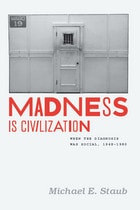
Madness Is Civilization
When the Diagnosis Was Social, 1948-1980Michael E. Staub
University of Chicago Press, 2011
In the 1960s and 1970s, a popular diagnosis for America’s problems was that society was becoming a madhouse. In this intellectual and cultural history, Michael E. Staub examines a time when many believed insanity was a sane reaction to obscene social conditions, psychiatrists were agents of repression, asylums were gulags for society’s undesirables, and mental illness was a concept with no medical basis.
The first study to describe how social diagnostic thinking emerged, Madness Is Civilization casts new light on the politics of the postwar era.
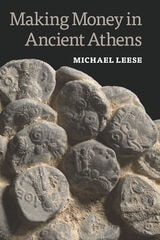
Making Money in Ancient Athens
Michael Leese
University of Michigan Press, 2021
Given their cultural, intellectual, and scientific achievements, surely the Greeks were able to approach their economic affairs in a rational manner like modern individuals? Since the nineteenth century, many scholars have argued that premodern people did not behave like modern businesspeople, and that the “stagnation” that characterized the economy prior to the Industrial Revolution can be explained by a prevailing noneconomic mentality throughout premodern (and nonwestern) societies. This view, which simultaneously extols the “sophistication” of the modern West, relegates all other civilizations to the status of economic backwardness.
But the evidence from ancient Athens, which is one of the best-documented societies in the premodern world, tells a very different story: one of progress, innovation, and rational economic strategies. Making Money in Ancient Athens examines in the most comprehensive manner possible the voluminous source material that has survived from Athens in inscriptions, private lawsuit speeches, and the works of philosophers like Aristotle and Plato. Inheritance cases that detail estate composition and investment choices, and maritime trade deals gone wrong, provide unparalleled glimpses into the specific factors that influenced Athenians at the level of the economic decision-making process itself, and the motivations that guided the specific economic transactions attested in the source material. Armed with some of the most thoroughly documented case studies and the richest variety of source material from the ancient Greek world, Michael Leese argues that the evidence overwhelmingly demonstrates that ancient Athenians achieved the type of long-term profit and wealth maximization and continuous reinvestment of profits into additional productive enterprise that have been argued as unique to (and therefore responsible for) the modern industrial-capitalist system.
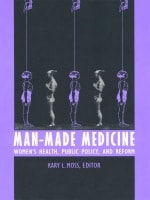
Man-Made Medicine
Women’s Health, Public Policy, and ReformKary L. Moss, ed.
Duke University Press, 1996
These essays by physicians, lawyers, activists, and scholars present a rare interdisciplinary approach to a complex set of issues. Gender stereotyping and bias in the collection, analysis, and reporting of scientific data and in the ways health-related news is covered by the media are examined. The exclusion of women from the health care policy-making process and the effect such exclusion has on the determination of priorities among potential areas of research are also explored. With discussions of the plight of specific populations of women whose health care needs are not being sufficiently met—for example, immigrants, prisoners, the mentally ill, or women with HIV/AIDS, disabilities, or reproductive health problems—this book considers matters of race and class within the parameters of gender as it builds a fundamental challenge to the existing health care system. A range of current reform proposals are also evaluated in terms of their potential impact on women.
Suggesting no less than a radical rethinking of women’s medicine, Man-Made Medicine gives essential direction to the discussions that will shape the future of health care in this country. It will be of great interest to a wide audience, including health care advocates, policymakers, scholars, and readers generally concerned with women’s health issues.
Contributors. Ellen Barry, Laurie Beck, Joan Bertin, Janet Calvo, Wendy Chavkin, Kay Dickersin, Abigail English, Elizabeth Fee, Carol Gill, Nancy Krieger, Joyce McConnell, Judy Norsigian, Ann Scales, Susan Stefan, Lauren Schnaper, Catherine Teare

Maximum Security
The Culture of Violence in Inner-City SchoolsJohn Devine
University of Chicago Press, 1996
Based on years of frontline experience in New York's inner-city schools, Maximum Security demonstrates that such policing strategies are not only ineffectual, they divorce students and teachers from their ethical and behavioral responsibilities. Exploring the culture of violence from within, John Devine argues that the security system, with its uniformed officers and invasive high-tech surveillance, has assumed presumptive authority over students' bodies and behavior, negating the traditional roles of teachers as guardians and agents of moral instruction. The teacher is reduced to an information bureaucrat, a purveyor of technical knowledge, while the student's physical well-being and ethical actions are left to the suspect scrutiny of electronic devices and security specialists with no pedagogical mission, training, or interest. The result is not a security system at all, but an insidious institutional disengagement from the caring supervision of the student body.
With uncompromising honesty, Devine provides a powerful portrayal of an educational system in crisis and bold new insight into the malignant culture of school violence.
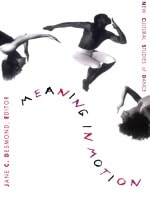
Meaning in Motion
New Cultural Studies of DanceJane C. Desmond, ed.
Duke University Press, 1997
Writing from a broad range of perspectives, contributors from disciplines as varied as art history and anthropology, dance history and political science, philosophy and women’s studies chart the questions and challenges that mark this site. How does dance enact or rework social categories of identity? How do meanings change as dance styles cross borders of race, nationality, or class? How do we talk about materiality and motion, sensation and expressivity, kinesthetics and ideology? The authors engage these issues in a variety of contexts: from popular social dances to the experimentation of the avant-garde; from nineteenth-century ballet and contemporary Afro-Brazilian Carnival dance to hip hop, the dance hall, and film; from the nationalist politics of folk dances to the feminist philosophies of modern dance. Giving definition to a new field of study, Meaning in Motion broadens the scope of dance analysis and extends to cultural studies new ways of approaching matters of embodiment, identity, and representation.
Contributors. Ann Cooper Albright, Evan Alderson, Norman Bryson, Cynthia Cohen Bull, Ann Daly, Brenda Dixon Gottschild, Susan Foster, Mark Franko, Marianne Goldberg, Amy Koritz, Susan Kozel, Susan Manning, Randy Martin, Angela McRobbie, Kate Ramsey, Anna Scott, Janet Wolff
Measuring America
How Economic Growth Came to Define American Greatness in the Late Twentieth CenturyAndrew L. Yarrow
University of Massachusetts Press, 2010
The United States has always fancied itself a nation apart—"exceptional" in its values, traditions, and way of life. For most of the country's history, ideas about what made America distinctive generally were framed in terms of a liberal idealism rooted in the thought of John Locke and articulated by Jefferson, Madison, and other Founders. While some commentators also observed that the United States was a land of plenty, it wasn't until the mid-twentieth century that material abundance emerged as the principal standard of American “greatness,” as measured by a host of new economic indicators.
Beginning in earnest in the wake of World War II, opinion-shapers in politics, business, academia, the media, the schools, and public diplomacy gloried in the nation's booming economy. Where “plenty” had once been a largely abstract concept, it was now quantifiable, thanks to new national income accounting and other economic data collection and analysis techniques. One could tally up production and consumption of an ever-expanding cornucopia of goods and services that made up the gross national product (GNP), the king of postwar statistics. American preeminence and American identity were increasingly linked with this measurable prosperity, presented in the language of a newly influential economics profession.
In Measuring America, Andrew L. Yarrow explores this history, telling two parallel, interlocking stories—of how economic ideas came to have vastly greater influence on American culture after World War II, and how those ideas dovetailed with a growing belief that the meaning and value of the United States resided in its material output. How and why this new way of “measuring America” developed, how it was expressed, and what it has meant and means for Americans today are the subject of this well-researched and insightful book.
Mistrust
An Ethnographic TheoryMatthew Carey
HAU, 2017
While mistrust can quickly ruin relationships and even dissolve extensive social ties, Carey shows that it might have other values. Drawing on fieldwork in Morocco’s High Atlas Mountains as well as comparative material from regions stretching from Eastern Europe to Melanesia, he examines the impact of mistrust on practices of conversation and communication, friendship and society, and politics and cooperation. In doing so, he demonstrates that trust is not the only basis for organizing human society and cooperating with others. The result is a provocative but enlightening work that makes us rethink social issues such as suspicion, doubt, and uncertainty.
Modes of Uncertainty
Anthropological CasesEdited by Limor Samimian-Darash and Paul Rabinow
University of Chicago Press, 2015
Organizing contributions from various anthropological subfields—including economics, business, security, humanitarianism, health, and environment—Limor Samimian-Darash and Paul Rabinow offer new tools with which to consider uncertainty, its management, and the differing modes of subjectivity appropriate to it. Taking up policies and experiences as objects of research and analysis, the essays here seek a rigorous inquiry into a sound conceptualization of uncertainty in order to better confront contemporary problems. Ultimately, they open the way for a participatory anthropology that asks crucial questions about our contemporary state.