Results by title
73 books match the query 'Strategy' and 3 start with m
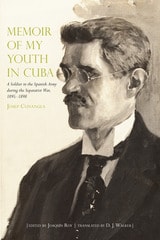
Memoir of My Youth in Cuba
A Soldier in the Spanish Army during the Separatist War, 1895–1898Dolores J. Walker
University of Alabama Press, 2017
A historically significant memoir offering a firsthand perspective on life, identity, and cultural transformation in nineteenth-century Cuba.
Memoir of My Youth in Cuba: A Soldier in the Spanish Army during the Separatist War, 1895–1898 is a translation of the memoir Memorias de mi juventud en Cuba: Un soldado del ejército español en la guerra separatista (1895–1898) by Josep Conangla. The English edition is based on the Spanish version edited by Joaquín Roy, who found the memoir and was given access to the Conangla family archives. Conangla’s memoir, now available in English, is an important addition to the accounts of Spanish and Cuban soldiers who served in Cuba’s second War of Independence.
Spaniard Josep Conangla was conscripted at the age of twenty and sent to Cuba. In the course of his time there, he reaffirmed his pacifism and support of Cuban independence. The young man was a believer who unfailingly connected his view of events to the Christian humanitarianism on which he prided himself. Conangla’s advanced education and the influence of well-placed friends facilitated his assignment to safe bureaucratic positions during the war, ensuring that he would not see combat. From his privileged position, he was a keen observer of his surroundings. He described some of the decisions he made—which at times put him at odds with the military bureaucracy he served—along with what he saw as the consequences of General Valeriano Weyler’s decree mandating the reconcentración, an early version of concentration camps. What Conangla saw fueled his revulsion at the collusion of the Spanish state and its state-sponsored religion in that policy. “Red Mass,” published six years after the War of Independence and included in his memoir, is a vivid expression in verse of his abhorrence.
Conangla’s recollections of the contacts between Spaniards and Cubans in the areas to which he was assigned reveal his ability to forge friendships even with Creole opponents of the insurrection. As an aspiring poet and writer, Conangla included material on fellow writers, Cuban and Spanish, who managed to meet and exchange ideas despite their circumstances. His accounts of the Spanish defeat, the scene in Havana around the end of the war, along with his return to Spain, are stirring.
Military Realism
The Logic and Limits of Force and Innovation in the U.S. ArmyPeter Campbell
University of Missouri Press, 2024
In five case studies of U.S. Army doctrine, Campbell pits military realism against bureaucratic and cultural perspectives in three key areas—nuclear versus conventional warfare, preferences for offense versus defense, and COIN missions—and finds that the army has been more doctrinally flexible than those perspectives would predict. He demonstrates that decision makers, while vowing in the wake of Vietnam to avoid (COIN) missions, nonetheless found themselves adapting to the geopolitical realities of fighting “low intensity” conflicts. In essence, he demonstrates that pragmatism has won out over dogmatism. At a time when American policymakers remain similarly conflicted about future defense strategies, Campbell’s work will undoubtedly shape and guide the debate.
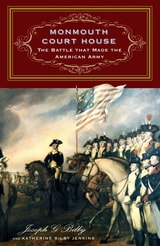
Monmouth Court House
The Battle that Made the American ArmyJoseph G. Bilby
Westholme Publishing, 2010
The Strategic Victory that Established the Continental Army as a True Fighting Force
The battle of Monmouth Court House, New Jersey, is among the most important battles in the history of the American Army. Well known in American mythology as the battle where Molly Pitcher fought alongside her fallen husband, Monmouth Court House is regarded by historians as the moment when the image of the American army in both Europe and the colonies was transformed from that of a rag-tag band of ill-trained civilians to that of a disciplined, well-guided, professional military unit. In June 1778, British General Henry Clinton’s army evacuated Philadelphia and struck out across “the Jerseys” on its way back to New York City. George Washington’s Continental Army, retrained and confident after enduring a winter at Valley Forge and supplemented by a large number of fresh New Jersey militia, marched in pursuit. About 50 miles south of New York City, the armies clashed at Monmouth Court House on June 28, in the last major Revolutionary War battle in the north. Essentially a draw, the battle marked the first time in the war that the Continental Army was able to hold a battlefield, fighting the full force of the British army to a standstill. Monmouth Court House: The Battle that Made the American Army by Joseph G. Bilby and Katherine Bilby Jenkins is the story of this battle, how it came to be, and its influence on the course of the war and American history.
The authors set Monmouth Court House within the context of the American Revolution and the civil war between Tories and Whigs that erupted in New Jersey during that time. The entire campaign and battle are described, including an analysis of the commanders, personnel, organization, training, and weapons of both armies. The book also assesses the historiography and folklore of the battle, including the story of the real “Molly Pitcher,” the use of the battleground as Civil War muster-in camp, its eventual status as Monmouth Battleground State Park, and current efforts at interpretation and battlefield archaeology and how they have changed our understanding of the battle.