Results by title
461 books match the query 'Teaching' and 17 start with m
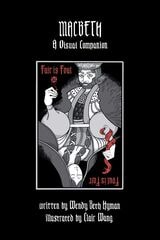
Macbeth
A Visual CompanionWendy Beth Hyman
Arizona Center for Medieval and Renaissance Studies, 2026
A collaboration between experienced Shakespeare scholar-educator Wendy Beth Hyman and her former student, emerging queer illustrator and animator Clair Wang, that seeks to visualize the literary language of Macbeth.
Macbeth: A Visual Companion offers a unique resource to readers, teachers, and performers of Shakespeare: an illustrated guide to those literary features of Shakespeare’s texts that can’t be represented on stage. How do you unravel a complex metaphor, an antiquated pun, an embedded allegory? What if allusions and images and similes could appear before the reader’s eyes? What if we could learn to read as Renaissance readers did: with fewer footnotes, but greater capacity to “see” literary language like chiasmus or equivocation? This is the aim of this creative collaboration.
Designed to be read alongside the free online editions provided by the Folger Shakespeare Library, Macbeth: A Visual Companion illuminates the most obscure features of a very complex play, empowering readers to unpack Shakespeare without reliance on watered-down modernizations or even staged productions. Hyman and Wang present a two-part strategy. One, illustrations that, rather than counterfeiting the action of drama, provide a visual representation of the inner worlds of language. And two, scholarly commentary that, rather than inertly explain or obtusely theorize difficulty, shows how literary devices themselves generate meaning. They thus model for readers how to access metaphors, allusions, and images in real time—just like Shakespeare’s original audience did. In the process, they aim to empower students and non-specialist teachers not only to understand Macbeth or Shakespeare more generally, but also to showcase a model for more confidently grappling with challenging literary texts of all kinds.
Making Mark Twain Work in the Classroom
James S. Leonard, ed.
Duke University Press, 1999
The essays in Making Mark Twain Work in the Classroom reaffirm the importance of Twain in the American literature curriculum from high school through graduate study. Addressing slavery and race, gender, class, religion, language and ebonics, Americanism, and textual issues of interest to instructors and their students, the contributors offer guidance derived from their own demographically diverse classroom experiences. Although some essays focus on such works as A Connecticut Yankee in King Arthur’s Court and The Innocents Abroad, most discuss the hotly debated Adventures of Huckleberry Finn, viewed alternately in this volume as a comic masterpiece or as evidence of Twain’s growing pessimism—but always as an effective teaching tool.
By placing Twain’s work within the context of nineteenth-century American literature and culture, Making Mark Twain Work in the Classroom will interest all instructors of American literature. It will also provoke debate among Americanists and those concerned with issues of race, class, and gender as they are represented in literature.
Contributors. Joseph A. Alvarez, Lawrence I. Berkove, Anthony J. Berret, S.J., Wesley Britton, Louis J. Budd, James E. Caron, Everett Carter, Jocelyn Chadwick-Joshua, Pascal Covici Jr., Beverly R. David, Victor Doyno, Dennis W. Eddings, Shelley Fisher Fishkin, S. D. Kapoor, Michael J. Kiskis, James S. Leonard, Victoria Thorpe Miller, Stan Poole, Tom Reigstad, David E. E. Sloane, David Tomlinson
Manifesto for the Humanities
Transforming Doctoral Education in Good Enough TimesSidonie Smith
University of Michigan Press, 2015
Grounding this manifesto in background factors contributing to current “crises” in the humanities, Smith advocates for a 21st century doctoral education responsive to the changing ecology of humanistic scholarship and teaching. She elaborates a more expansive conceptualization of coursework and dissertation, a more robust, engaged public humanities, and a more diverse, collaborative, and networked sociality.
Man’s Quest for Political Knowledge
The Study and Teaching of Politics in Ancient TimesWilliam Anderson
University of Minnesota Press, 1964
Man's Quest for Political Knowledge was first published in 1964. Minnesota Archive Editions uses digital technology to make long-unavailable books once again accessible, and are published unaltered from the original University of Minnesota Press editions.
Considering the importance of political science as an academic subject in our time, it is surprising that more attention has not been given, until now, to the history of political study and teaching. As Professor Anderson's book makes clear, an understanding of this history throws light on questions significantly related to basic problems of contemporary political science.
By placing in their historical context pertinent developments in ancient times, Professor Anderson shows how the study and teaching of politics may flourish under certain conditions and falter or fail under others. Throughout the book he demonstrates the truth of what Aristotle said about the study of politics: "In this subject as in others the best method of investigation is to study things in the process of development from the beginning."
In early chapters the author examines three literate societies of the ancient Near East—Mesopotamia, Egypt, and Israel. He then discusses, in the major section of the book, the accomplishments of the Greeks, who, with their many self-governing city-states and their secular attitude toward politics, opened up the study of politics in a realistic way. Here he gives Aristotle the most prominent role and finds Plato less important than most scholars might expect. Finally, he traces the decline of the political study and teaching in the Hellenistic period and in the time of the Roman Empire.
The volume will be of particular interest not only to political scientists but to historians, philosophers, and classical scholars.
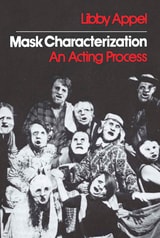
Mask Characterization
An Acting ProcessLibby Appel
Southern Illinois University Press, 1982
Behind the mask, Appel notes, the student is free to create a personality; paradoxically, because the mask hides the self, it enables the student to probe more deeply into himself.
“This book describes, defines, and discusses the mask characterization process, providing the theory behind the exercises and the step-by-step procedure in the organic development of the character from the masks,” Appel notes. The manual is divided into two parts: “The Instructor’s Guide” and “The Actor’s Guide.” There is also an introductory chapter, “The Class Structure,” which explains mask characterization procedures in the classroom, and a sample class schedule may be found in the back of the manual.
This book adds a new dimension to actor training and learning. It is essential to aspiring actors seeking new ways to create honest dramatic characterizations.
Meaningful Grading
A Guide for Faculty in the ArtsHoag Holmgren
West Virginia University Press, 2018
College and university faculty in the arts (visual, studio, language, music, design, and others) regularly grade and assess undergraduate student work but often with little guidance or support. As a result, many arts faculty, especially new faculty, adjunct faculty, and graduate student instructors, feel bewildered and must “reinvent the wheel” when grappling with the challenges and responsibilities of grading and assessing student work.
Meaningful Grading: A Guide for Faculty in the Arts enables faculty to create and implement effective assessment methodologies—research based and field tested—in traditional and online classrooms. In doing so, the book reveals how the daunting challenges of grading in the arts can be turned into opportunities for deeper student learning, increased student engagement, and an enlivened pedagogy.
Meaningful Writing Project
Learning, Teaching and Writing in Higher EducationMichele Eodice
Utah State University Press, 2017
In the face of the continuing discourse of crisis in US education, The Meaningful Writing Project offers readers an affirming story of writing in higher education that shares students’ experiences in their own voices. In presenting the results of a three-year study consisting of surveys and interviews of university seniors and their faculty across three diverse institutions, authors Michele Eodice, Anne Ellen Geller, and Neal Lerner consider students’ perceptions of their meaningful writing experiences, the qualities of those experiences, and instructors’ perspectives on assignment design and delivery.
This study confirms that meaningful assignments offer students opportunities to engage with instructors, peers, and texts and are relevant to past experiences and passions as well as to future aspirations and identities. Meaningful writing occurs across majors, in both required and elective courses, and beyond students’ years at college. Additionally, the study makes clear that faculty across the curriculum devote significant care and attention to creating writing assignments that support student learning, as they understand writing performance to be a developmental process connected to overall cognitive and social development, student engagement with learning, and success in a wide variety of disciplines and professions.
The Meaningful Writing Project provides writing center directors, WPAs, other composition scholars, and all faculty interested in teaching and learning with writing an unprecedented look into the writing projects students find meaningful.

Meeting at the Hyphen
Schools-Universities-Communities-Professions in Collaboration for Student Achievement and Well BeingEdited by Mary M. Brabeck, Mary E. Walsh, and Rachel Latta
University of Chicago Press, 2003
Michigan Journal of Community Service Learning
Volume 23 Number 1 - Fall 2016Jeffrey Howard, editor
Michigan Publishing Services, 2017
Each issue consists of articles at the cutting edge of research, theory, pedagogy, and other matters related to academic service-learning, campus-community partnerships, and engaged, public scholarship in higher education that extend the knowledge base and support and strengthen researchers’ and practitioners’ work. We also publish review essays of newly-released books pertinent to service-learning and community engagement.
Michigan Journal of Community Service Learning
Volume 23 Number 2 - Spring 2017Jeffrey Howard, editor
Michigan Publishing Services, 2017
Each issue consists of articles at the cutting edge of research, theory, pedagogy, and other matters related to academic service-learning, campus-community partnerships, and engaged, public scholarship in higher education that extend the knowledge base and support and strengthen researchers’ and practitioners’ work. We also publish review essays of newly-released books pertinent to service-learning and community engagement.
Minding Bodies
How Physical Space, Sensation, and Movement Affect LearningSusan Hrach
West Virginia University Press, 2021
What happens to teaching when you consider the whole body (and not just “brains on sticks”)?
Starting from new research on the body—aptly summarized as “sitting is the new smoking”—Minding Bodies aims to help instructors improve their students’ knowledge and skills through physical movement, attention to the spatial environment, and sensitivity to humans as more than “brains on sticks.” It shifts the focus of adult learning from an exclusively mental effort toward an embodied, sensory-rich experience, offering new strategies to maximize the effectiveness of time spent learning together on campus as well as remotely.
Minding Bodies draws from a wide range of body/mind research in cognitive psychology, kinesiology, and phenomenology to bring a holistic perspective to teaching and learning. The embodied learning approaches described by Susan Hrach are inclusive, low-tech, low-cost strategies that deepen the development of disciplinary knowledge and skills. Campus change-makers will also find recommendations for supporting a transformational mission through an attention to students’ embodied learning experiences.

Minnesota History
A Study OutlineTheodore C. Blegen
University of Minnesota Press, 1931
Minnesota History was first published in 1931. Minnesota Archive Editions uses digital technology to make long-unavailable books once again accessible, and are published unaltered from the original University of Minnesota Press editions.
Minnesota History
Guide to Reading and StudyTheodore C. Blegen
University of Minnesota Press, 1960
Minnesota History was first published in 1960. Minnesota Archive Editions uses digital technology to make long-unavailable books once again accessible, and are published unaltered from the original University of Minnesota Press editions.
Anyone interested in Minnesota history, whether as a teacher, as a student, or as a general reader, will find this an invaluable guide to reading and study. The book contains an outline of the state's history, questions and suggestions for the student, and lists of reading material for each of the 42 topical sections into which the outline is divided.
The outline covers the entire history of the state from the time of the Indians, before the French and British explorations, to the present. The reading references include accounts written from the seventeenth through the twentieth centuries. The aim in preparing the reading lists was to include any article or book bearing upon the Minnesota story which met the qualifications of good historical writing and fair accessibility. Materials of particular interest or importance to the topic under consideration are so designated, and there are liberal annotations to help the reader in his choice of readings. References which are particularly appropriate for young readers are also specially designated. A number of maps are provided for additional guidance.
This is a complete revision of a book long out of print, Minnesota History: A Study Outline by Theodore C. Blegen.
Module 10
Teaching with Archives: A Guide for Archivists, Librarians, and EducatorsSammie Morris
Society of American Archivists, 2016
Multilingual Writing in Entanglement
Becoming With Others Through Chronotopic Figuring and Unpredictable EncountersXiqiao Wang
Utah State University Press, 2025
This longitudinal qualitative study follows Morgan and Leo through their undergraduate careers, collecting rich ethnographic data across private, academic, and digital spaces. The resulting theoretical framework conceptualizes multilingual writing as simultaneously strategic, agentive, creative, diffused, contingent, and messy—a phenomenon shaped by dynamic interplay between ephemeral encounters and established practices. Employing chronotopic figuring as a methodological tool, Wang illuminates aspects of multilingual writing often elided in research: fleeting encounters that energize composition, reciprocal relationships that distribute writing labor, unexpected detours that redirect the writing process, and the layering of writing and identity practices across multiple historical trajectories. This approach moves beyond examining writing in isolated moments to trace how meaning emerges across languages, modes, and spacetimes.
Multilingual Writing in Entanglement offers crucial insights into how international students strategically and improvisationally reconfigure their semiotic and rhetorical repertoires to write multilingual lives into meaning. This work is influential for scholars and educators in composition, literacy studies, multilingual education, ESL, and linguistics.
Multimodal Transfer Pedagogy
Applications for InstructionRyan P. Shepherd
Utah State University Press, 2027
Multimodal Transfer Pedagogy provides practical methods and materials for composition teachers and directors to facilitate multimodal transfer. This rich collection of resources presents new ways of incorporating digital texts, exploring modes of meaning beyond traditional print and encouraging students to think about rhetorical approaches to meaning making.
Together with its online companion materials, the book delivers a distinctive synthesis of multimodal composing practices, writing transfer research, and theory to provide clear, actionable guidance to teachers and directors to apply multimodal composition pedagogy effectively. Twenty-three chapters cover multimodal transfer pedagogy—including social media, composing with AI, visual rhetoric and design, public advocacy, tabletop games, podcasting, and more.
Multimodal Transfer Pedagogy is built from contextualized pedagogical approaches and course materials—syllabi, assignments, assessment documents—that specifically direct pedagogical application toward multimodal transfer in a range of contexts, from first-year writing to the science writing classroom and writing center. A natural follow-up to Multimodal Composition and Writing Transfer, the book introduces a unique practical-pedagogical model for implementing multimodal work in the classroom.
Music Education in the United States
Contemporary IssuesJ. Terry Gates
University of Alabama Press, 1988
Exploring the ideas, innovations, and challenges shaping the future of music education.
This solid collection of essays, written by outstanding American music educators, reflects the current issues in music education and the ongoing attempt to overcome obstacles to excellence in teaching music. It stands as the most important and far-ranging professional overview of the discipline since the publication of the landmark Basic Concepts in Music Education in 1958, and early reviews indicate that it will generate both critical discussion and acclaim.
Several themes recur:(1) that music and, therefore, music education exist in a variety of social and cultural contexts, even when examined in controlled situations; (2) that music teaching has not yet freed itself from its traditional over-reliance on technical training, in spite of attention to aesthetic education; and (3) that there is a remarkable undercurrent of agreement among this diverse group of authors concerning the profession’s basic obligation to expand and refine the musical sensitivity of all age group of Americans. This book reflects some advanced thinking about these themes, which establishes new foundations for next generation theorizing and research.