Results by title
177 books match the query 'Themes, motives' and 10 start with m
Madness, Language, Literature
Michel Foucault
University of Chicago Press, 2023
Perceiving an enigmatic relationship between madness, language, and literature, French philosopher Michel Foucault developed ideas during the 1960s that are less explicit in his later, more well-known writings. Collected here, these previously unpublished texts reveal a Foucault who undertakes an analysis of language and experience detached from their historical constraints. Three issues predominate: the experience of madness across societies; madness and language in Artaud, Roussel, and Baroque theater; and structuralist literary criticism. Not only do these texts pursue concepts unique to this period such as the “extra-linguistic,” but they also reveal a far more complex relationship between structuralism and Foucault than has typically been acknowledged.
Mediating Modernisms
Indigenous Artists, Modernist Mediators, Global NetworksRuth B. Phillips and Norman Vorano, editors
Duke University Press, 2025
Contributors. Peter Brunt, Roberto Conduru, Hanna Horsberg Hansen, Elizabeth Harney, Jyotindra Jain, Sandra Klopper, Ian McLean, Anitra Nettleton, Chika Okeke-Agulu, Ruth B. Phillips, Una Rey, Megan Tamati-Quennell, Nicholas Thomas, Norman Vorano, Mark Andrew White

Men Who Hate Women and Women Who Kick Their Asses
Stieg Larsson's Millennium Trilogy in Feminist PerspectiveDonna King
Vanderbilt University Press, 2012
These lively and accessible essays expand the conversation in the blogosphere about the novels and films by connecting the controversies about gender roles to social trends in the real world.
Metagraffiti
Graffiti Art and the Urban Image in Latin AmericaChandra Morrison Ariyo
Rutgers University Press, 2025
Michael Field
Decadent ModernsSarah Parker
Ohio University Press, 2019
In the last twenty years, Michael Field has emerged as one of the most fascinating poets of the Victorian era. Through their collaborative partnership as “Michael Field,” Katharine Bradley and Edith Cooper engaged in the aesthetic and decadent movements of the fin de siècle, while their poetry and verse drama articulate ideas associated with the New Woman and boldly express queer and lesbian desire. Michael Field: Decadent Moderns extends the focus on these key literary and cultural contexts by emphasizing their continuing significance within twentieth-century literary modernism. Through a series of interdisciplinary essays, this book addresses Michael Field’s energetic engagements with a range of topics including ecology, perfume, tourism, art history, sculpture, formalism, classics, and book history. In doing so, Michael Field: Decadent Moderns highlights the modernity, radicalism, and relevance of their work, both within the nineteenth and twentieth centuries as well as in our own cultural moment.
Contributors: Leire Barrera-Medrano, Joseph Bristow, Jill R. Ehnenn, Sarah E. Kersh, Kristin Mahoney, Catherine Maxwell, Alex Murray, Sarah Parker, Margaret D. Stetz, Kate Thomas, and Ana Parejo Vadillo.
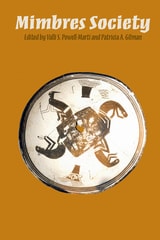
Mimbres Society
Edited by Valli S. Powell-Marti and Patricia A. Gilman
University of Arizona Press, 2006
While the attention to the extraordinary Mimbres painted pottery is well merited, the focus on its artistry alone has obscured other equally remarkable achievements and compelling questions about this unique and sophisticated society. Was the society as truly egalitarian as it has often been suggested? Was the pottery produced by specialists? How did Mimbres architecture—among the first to break living spaces into apartment-style room blocks—reflect the relationships among individuals, families, and communities? Did aggregate housing units translate into social equality, or did subtle hierarchies exist?
Tracing the way technology evolved in ceramic decoration, architecture, and mortuary practices, this collection of eight original contributions brings new insights into previously unexplored dimensions of Mimbres society. The contributors also provide vivid examples of how today’s archaeologists are linking field data to social theory.
Mirror Affect
Seeing Self, Observing Others in Contemporary ArtCristina Albu
University of Minnesota Press, 2016
For decades, contemporary artworks with reflective properties have stimulated public forms of spectatorship. According to Cristina Albu, these artworks, which can include elements such as mirrors, live video feedback, or sensors, draw attention to affective interdependence and mechanisms of social control.
In Mirror Affect, Albu provides a historical account of mirroring processes in contemporary art and offers insight into the phenomenological and sociopolitical concerns that have inspired artists to stage processes of affective, perceptual, and behavioral mirroring between art viewers. Beginning with the 1960s, Albu charts the rise of interpersonal modes of art spectatorship. She reveals contemporary artists’ strategic use of reflective and responsive interfaces to instill doubt in visual representation and appeal to active scrutiny of the changing social dynamics. She suggests that the mirroring processes envisioned by contemporary artists such as Joan Jonas, Dan Graham, Lynn Hershman Leeson, Olafur Eliasson, and Rafael Lozano-Hemmer trigger visual disjunctions to upset narcissistic inclinations. They invite viewers to see themselves in relation to others and to ponder their role within complex social systems.
From sculpture and performance to art and technology projects, video art, and installation art, Mirror Affect analyzes forms of interpersonal spectatorship, revising and expanding current historiographies of participatory art.
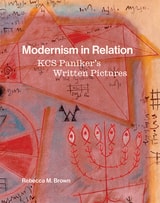
Modernism in Relation
KCS Paniker’s Written PicturesRebecca M. Brown
J. Paul Getty Trust, The, 0
This innovative book reimagines modernism through the illegible scribbles and vibrant colors of southern Indian artist KCS Paniker.
KCS Paniker (1911–1977) is a canonical figure in India’s twentieth-century modernism. He was principal of the Madras School of Art and founder of one of the world’s longest-standing artists’ communities. Yet, even within India, he remains a marginal figure, positioned at the periphery of a dominant art world centered in the north. Paniker’s best-known body of work, the Words and Symbols series (1963–77), calls on us to reconsider how knowledge is produced and disseminated in a postcolonial, decolonizing world. These “written pictures”—paintings filled with symbols, tables, equations, and illegible scribbles—invite decoding, only to undermine the pursuit of wholeness or stable meaning.
Paniker famously called Paul Klee his “guru.” In this book, art historian Rebecca M. Brown explores what that might mean, moving beyond tracing influence and derivation to embrace a fuller sense of artistic relation across geography and time. Featuring over 100 stunning illustrations, Modernism in Relation explores the dynamic, twisting currents of modernism, tracing how Paniker navigated its waters on his own terms—abandoning prescriptions for what modern art should be or what Indian modernism should look like. The book reveals a maker seeking new creative languages, challenging ways of knowing, and exploring the unpredictable, ever-changing nature of relation.
Mouse Morality
The Rhetoric of Disney Animated FilmBy Annalee R. Ward
University of Texas Press, 2002
2004 – Clifford G. Christians Ethics Research Award — The Carl Couch Center for Social and Internet Research
Kids around the world love Disney animated films, and many of their parents trust the Disney corporation to provide wholesome, moral entertainment for their children. Yet frequent protests and even boycotts of Disney products and practices reveal a widespread unease with the sometimes mixed and inconsistent moral values espoused in Disney films as the company attempts to appeal to the largest possible audience.
In this book, Annalee R. Ward uses a variety of analytical tools based in rhetorical criticism to examine the moral messages taught in five recent Disney animated films—The Lion King, Pocahontas, The Hunchback of Notre Dame, Hercules, and Mulan. Taking the films on their own terms, she uncovers the many mixed messages they purvey: for example, females can be leaders—but male leadership ought to be the norm; stereotyping is wrong—but black means evil; historical truth is valued—but only tell what one can sell, etc. Adding these messages together, Ward raises important questions about the moral ambiguity of Disney's overall worldview and demonstrates the need for parents to be discerning in letting their children learn moral values and life lessons from Disney films.

Moved by Love
Inspired Artists and Deviant Women in Eighteenth-Century FranceMary D. Sheriff
University of Chicago Press, 2004
Mary D. Sheriff uses these very different visions of enthusiasm to explore the complex interrelationships among creativity, sexuality, the body and the mind in eighteenth-century France. Drawing on evidence from the visual arts, literature, philosophy, and medicine, she portrays the deviance ascribed to both inspired men and women. But while various mythologies worked to normalize deviance in male artists, women had no justification for their deviance. For instance, the mythical sculptor Pygmalion was cured of an abnormal love for his statue through the making of art. He became a model for creative artists, living happily with his statue come to life. No happy endings, though, were imagined for such inspired women writers as Sappho and Heloise, who burned with erotomania their art could not quench. Even so, Sheriff demonstrates, the perceived connections among sexuality, creativity, and disease also opened artistic opportunities for creative women took full advantage of them.
Brilliantly reassessing the links between sexuality and creativity, artistic genius and madness, passion and reason, Moved by Love will profoundly reshape our view of eighteenth- century French culture.