Results by title
265 books match the query 'To 1500' and 21 start with m
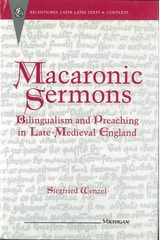
Macaronic Sermons
Bilingualism and Preaching in Late-Medieval EnglandSiegfried Wenzel
University of Michigan Press, 2010
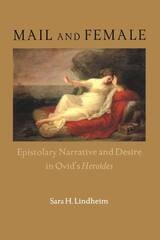
Mail and Female
Epistolary Narrative and Desire in Ovid's HeroidesSara H. Lindheim
University of Wisconsin Press, 2003
Using feminist and psychoanalytic approaches to examine the "female voice" in the Heroides, Sara H. Lindheim closely reads these fictive letters in which the women seemingly tell their own stories. She points out that in Ovid’s verse epistles all the women represent themselves in a strikingly similar and disjointed fashion. Lindheim turns to Lacanian theory of desire to explain these curious and hauntingly repetitive representations of the heroines in the "female voice." Lindheim’s approach illuminates what these poems reveal about both masculine and feminine constructions of the feminine

Maimonides' Empire of Light
Popular Enlightenment in an Age of BeliefRalph Lerner
University of Chicago Press, 2000
Lerner describes the brilliant and sometimes wily ways in which Maimonides sought to break through the despair and superstition that gripped the Jewish people's minds, without sacrificing the dignity and core of his message. These writings—presented here in uncommonly accurate, mostly new translations—also reveal that Maimonides was willing to risk the scorn of his contemporaries to enlighten both his own and future generations. By addressing the writings of Maimonides' disciples, including Shem Tov ben Joseph Ibn Falaquera in the mid-thirteenth century and Joseph Albo in the fifteenth century, Lerner shows how this technique was passed on.
In striking contrast to the Enlightenment of the eighteenth century, Maimonides' enlightenment is premised on the inequality of understandings and other differences between the elite and the common people. Instead of scorning the past, Lerner shows, Maimonides' enlightenment invests it with a new and ennobling dignity. A valuable reference for students of political philosophy and Jewish studies, Lerner's elegantly written book also brings to life the richness and relevance of medieval Jewish thought for all those interested in the Jewish tradition.
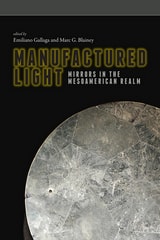
Manufactured Light
Mirrors in the Mesoamerican RealmEmiliano Gallaga
University Press of Colorado, 2015
Complex and time-consuming to produce, iron-ore mirrors stand out among Prehispanic artifacts for their aesthetic beauty, their symbolic implications, and the complexity and skill of their assembly. Manufactured Light presents the latest archaeological research on these items, focusing on the intersection of their significance and use and on the technological aspects of the manufacturing processes that created them.
The volume covers the production, meaning, and utilization of iron-ore mirrors in various Mesoamerican communities. Chapters focus on topics such as experimental archaeology projects and discussions of workshops in archaeological contexts in the Maya, Central Mexico, and northwest Mexico regions. Other chapters concentrate on the employment and ideological associations of these mirrors in Prehispanic times, especially as both sacred and luxury items. The final chapters address continuities in the use of mirrors from Prehispanic to modern times, especially in contemporary indigenous communities, with an emphasis on examining the relationship between ethnographic realities and archaeological interpretations.
While the symbolism of these artifacts and the intricacy of their construction have long been recognized in archaeological discussions, Manufactured Light is the first synthesis of this important yet under-studied class of material culture. It is a must-read for students and scholars of Mesoamerican archaeology, ethnography, religion, replicative experimentation, and lithic technology.
Contirbutors include: Marc G. Blainey, Thomas Calligaro, Carrie L. Dennett, Emiliano Gallaga, Julie Gazzola, Sergio Gómez Chávez, Olivia Kindl, Brigitte Kovacevich, Achim Lelgemann, José J. Lunazzi, John J. McGraw, Emiliano Melgar, Joseph Mountjoy, Reyna Solis, and Karl Taube.
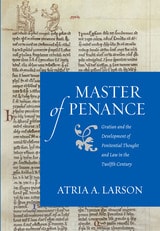
Master of Penance
Arrai A. Larson
Catholic University of America Press, 2014
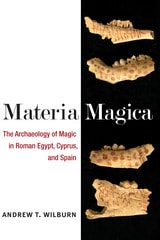
Materia Magica
The Archaeology of Magic in Roman Egypt, Cyprus, and SpainAndrew T. Wilburn
University of Michigan Press, 2015
This exciting new study draws on objects excavated or discovered in the late nineteenth or early twentieth century at three Mediterranean sites. Through the three case studies, Materia Magica identifies specific forms of magic that may be otherwise unknown. It isolates the practitioners of magic and examines whether magic could be used as a form of countercultural resistance. Andrew T. Wilburn discovers magic in the objects of ancient daily life, suggesting that individuals frequently turned to magic, particularly in crises. Local forms of magic may have differed, and Wilburn proposes that the only way we can find small-town sorcerers is through careful examination of the archaeological evidence.
Studying the remains of spells enacted by practitioners, Wilburn's work unites the analysis of the words written on artifacts and the physical form of these objects. He situates these items within their contexts, to study how and why they were used. Materia Magica approaches magic as a material endeavor, in which spoken spells, ritual actions, and physical objects all played vital roles in the performance of a rite.
Materia Magica develops a new method for identifying and interpreting the material remains of magical practice by assessing artifacts within their archaeological contexts. Wilburn suggests that excavations undertaken in recent centuries can yield important lessons about the past, and he articulates the ways in which we can approach problematic data.
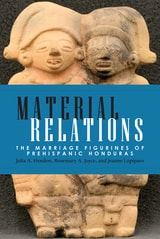
Material Relations
The Marriage Figurines of Prehispanic HondurasJulia A. Hendon
University Press of Colorado, 2014
They examine the production, use, and disposal of marriage figurines from six sites—Campo Dos, Cerro Palenque, Copán, Currusté, Tenampua, and Travesia—and explore their role in rituals and ceremonies, as well as in the forming of social bonds and the celebration of relationships among communities. They find evidence of historical traditions reproduced over generations through material media in social relations among individuals, families, and communities, as well as social differences within this network of connected yet independent settlements.
Material Relations provides a new and dynamic understanding of how social houses functioned via networks of production and reciprocal exchange of material objects and will be of interest to Mesoamerican archaeologists, anthropologists, and art historians.

Medieval Merchants and Money
Essays in Honour of James L. BoltonEdited by Matthew Davies
University of London Press, 2016
Medieval Practices Of Space
Barbara A. Hanawalt
University of Minnesota Press, 2000
Interprets space and place in the medieval era.
Interprets space and place in the medieval era.
A glance at medieval maps tells us that cartographers of the Middle Ages divided space differently than we do today. In the great mappae mundi, for instance, Jerusalem takes center stage, with an image of the crucified Christ separating one place from another. The architects of medieval cathedrals manipulated space to clarify the roles and status of all who entered. Even in the most everyday context, space was allotted according to gender and class and was freighted with infinitely subtle meanings. The contributors to this volume cross disciplinary and theoretical boundaries to read the words, metaphors, images, signs, poetic illusions, and identities with which medieval men and women used space and place to add meaning to the world.Contributors: Kathleen Biddick, U of Notre Dame; Charles Burroughs, SUNY, Binghamton; Michael Camille, U of Chicago; Tom Conley, Harvard U; Donnalee Dox, U of Arizona; Jody Enders, U of California, Santa Barbara; Valerie K. J. Flint, U of Hull, UK; Andrzej Piotrowski, U of Minnesota; Daniel Lord Smail, Fordham U.Barbara A. Hanawalt is King George III Professor of British History at Ohio State University. Michal Kobialka is associate professor of theatre at University of Minnesota.
Medieval Public Justice
Massimo Vallerani
Catholic University of America Press, 2012
Medieval Sovereignty
Marsilius of Padua and Bartolous of SaxoferratoFrancesco Maiolo
Eburon Academic Publishers, 2007
Medieval Women and Their Objects
Jenny Adams and Nancy Mason Bradbury, editors
University of Michigan Press, 2016
The opening section looks at how medieval authors imagined fictional and legendary women using particular objects in ways that reinforce or challenge gender roles. These women bring objects into the orbit of gender identity, employing and relating to them in a literal sense, while also taking advantage of their symbolic meanings. The second section focuses on the use of texts both as objects in their own right and as mechanisms by which other objects are defined. The possessors of objects in these essays lived in the world, their lives documented by historical records, yet like their fictional and legendary counterparts, they too used objects for instrumental ends and with symbolic resonances. The final section considers the objectification of medieval women’s bodies as well as its limits. While this at times seems to allow for a trade in women, authorial attempts to give definitive shapes and boundaries to women’s bodies either complicate the gender boundaries they try to contain or reduce gender to an ideological abstraction. This volume contributes to the ongoing effort to calibrate female agency in the late Middle Ages, honoring the groundbreaking work of Carolyn P. Collette.
Men at the Center
Redemptive Governance under Louis IXWilliam Chester Jordan
Central European University Press, 2012
Taking Professor Natalie Zemon Davis’ fascinating biographical studies of three Women on the Margins in the seventeenth century as an inspiration, the author of this book offers three portraits of men who were at the very center of governance in thirteenth-century France, men who strove in the shadow of King Louis IX (Saint Louis) to impose a redemptive regime on the realm. Professor Jordan treats them as individuals, but in a sense they are also types: Robert of Sorbon, a churchman; Etienne Boileau, a bourgeois; and Simon de Nesle, an aristocrat. Robert was the founder of the Sorbonne; Boileau was the prévôt or royal administrator of Paris; and Simon was twice co-regent of the kingdom. Thinking about them and their relations with Louis IX opens up a new and altogether sobering vista for exploring the nature of the king’s rule and the impact of his rule on his subjects.
Merchant Class of Medieval London
1300-1500Sylvia L. Thrupp
University of Michigan Press, 1948
Metaphysical Themes in Thomas Aquinas II
John F. Wippel
Catholic University of America Press, 2007
Metaphysical Themes in Thomas Aquinas III
John F. Wippel
Catholic University of America Press, 2020
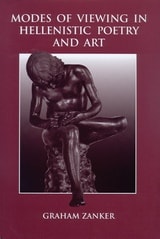
Modes of Viewing in Hellenistic Poetry and Art
And ArtGraham Zanker
University of Wisconsin Press, 2003
Taking a fresh look at the poetry and visual art of the Hellenistic age, from the death of Alexander the Great in 323 B.C. to the Romans’ defeat of Cleopatra in 30 B.C., Graham Zanker makes enlightening discoveries about the assumptions and conventions of Hellenistic poets and artists and their audiences.
Zanker’s exciting new interpretations closely compare poetry and art for the light each sheds on the other. He finds, for example, an exuberant expansion of subject matter in the Hellenistic periods in both literature and art, as styles and iconographic traditions reserved for grander concepts in earlier eras were applied to themes, motifs, and subjects that were emphatically less grand.
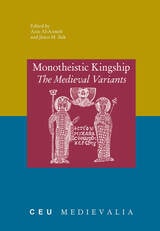
Monotheistic Kingship
The Medieval VariantsAziz Al-Azmeh
Central European University Press, 2004
This volume of essays intends to present diverse aspects of monotheistic kingship during the Middle Ages in two general-theoretical articles and a series of “case studies” on the relationship of religion and rulership. The authors discuss examples of the role of religion—based on both textual and iconic evidence—in Carolingian, Ottonian and late medieval western Europe; in Byzantium and Armenia; Georgia; Hungary; the Khazar Khanate; Poland, and Rus’. Two studies explore the issue in medieval Jewish and Islamic political thought. The editors hope that these special inquiries will engender more comparative studies on the subject.
Moorings
Portuguese Expansion and the Writing of AfricaJosiah Blackmore
University of Minnesota Press, 2008
How Africa was perceived in the early modern imaginary
In this first book to study Portuguese texts about Africa, Moorings brings an important but little-known body of European writings to bear on contemporary colonial thought. Images of Africa as monstrous, dangerous, and lush were created in early Portuguese imperial writings and dominated its representation in European literature. Moorings establishes these key works in their proper place: foundational to Western imperial discourse.
Attentive to history as well as the nuances of language, Josiah Blackmore leads readers from the formation of the “Moor” in medieval Iberia to the construction of a full colonial imaginary, as found in the works of two writers: the royal chronicler Gomes Eanes de Zurara and the epic poet Luís de Camões. Blackmore’s original work helps to explain how concepts and myths—such as the “otherness” of Africa and Africans—originated, functioned, and were perpetuated.Delving into the Portuguese imperial experience, Moorings enriches our understanding of historical and literary imagination during a significant period of Western expansion.
Mountain and Plain
From the Lycian Coast to the Phrygian Plateau in the Late Roman and Early Byzantine PeriodMartin Harrison
University of Michigan Press, 2001
The present study is the fruit of years of excavation and research by the author. The manuscript was largely sketched out when Martin Harrison unexpectedly passed away, and the volume has been finished and prepared for press by his long-time assistant Wendy Young, with further guidance from friends and colleagues with whom he had discussed the project.
The resulting volume explores Martin Harrison's belief that the coastal cities of Lycia declined after the fifth century C.E., and that smaller settlements (monasteries, villages, and towns) appeared in the mountains and further inland. In addition he considered that there was a demographic shift of masons and sculptors from the cities to serve these new settlements. This beautifully illustrated study provides convincing evidence from architecture, sculpture, and inscriptional sources to support this theory. It also contains a description of Amorium in Phrygia, as revealed in survey and excavation seasons from 1987 until the author's untimely death half a dozen years later. The volume includes a preface by Stephen Hill and an appendix by Michael Ballance and Charlotte Roueché on three special inscriptions from Ovacik.
The volume will be of interest to historians of the Near East and classical antiquity, to archaeologists, and to students of architectural history.
Martin Harrison was Professor of Archaeology, University of Oxford. Wendy Young was Research Assistant to the author until his death.
Movement, Connectivity, and Landscape Change in the Ancient Southwest
Margaret C. Nelson
University Press of Colorado, 2026
Particular attention is paid to the various ways that archaeology can and should contribute to contemporary social and environmental issues. Contributors come together to provide a synthetic volume on current research and possibilities for future explorations. Moving forward, they argue that archaeologists must continue to include researchers from across political and disciplinary boundaries and enhance collaboration with Native American groups.
This book will be of interest to professional and academic archaeologists, as well as students working in the field of the American Southwest.