Results by title
161 books match the query 'Universities and colleges' and 5 start with m
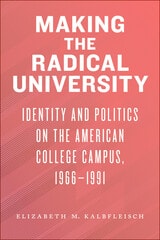
Making the Radical University
Identity and Politics on the American College Campus, 1966–1991Elizabeth M. Kalbfleisch
University of Massachusetts Press, 2024
In the 1960s, professors, students, and activists on the political Left viewed college curricula as useful sites for political transformation. They coordinated efforts to alter general education requirements at the college level to foster change in American thought, with greater openness toward people who had previously been excluded, including women, people of color, the poor and working classes, people with disabilities, and members of the LGBTQ community. Their work reshaped American culture and politics, while prompting a significant backlash from conservatives attempting to, in their view, protect classical education from modern encroachment.
Elizabeth M. Kalbfleisch details how American universities became a battleground for identity politics from the 1960s through the 1980s. Focusing on two case studies at Stanford University and the University of Texas at Austin, Making the Radical University examines how curricular changes led to polarizing discussions nationwide around academic standards and identity politics, including the so-called canon wars. Today, these debates have only become more politically charged, complex, and barbed.
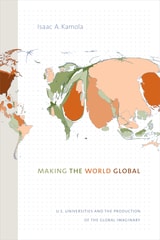
Making the World Global
U.S. Universities and the Production of the Global ImaginaryIsaac A. Kamola
Duke University Press, 2019
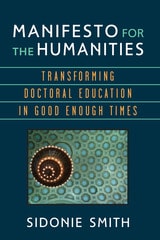
Manifesto for the Humanities
Transforming Doctoral Education in Good Enough TimesSidonie Smith
University of Michigan Press, 2015
Grounding this manifesto in background factors contributing to current “crises” in the humanities, Smith advocates for a 21st century doctoral education responsive to the changing ecology of humanistic scholarship and teaching. She elaborates a more expansive conceptualization of coursework and dissertation, a more robust, engaged public humanities, and a more diverse, collaborative, and networked sociality.
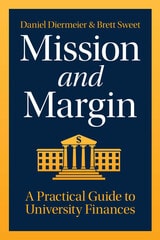
Mission and Margin
A Practical Guide to University FinancesDaniel Diermeier and Brett C. Sweet
University of Chicago Press, 2025
An insider’s guide to university finances, for non-insiders.
The finances of higher education have never been more challenging. From two-year institutions to the Ivy Leagues, from department chairs to provosts, administrators face revenue shortfalls and financial insecurity. A fundamental understanding of financial management is more essential than ever for university leaders at every level—as is a true partnership between academic leaders and their CFOs.
In Margin and Mission, Daniel Diermeier and Brett Sweet distill the principles for successful financial management in higher education, based on their work together at Vanderbilt University. Their concise, practical guide develops the reader’s understanding step-by-logical-step with the help of real-world examples. Margin and Mission aims to give university leaders, from board members to department chairs, the knowledge to make sound economic decisions that preserve their institutions’ purpose—even in the face of uncertainty.
Mission for Development
Utah Universities and the Point Four Program in IranRichard Garlitz
Utah State University Press, 2018
The Point Four Program sponsored American technical assistance for developing countries during the 1950s—an American Cold War strategy to cultivate friendly governments and economic development in countries purportedly susceptible to Communist influence. Between 1951 and 1964, advisors from Brigham Young University sought to modernize Iranian public education, experts from Utah State University worked to improve agricultural production, and doctors and nurses from the University of Utah helped with the Iranian government’s rural health initiatives. In A Mission for Development, author Richard Garlitz offers a critical and clear-eyed assessment of the challenges the Utahns faced and the contributions they made to Iranian development.
The book also reexamines the Iranian political crisis of the early 1950s and the overthrow of Prime Minister Mohammad Mossadegh through the eyes of the Utah advisors. A Mission for Development provides rare insight into the university role in international development and will be of interest to historians and policy makers.