Results by title
65 books match the query 'Virginia' and 5 start with m
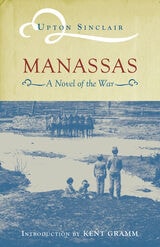
Manassas
A Novel of the WarUpton Sinclair
University of Alabama Press, 2000
Centers on the moral dimension of the conflict as it traces a young Mississippi boy’s conversion from pro-slavery Southerner to abolitionist Union soldier
Allan Montague, born on a Mississippi plantation about twenty years before the Civil War, has grown up with slavery and considers it natural. When his father moves to Boston for business and takes the boy with him, young Allan carries a knife given to him by his cousin to use in killing abolitionists.
The first abolitionist young Allan meets in Boston is Levi Coffin, the reputed founder of the Underground Railroad. In this first of many meetings with historical figures, Allan forms a friendship with Coffin, who eventually takes him to hear a speech by former slave Frederick Douglass. Douglass's powerful words cement Allan's transformation into an abolitionist—a transformation that will lead him back to his Deep South home with the hope of freeing slaves and eventually back to the North and the fateful Battle of Manassas.
Kent Gramm, author of the introduction for this new edition of Manassas, calls the novel “a modern version of the morality play,” with the United States as the central character. “The real story, he writes, is the moral phenomenon of the Civil War.” It is a powerful book that deserves to be revived, read, and studied.
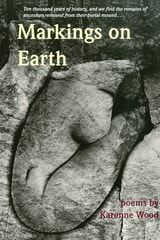
Markings on Earth
Karenne Wood
University of Arizona Press, 2001
“Ten thousand years of history, and we find the remains
of ancestors removed from their burial mound . . . “
Impressions of the past, markings on earth, are part of the world of Karenne Wood. A member of the Monacan tribe of Virginia, she writes with insight and grace on topics that both reflect and extend her Native heritage.
Markings on Earth is a cyclical work that explores the many dimensions of human experience, from our interaction with the environment to personal relationships. In these pages we relive the arrival of John Smith in America and visit the burial mounds of the Monacan people, experience the flight of the great blue heron and witness the dance of the spider. We also share the personal journey of one individual who seeks to overcome her sense of alienation from her people and her past.
Wood’s palette is not only Nature but human nature as well. She writes pointedly about shameful episodes of American history, such as the devastation of Appalachia by mining companies and the “disappearance” of Indian peoples. She also addresses forms of everyday violence known to many of us, such as alcoholism and sexual abuse. Wood conveys an acceptance of history and personal trauma, but she finds redemption in a return to tradition and a perception of the world’s natural grace.
Through these elegantly crafted words, we come to know that Native writers need not be limited to categorical roles determined by their heritage. Markings on Earth displays a fidelity to human experience, evoking that experience through poems honed to perfection. It is an affirmation of survival, a work that suggests one person’s life cannot be separated from the larger story of its community, its rootedness in history, and its timeless connections to the world.
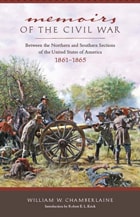
Memoirs of the Civil War
Between the Northern and Southern Sections of the United States of America 1861 to 1865William W. Chamberlaine
University of Alabama Press, 2011
Memoirs of the Civil War, though relatively little known because of its rarity in the original edition, contains much valuable information and engaging narrative passages. A Virginian whose Confederate career included service in an infantry regiment early in the war, Chamberlaine’s most important military service was as a staff officer attached to Brigadier General Reuben Lindsay Walker, who commanded the Third Corps artillery in the Army of Northern Virginia.
Includes excellent material on the duties of staff officers, operation of Confederate conscription, and the role of artillery in Lee’s campaigns. He is especially eloquent and revealing about a number of famous battles: the Seven Days; Antietam, where Chamberlaine distinguished himself and was wounded; and the Wilderness, where he had a memorable encounter with Lee.
My Dearest Angel
A Virginia Family Chronicle 1895–1947Katie Letcher Lyle
Ohio University Press, 2002
She was the daughter of a circuit judge and state senator. He was the youngest son of Virginia’s Civil War governor and was a state legislator himself at the age of nineteen. Their courtship and marriage stands as a portrait of a bygone way of life unique to the American South during the first half of the twentieth century. My Dearest Angel is their story, told through their faithful correspondence over the course of their fifty years together.
Piecing together the voluminous letters, their granddaughter, noted author Katie Letcher Lyle, has succeeded in giving us an intimate panorama of the full and oftentimes wrenching lives led by Greenlee and Katie Letcher. Domestic life, family secrets, and visiting luminaries are part of their story. But the abiding appeal of My Dearest Angel is the maturation of a lifelong relationship built on the crest of a changing world.
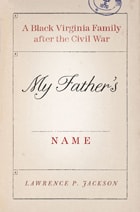
My Father's Name
A Black Virginia Family after the Civil WarLawrence P. Jackson
University of Chicago Press, 2012
My Father’s Name is a family story full of twists and turns—and one of haunting familiarity to many Americans, who may question whether the promises of emancipation have ever truly been fulfilled. It is also a resolute look at the duties that come with reclaiming and honoring Americans who survived slavery and a thoughtful meditation on its painful and enduring history.