Results by title
106 books match the query 'Western' and 3 start with m

Masterpieces of History
The Peaceful End of the Cold War in Europe, 1989The National Security Archive Savranskaya
Central European University Press, 2010
Twenty years in the making, this collection presents 122 top-level Soviet, European and American records on the superpowers' role in the annus mirabilis of 1989. Consisting of Politburo minutes; diary entries from Gorbachev's senior aide, Anatoly Chernyaev; meeting notes and private communications of Gorbachev with George H.W. Bush, Margaret Thatcher, Helmut Kohl and François Mitterrand; and high-level CIA analyses, this volume offers a rare insider's look at the historic, world-transforming events that culminated in the collapse of communism in Eastern Europe and the end of the Cold War. Most of these records have never been published before.
[more]
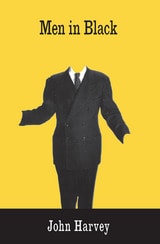
Men in Black
John Harvey
University of Chicago Press, 1995
Mr. Pink:
"Why can't we pick out our own color?"
Joe:
"I tried that once, it don't work. You get four guys fighting over who's gonna be Mr. Black."
—Quentin Tarantino, Reservoir Dogs
Men's clothes went black in the nineteenth century. Dickens, Ruskin and Baudelaire all asked why it was, in an age of supreme wealth and power, that men wanted to dress as if going to a funeral. The answer is in this history of the color black. Over the last 1000 years there have been successive expansions in the wearing of black—from the Church to the Court, from the Court to the merchant class. Though black as fashion was often smart and elegant, its growth as a cultural marker was fed by several currents in Europe's history—in politics, asceticism, religious warfare. Only in the nineteenth century, however, did black fully come into its own as fashion, the most telling witnesses constantly saw connections between the taste for black and the forms of constraint with which European society regimented itself.
Concentrating on the general shift away from color that began around 1800, Harvey traces the transition to black from the court of Burgundy in the 15th century, through 16th-century Venice, 17th-century Spain and the Netherlands. He uses paintings from Van Eyck and Degas to Francis Bacon, religious art, period lithographs, wood engravings, costume books, newsphotos, movie stills and related sources in his compelling study of the meaning of color and clothes.
Although in the twentieth century tastes have moved toward new colors, black has retained its authority as well as its associations with strength and cruelty. At the same time black is still smart, and fashion keeps returning to black. It is, perhaps, the color that has come to acquire the greatest, most significant range of meaning in history.
[more]
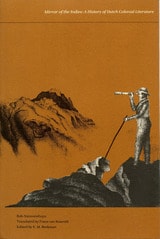
Mirror of the Indies
A History of Dutch Colonial LiteratureRob Nieuwenhuys
University of Massachusetts Press, 1982
This book is the definitive literary history of the colonial Dutch East Indies and is partially distinguished from its predecessors by its discussion of materials ranging from natural history and religious sermons to pamphlets and the accounts of travelers from the seventeenth through the twentieth centuries. What emerges from this comprehensive approach is an unusually thorough and sensitive account of the manifold encounters of the Dutch with the East Indian societies that they conquered, tried to understand, and, finally, had to relinquish under the inevitable pressures of change and the desire for independence. This history records how a hybrid literature emerges from that of the colonial culture to become a distinct literature of its own and why the concepts derived from European cultural history--such as baroque or neoclassicism--are totally inapplicable to the works discussed here.
[more]