Results by title
173 books match the query 'Women in literature' and 9 start with m
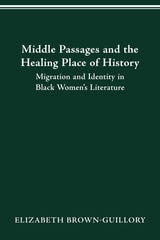
MIDDLE PASSAGES AND THE HEALING PLACE OF HISTORY
MIGRATION AND IDENTITY IN BLACK WOMEN'S LITERATUREELIZABETH BROWN-GUILLORY
The Ohio State University Press, 2006
This volume reveals that black women across the globe share a common ground fraught with struggles, but the narratives bear out that these women are not easily divided and that they stand upon each other’s shoulders dispensing healing balms. Black women’s history and herstory commingle; the trauma that ensued when Africans were loaded onto ships in chains continues to haunt black women, and men, too, wherever they find themselves in this present moment of the Diaspora.
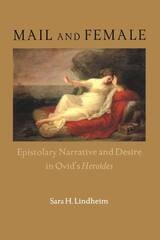
Mail and Female
Epistolary Narrative and Desire in Ovid's HeroidesSara H. Lindheim
University of Wisconsin Press, 2003
Using feminist and psychoanalytic approaches to examine the "female voice" in the Heroides, Sara H. Lindheim closely reads these fictive letters in which the women seemingly tell their own stories. She points out that in Ovid’s verse epistles all the women represent themselves in a strikingly similar and disjointed fashion. Lindheim turns to Lacanian theory of desire to explain these curious and hauntingly repetitive representations of the heroines in the "female voice." Lindheim’s approach illuminates what these poems reveal about both masculine and feminine constructions of the feminine
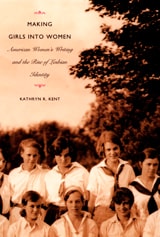
Making Girls into Women
American Women's Writing and the Rise of Lesbian IdentityKathryn R. Kent
Duke University Press, 2003
Kent not only analyzes how texts represent queer erotics, but also theorizes how texts might produce them in readers. She describes the ways postbellum sentimental literature such as that written by Harriet Beecher Stowe, Louisa May Alcott, and Emma D. Kelley eroticizes, reacts against, and even, in its own efforts to shape girls’ selves, contributes to the production of queer female identifications and identities. Tracing how these identifications are engaged and critiqued in the early twentieth century, she considers works by Djuna Barnes, Gertrude Stein, Marianne Moore, and Elizabeth Bishop, as well as in the queer subject-forming effects of another modern invention, the Girl Scouts. Making Girls into Women ultimately reveals that modern lesbian identity marks an extension of, rather than a break from, nineteenth-century women’s culture.
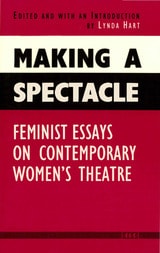
Making a Spectacle
Feminist Essays on Contemporary Women's TheatreEdited and with an Introduction by Lynda Hart
University of Michigan Press, 1988
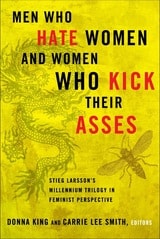
Men Who Hate Women and Women Who Kick Their Asses
Stieg Larsson's Millennium Trilogy in Feminist PerspectiveDonna King
Vanderbilt University Press, 2012
These lively and accessible essays expand the conversation in the blogosphere about the novels and films by connecting the controversies about gender roles to social trends in the real world.
Mothering Across Cultures
Postcolonial RepresentationsAngelita Reyes
University of Minnesota Press, 2001
A multifaceted exploration of memory, mothering, literature, and postcoloniality.
Blending the personal and the historical, the practical and the theoretical, Angelita Reyes draws on a wide range of texts from Africa and the African diaspora to establish mothering as a paradigm of progressive feminisms. Reyes creates a comparative dialogue among the fictions of five postcolonial women writers: Toni Morrison, Paule Marshall, Simone Schwarz-Bart, Jean Rhys, and Mariama Bâ.
Reyes discusses the theme of mothering as a human reality, as a paradigm for cultural crossings, and as what she refers to as autobiographical memory-telling. Not only does her work explore the fraught relationships among memory, history, and mothering, but it also questions conventional ways of approaching the often fragmented testimony and artifacts of the lives of women of African descent. Finally, Reyes uses memory-telling to present the autobiography of her own mother, whose extended American family said she "married a Spanish Negro who don’t speak good English." Her blending of authorial, critical, historical, and autobiographical voices in this work extends our understanding of the cross-cultural ideas of mothering.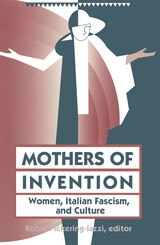
Mothers Of Invention
Women, Italian Facism, and CultureRobin Pickering-Iazzi
University of Minnesota Press, 1995
The first in-depth look at culture produced by women in Fascist Italy.
Mothers of Invention was first published in 1995. Minnesota Archive Editions uses digital technology to make long-unavailable books once again accessible, and are published unaltered from the original University of Minnesota Press editions.
To Mussolini, she was either donna-madre, the lauded domestic model, or donna-crisi, intellectual, masculine, a degenerate type. But woman, as Mothers of Invention shows, was not a category so easily defined or contained by the Italian Fascist state. This volume is the first thorough investigation of culture produced by Italian women during Fascism (1922-1943).In literature, painting, sculpture, film, and fashion, the contributors explore the politics of invention articulated by these women as they negotiated prevailing ideologies. Essays on women’s film spectatorship, on Anna Kuliscioff as the leading feminist in the Socialist party, on Teresa Labriola’s concept of Fascist feminism, on futurism and on Irene Brin’s reportage on female fashion and self-invention examine women in mass culture, political thought, and daily living. Contributors: Rosalia Colombo Ascari, Sweet Briar College; Fiora A. Bassanese, U of Massachusetts, Boston; Maurizia Boscagli, U of California, Santa Barbara; Emily Braun, Hunter College, CUNY; Carole C. Gallucci; Mariolina Graziosi, U of Milan; Clara Orban, Depaul U; Lucia Re, UCLA; Jacqueline Reich, Trinity College; and Barbara Spackman, New York University.
Moving On
The Heroines of Shirley Ann Grau, Anne Tyler, and Gail GodwinSusan S. Kissel
University of Wisconsin Press, 1996
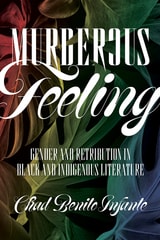
Murderous Feeling
Gender and Retribution in Black and Indigenous LiteratureChad Benito Infante
University of Minnesota Press, 2026
Examining revenge narratives as a feminist response to slavery and settler colonialism
From Octavia Butler’s Kindred to The Round House by Louise Erdrich, themes of retribution resound throughout the work of renowned Black and Indigenous women and queer authors. Revealing how the Black Power Movement and the American Indian Movement influenced literature from the 1960s onward, Murderous Feeling explores how these writers have employed revenge narratives as a response to white supremacy and colonialism.
Chad Benito Infante shows how, rather than using retributive violence to cultivate a heroic, masculine ideal, Black and Native women and queer writers use revenge as a way to raise philosophical questions about justice and the reclamation of power in the face of white supremacy. Pairing canonical texts—including work by James Baldwin, Leslie Marmon Silko, Craig Womack, Toni Morrison, and others—he demonstrates how this uniquely queer and feminist literary tradition, the “grammar of interrogation,” allows for generative ambivalence and curiosity about the possibilities and failures of violence.
In highlighting these narratives’ potential to steer anticolonial efforts, Murderous Feeling reconceptualizes literary violence not as an individualized act of cleansing but as a tool for revolutionary inquiry.
Retail e-book files for this title are screen-reader friendly.