Results by title
991 books match the query 'Writing' and 38 start with m
Macroanalysis
Digital Methods and Literary HistoryMatthew L. Jockers
University of Illinois Press, 2013
Making Administrative Work Visible
Data-Driven Advocacy for Understanding the Labor of Writing Program AdministrationLeigh Graziano
Utah State University Press, 2023
The collection has three parts, each of which focuses on the most confounding challenges facing WPAs as well as the most compelling sites of their contributions to administration, labor in higher education, and the discipline’s collective obligation to forwarding the goals of social justice and advocacy: Advocating through Representations of WPA Labor, Advocating by Accounting for Time and Labor, and Advocating in and through Complex Institutional Contexts. The chapters use data to share and track the work functions, job titles, grand narratives, program assessments, tenure and promotion, email practices, and more undertaken by WPAs in their administrative capacities. Chapters also surface narratives for future data and studies to be done by other scholars.
By taking up and answering questions about the range of WPA work—and the invisibility of much of that work—Making Administrative Work Visible creates avenues toward accounting for and acknowledging the complex activity systems in which WPAs lead the work of the university and advocate for data-driven strategies needed to sustain this foundational area of higher education.
Contributors: Kamila Albert, Brooke Anderson, Sheila Carter-Tod, Amy Cicchino, Ana Cortés Lagos, Kristi Murray Costello, Jennifer Cunningham, Ryan Dippre, Kimberly Emmons, Genevieve García de Müeller, Jill Gladstein, Caleb González, Michael Healy, Lyra Hilliard, Kristine Johnson, Seth Kahn, Rita Malenczyk, Troy Mikanovich, Lilian Mina, Angela Mitchell, Greer Murphy, Kate Navickas, Michael Neal, Patti Poblete, Jan Rieman, Heather Robinson, Katelyn Stark, Mary Stewart, Natalie Stillman-Webb, Lizbett Tinoco, Lisa Tremain, Martha Wilson Schaffer
Making Progress
Programmatic and Administrative Approaches for Multimodal Curricular TransformationLogan Bearden
Utah State University Press, 2021
MCT can be achieved at the intersection of program documents and practices. Bearden details ten composition programs that have undergone MCT, offering interview data from the directors who oversaw and/or participated within the processes. He analyzes a corpus of outcomes statements to discover ways we can “make space” for multimodality and gives instructors and programs a broader understanding of the programmatic values for which they should strive if they wish to make space for multimodal composition in curricula. Making Progress also presents how other program documents like syllabi and program websites can bring those outcomes to life and make multimodal composing a meaningful part of first-year composition curricula.
First-year composition programs that do not help their students learn to compose multimodal texts are limiting their rhetorical possibilities. The strategies in Making Progress will assist writing program directors and faculty who are interested in using multimodality to align programs with current trends in disciplinary scholarship and deal with resistance to curricular revision to ultimately help students become more effective communicators in a digital-global age.
Mapping Racial Literacies
College Students Write about Race and SegregationSophie R. Bell
Utah State University Press, 2020
This textual ethnography embeds early college students’ writing in deep historical and theoretical contexts and looks for new ways that their writing contributes to and reshapes contemporary understandings of how US and global citizens are thinking about race. The book is a teaching narrative, tracing a teaching journey that considers student writing not only in the moments it is assigned but also in continual revisions of the course, making it a useful tool in helping college-age students see, explore, and articulate the role of race in determining their life experiences and opportunities.
Sophie Bell’s work narrates the experiences of a white teacher making mistakes in teaching about race and moving forward through those mistakes, considering that process valuable and, in fact, necessary. Providing a model for future scholars on how to carve out a pedagogically responsive identity as a teacher, Mapping Racial Literacies contributes to the scholarship on race and writing pedagogy and encourages teachers of early college classes to bring these issues front and center on the page, in the classroom, and on campus.
Mapping the Invisible Landscape
Folklore, Writing, and the Sense of PlaceKent C. Ryden
University of Iowa Press, 1993
Any landscape has an unseen component: a subjective component of experience, memory, and narrative which people familiar with the place understand to be an integral part of its geography but which outsiders may not suspect the existence of—unless they listen and read carefully. This invisible landscape is make visible though stories, and these stories are the focus of this engrossing book.
Traveling across the invisible landscape in which we imaginatively dwell, Kent Ryden—himself a most careful listener and reader—asks the following questions. What categories of meaning do we read into our surroundings? What forms of expression serve as the most reliable maps to understanding those meanings? Our sense of any place, he argues, consists of a deeply ingrained experiential knowledge of its physical makeup; an awareness of its communal and personal history; a sense of our identity as being inextricably bound up with its events and ways of life; and an emotional reaction, positive or negative, to its meanings and memories.
Ryden demonstrates that both folk and literary narratives about place bear a striking thematic and stylistic resemblance. Accordingly, Mapping the Invisible Landscape examines both kinds of narratives. For his oral materials, Ryden provides an in-depth analysis of narratives collected in the Coeur d'Alene mining district in the Idaho panhandle; for his consideration of written works, he explores the “essay of place,” the personal essay which takes as its subject a particular place and a writer's relationship to that place.
Drawing on methods and materials from geography, folklore, and literature, Mapping the Invisible Landscape offers a broadly interdisciplinary analysis of the way we situate ourselves imaginatively in the landscape, the way we inscribe its surface with stories. Written in an extremely engaging style, this book will lead its readers to an awareness of the vital role that a sense of place plays in the formation of local cultures, to an understanding of the many-layered ways in which place interacts with individual lives, and to renewed appreciation of the places in their own lives and landscapes.
Mario Vargas Llosa
A Life of WritingBy Raymond Leslie Williams
University of Texas Press, 2014
Awarded the Nobel Prize in 2010 at the age of seventy-four, Peruvian writer Mario Vargas Llosa has held pivotal roles in the evolution and revolutions of modern Latin American literature. Perhaps surprisingly, no complete history of Vargas Llosa’s works, placed in biographical and historical context, has been published—until now. A masterwork from one of America’s most revered scholars of Latin American fiction, Mario Vargas Llosa: A Life of Writing provides a critical overview of Vargas Llosa’s numerous novels while reinvigorating debates regarding conventional interpretations of the work.
Weaving analysis with discussions of the writer’s political commentary, Raymond Leslie Williams traces the author’s youthful identity as a leftist student of the 1960s to a repudiation of some of his earlier ideas beginning in the 1980s. Providing a unique perspective on the complexity, nuance, and scope of Vargas Llosa’s lauded early novels and on his passionate support of indigenous populations in his homeland, Williams then turns his eye to the recent works, which serve as a bridge between the legacies of the Boom and the diverse array of contemporary Latin American fiction writers at work today. In addition, Williams provides a detailed description of Vargas Llosa’s traumatic childhood and its impact on him—seen particularly in his lifelong disdain for authority figures—as well as of the authors who influenced his approach, from Faulkner to Flaubert. Culminating in reflections drawn from Williams’s formal interviews and casual conversations with the author at key phases of both men’s careers, this is a landmark publication that will spark new lines of inquiry into an intricate body of work.
Masking Inequality with Good Intentions
Systemic Bias, Counterspies, and Discourse Acquisition in STEM EducationHeather M. Falconer
University Press of Colorado, 2023
In Masking Inequality with Good Intentions, Heather M. Falconer examines the impact of systemic bias on disciplinary discourse acquisition and identity development by asking “How do the norms and expectations of higher education and STEM, specifically, impact the development of scientific identity and discursive skill?” and “What role do societal markers like race and gender play in the negotiation of identity in STEM learning environments?”
Drawing on the experiences and writings of six students from historically underrepresented backgrounds in STEM, each participating in an undergraduate research program, Falconer discusses how programmatic and pedagogical choices can work to either further marginalize students and disrupt their writing and identity development as scientists or create counterspaces—spaces where students can thrive and push back against dominant, oppressive forces. Practical applications for pedagogy, curriculum, and program design are included.
Master Class
Lessons from Leading WritersNancy Bunge
University of Iowa Press, 2005
Master Class: Lessons from Leading Writers gathers more than two decades of wisdom from twenty-nine accomplished authors. It offers previously unpublished interviews along with freshly edited versions of ten interviews from Nancy Bunge's well-received previous collection, Finding the Words. The first section, Theory, incorporates interviews which document the golden age of writing programs in which authors with a strong sense of social and cultural responsibility taught as seriously as they wrote. These conversations delve into the writers' philosophies and teaching methods. The second section, Practice, presents interviews with authors who discuss how they've approached the writing of particular works. Altogether the interviews introduce authors as inspirational models and provide insightful techniques for other writers to try. One piece of advice recurs with striking consistency: to produce fresh, interesting work, aspiring writers must develop a passionate self-trust. This rule has an essential corollary: improving as a writer means constantly stretching oneself with new information and skills. Sure to interest writing and literature teachers as well as writers at every stage of development, Master Class is highly recommended for undergraduate and graduate writing courses.
Interviews with Marvin Bell, Ivan Doig, Sandra Gilbert, Allen Ginsberg, Donald Hall, Jim Harrison, Etheridge Knight, Margot Livesey, Larry McMurtry, James Alan McPherson, Clarence Major, Bobbie Ann Mason, Sue Miller, N. Scott Momaday, Kyoko Mori, Thylias Moss, W. S. Penn, Kit Reed, Alix Kates Shulman, William Stafford, Wallace Stegner, Ruth Stone, Scott Turow, Katherine Vaz, Diane Wakoski, Anne Waldman, Richard Wilbur, Richard Yates, and Helen Yglesias.
Material Culture of Writing
edited by Cydney Alexis and Hannah J. Rule
University Press of Colorado, 2022
The collection features scholars across the disciplines—such as art, art history, English, museum studies, and writing studies—who work as teachers, historians, museum curators/conservators, and faculty. Each chapter features methods and questions from contributors’ own disciplines while at the same time speaking to writing studies’ interest in writers, writing identity, and writing practice. The authors in this volume also work with a variety of methodologies, including literary analysis, archival research, and qualitative research, providing models for the types of research possible using a material culture studies framework. The collection is organized into three sections—Writing Identity, Writing Work, Writing Genre—each with a contextualizing introduction from the editors that introduces the chapters themselves and imagines possible directions for writing studies research facilitated by material culture studies.
The Material Culture of Writing serves as an accessible introduction to work in material culture studies for writing studies scholars, graduate students, and undergraduates, especially as it makes a distinctive contribution to writing studies in its material culture studies approach. Because of the interdisciplinarity of material culture studies and this volume’s contributors, this collection will appeal to a wide range of scholars and readers, including those interested in writing studies, the history of the book, print culture, genre studies, archival methods, and authorship studies.
Contributors: Cydney Alexis, Debby Andrews, Diane Ehrenpreis, Keri Epps, Desirée Henderson, Kevin James, Jenny Krichevsky, Anne Mackay, Emilie Merrigan, Laura R. Micciche, Hannah J. Rule, Kate Smith
Maxwell Street
Writing and Thinking PlaceTim Cresswell
University of Chicago Press, 2019
In Maxwell Street, Cresswell advocates approaching the study of place as an “assemblage” of things, meanings, and practices. He models this innovative approach through a montage format that exposes the different types of texts—primary, secondary, and photographic sources—that have attempted to capture the essence of the area. Cresswell studies his historical sources just as he explores the different elements of Maxwell Street—exposing them layer by layer. Brilliantly interweaving words and images, Maxwell Street sheds light on a historic Chicago neighborhood and offers a new model for how to write about place that will interest anyone in the fields of geography, urban studies, or cultural history.
Maya Daykeeping
Three Calendars from Highland GuatemalaJohn M. Weeks
University Press of Colorado, 2009
The use of such calendars is mentioned in historical and ethnographic works, but very few examples are known to exist. Each of the three calendars transcribed and translated by John M. Weeks, Frauke Sachse, and Christian M. Prager - and housed at the University of Pennsylvania Museum of Archaeology and Anthropology - is unique in structure and content. Moreover, except for an unpublished study of the 1722 calendar by Rudolf Schuller and Oliver La Farge (1934), these little-known works appear to have escaped the attention of most scholars. Introductory essays contextualize each document in time and space, and a series of appendixes present previously unpublished calendrical notes assembled in the early twentieth century.
Providing considerable information on the divinatory use of calendars in colonial highland Maya society previously unavailable without a visit to the University of Pennsylvania's archives, Maya Daykeeping is an invaluable primary resource for Maya scholars. Mesoamerican Worlds Series
Meaningful Writing Project
Learning, Teaching and Writing in Higher EducationMichele Eodice
Utah State University Press, 2017
In the face of the continuing discourse of crisis in US education, The Meaningful Writing Project offers readers an affirming story of writing in higher education that shares students’ experiences in their own voices. In presenting the results of a three-year study consisting of surveys and interviews of university seniors and their faculty across three diverse institutions, authors Michele Eodice, Anne Ellen Geller, and Neal Lerner consider students’ perceptions of their meaningful writing experiences, the qualities of those experiences, and instructors’ perspectives on assignment design and delivery.
This study confirms that meaningful assignments offer students opportunities to engage with instructors, peers, and texts and are relevant to past experiences and passions as well as to future aspirations and identities. Meaningful writing occurs across majors, in both required and elective courses, and beyond students’ years at college. Additionally, the study makes clear that faculty across the curriculum devote significant care and attention to creating writing assignments that support student learning, as they understand writing performance to be a developmental process connected to overall cognitive and social development, student engagement with learning, and success in a wide variety of disciplines and professions.
The Meaningful Writing Project provides writing center directors, WPAs, other composition scholars, and all faculty interested in teaching and learning with writing an unprecedented look into the writing projects students find meaningful.
Mentor and Muse
Essays from Poets to PoetsEdited by Blas Falconer, Beth Martinelli, and Helena Mesa
Southern Illinois University Press, 2010
In Mentor and Muse, a collection of twenty-nine insightful essays by some of today’s leading poetic minds, editors Blas Falconer, Beth Martinelli, and Helena Mesa have brought together an illuminating anthology that draws upon both established and emerging poets to create a one-of-a-kind resource and unlock the secrets of writing and revising poetry.
Gathered here are numerous experts eager to share their wisdom with other writers. Each author examines in detail a particular poetic element, shedding new light on the endless possibilities of poetic forms. Addressed within are such topics as the fluid possibilities of imagery in poetry; the duality of myth and the personal, and the power of one to unlock the other; the surprising versatility of traditional poetic forms; and the pleasure of collaboration with other poets. Also explored in depth are the formative roles of cultural identity and expectations, and their effect on composition; advice on how to develop one’s personal poetic style and approach; the importance of setting in reading and meaning; and the value of indirection in the lyric poem. Challenges to conventional concepts of beauty are examined through Shakespeare’s sonnets, and the ghost of Longfellow is called upon to guide students through the rewards and roadblocks of writing popular poetry. Poetic persona is demystified through Newton’s law of gravity, while the countless permutations of punctuation are revealed with analysis of e. e. cummings and W. S. Merwin.
The essays include the full text of the poems discussed, and detailed, relevant writing exercises that allow students the opportunity to directly implement the strategies they have learned. While many advanced topics such as authenticity, discordant music, and prosody are covered, this highly readable volume is as user-friendly as it is informative. Offering a variety of aesthetics and approaches to tackling the issues of composition, Mentor and Muse takes poets beyond the simple stages of poetic terms and strategies. These authorsinvite students to explore more advanced concepts, enabling them to draw on the traditions of the past while at the same time forging their own creative paths into the future.
Chosen as one of the "Best Books for Writers" by Poets & Writers magazine
Mentorship/Methodology
Reflections, Praxis, and FuturesLeigh Gruwell
Utah State University Press, 2024
The contributors consider how methodology informs mentorship, how mentorship activates methodology, and how to locate the future of the field in these moments of intersection. Mentorship, through the research and relationships it nourishes, creates the future of writing studies—or, conversely, reproduces the past. At the juncture where this happens, the contributors inquire, Where have current arrangements of mentorship/methodology taken writing studies? Where do these points of intersection exist in performance and practice, in theory, in research? What images of the field do they produce? How can scholars better articulate and write about these moments or spaces in which mentorship and methodology collide in productive disciplinary work?
By making the “slash” more visible, Mentorship/Methodology provides significant opportunities to support and cultivate diverse ways of knowing and being in rhetoric and composition, both locally and globally. The volume will appeal to students and scholars of rhetoric, composition, and technical and professional communication, as well as readers interested in conversations about mentorship and methodology.
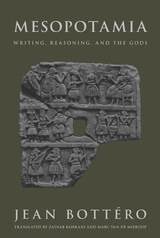
Mesopotamia
Writing, Reasoning, and the GodsJean Bottéro
University of Chicago Press, 1995
To give the reader some sense of how Mesopotamian civilization has been mediated and interpreted in its transmission through time, Bottero begins with an account of Assyriology, the discipline devoted to the ancient culture. This transmission, compounded with countless discoveries, would not have been possible without the surprising decipherment of the cuneiform writing system. Bottero also focuses on divination in the ancient world, contending that certain modes of worship in Mesopotamia, in their application of causality and proof, prefigure the "scientific mind."
Metabolizing Capital
Writing, Information, and the Biophysical EnvironmentChristian J. Pulver
Utah State University Press, 2020
The rise of the global cloud and the internet-of-things have ushered in a new stage of the internet that marks a transition from the celebrated user-generated content of Web 2.0 to the data-driven networks of Web 3.0. As social media networks have expanded, so has the amount of writing and communication we do online. This has created several valuable sub-layers of data and metadata about consumer-citizens that corporations and governments now routinely collect, store, and monetize. This frenzy to collect more data is contributing to several problematic social and environmental concerns as flows of information and capital dangerously accelerate how energy and matter move through ecosystems at every scale.
This book explores the planetary consequences of Web 3.0 and the vital role that writing and data production play in accelerating capital circulation, from concerns raised by the growing energy demands of the information industries, to growing streams of electronic waste, to the growing socioeconomic tensions arising as a result of information monopolies.
A posthuman, Marxist analysis of digital culture and writing, Metabolizing Capital contributes to and challenges current understandings of rhetorical agency and actor networks. Combining scholarship from writing studies, rhetoric, and composition with research in metabolic ecology, information theory, media studies, cognitive psychology, history, and new materialism, this book should be of interest to scholars in writing studies as well as others who study digital culture, ecological literacies, the history of writing and information, big data, and environmental concerns related to electronics and the information industries.
Methodological Matters
Narratives for Emerging Researchers in Rhetoric and CompositionErin Kathleen Bahl
Utah State University Press, 2026
Methodological Matters offers a series of investigative reflections from experienced and emerging researchers to provide guidance for researchers who are navigating important complexities early in their careers. Each chapter explores a larger research-related question by narrating how one researcher negotiated a unique methodological challenge while working on a dissertation in the field of rhetoric and composition.
Given the constraints placed on new researchers’ time and resources, one way to navigate research-related precarities is to learn from others who have successfully traversed the same investigative terrain. This volume curates investigative reflections from researchers who, at the time of writing, were in the process of completing (or had just completed) their dissertations. Three parts explore issues of identity, craft, and practice in conducting research as an emerging scholar in rhetoric and composition, and the collection concludes with critical reflections on the role of precarity in conducting research.
Both a curated series of investigative reflections from emerging researchers and a resource guide with tangible tools for use in graduate seminars and fieldwork, Methodological Matters amplifies voices of those who learned how to do research in precarious contexts while simultaneously situated within the sometimes frustrating developmental phase located between “student” and “practitioner.”
Methods and Methodologies for Research in Digital Writing and Rhetoric, Volume 1
Centering Positionality in Computers and Writing ScholarshipCrystal VanKooten
University Press of Colorado, 2023
Methods and Methodologies for Research in Digital Writing and Rhetoric, Volume 2
Centering Positionality in Computers and Writing ScholarshipVictor Del Hierro
University Press of Colorado, 2023
Methods and Methodologies explores how researchers theorize, design, enact, reflect on, and revise digital writing research. The contributors to the two volumes of this edited collection explore how digital technologies can be used to solve problems, challenge the status quo, and address inequities. In some cases, they do so by using familiar digital technologies in novel ways. In other cases, they explain the use of relatively new or less familiar technologies such as digital mapping apps, Twitter bots, audio-visual captions, and computer programming code. By reflecting on the lessons that emerged from their work—and in particular on their own positionality—the authors provide methodological narratives that are personal, professional, and individual yet foundational. By combining attention to human positionality and digital technology, Methods and Methodologies addresses important social issues and questions related to writing and rhetoric.

Methods and Methodology in Composition Research
Gesa Kirsch and Patricia A. Sullivan
Southern Illinois University Press, 1992
In original essays, fourteen nationally known scholars examine the practical, philosophical, and epistemological implications of a variety of research traditions. Included are discussions of historical, theoretical, and feminist scholarship; case-study and ethnographic research; text and conversation analysis; and cognitive, experimental, and descriptive research. Issues that cross methodological boundaries, such as the nature of collaborative research and writing, methodological pluralism, the classification and coding of research data, and the politics of composition research, are also examined. Contributors reflect on their own research practices, and so reflect the current state of composition research itself.

Microhistories of Composition
Bruce Mccomiskey
Utah State University Press, 2016
Writing studies has been dominated throughout its history by grand narratives of the discipline, but in this volume Bruce McComiskey begins to explore microhistory as a way to understand, enrich, and complicate how the field relates to its past. Microhistory investigates the dialectical interaction of social history and cultural history, enabling historians to examine uncommon sites, objects, and agents of historical significance overlooked by social history and restricted to local effects by cultural history. This approach to historical scholarship is ideally suited for exploring the complexities of a discipline like composition.
Through an introduction and eleven chapters, McComiskey and his contributors—including major figures in the historical research of writing studies, such as Louise Wetherbee Phelps, Kelly Ritter, and Neal Lerner—develop focused narratives of particular significant moments or themes in disciplinary history. They introduce microhistorical methodologies and illustrate their application and value for composition historians, contributing to the complexity and adding momentum to the emerging trend within writing studies toward a richer reading of the field’s past and future. Scholars and historians of both composition and rhetoric will appreciate the fresh perspectives on institutional and disciplinary histories and larger issues of rhetorical agency and engagement enacted in writing classrooms that are found in Microhistories of Composition.
Other contributors include Cheryl E. Ball, Suzanne Bordelon, Jacob Craig, Matt Davis, Douglas Eyman, Brian Gogan, David Gold, Christine Martorana, Bruce McComiskey, Josh Mehler, Annie S. Mendenhall, Kendra Mitchell, Antony N. Ricks, David Stock, Kathleen Blake Yancey, Bret Zawilski, and James T. Zebroski.
Millions of Suns
On Writing and LifeSharon Fagan McDermott and M. C. Benner Dixon
University of Michigan Press, 2023
With decades of combined teaching experience, McDermott and Benner Dixon share practical craft-of-writing advice with the reader, including over fifty engaging writing prompts to spark the creative process. These prompts guide readers toward the freedom and joy that comes with finding one’s authentic voice. Embracing both the painful and the playful, Millions of Suns is an ideal text for classrooms, professional development, or daily writing practice. Through humor, lyricism, and poignancy, the fundamental message of the book remains the same for newcomers and career authors, whether they write poetry, fiction, non-fiction, or memoir. Let Millions of Suns open a door for you into your creative work, inviting imagination, memory, and inspiration into your writing life.
Missing Measures
Modern Poetry and the Revolt Against MeterTimothy Steele
University of Arkansas Press, 1990
By the close of the nineteenth century, many poets had abandoned rhyme and meter in favor of “free verse.” Nearly one hundred years later, a growing number of younger poets are reclaiming traditional conventions of prosody by composing rhymed and measured poetry.
Missing Measures is the first full articulation of the aesthetics of this new movement. Timothy Steele, one of the best of those poets who are sometimes called the “New Formalists,” treats his subject against a backdrop of the long history of ideas about poetry, formulated first by the ancients and re-examined and re-interpreted by subsequent writers.
Steele offers a new perspective on the wholesale departure from tradition proclaimed in modernist critical justifications. A rare marriage of clear writing, careful scholarship, and bold thinking, Missing Measures provides a vital new movement with a critical manifesto.
Mobility Work in Composition
Bruce Horner
Utah State University Press, 2020
Both established and up-and-coming scholars bring a diversity of geographic, institutional, and research-based perspectives to the volume, which includes in-depth investigations of specific forms of mobility work in composition, as well as responses to and reflections on those explorations. Eight chapters present specific cases or issues of this work and twelve shorter response chapters follow, identifying key points of intersection and conflict in the arguments and posing new questions and directions to pursue.
Addressing matters of knowledge transfer and meaning translation, immigrant literacy practices, design pedagogy, academic career changes, student websites, research methodologies, school literacy programs, and archives, Mobility Work in Composition asks what mobility in composition means and how, why, and for whom it might work. It will be of broad interest to students and scholars in rhetoric and composition.
Contributors: Anis Bawarshi, Elizabeth Chamberlain, Patrick Danner, Christiane Donahue, Keri Epps, Eli Goldblatt, Rachel Gramer, Timothy Johnson, Jamila Kareem, Carmen Kynard, Rebecca Lorimer Leonard, Andrea Olinger, John Scenters-Zapico, Khirsten L. Scott, Mary P. Sheridan, Jody Shipka, Ann Shivers-McNair, Scott Wible, Rick Wysocki
Moorings
Portuguese Expansion and the Writing of AfricaJosiah Blackmore
University of Minnesota Press, 2008
How Africa was perceived in the early modern imaginary
In this first book to study Portuguese texts about Africa, Moorings brings an important but little-known body of European writings to bear on contemporary colonial thought. Images of Africa as monstrous, dangerous, and lush were created in early Portuguese imperial writings and dominated its representation in European literature. Moorings establishes these key works in their proper place: foundational to Western imperial discourse.
Attentive to history as well as the nuances of language, Josiah Blackmore leads readers from the formation of the “Moor” in medieval Iberia to the construction of a full colonial imaginary, as found in the works of two writers: the royal chronicler Gomes Eanes de Zurara and the epic poet Luís de Camões. Blackmore’s original work helps to explain how concepts and myths—such as the “otherness” of Africa and Africans—originated, functioned, and were perpetuated.Delving into the Portuguese imperial experience, Moorings enriches our understanding of historical and literary imagination during a significant period of Western expansion.
More Than Words
A Memoir of a Writing LifeJerry Apps
Wisconsin Historical Society Press, 2022
More than a Moment
Contextualizing the Past, Present, and FutureSteven D. Krause
Utah State University Press, 2019
Krause writes about his own experiences as a participant in several MOOCs and the experiences of faculty who developed and taught MOOCs. Contrary to many early claims from educational entrepreneurs, they were never entirely “new,” and MOOCs and their aftermath are still at the heart of the tensions between nonprofit universities and for-profit entities, particularly online program management firms, in delivering distance education.
While MOOCs are no longer a threat to education in the United States, they are part of the ongoing corporatization of education and remain part of conversations about experienced-based credit, corporate training, and open education. Presenting historical, student, teacher, and administrative perspectives, More than a Moment is a well-rounded treatment that will be of interest to academics and entrepreneurs interested in distance education, online pedagogy, online program management, and public-private partnerships in higher education.
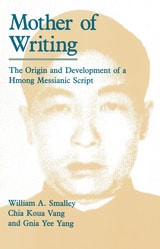
Mother of Writing
The Origin and Development of a Hmong Messianic ScriptWilliam A. Smalley, Chia Koua Vang, and Gnia Yee Yang
University of Chicago Press, 1990
An anthropological linguist who has worked among the Hmong, William A. Smalley joins Shong Lue's chief disciple, Chia Koua Vang, and one of his associates, to tell the fascinating story of how the previously unschooled farmer developed his remarkable writing system through four stages of increasing sophistication. The uniqueness of Shong Lue's achievement is highlighted by a comparison of Shong Lue's writing system to other known Hmong systems and to the history of writing as a whole.
In addition to a nontechnical linguistic analysis of the script and a survey of its current use, Mother of Writing provides an intriguing cultural account of Shong Lue's life. The book traces the twenty-year-long struggle to disseminate the script after Shong Lue's death, first by handwriting, then by primitive moveable type, an abortive attempt to design a wooden typewriter, and finally by modern wordprocessing. In a moving concluding chapter, Smalley discusses his own complex feelings about his coauthors' story.
Moving Beyond Academic Discourse
Composition Studies and the Public SphereChristian R. Weisser. Foreword by Gary A. Olson
Southern Illinois University Press, 2002
Moving student writing beyond academic discourse and into larger public spheres is a difficult task, but Christian R. Weisser’s study challenges composition instructors to do just that. This highly accessible book does what no other study has attempted to do: place the most current, cutting-edge theories and pedagogies in rhetoric and composition in their intellectual and historical contexts, while at the same time offering a unique, practical theory and pedagogy of public writing for use both inside and outside of the classroom.
By positing a theory of the public for composition studies, one which envisions the public sphere as a highly contested, historically textured, multilayered, and sometimes contradictory site, Weisser offers a new approach to the roles that compositionists might assume in their attempts to initiate progressive political and social change.
After first providing a historical context that situates composition’s recent interest in public writing, Weisser next examines recent theories in composition studies that consider writing an act of social engagement before outlining a more complex theory of the public based on the work of Jürgen Habermas. The resulting re-envisioning of the public sphere expands current conversations in rhetoric and composition concerning the public.
Weisser concludes with a holistic vision that places greater political and social import on addressing public issues and conversations in the composition classroom and that elucidates the role of the public intellectual as it relates specifically to compositionists in postmodern society.
Multilingual Contributions to Writing Research
Towards an Equal Academic Exchangeedited by Natalia Ávila Reyes
University Press of Colorado, 2022
This edited collection offers chapters based on presentations at the Second Latin American Association of Writing Studies in Higher Education and Professional Contexts International Congress (II ALES) held in Santiago, Chile, in 2018. Together, the contributors to the collection—drawn from nine countries and writing in three languages—highlight the many perspectives, resources, and traditions that enrich and expand international conversations about writing, writing instruction, and writing research. The multiple locations from which the chapters in this collection emerge contribute significantly to the situated findings and concerns they address, with the authors of each chapter considering the social, lingual, and institutional contexts shaping their work. Drawing on both robust traditions and cutting-edge research, this collection makes a distinctive contribution to discussions of writing in and beyond Latin America.
This book is also available as an open access ebook through the WAC Clearinghouse.
Multilingual Writers and Writing Centers
Ben Rafoth
Utah State University Press, 2015
Multilingual writers—often graduate students with more content knowledge and broader cultural experience than a monolingual tuto—unbalance the typical tutor/client relationship and pose a unique challenge for the writing center. Multilingual Writers and Writing Centers explores how directors and tutors can better prepare for the growing number of one-to-one conferences with these multilingual writers they will increasingly encounter in the future.
This much-needed addition of second language acquisition (SLA) research and teaching to the literature of writing center pedagogy draws from SLA literature; a body of interviews Rafoth conducted with writing center directors, students, and tutors, and his own decades of experience. Well-grounded in daily writing center practice, the author addresses which concepts and practices directors can borrow from the field of SLA to help tutors respond to the needs of multilingual writers, what directors need to know about these concepts and practices, and how tutoring might change in response to changes in student populations.
Multilingual Writers and Writing Centers is a call to invigorate the preparation of tutors and directors for the negotiation of the complexities of multilingual and multicultural communication.
Multilingual Writing in Entanglement
Becoming With Others Through Chronotopic Figuring and Unpredictable EncountersXiqiao Wang
Utah State University Press, 2025
This longitudinal qualitative study follows Morgan and Leo through their undergraduate careers, collecting rich ethnographic data across private, academic, and digital spaces. The resulting theoretical framework conceptualizes multilingual writing as simultaneously strategic, agentive, creative, diffused, contingent, and messy—a phenomenon shaped by dynamic interplay between ephemeral encounters and established practices. Employing chronotopic figuring as a methodological tool, Wang illuminates aspects of multilingual writing often elided in research: fleeting encounters that energize composition, reciprocal relationships that distribute writing labor, unexpected detours that redirect the writing process, and the layering of writing and identity practices across multiple historical trajectories. This approach moves beyond examining writing in isolated moments to trace how meaning emerges across languages, modes, and spacetimes.
Multilingual Writing in Entanglement offers crucial insights into how international students strategically and improvisationally reconfigure their semiotic and rhetorical repertoires to write multilingual lives into meaning. This work is influential for scholars and educators in composition, literacy studies, multilingual education, ESL, and linguistics.
Multimodal Composing and Writing Transfer
Kara Poe Alexander
Utah State University Press, 2024
Over the past two decades the concepts of multimodal composing and writing transfer have grown and reshaped the nature of writing studies, but rarely have the ways in which these areas overlap been studied. This collection shows how this shift in writing studies has been mutually informative, covering a wider range of contexts for multimodality and writing transfer than just in first-year composition courses. It places composition teaching practices and multimodal research in conversation with learning transfer theory to provide an in-depth examination of how they influence one another.
Multimodal Composing and Writing Transfer develops these intersections to connect multimodal composition and writing practices across a wide array of fields and contexts. Scholars across disciplines, postsecondary writing teachers, writing program administrators, writing center directors, and graduate students will find this collection indispensable.
Multimodal Composing
Strategies for Twenty-First-Century Writing ConsultationsLindsay A. Sabatino
Utah State University Press, 2019
Multimodal Composing explores the relationship between rhetorical choices, design thinking, accessibility, and technological awareness in the writing center. Each chapter deepens consultants’ understanding of multimodal composing by introducing them to important features and practices in a variety of multimodal texts. The chapters’ activities provide consultants with an experience that familiarizes them with design thinking and multimodal projects, and a companion website (www.multimodalwritingcenter.org) offers access to additional resources that are difficult to reproduce in print (and includes updated links to resources and tools).
Multimodal projects are becoming the norm across disciplines, and writers expect consultants to have a working knowledge of how to answer their questions. Multimodal Composing introduces consultants to key elements in design, technology, audio, and visual media and explains how these elements relate to the rhetorical and expressive nature of written, visual, and spoken communication. Peer, graduate student, professional tutors and writing center directors will benefit from the activities and strategies presented in this guide.
Contributors:
Patrick Anderson, Shawn Apostel, Jarrod Barben, Brandy Ball Blake, Sarah Blazer, Brenta Blevins, Russell Carpenter, Florence Davies, Kate Flom Derrick, Lauri Dietz, Clint Gardner, Karen J. Head, Alyse Knorr, Jarret Krone, Sohui Lee, Joe McCormick, Courtnie Morin, Alice Johnston Myatt, Molly Schoen, James C. W. Truman
Multimodal Transfer Pedagogy
Applications for InstructionRyan P. Shepherd
Utah State University Press, 2027
Multimodal Transfer Pedagogy provides practical methods and materials for composition teachers and directors to facilitate multimodal transfer. This rich collection of resources presents new ways of incorporating digital texts, exploring modes of meaning beyond traditional print and encouraging students to think about rhetorical approaches to meaning making.
Together with its online companion materials, the book delivers a distinctive synthesis of multimodal composing practices, writing transfer research, and theory to provide clear, actionable guidance to teachers and directors to apply multimodal composition pedagogy effectively. Twenty-three chapters cover multimodal transfer pedagogy—including social media, composing with AI, visual rhetoric and design, public advocacy, tabletop games, podcasting, and more.
Multimodal Transfer Pedagogy is built from contextualized pedagogical approaches and course materials—syllabi, assignments, assessment documents—that specifically direct pedagogical application toward multimodal transfer in a range of contexts, from first-year writing to the science writing classroom and writing center. A natural follow-up to Multimodal Composition and Writing Transfer, the book introduces a unique practical-pedagogical model for implementing multimodal work in the classroom.
Mutuality in the Rhetoric and Composition Classroom
David L. Wallace and Helen Rothschild Ewald
Southern Illinois University Press, 2000
In Mutuality in the Rhetoric and Composition Classroom, David L. Wallace and Helen Rothschild Ewald point out the centrality of rhetoric in the academy, asserting the intimate connection between language and knowledge making. They also stress the need for a change in the roles of teachers and students in today’s classroom. Their goal is mutuality, a sharing of authority among teachers and students in the classroom that would allow everyone an equal voice in the communication of ideas.
Arguing that the impetus to empower students by engaging them in liberatory and emancipatory pedagogies is simply not enough, Wallace and Ewald seek to “help readers identify, theorize, and work through problems faced by teachers who already value alternative approaches but who are struggling to implement them in the classroom." It is not the teacher’s job merely to convey a received body of knowledge, nor is knowledge a prepackaged commodity to be delivered by the teacher. It is “constituted in the classroom through the dialogic interaction between teachers and students alike.”
Wallace and Ewald see mutuality as potentially transformative, but they “do not believe that the nature or that transformation can be designated in advance.” Rather it is located in the interaction between teachers and students. Wallace and Ewald look at how the transformative notion of mutuality can be effected in classrooms in three important ways: reconstituting classroom speech genres, redesigning the architecture of rhetoric and writing courses, and valuing students’ interpretive agency in classroom discourse. Mutuality in alternative pedagogy, they assert, is neither a single approach nor a specific set of valued practices; it is a continuous collaboration between teachers and students.
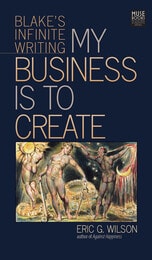
My Business Is to Create
Blake's Infinite WritingEric G. Wilson
University of Iowa Press, 2011
p.MsoNormal, li.MsoNormal, div.MsoNormal { margin: 0in 0in 0.0001pt; font-size: 12pt; font-family: "Times New Roman"; }div.Section1 { page: Section1; }
For William Blake, living is creating, conforming is death, and “the imagination . . . is the Human Existence itself.” But why are imagination and creation—so vital for Blake—essential for becoming human? And what is imagination? What is creation? How do we create? Blake had answers for these questions, both in word and in deed, answers that serve as potent teachings for aspiring writers and accomplished ones alike. Eric G. Wilson’s My Business Is to Create emulates Blake, presenting the great figure’s theory of creativity as well as the practices it implies.
In both his life and his art, Blake provided a powerful example of creativity at any cost—in the face of misunderstanding, neglect, loneliness, poverty, even accusations of insanity. Just as Los cries out in Jerusalem: The Emanation of the Giant Albion, “I must Create a System, or be enslav'd by another Man's; / I will not Reason and Compare: my business is to Create,” generations of writers and artists as diverse as John Ruskin, William Butler Yeats, Allen Ginsberg, Philip K. Dick, songwriter Patti Smith, the avant-garde filmmaker Jim Jarmusch, and the underground comic-book artist R. Crumb have taken Blake’s creed as inspiration.
Unwilling to cede his vision, Blake did more than simply produce iconoclastic poems and paintings; he also cleared a path toward spiritual and ethical enlightenment. To fashion powerful art is to realize the God within and thus to feel connected with enduring vitality and abundant generosity. This is Blake’s everlasting gospel, distilled here in an artist’s handbook of interest to scholars, writing teachers, and those who have made writing their way of life. My Business Is to Create is indispensable for all serious artists who want to transform their lives into art and make their art more alive.
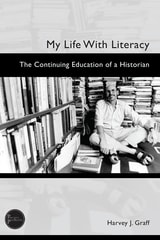
My Life with Literacy
The Continuing Education of a HistorianHarvey J. Graff
University Press of Colorado, 2025