Results by title
28167 books match the query 'History' and 1583 start with m
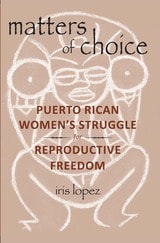
Matters of Choice
Puerto Rican Women's Struggle for Reproductive FreedomLopez, Iris
Rutgers University Press, 2008
In Matters of Choice, Iris Lopez presents a comprehensive analysis of the dichotomous views that have portrayed sterilization either as part of a coercive program of population control or as a means of voluntary, even liberating, fertility control by individual women. Drawing upon her twenty-five years of research on sterilized Puerto Rican women from five different families in Brooklyn, Lopez untangles the interplay between how women make fertility decisions and their social, economic, cultural, and historical constraints. Weaving together the voices of these women, she covers the history of sterilization and eugenics, societal pressures to have fewer children, a lack of adequate health care, patterns of gender inequality, and misinformation provided by doctors and family members.
Lopez makes a stirring case for a model of reproductive freedom, taking readers beyond victim/agent debates to consider a broader definition of reproductive rights within a feminist anthropological context.
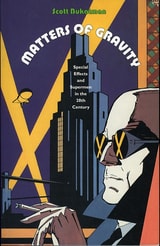
Matters of Gravity
Special Effects and Supermen in the 20th CenturyScott Bukatman
Duke University Press, 2003
Considering theme parks, cyberspace, cinematic special effects, superhero comics, and musical films, Matters of Gravity highlights phenomena that make technology spectacular, permit unfettered flights of fantasy, and free us momentarily from the weight of gravity and history, of past and present. Bukatman delves into the dynamic ways pop culture imagines that apotheosis of modernity: the urban metropolis. He points to two genres, musical films and superhero comics, that turn the city into a unique site of transformative power. Leaping in single bounds from lively descriptions to sharp theoretical insights, Matters of Gravity is a deft, exhilarating celebration of the liberatory effects of popular culture.
Matthew Arnold and the Classical Tradition
Warren D. Anderson
University of Michigan Press, 1988
Matthew within Judaism
Israel and the Nations in the First GospelAnders Runesson
SBL Press, 2020
In this collection of essays, leading New Testament scholars reassess the reciprocal relationship between Matthew and Second Temple Judaism. Some contributions focus on the relationship of the Matthean Jesus to torah, temple, and synagogue, while others explore theological issues of Jewish and gentile ethnicity and universalism within and behind the text.

Maturing Masculinities
Aging, Chronic Illness, and Viagra in MexicoEmily A. Wentzell
Duke University Press, 2013
Erectile dysfunction treatments like Viagra are popular in Mexico, where stereotypes of men as sex-obsessed "machos" persist. However, most of the men Wentzell interviewed saw erectile difficulty as a chance to demonstrate difference from this stereotype. Rather than using drugs to continue youthful sex lives, many collaborated with wives and physicians to frame erectile difficulty as a prompt to embody age-appropriate, mature masculinities.
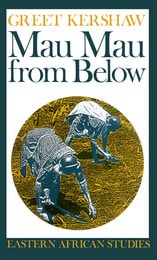
Mau Mau From Below
Eastern African StudiesGreet Kershaw
Ohio University Press, 1996
John Lonsdale says in his introduction:
“This is the oral evidence of the Kikuyu villagers with whom Greet Kershaw lived as an aid worker during the Mau Mau ‘Emergency’ in the 1950s, and which is now totally irrecoverable in any form save in her own field notes.
Professor Kershaw has uncovered long local histories of social tension which could have been revealed by no other means than patient enquiry, of both her neighbour’s memory and government archives…
Nobody, whether Kikuyu participant, Kenyan or European scholar, has provided such startlingly authoritative ethnographic insights into the values, fears and expectations of Kikuyu society and thus of the motivation of Kikuyu action…
Her data suggests, as other scholars have also accepted, that there never was a single such movement and that none of its members, even those who supposed themselves to be its leaders, ever saw it whole, not because they did not have a political aim, but because that agenda was contested within different political circles over which they had no control and of which they may scarcely have had any knowledge.
And why is this finding important? It is because others, including almost all the movement’s enemies, did see Mau Mau whole in order to try to comprehend it, a first step towards defeating it.”
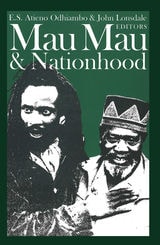
Mau Mau and Nationhood
Arms, Authority, and NarrationE. S. Atieno Odhiambo
Ohio University Press, 2003
Fifty years after the declaration of the state of emergency, Mau Mau still excites argument and controversy, not least in Kenya itself. Mau Mau and Nationhood is a collection of essays providing the most recent thinking on the uprising and its aftermath.
The work of well-established scholars as well as of young researchers with fresh perspectives, Mau Mau and Nationhood achieves a multilayered analysis of a subject of enduring interest. According to Terence Ranger, Emeritus Rhodes Professor, Oxford, “In some ways the historiography of Mau Mau is a supreme example not only of ambiguity and complexity, but also of redemption of a topic once thought incapable of rational analysis.”
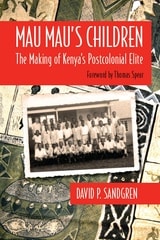
Mau Mau’s Children
The Making of Kenya’s Postcolonial EliteDavid P. Sandgren; Foreword by Thomas Spear
University of Wisconsin Press, 2012
In 1963 David P. Sandgren went to Kenya to teach in a small, rural school for boys, where he remained for the next four years. These were heady times for Kenyans, as the nation gained its independence, approved a new constitution, and held its first elections. In the school where Sandgren taught, the sons of Gikuyu farmers rose to the challenges of this post colonial era and, in time, entered Kenyan society as adults, joining Kenya’s first generation of post colonial elites.
In Mau Mau’s Children, Sandgren has reconnects with these former students. Drawing on more than one hundred interviews, he provides readers with a collective biography of the lives of Kenya’s first postcolonial elite, stretching from their 1940s childhood to the peak of their careers in the 1990s. Through these interviews, Mau Mau’s Children shows the trauma of growing up during the Mau Mau Rebellion, the nature of nationalism in Kenya, the new generational conflicts arising, and the significance of education and Gikuyu ethnicity on his students' path to success.
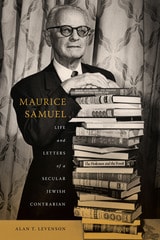
Maurice Samuel
Life and Letters of a Secular Jewish ContrarianAlan T. Levenson
University of Alabama Press, 2022
An intellectual biography that reassesses one of the premier Jewish humanists of the mid-twentieth century
In Maurice Samuel: Life and Letters of a Secular Jewish Contrarian, Alan T. Levenson captures the life, works, and milieu of the Romanian-born, English-educated, American belletrist Maurice Samuel. A diaspora intellectual—or a rooted cosmopolitan, as Levenson describes him—Samuel made an indelible mark on many features of contemporary Jewish thought and culture. A generalist in an age of experts, an independent scholar in an age of rabbis and professors, Samuel was one of the most productive and visible members of the group dubbed the “other” New York Jewish intellectuals.
His fame as a public intellectual and popular speaker were well warranted: no mere popularizer, Samuel contributed significantly to four seemingly unrelated but critical areas of modern Jewish thought. Samuel is characterized by some as principally a Zionist, by others as an accomplished translator and many Americans’ first entrée into the world of Yiddish literature, by still others as a polemicist and campaigner against anti-Semitism, and finally as a media-savvy Biblical critic, essayist, and radio personality. But he was all of these things, since Samuel succeeded in an era when it was possible to be a public intellectual without being an expert.
Drawing on Samuel’s vast literary opus, as well as previously unexplored archival material from three continents, this study writes Samuel back into the history of mid-twentieth-century American letters. Levenson argues that Samuel’s varied and substantive contributions demand reconsideration of our assumptions about the means and ends of cultural transmission, and merit him a place as one of twentieth-century American Jewry’s most significant cultural and intellectual voices.
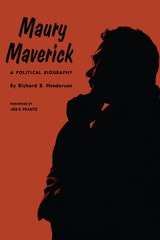
Maury Maverick
A Political BiographyBy Richard B. Henderson
University of Texas Press, 1970
Maury Maverick was possibly the first liberal United States Congressman from Texas to achieve national and even international stature. A dedicated Democrat, he was ready to attack Franklin D. Roosevelt whenever he felt that Roosevelt was flagging in his enthusiasm for reform. He was honest to the point of rudeness, and he belonged to the "damn the torpedoes" class that pulled ahead regardless of political consequences.
He was at home with the literate—he was a prodigious writer and speaker—but always ready to puncture their pretensions. And he could cuss with sailors, pecan shellers, and any breed of saloon keeper. Put all that together with a short, stocky, bulldog frame, a fierce face and a voice to match, and you have one of the nation's more colorful political figures.
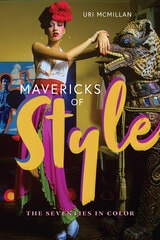
Mavericks of Style
The Seventies in ColorUri McMillan
Duke University Press, 2025
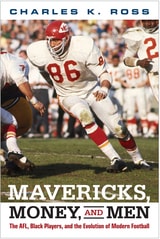
Mavericks, Money, and Men
The AFL, Black Players, and the Evolution of Modern FootballCharles Ross
Temple University Press, 2016
The American Football League, established in 1960, was innovative both in its commitment to finding talented, overlooked players—particularly those who played for historically black colleges and universities—and in the decision by team owners to share television revenues.
In Mavericks, Money and Men, football historian Charles Ross chronicles the AFL’s key events, including Buck Buchanan becoming the first overall draft pick in 1963, and the 1965 boycott led by black players who refused to play in the AFL-All Star game after experiencing blatant racism. He also recounts how the success of the AFL forced a merger with the NFL in 1969, which arguably facilitated the evolution of modern professional football.
Ross shows how the league, originally created as a challenge to the dominance of the NFL, pressured for and ultimately accelerated the racial integration of pro football and also allowed the sport to adapt to how African Americans were themselves changing the game.
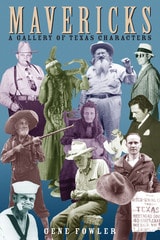
Mavericks
A Gallery of Texas CharactersBy Gene Fowler
University of Texas Press, 2008
Texas has been home to so many colorful characters, out-of-staters might wonder if any normal people live here. And it's true that the "Texian" desire to act out sometimes overcomes even the most sober citizens—which makes it a real challenge for the genuine eccentrics to distinguish themselves from the rest of us. Fortunately, though, many maverick Texans have risen to the test, and in this book, Gene Fowler introduces us to a gallery of Texas eccentrics from the worlds of oil, ranching, real estate, politics, rodeo, metaphysics, showbiz, art, and folklore.
Mavericks rounds up dozens of Fowler's favorite Texas characters, folks like the Trinity River prophet Commodore Basil Muse Hatfield; the colorful poet-politician Cyclone Davis Jr.; Big Bend tourist attraction Bobcat Carter; and the dynamic chief executive of the East Texas Oil Field Governor Willie. Fowler persuasively argues that many of these characters should be viewed as folk performance artists who created "happenings" long before the modern art world took up that practice in the 1960s. Other featured mavericks run the demographic gamut from inspirational connoisseurs of the region's native quirkiness to creative con artists and carnival oddities. But, artist or poser, all of the eccentrics in Mavericks completely embody the style and spirit that makes Texas so interesting, entertaining, and culturally unique.
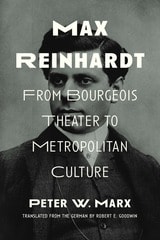
Max Reinhardt
From Bourgeois Theater to Metropolitan CulturePeter W. Marx, translated from the German by Robert E. Goodwin
Northwestern University Press, 2024
At the same time, Reinhardt soon longed for an international range: guest performances throughout Europe and to the US soon made him into a global star – and even a brand. He represents a metropolitan culture that roots in the late nineteenth century but comes to an end when Fasicsm in Europe ended any hopes for an international culture. As a Jew, Reinhardt himself had to flee the Nazis but when he eventually arrived in the US, he could not follow up with his earlier successes. Marx provides a broad panorama of Reinhardt's work, portraying not only his work method and some of his best known productions, but also the cultural conditions of his visionary enterprise.
Max Weber's Comparative-Historical Sociology
Stephen Kalberg
University of Chicago Press, 1994

Max Weber
A Critical IntroductionKieran Allen
Pluto Press, 2004
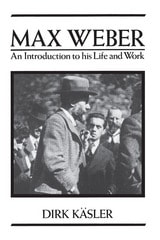
Max Weber
An Introduction to His Life and WorkDirk Käsler
University of Chicago Press, 1988
Käsler offers a comprehensive account of Weber's views, giving attention both to the context in which Weber produced his most significant contributions to social science, and to the changes involved in his work over the course of his career. This volume also serves as an introduction to the controversies that Weber's writings have stimulated, from the time of their first appearance to the present day.
This book will be of vital interest to anyone concerned with Max Weber and will undoubtedly become the leading student text on Weber in the English-speaking world.

Maximum Harm
The Tsarnaev Brothers, the FBI, and the Road to the Marathon BombingMichele R. McPhee
University Press of New England, 2017

Maximum Movies—Pulp Fictions
Film Culture and the Worlds of Samuel Fuller, Mickey Spillane, and Jim ThompsonStanfield, Peter
Rutgers University Press, 2011
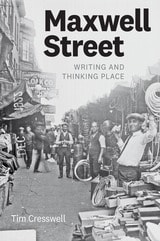
Maxwell Street
Writing and Thinking PlaceTim Cresswell
University of Chicago Press, 2019
In Maxwell Street, Cresswell advocates approaching the study of place as an “assemblage” of things, meanings, and practices. He models this innovative approach through a montage format that exposes the different types of texts—primary, secondary, and photographic sources—that have attempted to capture the essence of the area. Cresswell studies his historical sources just as he explores the different elements of Maxwell Street—exposing them layer by layer. Brilliantly interweaving words and images, Maxwell Street sheds light on a historic Chicago neighborhood and offers a new model for how to write about place that will interest anyone in the fields of geography, urban studies, or cultural history.

May '68
Donald M. Reid and Daniel J. Sherman, special issue editors
Duke University Press, 2018
Contributors: Ludivine Bantigny, Françoise Blum, Tony Côme, Boris Gobille, Bethany Keenan, Salar Mohandesi, Donald Reid, Sandrine Sanos, Daniel Sherman

May '68 and Its Afterlives
Kristin Ross
University of Chicago Press, 2002
Kristin Ross shows how the current official memory of May '68 came to serve a political agenda antithetical to the movement's aspirations. She examines the roles played by sociologists, repentant ex-student leaders, and the mainstream media in giving what was a political event a predominantly cultural and ethical meaning. Recovering the political language of May '68 through the tracts, pamphlets, and documentary film footage of the era, Ross reveals how the original movement, concerned above all with the question of equality, gained a new and counterfeit history, one that erased police violence and the deaths of participants, removed workers from the picture, and eliminated all traces of anti-Americanism, anti-imperialism, and the influences of Algeria and Vietnam. May '68 and Its Afterlives is especially timely given the rise of a new mass political movement opposing global capitalism, from labor strikes and anti-McDonald's protests in France to the demonstrations against the World Trade Organization in Seattle.

May Irwin
Singing, Shouting, and the Shadow of MinstrelsySharon Ammen
University of Illinois Press, 2017
Sharon Ammen's in-depth study traces Irwin's hurly-burly life. Irwin gained fame when, layering aspects of minstrelsy over ragtime, she popularized a racist "Negro song" genre. Ammen examines this forgotten music, the society it both reflected and entertained, and the ways white and black audiences received Irwin's performances. She also delves into Irwin's hands-on management of her image and career, revealing how Irwin carefully built a public persona as a nurturing housewife whose maternal skills and performing acumen reinforced one another. Irwin's act, soaked in racist song and humor, built a fortune she never relinquished. Yet her career's legacy led to a posthumous obscurity as the nation that once adored her evolved and changed.
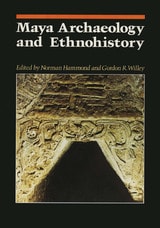
Maya Archaeology and Ethnohistory
Edited by Norman Hammond and Gordon R. Willey
University of Texas Press, 1979
Embracing a wide range of research, this book offers various views on the intellectual history of Maya archaeology and ethnohistory and the processes operating in the rise and fall of Maya civilization.
The fourteen studies were selected from those presented at the Second Cambridge Symposium on Recent Research in Mesoamerican Archaeology and are presented in three major sections.
The first of these deals with the application of theory, both anthropological and historical, to the great civilization of the Classic Maya, which flourished in the Yucatan, Guatemala, and Belize during the first millennium A.D. The structural remains of the Classic Period have impressed travelers and archaeologists for over a century, and aspects of the development and decline of this strange and brilliant tropical forest culture are examined here in the light of archaeological research.
The second section presents the results of field research ranging from the Highlands of Mexico east to Honduras and north into the Lowland heart of Maya civilization, and iconographic study of excavated material.
The third section covers the ethnohistoric approach to archaeology, the conjunction of material and documentary evidence. Early European documents are used to illuminate historic Maya culture. This section includes transcriptions of previously unpublished archival material.
Although not formally linked beyond their common field of inquiry, the essays here offer a conspectus of late-twentieth century Maya research and a series of case histories of the work of some of the leading scholars in the field.
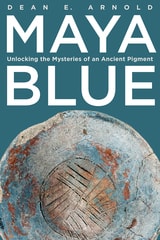
Maya Blue
Unlocking the Mysteries of an Ancient PigmentDean E. Arnold
University Press of Colorado, 2025
Combining the organic dye indigo and the inorganic clay mineral palygorskite in a highly stable chemical hybrid that, unlike indigo, resists attacks by acids, alkalines, and organic solvents and endures without fading, Maya Blue has a rich blue color that has survived for centuries in one of the world’s harshest climates. First used at the site of Calakmul in the tropical forest of southern Mexico during the Late Preclassic period, the Maya’s abiding hue diffused across Mesoamerica over a period of 1,700 years. It appears on Maya pottery, sculpture, murals, and codices and carries multiple meanings, standing as a symbol for cultural cornerstones such as sacrifice and the rain god Chaak. It was discovered in 1931 at Chichén Itzá, and its composition was a mystery for more than three decades, then questions about its source, how and why it achieved such stability, and how and why the Maya made the pigment persisted even longer.
In Maya Blue, Arnold summarizes ethnographic, archaeological, chemical, and material science research over the last century from an anthropological perspective. This thorough, engaging, and accessible book chronicles the history of this pigment as no work has done before.
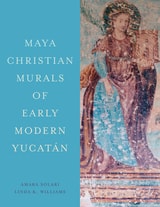
Maya Christian Murals of Early Modern Yucatán
Amara SolariLinda K. Williams
University of Texas Press, 2024
The first study of Christian murals created by indigenous artists in sixteenth and seventeenth century Yucatán.
In the sixteenth and seventeenth centuries, Maya artists painted murals in churches and conventos of Yucatán using traditional techniques to depict iconography brought from Europe by Franciscan friars. The fragmentary visual remains and their placement within religious structures embed Maya conceptions of sacredness beyond the didactic imagery. Mobilizing both cutting-edge technology and tried-and-true analytical methods, art historians Amara Solari and Linda K. Williams reexamine the Maya Christian murals, centering the agency of the people who created them.
The first volume to comprehensively document the paintings, Maya Christian Murals of Early Modern Yucatán collects new research on the material composition of the works, made possible by cutting-edge imaging methods. Solari and Williams investigate pigments and other material resources, as well as the artists and historical contexts of the murals. The authors uncover numerous local innovations in form and content, including images celebrating New World saints, celestial timekeeping, and ritual processions. Solari and Williams argue that these murals were not simply vehicles of coercion, but of cultural “grafting,” that allowed Maya artists to shape a distinctive and polyvocal legacy in their communities.

Maya Daykeeping
Three Calendars from Highland GuatemalaJohn M. Weeks
University Press of Colorado, 2009
The use of such calendars is mentioned in historical and ethnographic works, but very few examples are known to exist. Each of the three calendars transcribed and translated by John M. Weeks, Frauke Sachse, and Christian M. Prager - and housed at the University of Pennsylvania Museum of Archaeology and Anthropology - is unique in structure and content. Moreover, except for an unpublished study of the 1722 calendar by Rudolf Schuller and Oliver La Farge (1934), these little-known works appear to have escaped the attention of most scholars. Introductory essays contextualize each document in time and space, and a series of appendixes present previously unpublished calendrical notes assembled in the early twentieth century.
Providing considerable information on the divinatory use of calendars in colonial highland Maya society previously unavailable without a visit to the University of Pennsylvania's archives, Maya Daykeeping is an invaluable primary resource for Maya scholars. Mesoamerican Worlds Series
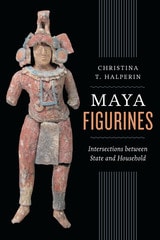
Maya Figurines
Intersections between State and HouseholdBy Christina T. Halperin
University of Texas Press, 2014
Rather than view the contours of Late Classic Maya social life solely from towering temple pyramids or elite sculptural forms, this book considers a suite of small anthropomorphic, zoomorphic, and supernatural figurative remains excavated from household refuse deposits. Maya Figurines examines these often neglected objects and uses them to draw out relationships between the Maya state and its subjects.
These figurines provide a unique perspective for understanding Maya social and political relations; Christina T. Halperin argues that state politics work on the microscale of everyday routines, localized rituals, and small-scale representations. Her comprehensive study brings together archeology, anthropology, and art history with theories of material culture, performance, political economy, ritual humor, and mimesis to make a fascinating case for the role politics plays in daily life. What she finds is that, by comparing small-scale figurines with state-sponsored, often large-scale iconography and elite material culture, one can understand how different social realms relate to and represent one another. In Maya Figurines, Halperin compares objects from diverse households, archeological sites, and regions, focusing especially on figurines from Petén, Guatemala, and comparing them to material culture from Belize, the northern highlands of Guatemala, the Usumacinta River, the Campeche coastal area, and Mesoamerican sites outside the Maya zone. Ultimately, she argues, ordinary objects are not simply passive backdrops for important social and political phenomena. Instead, they function as significant mechanisms through which power and social life are intertwined.
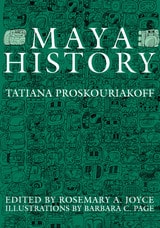
Maya History
By Tatiana Proskouriakoff
University of Texas Press, 1993
Tatiana Proskouriakoff, a preeminent student of the Maya, made many breakthroughs in deciphering Maya writing, particularly in demonstrating that the glyphs record the deeds of actual human beings, not gods or priests. This discovery opened the way for a history of the Maya, a monumental task that Proskouriakoff was engaged in before her death in 1985. Her work, Maya History, has been made ready for press by the able editorship of Rosemary Joyce.
Maya History reconstructs the Classic Maya period (roughly A.D. 250-900) from the glyphic record on stelae at numerous sites, including Altar de Sacrificios, Copan, Dos Pilas, Naranjo, Piedras Negras, Quirigua, Tikal, and Yaxchilan. Proskouriakoff traces the spread of governmental institutions from the central Peten, especially from Tikal, to other city-states by conquest and intermarriage. Thirteen line drawings of monuments and over three hundred original drawings of glyphs amplify the text.
Maya Intellectual Renaissance
Identity, Representation, and LeadershipBy Victor D. Montejo
University of Texas Press, 2005
When Mayan leaders protested the celebration of the Quincentenary of the "discovery" of America and joined with other indigenous groups in the Americas to proclaim an alternate celebration of 500 years of resistance, they rose to national prominence in Guatemala. This was possible in part because of the cultural, political, economic, and religious revitalization that occurred in Mayan communities in the later half of the twentieth century. Another result of the revitalization was Mayan students' enrollment in graduate programs in order to reclaim the intellectual history of the brilliant Mayan past. Victor Montejo was one of those students.
This is the first book to be published outside of Guatemala where a Mayan writer other than Rigoberta Menchu discusses the history and problems of the country. It collects essays Montejo has written over the past ten years that address three critical issues facing Mayan peoples today: identity, representation, and Mayan leadership. Montejo is deeply invested in furthering the discussion of the effectiveness of Mayan leadership because he believes that self-evaluation is necessary for the movement to advance. He also criticizes the racist treatment that Mayans experience, and advocates for the construction of a more pluralistic Guatemala that recognizes cultural diversity and abandons assimilation. This volume maps a new political alternative for the future of the movement that promotes inter-ethnic collaboration alongside a reverence for Mayan culture.
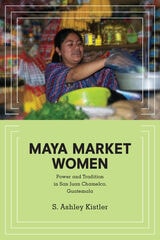
Maya Market Women
Power and Tradition in San Juan Chamelco, GuatemalaS. Ashley Kistler
University of Illinois Press, 2014
As cultural mediators, Chamelco's market women offer a model of contemporary Q'eqchi' identity grounded in the strength of the Maya historical legacy. Guatemala's Maya communities have faced nearly five hundred years of constant challenges to their culture, from colonial oppression to the instability of violent military dictatorships and the advent of new global technologies. In spite of this history, the people of San Juan Chamelco, Guatemala, have effectively resisted significant changes to their cultural identities. Chamelco residents embrace new technologies, ideas, and resources to strengthen their indigenous identities and maintain Maya practice in the 21st century, a resilience that sets Chamelco apart from other Maya towns.
Unlike the region's other indigenous women, Chamelco's Q'eqchi' market women achieve both prominence and visibility as vendors, dominating social domains from religion to local politics. These women honor their families' legacies through continuation of the inherited, high-status marketing trade. In Maya Market Women, S. Ashley Kistler describes how market women gain social standing as mediators of sometimes conflicting realities, harnessing the forces of global capitalism to revitalize Chamelco's indigenous identity. Working at the intersections of globalization, kinship, gender, and memory, Kistler presents a firsthand look at Maya markets as a domain in which the values of capitalism and indigenous communities meet.
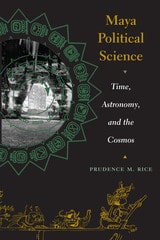
Maya Political Science
Time, Astronomy, and the CosmosBy Prudence M. Rice
University of Texas Press, 2004
How did the ancient Maya rule their world? Despite more than a century of archaeological investigation and glyphic decipherment, the nature of Maya political organization and political geography has remained an open question. Many debates have raged over models of centralization versus decentralization, superordinate and subordinate status—with far-flung analogies to emerging states in Europe, Asia, and Africa. But Prudence Rice asserts that neither the model of two giant "superpowers" nor that which postulates scores of small, weakly independent polities fits the accumulating body of material and cultural evidence.
In this groundbreaking book, Rice builds a new model of Classic lowland Maya (AD 179-948) political organization and political geography. Using the method of direct historical analogy, she integrates ethnohistoric and ethnographic knowledge of the Colonial-period and modern Maya with archaeological, epigraphic, and iconographic data from the ancient Maya. On this basis of cultural continuity, she constructs a convincing case that the fundamental ordering principles of Classic Maya geopolitical organization were the calendar (specifically a 256-year cycle of time known as the may) and the concept of quadripartition, or the division of the cosmos into four cardinal directions. Rice also examines this new model of geopolitical organization in the Preclassic and Postclassic periods and demonstrates that it offers fresh insights into the nature of rulership, ballgame ritual, and warfare among the Classic lowland Maya.
Maya Worldviews at Conquest
Leslie G. Cecil
University Press of Colorado, 2009
Focusing on the Postclassic and Colonial periods, Maya Worldviews at Conquest provides a regional investigation of archaeological and epigraphic evidence of Maya ideology, landscape, historical consciousness, ritual practices, and religious symbolism before and during the Spanish conquest. Through careful investigation, the volume focuses on the impact of conversion, hybridization, resistance, and revitalization on the Mayans’ understanding of their world and their place in it.
The volume also addresses the issue of anthropologists unconsciously projecting their modern worldviews on the culture under investigation. Thus, the book critically defines and strengthens the use of worldviews in the scholarly literature regardless of the culture studied, making it of value not only to Maya scholars but also to those interested in the anthropologist’s projection of worldview on other cultures in general.
Maya after War
Conflict, Power, and Politics in GuatemalaBy Jennifer L. Burrell
University of Texas Press, 2013
Guatemala’s thirty-six-year civil war culminated in peace accords in 1996, but the postwar transition has been marked by continued violence, including lynchings and the rise of gangs, as well as massive wage-labor exodus to the United States. For the Mam Maya municipality of Todos Santos Cuchumatán, inhabited by a predominantly indigenous peasant population, the aftermath of war and genocide resonates with a long-standing tension between state techniques of governance and ancient community-level power structures that incorporated concepts of kinship, gender, and generation. Showing the ways in which these complex histories are interlinked with wartime and enduring family/class conflicts, Maya after War provides a nuanced account of a unique transitional postwar situation, including the complex influence of neoliberal intervention.
Drawing on ethnographic field research over a twenty-year period, Jennifer L. Burrell explores the after-war period in a locale where community struggles span culture, identity, and history. Investigating a range of tensions from the local to the international, Burrell employs unique methodologies, including mapmaking, history workshops, and an informal translation of a historic ethnography, to analyze the role of conflict in animating what matters to Todosanteros in their everyday lives and how the residents negotiate power. Examining the community-based divisions alongside national postwar contexts, Maya after War considers the aura of hope that surrounded the signing of the peace accords, and the subsequent doubt and waiting that have fueled unrest, encompassing generational conflicts. This study is a rich analysis of the multifaceted forces at work in the quest for peace, in Guatemala and beyond.
Maya-British Conflict at the Edge of the Yucatecan Caste War
Christine A. Kray
University Press of Colorado, 2023
Official British declarations of neutrality in the Caste War were confounded by a variety of political and economic factors, including competing land claims befuddled by a tangled set of treaties, mahogany extraction by British companies in contested territories, Maya rent demands, British trade in munitions to different groups of Maya combatants, and a labor system reliant on debt servitude. All these factors contributed to uneasy alliances and opportunistic crossings of imagined geopolitical borders in both directions, ultimately leading to a new military conflict in the western and northern regions of the territory claimed by Britain. What frequently began as hyper-local disputes spun out into international affairs as actors called upon more powerful groups for assistance. Evading reductionism, this work traces the decisions and actions of key figures as they maneuvered through the miasma of violence, abuse, deception, fear, flight, and glimpses of freedom.
Positioning the historiographic and ethnographic gaze on the English side without adopting the colonialist narratives and objectives found in English repositories, Maya-British Conflict at the Edge of the Yucatecan Caste War is an important and original contribution to a neglected area of study. It will appeal to students, scholars, and general readers interested in anthropology, Latin American cultures and history, Central American history, British imperialism, Indigenous rights, political anthropology, and colonialism and culture.
Mayakovsky
A BiographyBengt Jangfeldt
University of Chicago Press, 2014
With Mayakovsky, Bengt Jangfeldt offers the first comprehensive biography of Mayakovsky, revealing a troubled man who was more dreamer than revolutionary, more political romantic than hardened Communist. Jangfeldt sets Mayakovsky’s life and works against the dramatic turbulence of his times, from the aesthetic innovations of the pre-revolutionary avant-garde to the rigidity of Socialist Realism and the destruction of World War I to the violence—and hope—of the Russian Revolution, through the tightening grip of Stalinist terror and the growing disillusion with Russian communism that eventually led the poet to take his life.
Through it all is threaded Mayakovsky’s celebrated love affair with Lili Brik and the moving relationship with Lili’s husband, Osip, along with a brilliant depiction of the larger circle of writers and artists around Mayakovsky, including Maxim Gorky, Viktor Shklovsky, Alexander Rodchenko, and Roman Jakobson. The result is a literary life viewed in the round, enabling us to understand the personal and historical furies that drove Mayakovsky and generated his still-startling poetry.
Illustrated throughout with rare images of key characters and locations, Mayakovsky is a major step in the revitalization of a crucial figure of the twentieth-century avant-garde.

Mayan Drifter
Chicano Poet in the Lowlands of AmericaJuan Herrera
Temple University Press, 1997
Mayan Voices for Human Rights
Displaced Catholics in Highland ChiapasBy Christine Kovic
University of Texas Press, 2005
In the last decades of the twentieth century, thousands of Mayas were expelled, often violently, from their homes in San Juan Chamula and other highland communities in Chiapas, Mexico, by fellow Mayas allied with the ruling Institutional Revolutionary Party (PRI). State and federal authorities generally turned a blind eye to these human rights abuses, downplaying them as local conflicts over religious conversion and defense of cultural traditions. The expelled have organized themselves to fight not only for religious rights, but also for political and economic justice based on a broad understanding of human rights.
This pioneering ethnography tells the intertwined stories of the new communities formed by the Mayan exiles and their ongoing efforts to define and defend their human rights. Focusing on a community of Mayan Catholics, the book describes the process by which the progressive Diocese of San Cristóbal and Bishop Samuel Ruiz García became powerful allies for indigenous people in the promotion and defense of human rights. Drawing on the words and insights of displaced Mayas she interviewed throughout the 1990s, Christine Kovic reveals how the exiles have created new communities and lifeways based on a shared sense of faith (even between Catholics and Protestants) and their own concept of human rights and dignity. She also uncovers the underlying political and economic factors that drove the expulsions and shows how the Mayas who were expelled for not being "traditional" enough are in fact basing their new communities on traditional values of duty and reciprocity.
Mayas in Postwar Guatemala
Harvest of Violence RevisitedEdited by Walter E. Little and Timothy J. Smith
University of Alabama Press, 2009
Mayor Harold Washington
Champion of Race and Reform in ChicagoRoger Biles
University of Illinois Press, 2020
McIntosh and Weatherford
Creek Indian LeadersBenjamin W. Griffith
University of Alabama Press, 1998
The human story behind the Creek War and the coming of Indian Removal.
About the time of the American Revolutionary war, when the Creek Indians owned land that is today approximately the lower two-thirds of Alabama and of Georgia west of the Oconee River, two sons were born to Indian mothers and Scots fathers in obscure towns in the territory of the Creek Nation. Both sons were named William, and both were to become leaders of their mothers’ people.
The two remarkable men lived during a period of war and turbulence along the frontier in Alabama and Georgia. More often the subjects of folk tale and legend than serious historical inquiry, McIntosh and Weatherford fought on opposing sides in the Creek War of 1813-1814. McIntosh allied himself with Andrew Jackson and the friendly Lower Creeks, while Weatherford joined with the hostile Red Stick and was the leader of a band of Upper Creeks in the massacre at Fort Mims. McIntosh, who was given the rank of brigadier general for his military feats, was involved in the machinations that led to the ceding of Creek lands to Georgia. As a result, he died in disgrace at the hands of his fellow Creeks. Weatherford, once hated and feared, died a planter and local hero in Alabama near the site of Fort Mims.
Meadowood Phase Settlement Pattern in the Niagara Frontier Region of Western New York State
Joseph E. Granger, Jr.
University of Michigan Press, 1978

Meander Scars
Reflections on Healing the Willamette RiverAbby Phillips Metzger
Oregon State University Press, 2013
Yet, through canoe trips and intimate explorations of the river, Metzger discovers glints of resiliency: a beaver trolling through a slough, native fish in quiet backwaters, and strong currents that carry undertones of the wild Willamette. Together with tales from farmers and scientists alike, these experiences lead Metzger to ask whether something scarred can fully heal, and whether a disjointed river can be whole again.
A story of re-discovery as told by a learner, Meander Scars will appeal to readers of literary nonfiction, river advocates, naturalists, and outdoor enthusiasts interested in sustaining healthy river systems for themselves, their children, and beyond.
Meaning in History
The Theological Implications of the Philosophy of HistoryKarl Löwith
University of Chicago Press, 1957
Meaning of Modern Art
Karsten Harries
Northwestern University Press, 1979
Art expresses an ideal image of man, and an essential part of understanding the meaning of a work of art is understanding this image. When the ideal image changes, art, too, must change. It is thus possible to look at the emergence of modern art as a function of the disintegration of the Platonic-Christian conception of man. The artist no longer has an obvious, generally accepted route to follow. One sign of this is that there is no one style today comparable to Romanesque, Gothic, Renaissance, or Baroque. This lack of direction has given the artist a new freedom. Today there is a great variety of answers to the question, "What is art?" Such variety, however, betrays an uncertainty about the meaning of art. An uneasiness about the meaning of art has led modern artists to enter into dialogue with art historians, psychologists and philosophers. Perhaps this interpretation can contribute to that dialogue.
Meaninglessness
Time, Rhythm, and the Undead in Postcolonial CinemaVlad Dima
Michigan State University Press, 2023
Meanings for Manhood
Edited by Mark C. Carnes and Clyde Griffen
University of Chicago Press, 1990
Meanings of Maple
An Ethnography of SugaringMichael Lange
University of Arkansas Press, 2017
Readers will go deep into a Vermont sugar bush and its web of plastic tubes, mainline valves, and collection tanks. They will visit sugarhouses crammed with gas evaporators and reverse-osmosis machines. And they will witness encounters between sugar makers and the tourists eager to invest Vermont with mythological fantasies of rural simplicity.
So much more than a commodity study, Meanings of Maple frames a new approach for evaluating the broader implications of iconic foodways, and it will animate conversations in food studies for years to come.
Measuring America
How Economic Growth Came to Define American Greatness in the Late Twentieth CenturyAndrew L. Yarrow
University of Massachusetts Press, 2010
The United States has always fancied itself a nation apart—"exceptional" in its values, traditions, and way of life. For most of the country's history, ideas about what made America distinctive generally were framed in terms of a liberal idealism rooted in the thought of John Locke and articulated by Jefferson, Madison, and other Founders. While some commentators also observed that the United States was a land of plenty, it wasn't until the mid-twentieth century that material abundance emerged as the principal standard of American “greatness,” as measured by a host of new economic indicators.
Beginning in earnest in the wake of World War II, opinion-shapers in politics, business, academia, the media, the schools, and public diplomacy gloried in the nation's booming economy. Where “plenty” had once been a largely abstract concept, it was now quantifiable, thanks to new national income accounting and other economic data collection and analysis techniques. One could tally up production and consumption of an ever-expanding cornucopia of goods and services that made up the gross national product (GNP), the king of postwar statistics. American preeminence and American identity were increasingly linked with this measurable prosperity, presented in the language of a newly influential economics profession.
In Measuring America, Andrew L. Yarrow explores this history, telling two parallel, interlocking stories—of how economic ideas came to have vastly greater influence on American culture after World War II, and how those ideas dovetailed with a growing belief that the meaning and value of the United States resided in its material output. How and why this new way of “measuring America” developed, how it was expressed, and what it has meant and means for Americans today are the subject of this well-researched and insightful book.

Measuring Mamma's Milk
Fascism and the Medicalization of Maternity in ItalyElizabeth Dixon Whitaker
University of Michigan Press, 2000