Results by title
28167 books match the query 'History' and 1583 start with m
Measuring Time, Making History
Lynn Hunt
Central European University Press, 2008

Measuring the Cosmos
How Scientists Discovered the Dimensions of the UniverseDavid H. Clark and Matthew D.H. Clark
Rutgers University Press, 2004
Humans have always viewed the heavens with wonder and awe. The skies have inspired reflection on the vastness of space, the wonder of creation, and humankind’s role in the universe. In just over one hundred years, science has moved from almost total ignorance about the actual distances to the stars and earth’s place in the galaxy to our present knowledge about the enormous size, mass, and age of the universe. We are reaching the limits of observation, and therefore the limits of human understanding. Beyond lies only our imagination, seeded by the theories of physics. In Measuring the Cosmos, science writers David and Matthew Clark tell the stories of both the well-known and the unsung heroes who played key roles in these discoveries. These true accounts reveal ambitions, conflicts, failures, as well as successes, as the astonishing scale and age of the universe were finally established. Few areas of scientific research have witnessed such drama in the form of ego clashes, priority claims, or failed (or even falsified) theories as that resulting from attempts to measure the universe. Besides giving credit where long overdue, Measuring the Cosmos explains the science behind these achievements in accessible language sure to appeal to astronomers, science buffs, and historians.
Measuring the Flow of Time
The Works of James A. Ford, 1935-1941James A. Ford, edited by R. Lee Lyman and Michael J. O'Brien
University of Alabama Press, 1999
This collection of Ford's works focuses on the development of ceramic chronology—a key tool in Americanist archaeology.
Measuring the Harlem Renaissance
The U.S. Census, African American Identity, and Literary FormMichael Soto
University of Massachusetts Press, 2016
In this provocative study, Michael Soto examines African American cultural forms through the lens of census history to tell the story of how U.S. officialdom—in particular the Census Bureau—placed persons of African descent within a shifting taxonomy of racial difference, and how African American writers and intellectuals described a far more complex situation of interracial social contact and intra-racial diversity. What we now call African American identity and the literature that gives it voice emerged out of social, cultural, and intellectual forces that fused in Harlem roughly one century ago.
Measuring the Harlem Renaissance sifts through a wide range of authors and ideas—from W. E. B. Du Bois, Rudolph Fisher, and Nella Larsen to Zora Neale Hurston, Langston Hughes, and Wallace Thurman, and from census history to the Great Migration—to provide a fresh take on late nineteenth—and twentieth—century literature and social thought. Soto reveals how Harlem came to be known as the “cultural capital of black America,” and how these ideas left us with unforgettable fiction and poetry.
Measuring the New World
Enlightenment Science and South AmericaNeil Safier
University of Chicago Press, 2008
Measuring the Universe
Cosmic Dimensions from Aristarchus to HalleyAlbert Van Helden
University of Chicago Press, 1986
"Van Helden's authoritative treatment is concise and informative; he refers to numerous sources of information, draws on the discoveries of modern scholarship, and presents the first book-length treatment of this exceedingly important branch of science."—Edward Harrison, American Journal of Physics
"Van Helden writes well, with a flair for clear explanation. I warmly recommend this book."—Colin A. Ronan, Journal of the British Astronomical Association
Meat Makes People Powerful
A Global History of the Modern EraWilson J. Warren
University of Iowa Press, 2018
From large-scale cattle farming to water pollution, meat— more than any other food—has had an enormous impact on our environment. Historically, Americans have been among the most avid meat-eaters in the world, but long before that meat was not even considered a key ingredient in most civilizations’ diets. Labor historian Wilson Warren, who has studied the meat industry for more than a decade, provides this global history of meat to help us understand how it entered the daily diet, and at what costs and benefits to society.
Spanning from the nineteenth century to current and future trends, Warren walks us through the economic theory of food, the discovery of protein, the Japanese eugenics debate around meat, and the environmental impact of livestock, among other topics. Through his comprehensive, multifaceted research, he provides readers with the political, economic, social, and cultural factors behind meat consumption over the last two centuries. With a special focus on East Asia, Meat Makes People Powerful reveals how national governments regulated and oversaw meat production, helping transform virtually vegetarian cultures into major meat consumers at record speed.
As more and more Americans pay attention to the sources of the meat they consume, Warren’s compelling study will help them not only better understand the industry, but also make more informed personal choices. Providing an international perspective that will appeal to scholars and nutritionists alike, this timely examination will forever change the way you see the food on your plate.

Meat and the Birth of Rome
Zooarchaeology, Foodways, and Religious RitualsVictoria C. Moses
University of Alabama Press, 2026
Meat and the Birth of Rome explores faunal remains from archaeological sites dating to the early Iron Age through early Republican period in Rome and its environs and challenges a prevailing view of Rome’s exceptionalism. Victoria C. Moses tempers the myth by illuminating the roles of meat production, distribution, and consumption and ritual sacrifice in the social hierarchy, economy, and religious practices as Rome grew. During the transformative period around the eighth century BCE, Romans conserved older foodways and their diverse ritual practices. These findings within the broader zooarchaeological data from peninsular Italy show that, despite Rome’s later success, it shared many early characteristics with its neighbors.
This compelling narrative adds to the current archaeological conversations and research on the history of the eternal city.
Meat, Modernity, and the Rise of the Slaughterhouse
Paula Young Lee
University of New Hampshire Press, 2008
Contributors include: Dorothee Brantz, Kyri Claflin, Jared Day, Roger Horowitz, Lindgren Johnson, Ian MacLachlan, Christopher Otter, Dominic Pacyga, Richard Perren, Jeffrey Pilcher, and Sydney Watts.
Meatless Days
Sara Suleri Goodyear
University of Chicago Press, 1989
"Nine autobiographical tales that move easily back and forth among Pakistan, Britain, and the United States. . . . She forays lightly into Pakistani history, and deeply
into the history of her family and friends. . . . The Suleri women at home in Pakistan make this book sing."—Daniel Wolfe, New York Times Book Review
"A jewel of insight and beauty. . . . Suleri's voice has the same authority when she speaks about Pakistani politics as it does in her literary interludes."—Rone Tempest, Los Angeles Times Book Review
"The author has a gift for rendering her family with a few, deft strokes, turning them out as whole and complete as eggs."—Anita Desai, Washington Post Book World
"Meatless Days takes the reader through a Third World that will surprise and confound him even as it records the author's similar perplexities while coming to terms with the West. Those voyages Suleri narrates in great strings of words and images so rich that they left this reader . . . hungering for more."—Ron Grossman, Chicago Tribune
"Dazzling. . . . Suleri is a postcolonial Proust to Rushdie's phantasmagorical Pynchon."—Henry Louise Gates, Jr., Voice Literary Supplement
Mecca and Eden
Ritual, Relics, and Territory in IslamBrannon Wheeler
University of Chicago Press, 2006
Integrating Islamic examples into the comparative study of religion, Brannon Wheeler shows how the treatment of rituals, relics, and territory is related to the more general mythological depiction of the origins of Islamic civilization. Along the way, Wheeler considers the contrast between Mecca and Eden in Muslim rituals, the dispersal and collection of relics of the prophet Muhammad, their relationship to the sanctuary at Mecca, and long tombs associated with the gigantic size of certain prophets mentioned in the Quran.
Mecca and Eden succeeds, as few books have done, in making Islamic sources available to the broader study of religion.

Mechademia 8
Tezuka’s Manga LifeFrenchy Lunning
University of Minnesota Press, 2013
Known as the “Walt Disney of Japan” it is no surprise that Tezuka Osamu is still the best-known manga creator to Western fans. Current scholarship has uncovered the profound complexity and ambiguity not only of his work but of the man, the artist, and his life—dismantling his position as the god of manga.
Contributors to this volume of Mechademia—a series devoted to creative and critical work on anime, manga, and the fan arts—analyze Tezuka and his complicated approaches toward life and nonlife on earth, as well as his effect on the lives of other manga artists. Using essays and reprints of Japanese manga on Tezuka, this book questions his influence and attitudes toward the nonhuman, evolutionary theory, the aesthetic lineage of contemporary manga, incipient feminism in the reinscription of the nonhuman feminine, the sexual politics of manga bodies, the origins of the moe culture, and the styles of didacticism revealing the digressions of insects and classical modes, among others.
The authors offer varying perspectives on the historical transformations in production, distribution, and reception that gradually integrated and differentiated an overlapping series of markets and readerships in the postwar era. Divided into four sections that explore different “lives”—“Nonhuman Life,” “Media Life,” “A Life in Manga,” and “Everyday Life”—Mechademia 8 serves as a prehistory of the impersonal politics of the present while tracing Tezuka’s legacy.
Contributors: Akatsuka Fujio; Anno Moyoko; Linda H. Chance, U of Pennsylvania; Jonathan Clements; Hideaki Fujiki, Nagoya U; Patrick W. Galbraith; Verina Gfader, U of Huddersfield; Alicia Gibson; G. Clinton Godart, USC; Yorimitsu Hashimoto, Osaka U; Ryan Holmberg; Hikari Hori, Columbia U; Mary A. Knighton, College of William and Mary; Thomas Lamarre, McGill U; Christine L. Marran, U of Minnesota; Natsume Fusanosuke, Gakushuin U, Tokyo; Ōtsuka Eiji, Kobe Design U; Baryon Tensor Posadas; Renato Rivera Rusca, Meiji U; Frederik L. Schodt; Marc Steinberg, Concordia U; Tezuka Osamu; Toshiya Ueno, Wako U, Tokyo; Matthew Young.
Medal Winners
How the Vietnam War Launched Nobel CareersBy Raymond S. Greenberg
University of Texas Press, 2020
As the ground war in Vietnam escalated in the late 1960s, the US government leveraged the so-called doctor draft to secure adequate numbers of medical personnel in the armed forces. Among newly minted physicians’ few alternatives to military service was the Clinical Associate Training Program at the National Institutes of Health. Though only a small percentage of applicants were accepted, the elite program launched an unprecedented number of remarkable scientific careers that would revolutionize medicine at the end of the twentieth century.
Medal Winners recounts this overlooked chapter and unforeseen byproduct of the Vietnam War through the lives of four former NIH clinical associates who would go on to become Nobel laureates. Raymond S. Greenberg traces their stories from their pre-NIH years and apprenticeships through their subsequent Nobel Prize–winning work, which transformed treatment of heart disease, cancer, and other diseases. Greenberg shows how the Vietnam draft unintentionally ushered in a golden era of research by bringing talented young physicians under the tutelage of leading scientists and offers a lesson in what it may take to replicate such a towering center of scientific innovation as the NIH in the 1960s and 1970s.
Meddling in Middle Europe
Britain and the 'Lands Between' 1919-1925Miklos Lojkó
Central European University Press, 2006

Medgar Evers
Mississippi MartyrMichael Vinson Williams
University of Arkansas Press, 2011
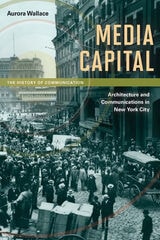
Media Capital
Architecture and Communications in New York CityAurora Wallace
University of Illinois Press, 2012
Media Constrained by Context
International Assistance and Democratic Media Transition in the Western BalkansKristina Irion
Central European University Press, 2018
Media Culture in Transnational Asia
Convergences and DivergencesHyesu Park
Rutgers University Press, 2020
Media Cultures of the Russian 1990s
Inventing the Post-Soviet Public SphereEdited by Maya Vinokour
Amherst College Press, 2025
Written by an interdisciplinary group of experts, this edited collection addresses the mutual influence among disparate spheres of public life that enabled the media “Wild West” of the first post-Soviet decade. As a joint platform, the volume and the associated Multimedia Sourcebook of the Russian 1990s present the decade’s media cultures in a manner that reflects their historical interconnectedness and relationship to the global present.
Edited by Maya Vinokour with contributions from Bradley Gorski, Courtney Doucette, Fabrizio Fenghi, Rita Safariants, Daniil Leiderman, Thomas Keenan, and Pavel Khazanov.
Media Freedom and Pluralism
Media Policy Challenges in the Enlarged EuropeBeata Klimkiewicz
Central European University Press, 2010
Media Primitivism
Technological Art in AfricaDelinda Collier
Duke University Press, 2020
Media Theory in Japan
Marc Steinberg and Alexander Zahlten, editors
Duke University Press, 2017
Media and the Affective Life of Slavery
Allison Page
University of Minnesota Press, 2022
How media shapes our actions and feelings about race
Amid fervent conversations about antiracism and police violence, Media and the Affective Life of Slavery delivers vital new ideas about how our feelings about race are governed and normalized by our media landscape. Allison Page examines U.S. media from the 1960s to today, analyzing how media culture instructs viewers to act and feel in accordance with new racial norms created for an era supposedly defined by an end to legal racism.
From the classic television miniseries Roots to the edutainment video game Mission 2: Flight to Freedom and the popular website slaveryfootprint.org, Media and the Affective Life of Slavery provides an in-depth look at the capitalist and cultural artifacts that teach the U.S. public about slavery. Page theorizes media not only as a system of representation but also as a technology of citizenship and subjectivity, wherein race is seen as a problem to be solved. Ultimately, she argues that visual culture works through emotion, a powerful lever for shaping and managing racialized subjectivity.
Media and the Affective Life of Slavery delivers compelling, provocative material and includes a wealth of archival research into such realms as news, entertainment, television, curricula, video games, and digital apps, providing new and innovative scholarship where none currently exists.
Media and the Global Cold War
Edited by Rossen Djagalov and Arvind Rajagopal
University of Illinois Press, 2027
Arvind Rajagopal and Rossen Djagalov present essays on the uses of Cold War media. Focusing on the Global South, the contributors illuminate how postcolonial nations and others defied superpower pressure to use media for nation-building and international cooperation. At the same time, communication infrastructures linked global regions in unequal ways that often reinforced the power of the United States. Throughout, the essays show how Cold War media practices like secrecy, propaganda, and cultural diplomacy cemented patterns that still influence global communication systems and international politics today.
Cutting-edge and timely, Media and the Global Cold War reveals the workings of media beyond the superpower rivalry.
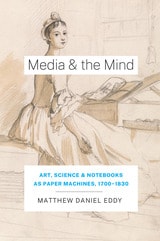
Media and the Mind
Art, Science, and Notebooks as Paper Machines, 1700-1830Matthew Daniel Eddy
University of Chicago Press, 2022
We often think of reason as a fixed entity, as a definitive body of facts that do not change over time. But during the Enlightenment, reason also was seen as a process, as a set of skills enacted on a daily basis. How, why, and where were these skills learned? Concentrating on Scottish students living during the long eighteenth century, this book argues that notebooks were paper machines and that notekeeping was a capability-building exercise that enabled young notekeepers to mobilize everyday handwritten and printed forms of material and visual media in a way that empowered them to judge and enact the enlightened principles they encountered in the classroom. Covering a rich selection of material ranging from simple scribbles to intricate watercolor diagrams, the book reinterprets John Locke’s comparison of the mind to a blank piece of paper, the tabula rasa. Although one of the most recognizable metaphors of the British Enlightenment, scholars seldom consider why it was so successful for those who used it. Each chapter uses one core notekeeping skill to reveal the fascinating world of material culture that enabled students in the arts, sciences, and humanities to transform the tabula rasa metaphor into a dynamic cognitive model. Starting in the home, moving to schools, and ending with universities, the book reconstructs the relationship between media and the mind from the bottom up. It reveals that the cognitive skills required to make and use notebooks were not simply aids to reason; rather, they were part of reason itself.
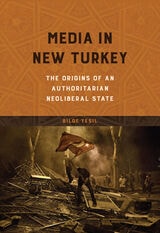
Media in New Turkey
The Origins of an Authoritarian Neoliberal StateBilge Yesil
University of Illinois Press, 2016
Yesil confronts essential questions regarding: the role of the state and military in building the structures that shaped Turkey's media system; media adaptations to ever-shifting contours of political and economic power; how the far-flung economic interests of media conglomerates leave them vulnerable to state pressure; and the ways Turkey's politicized judiciary criminalizes certain speech.
Drawing on local knowledge and a wealth of Turkish sources, Yesil provides an engrossing look at the fault lines carved by authoritarianism, tradition, neoliberal reform, and globalization within Turkey's increasingly far-reaching media.
Media, Erotics, and Transnational Asia
Purnima Mankekar and Louisa Schein, eds.
Duke University Press, 2012
Judith Farquhar examines how health magazines serve as sources of both medical information and erotic titillation to readers in urban China. Tom Boellstorff analyzes how queer zines produced in Indonesia construct the relationship between same-sex desire and citizenship. Purnima Mankekar examines the rearticulation of commodity affect, erotics, and nation on Indian television. Louisa Schein describes how portrayals of Hmong women in videos shot in Laos create desires for the homeland among viewers in the diaspora. Taken together, the essays offer fresh insights into research on gender, erotics, media, and Asia transnationally conceived.
Contributors. Anne Allison, Tom Boellstorff, Nicole Constable, Heather Dell, Judith Farquhar, Sarah L. Friedman, Martin F. Manalansan IV, Purnima Mankekar, Louisa Schein, Everett Yuehong Zhang
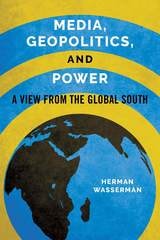
Media, Geopolitics, and Power
A View from the Global SouthHerman Wasserman
University of Illinois Press, 2018
Herman Wasserman analyzes the debates surrounding South Africa's new media presence against the backdrop of rapidly changing geopolitics. His exploration reveals how South African disputes regarding access to, and representation in, the media reflect the domination and inequality in the global communication sphere. Optimists see post-apartheid media as providing a vital space that encourages exchanges of opinion in a young democracy. Critics argue the public sphere mirrors South Africa's past divisions and privileges the viewpoints of the elite. Wasserman delves into the ways these simplistic narratives obscure the country's internal tensions, conflicts, and paradoxes even as he charts the diverse nature of South African entry into the global arena.

Media, Market, and Democracy in China
Between the Party Line and the Bottom LineYuezhi Zhao
University of Illinois Press, 1998
How do market forces influence the media in China? How does the Party both introduce and try to contain the market's influence? How do commercial imperatives both accommodate and challenge Party control?
Yuezhi Zhao interviewed a wide range of scholars, media administrators, and media professionals to answer these and other questions. Working in China in 1994 and 1995, she monitored media content, carried out extensive documentary research in Beijing, and held off-the-record meetings with Chinese media insiders. What she found informs an in-depth look at the intertwining nature of the Communist Party and the news media in China, how they affect each other, and what the future might hold for each.
A rare on-the-ground portrait, Media, Market, and Democracy in China is must reading for scholars, media and business professionals, and policymakers who need to understand what happened to China and its mass media during a period of dynamic growth and change.
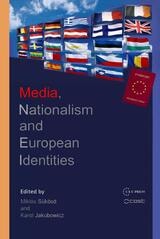
Media, Nationalism and European Identities
Karol Jakubowicz
Central European University Press, 2011
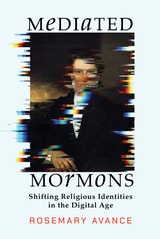
Mediated Mormons
Shifting Religious Identities in the Digital AgeRosemary Avance
University of Utah Press, 2024
Mediated Mormons uses a case study approach to consider various iterations of Mormon identity as presented by church authorities, faithful members, the secular media, and heterodox and former adherents. These often-conflicting perspectives challenge traditional models of LDS authority, dismantling a monolithic view of Mormons and offering a window into processes of social activism and institutional change in the internet era.
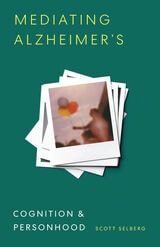
Mediating Alzheimer's
Cognition and PersonhoodScott Selberg
University of Minnesota Press, 2022
An exploration of the representational culture of Alzheimer’s disease and how media technologies shape our ideas of cognition and aging
With no known cause or cure despite a century of research, Alzheimer’s disease is a true medical mystery. In Mediating Alzheimer’s, Scott Selberg examines the nature of this enduring national health crisis by looking at the disease’s relationship to media and representation. He shows how collective investments in different kinds of media have historically shaped how we understand, treat, and live with this disease.
Selberg demonstrates how the cognitive abilities that Alzheimer’s threatens—memory, for example—are integrated into the operations of representational technologies, from Polaroid photographs to Post-its to digital artificial intelligence. Focusing on a wide variety of media technologies, such as neuroimaging, art therapy, virtual reality, and social media, he shows how these cognitively oriented media ultimately help define personhood for people with Alzheimer’s. Media have changed the practices of successful aging in the United States, and Selberg takes us deep into how technologies like digital brain-training and online care networks shape ideas of cognition and healthy aging.
Packed with startlingly fresh insights, Mediating Alzheimer’s contributes to debates around bioethics, the labor of caregiving, and a national economy increasingly invested in communication and digital media. Probing the very technologies that promise to save and understand our brains, it gives us new ways of understanding Alzheimer’s disease and aging in America.
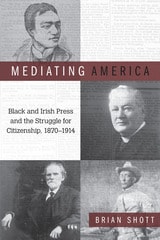
Mediating America
Black and Irish Press and the Struggle for Citizenship, 1870-1914Brian Shott
Temple University Press, 2019
Until recently, print media was the dominant force in American culture. The power of the paper was especially true in minority communities. African Americans and European immigrants vigorously embraced the print newsweekly as a forum to move public opinion, cohere group identity, and establish American belonging.
Mediating America explores the life and work of T. Thomas Fortune and J. Samuel Stemons as well as Rev. Peter C. Yorke and Patrick Ford—respectively two African American and two Irish American editor/activists in the late nineteenth and early twentieth centuries. Historian Brian Shott shows how each of these “race men” (the parlance of the time) understood and advocated for his group’s interests through their newspapers. Yet the author also explains how the newspaper medium itself—through illustrations, cartoons, and photographs; advertisements and page layout; and more—could constrain editors’ efforts to guide debates over race, religion, and citizenship during a tumultuous time of social unrest and imperial expansion.
Black and Irish journalists used newspapers to recover and reinvigorate racial identities. As Shott proves, minority print culture was a powerful force in defining American nationhood.
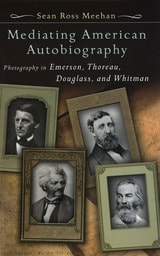
Mediating American Autobiography
Photography in Emerson, Thoreau, Douglass, and WhitmanSean Ross Meehan
University of Missouri Press, 2008
The emergence of photography in the mid-nineteenth century transformed ideas about how the self and nature could be pictured. Although the autobiographical potential of photography seems self-evident today, Sean Meehan takes us back to the birth of the medium when some of America’s preeminent authors began to think about photography’s implications for the representation of identity and the nature of autobiographical writing.
Both photography and autobiography involve a tension between disclosing and concealing their means of production: a chemical process for one, the writing process for the other. Meehan examines how four major authors—Ralph Waldo Emerson, Henry David Thoreau, Frederick Douglass, and Walt Whitman—were well aware of this tension and explored it in their work. By examining the implications of early photography in their writings, he shows how each engaged the new visual medium, how photography mediated their conceptions of self-representation, and how their appropriation of photographic thinking created a new kind of autobiography.
Examining the metonymic nature of photography, Meehan explores how the new medium influenced conceptions of visual and verbal representation. He intertwines these four writers’ reflections on photography—in Emerson’s Representative Men, Thoreau’s journals, Douglass’s narratives of slavery, and Whitman’s Specimen Days—with theories of photography as expounded by its inventors and observers, from Louis Daguerre and William Talbot in Europe to Oliver Wendell Holmes and Marcus Root in America.
As the first book to focus on the emergence of this new visual medium during the American Renaissance, Mediating American Autobiography shows us what photography means for American literature in general and for the genre most closely linked to it in particular. Because the engagement of these writers with photography has been neglected in previous scholarship, Meehan’s work provocatively bridges the study of two media and illuminates an important aspect of American thought and culture at the dawn of the technological era.

Mediating Culture in the Seventeenth-Century German Novel
Eberhard Werner Happel, 1647-1690Gerhild Scholz Williams
University of Michigan Press, 2014
Happel primarily lived and worked in the vigorous port city of Hamburg, which was a “media center” in terms of the access it offered to a wide library of books in public and private collections. Hamburg’s port status meant it buzzed with news and information, and Happel drew on this flow of data in his novels. His books deal with many topics of current interest—national identity formation, gender and sexualities, Western European encounters with neighbors to the East, confrontations with non-European and non-Western powers and cultures—and they feature multiple media, including news reports, news collections, and travel writings. As a result, Happel’s use of contemporary source material in his novels feeds our current interest in the impact of the production of knowledge on seventeenth-century narrative. Mediating Culture in the Seventeenth-Century German Novel explores the narrative wealth and multiversity of Happel’s work, examines Happel’s novels as illustrative of seventeenth-century novel writing in Germany, and investigates the synergistic relationship in Happel’s writings between the booming print media industry and the evolution of the German novel.
Mediating Gender in Post-Authoritarian South Korea
Michelle Cho and Jesook Song
University of Michigan Press, 2024
Mediating Gender in Post-Authoritarian South Korea maps the ways in which popular media and public discourse make the social dynamics of gender visible and open them up for debate and dismantling. In presenting innovative new research on the ways in which popular ideas about gender gain concrete form and political substance through mass mediation, the book’s contributors investigate the discursive production of gender in contemporary South Korea through trends, tropes, and thematics, as popular media become the domain in which new gendered subjectivities and relations transpire. The essays in this volume present cases and media objects that span multiple media and platforms, introducing new ways of thinking about gender as a platform and a conceptual infrastructure in the post-authoritarian era.
Mediating Indianness
Cathy Covell Waegner
Michigan State University Press, 2015
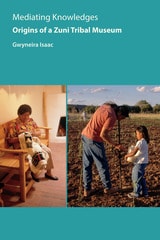
Mediating Knowledges
Origins of a Zuni Tribal MuseumGwyneira Isaac
University of Arizona Press, 2007
These personal narratives provide insight into the diversity of perspectives found within the community, as well as tracing the ongoing negotiation of the relationship between Zuni and Anglo-American cultures. In particular, Isaac examines how Zunis, who transmit knowledge about their history through oral tradition and initiation into religious societies, must navigate the challenge of utilizing Anglo-American museum practices, which privilege technology that aids the circulation of knowledge beyond its original narrators.
This book provides a much-needed contemporary ethnography of a Pueblo community recognized for its restrictive approach to outside observers. The complex interactions between Zunis and anthropologists explored here, however, reveal not only Puebloan but also Anglo-American attitudes toward secrecy and the control of knowledge.
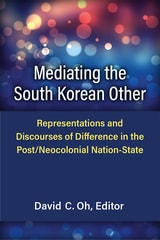
Mediating the South Korean Other
Representations and Discourses of Difference in the Post/Neocolonial Nation-StateDavid C. Oh, Editor
University of Michigan Press, 2022
This collection brings together leading and emerging scholars of multiculturalism in Korean media culture to examine mediated constructions of the “other,” taking into account the nation’s postcolonial and neocolonial relationships and its mediated construction of self. “Anthrocategorism ,” a more nuanced translation of injongchabyeol, is proffered as a new framework for understanding difference in ways that are locally meaningful in a society and media system in which racial or even ethnic differences are not the most salient. The collection points to the construction of racial others that elevates, tolerates, and incorporates difference; the construction of valued and devalued ethnic others, and the ambivalent construction of co-ethnic others as sympathetic victims or marginalized threats.
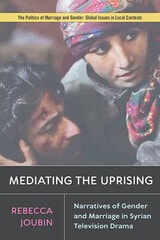
Mediating the Uprising
Narratives of Gender and Marriage in Syrian Television DramaRebecca Joubin
Rutgers University Press, 2020
While for some screenwriters a return to pre-2011 life would be welcome after so much bloodshed, others advocated profound cultural and social transformation, instead. They employed marriage and gender metaphors in the stories they wrote to engage in political critique, even at the risk of creating marketing difficulties for the shows or they created escapist stories such as transnational adaptations and Old Damascus tales. Serving as heritage preservation, Mediating the Uprising underscores that television drama creators in Syria have many ways of engaging in protest, with gender and marriage at the heart of the polemic.
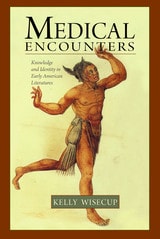
Medical Encounters
Knowledge and Identity in Early American LiteraturesKelly Wisecup
University of Massachusetts Press, 2013
Against the prevailing view that colonial texts provide insight only into their writers' perspectives, Wisecup demonstrates that Europeans, Natives, and Africans held certain medical ideas in common, including a conception of disease as both a spiritual and a physical entity, and a belief in the power of special rituals or prayers to restore health. As a consequence, medical knowledge and practices operated as a shared form of communication on which everyone drew in order to adapt to a world of devastating new maladies and unfamiliar cures.
By signaling one's relation to supernatural forces, to the natural world, and to other people, medicine became an effective means of communicating a variety of messages about power and identity as well as bodies and minds. Native Americans in Virginia and New England, for example, responded to the nearly simultaneous arrival of mysterious epidemics and peoples by incorporating colonists into explanations of disease, while British American colonists emphasized to their audiences back home the value of medical knowledge drawn from cross-cultural encounters in the New World.
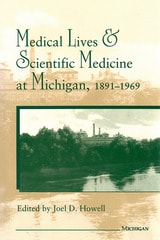
Medical Lives and Scientific Medicine at Michigan, 1891-1969
Joel D. Howell, Editor
University of Michigan Press, 1993
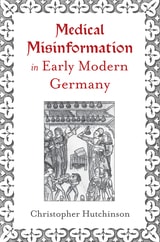
Medical Misinformation in Early Modern Germany
Christopher Hutchinson
University of Delaware Press, 2026
Medical Misinformation in Early Modern Germany examines how doctors, writers, and printers in sixteenth-century Germany responded to the rapid expansion of print and its implications for medical knowledge. The spread of printed texts generated widespread suspicion about print’s reliability as a conduit of information and led writers to reflect on questions of audience, vernacularity, and medical authority in their responses to disease. The book investigates literary texts alongside popular vernacular medical pamphlets on the major epidemic diseases of the period––plague, syphilis, and the English sweating sickness––to reveal a widespread concern with the impact of printed texts on public health. During the 1529 outbreak of the English sweating sickness, this concern culminated in writers’ use of a “rhetoric of virality,” explicitly comparing the circulation of texts to the spread of disease, as they confronted the parallel contagions of disease and information.
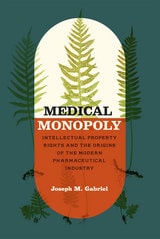
Medical Monopoly
Intellectual Property Rights and the Origins of the Modern Pharmaceutical IndustryJoseph M. Gabriel
University of Chicago Press, 2014
Drawing on a wealth of previously unused archival material, Medical Monopoly combines legal, medical, and business history to offer a sweeping new interpretation of the origins of the complex and often troubling relationship between the pharmaceutical industry and medical practice today. Joseph M. Gabriel provides the first detailed history of patent and trademark law as it relates to the nineteenth-century pharmaceutical industry as well as a unique interpretation of medical ethics, therapeutic reform, and the efforts to regulate the market in pharmaceuticals before World War I. His book will be of interest not only to historians of medicine and science and intellectual property scholars but also to anyone following contemporary debates about the pharmaceutical industry, the patenting of scientific discoveries, and the role of advertising in the marketplace.
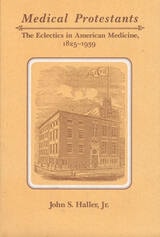
Medical Protestants
The Eclectics in American Medicine, 1825-1939John S. Haller Jr.
Southern Illinois University Press, 1994
John S. Haller,Jr., provides the first modern history of the Eclectic school of American sectarian medicine.
The Eclectic school (sometimes called the "American School") flourished in the mid-nineteenth century when the art and science of medicine was undergoing a profound crisis of faith. At the heart of the crisis was a disillusionment with the traditional therapeutics of the day and an intense questioning of the principles and philosophy upon which medicine had been built. Many American physicians and their patients felt that medicine had lost the ability to cure. The Eclectics surmounted the crisis by forging a therapeutics based on herbal remedies and an empirical approach to disease, a system independent of the influence of European practices.
Although rejected by the Regulars (adherents of mainstream medicine), the Eclectics imitated their magisterial manner, establishing two dozen colleges and more than sixty-five journals to proclaim the wisdom of their theory. Central to the story of Eclecticism is that of the Eclectic Medical Institute of Cincinnati, the "mother institute" of reform medical colleges. Organized in 1845, the school was to exist for ninety-four years before closing in 1939.
Throughout much of their history, the Eclectic medical schools provided an avenue into the medical profession for men and women who lacked the financial and educational opportunities the Regular schools required, siding with Professor Martyn Paine of the Medical Department of New York University, who, in 1846, had accused the newly formed American Medical Association of playing aristocratic politics behind a masquerade of curriculum reform. Eventually, though, they grudgingly followed the lead of the Regulars by changing their curriculum and tightening admission standards.
By the late nineteenth century, the Eclectics found themselves in the backwaters of modern medicine. Unable to break away from their botanic bias and ill-equipped to support the implications of germ theory, the financial costs of salaried faculty and staff, and the research implications of laboratory science, the Eclectics were pushed aside by the rush of modern academic medicine.
Medical Technics
Don Ihde
University of Minnesota Press, 2019
A personal account of the aging body and advanced technologies by a preeminent philosopher of technology
Medical Technics is a rigorous examination of how medical progress has modified our worlds and contributed to a virtual revolution in longevity. Don Ihde offers a unique autobiographical tour of medical events experienced in a decade, beginning in his 70s. Ihde offers experiential and postphenomenological analyses of technologies such as sonography and microsurgery, and ultimately asks what it means to increasingly become a cyborg.
Forerunners: Ideas FirstShort books of thought-in-process scholarship, where intense analysis, questioning, and speculation take the lead
Medical Women and Victorian Fiction
Kristine Swenson
University of Missouri Press, 2005
Medicinal Plants of Native America, Vols. 1 and 2
Daniel E. Moerman
University of Michigan Press, 1987

Medicine and American Growth, 1800–1860
James H. Cassedy
University of Wisconsin Press, 1986
“A work of great breadth, originality, and distinction. Rarely do we see such a successful marriage between historical demography and the history of medicine. The interconnections between population increase, migration and immigration on the one hand, and disease and the development of medicine on the other in antebellum America are brilliantly presented.”—Irvine Loudon, Bulletin of the History of Medicine
Medicine and Nation Building in the Americas, 1890-1940
Jose Amador
Vanderbilt University Press, 2015
Drawing on sources in Cuba, Puerto Rico, Brazil, and the United States, Amador shows that initiatives launched in colonial settings laid the foundation for the rise of public health programs in the hemisphere and transformed debates about the formation of national culture. Writers rethought theories of environmental and racial danger, while Cuban reformers invoked the yellow fever campaign to exclude nonwhite immigrants. Puerto Rican peasants flooded hookworm treatment stations, and Brazilian sanitarians embraced regionalist and imperialist ideologies. Together, these groups illustrated that public health campaigns developed in the shadow of empire propelled new conflicts and conversations about achieving modernity and progress in the tropics.
This book is a recipient of the annual Norman L. and Roselea J. Goldberg Prize for the best project in the area of medicine.